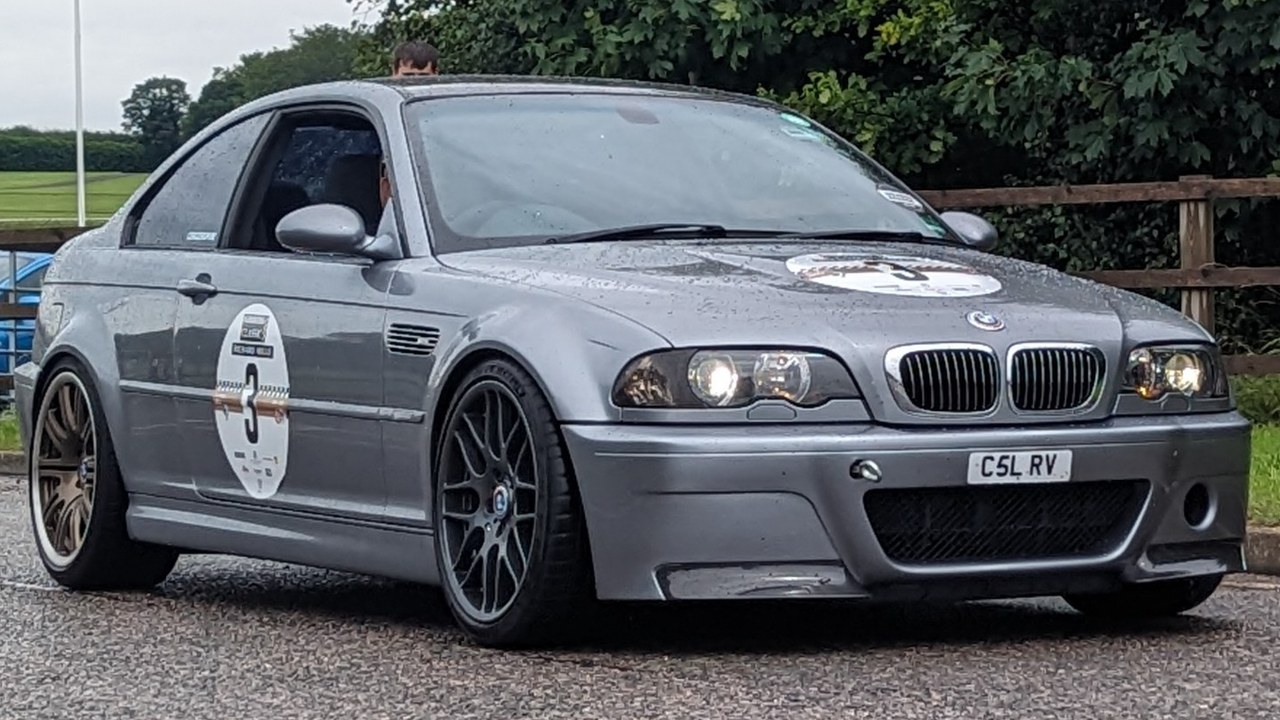
The 2004 BMW M3 CSL arrived at a moment when performance cars were getting heavier, more complex and more insulated, yet it went in the opposite direction. By stripping weight, sharpening the hardware and prioritising feel over comfort, it showed that a leaner, more focused M3 could deliver a bigger emotional payoff than any spec sheet number. Two decades on, it still stands as proof that less equipment and more intent can turn a very good sports coupe into something close to a reference point.
Reviving the Coupe Sport Leichtbau idea for a new era
BMW did not pluck the CSL badge out of thin air for the E46 generation. The letters stood for Coupe Sport Leichtbau on the original E9 CSL, a car that helped reshape BMW’s image by using lightweight construction to win on track and build credibility on the road. Although the E9 CSL was instrumental in that transformation, the Coupe Sport Leichtbau tag then disappeared for decades, which made its return on the early 2000s M3 a deliberate statement that weight saving and purity were back at the top of the agenda.
By the time the E46 M3 CSL appeared, the standard M3 was already a benchmark, but it was also a relatively plush, multi-role coupe. The CSL project set out to create what internal documents described as unique, absolutely unmarred driving dynamics and a purist character, a car that combined supreme agility with outstanding performance. Lightweight construction was not just a marketing line, it was described as being deeply rooted in the DNA of this specific model, with engineers treating mass reduction as the central organising principle rather than a late-stage tweak.
How BMW carved weight out of a familiar shape
The most radical part of the M3 CSL story is how far the engineers went to remove mass from a car that already shared its basic shell with a regular E46 coupe. First of all, they trained weight off it by attacking every major panel and component that did not need to be steel. The front splitter, rear diffuser, roof, door panels and centre console were made of carbon fibre reinforced plastic, while the boot lid and even the floor of the luggage compartment were reworked to save kilograms. In creating the CSL, Bimmer’s elite engineering brains went hog wild with weight savings, to the point where lightweight paper replaced the trunk floor in place of heavier materials.
Innovative materials were deployed exactly where they would have the biggest effect on handling. Carbon fibre reinforced plastic, aluminium and other composites were used in the roof, bumpers and interior structure, with the carbon plastic easily recognisable as such rather than being hidden under trim. The BMW documentation on the CSL makes clear that this was about more than a headline number, it was about lowering the centre of gravity and reducing unsprung mass so the suspension could work more precisely. Lightweight construction extended to the exhaust and braking system to save further weight, and even the sound insulation and standard equipment list were pared back to keep the kerb figure down.
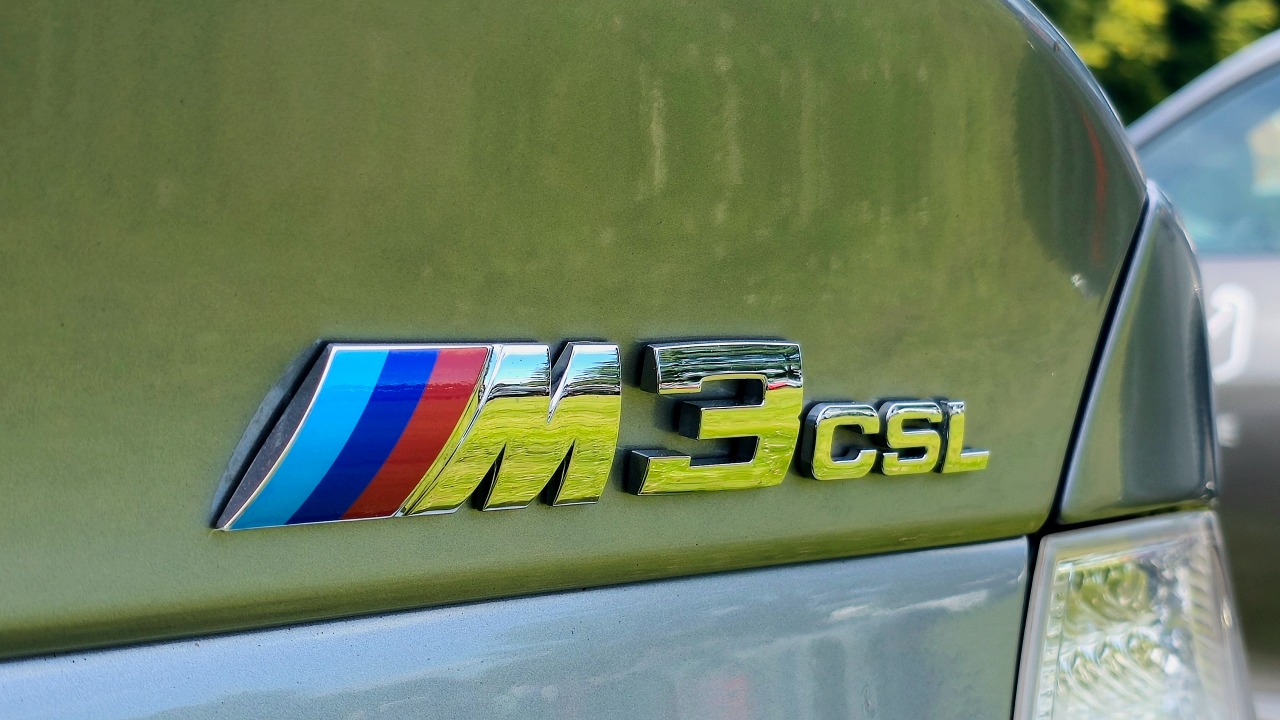
Engine, chassis and the pursuit of sharper response
Under the bonnet, the CSL did not rely on a huge power increase to feel transformed. The familiar straight six was reworked with revised camshafts, with 268 degrees of inlet duration compared to 260 of the standard M3 and 264 degrees on the exhaust side, while lift remained the same. Power output was quoted at 265 kW and 360 hp, which represented 17 additional hp (13 kW) compared to the normal M3, while torque was listed at 370 Nm and 273 ft-lb at 4,000 rpm. Those numbers are modest by modern standards, but they were paired with a dramatic reduction in intake restriction and a bespoke carbon airbox that gave the engine a far more immediate response.
Pop the bonnet and you see how air is ducted up to that now famous carbon airbox, a huge chamber that rams more air into the engine and dominates the engine bay visually as well as acoustically. Contemporary testers and later reviewers have repeatedly highlighted how the CSL’s intake noise and throttle response make it feel more special than the raw power figure suggests, with one long term E46 owner noting that even a heavily modified standard M3, 600 lbs lighter than stock and with about 20 hp more than stock, still could not quite replicate the CSL’s character. Combined with stiffer suspension components that used ball joints rather than rubber bearings, the chassis tuning matched the engine’s urgency, trading a little ride comfort for a much more connected feel.
From controversial compromises to cult status
At launch, some of the CSL’s decisions looked risky. The car was offered only with a single transmission, a robotised manual that divided opinion, and its stripped back cabin, reduced sound insulation and fixed back seats made it less practical than a regular M3. Even within BMW circles there has always been a healthy dose of skepticism about whether the CSL was really worth the hype, with some owners of standard M3s questioning if the weight saving and sharper tuning justified the price and the compromises in everyday use. Later video reviews have revisited those doubts, asking whether the CSL’s reputation is inflated by rarity and nostalgia.
Yet the market and the enthusiast community have largely answered that question in the CSL’s favour. The M3 CSL was described in period as the ultimate production version of the E46, the last M3 powered by a naturally aspirated inline six, and values today reflect that status, with well kept examples reported to sell for well over six figures. One detailed guide has gone so far as to call it the best performance car BMW has ever built, while another retrospective described it as a dream machine that followed the same basic formula as the original 3.0 CSL, with many body panels replaced by carbon fibre parts and only the changes that would make the car better being approved. Even stories of a CSL abandoned for a decade in a London garage have only added to the mythology, underlining how unusual and coveted the car has become.
The CSL’s legacy in a heavier, faster world
Looking back from today’s landscape of turbocharged, electronically assisted M cars, the E46 M3 CSL feels almost modest on paper, yet its influence is visible in every later lightweight special that BMW has produced. The E92 M3 GTS was explicitly framed as a spiritual successor to the CSL, slightly quicker in a straight line but following the same template of reduced weight, more focused suspension and track oriented hardware. Later limited run models like the F87 M2 CS and other two door M cars have been judged against the CSL as a benchmark, with enthusiasts debating whether newer cars with more power and technology can really match the older car’s sense of connection.
What the CSL proved, and what still resonates, is that shaving mass and simplifying the driving experience can deliver gains that no amount of extra horsepower can replicate. Lightweight construction was described as being deeply rooted in the DNA of this model, and that philosophy has become a touchstone for engineers who want to counter complaints about heavy, boat like cars by mandating weight reductions to make them more agile and responsive. When I look at the way the CSL combined relatively modest power with obsessive attention to materials, aerodynamics and chassis tuning, it is clear that its real achievement was to show that a carefully honed, less complicated M3 could feel more vivid and more memorable than any of its more lavishly equipped contemporaries.
More from Fast Lane Only: