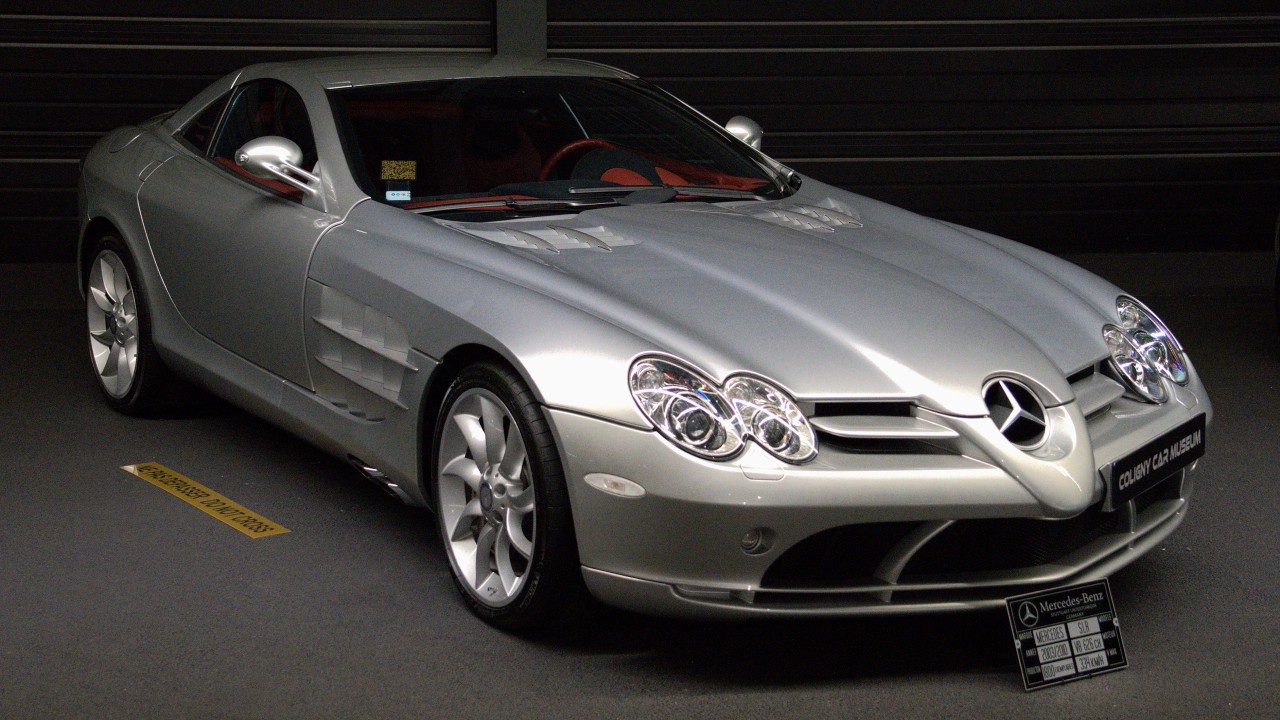
The 2005 Mercedes-Benz SLR McLaren arrived as a rare attempt to fuse two usually opposing ideas: the razor-edged focus of a supercar and the comfort and civility of a grand tourer. Instead of chasing lap times at any cost, it tried to deliver towering performance in a package that could cross continents at speed, with the ease and polish expected from a flagship Mercedes. That tension between extremes is what still makes the SLR feel distinctive in a crowded field of early‑2000s exotics.
From racing heritage to road-going hybrid
The SLR name carried heavy expectations long before the 2005 road car turned a wheel, because it echoed the legendary 300 SLR and the ultra-rare SLR Uhlenhaut Coupé. That earlier machine, described as a rare SL / SLR hybrid with only two in existence, has been called the most valuable car in the world, which meant any modern SLR had to justify its badge with both speed and drama. By reviving that lineage, Mercedes signaled that this would not be just another fast coupe but a halo model intended to sit at the intersection of motorsport history and luxury road travel, a place where a driver could feel a direct line from grand prix circuits to the autobahn.
To achieve that, Mercedes partnered with McLaren, creating what one description calls one of the greatest supercar collaborations ever built, where German precision met Brit engineering know‑how. The result was a car that did not simply mimic Italian exotics but instead leaned into a different philosophy, pairing Mercedes comfort and safety tech with McLaren’s experience in lightweight structures and high-speed stability. That cross‑channel collaboration framed the SLR as a deliberate blend of cultures and priorities, which is exactly what a super‑GT needs to be.
Engineered for supercar speed and GT stamina
At the heart of the SLR’s dual personality was its powertrain, which delivered supercar numbers while being tuned for everyday usability. The SLR used a hand‑built V8 described under its Engine section as a 232 kg unit, or 511 lb, with a 5.4 L capacity and 331.9 cu in displacement, precisely 5,439 cc, and a supercharged SOHC layout with 3 valves per cylinder. That hardware gave the car the instant, muscular response expected of a top‑tier performance machine, yet the decision to use a relatively understressed, supercharged V8 instead of a peaky racing engine reflected a desire for durability and smooth torque, the kind of traits that matter on long journeys as much as on short blasts.
Contemporary performance breakdowns underline how serious those numbers were in the early 2000s, describing a displacement of 5,439 in a Performance Specifications table and highlighting how the SLR ranked among the most powerful German supercars of its era. Other data points list the car with 617 hp from a supercharged 5.5L V8 and, in another technical overview, a newly developed V8 supercharged engine delivering an output of 626 hp. Even allowing for differences in rating standards, the message is clear: the SLR had power on par with the most extreme exotics of its day, yet it wrapped that performance in a package that could idle smoothly in traffic and cruise at high speed without strain, which is exactly what a grand tourer demands.
Carbon-fiber structure with real-world usability
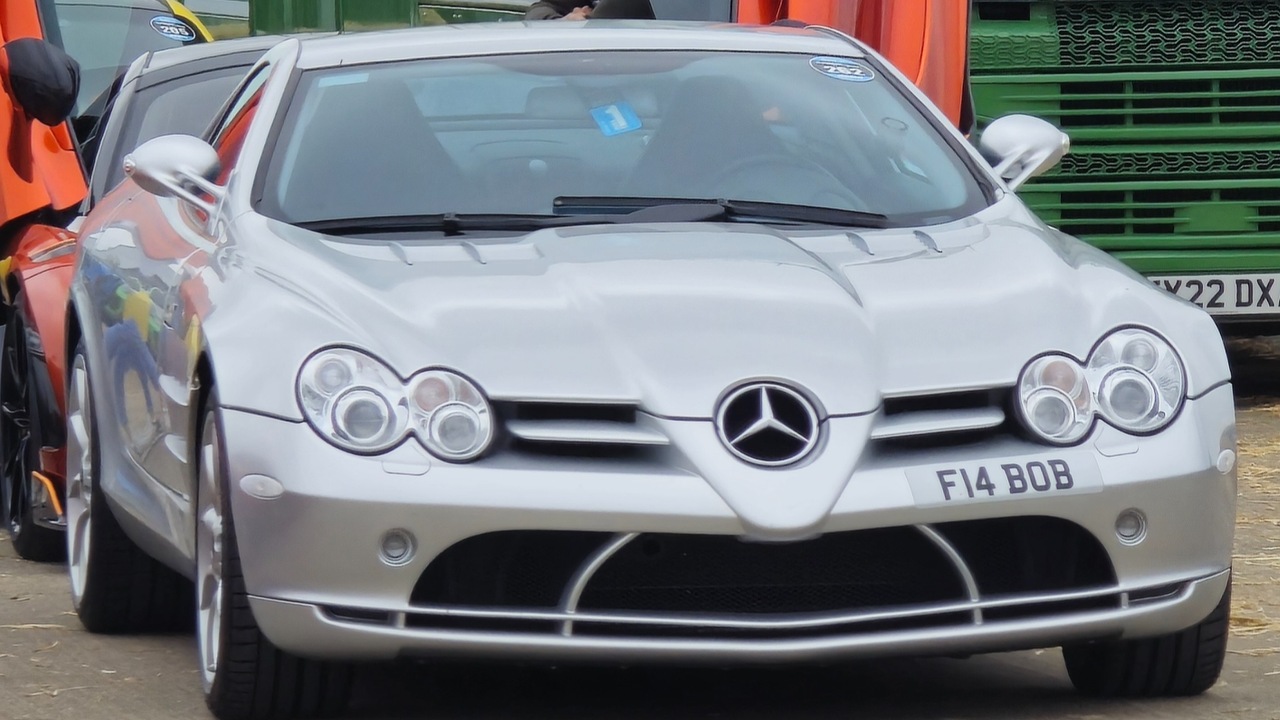
Under the skin, the SLR’s structure showed how far Mercedes and McLaren were willing to go to give the car supercar-grade engineering while still aiming for daily usability. Reporting on the chassis describes a front crash structure that was all‑carbon and a monocoque formed from a four‑piece carbon‑fiber arrangement bonded together, a layout that echoes contemporary Formula 1 practice. This approach delivered the stiffness and lightness needed for high-speed stability and sharp responses, but it also allowed engineers to tune the crash behavior and cabin integrity to Mercedes safety standards, something that pure track-focused cars of the time often treated as secondary.
That carbon architecture supported the idea, highlighted in later analysis, that McLaren and Mercedes effectively built what some have called the first daily hypercar, a machine that happened to have 617 horsepower yet was designed to be driven often rather than stored as a weekend toy. The SLR’s relatively generous cabin, its conventional front‑hinged doors paired with dramatic side‑exit exhausts, and its commitment to safety tech all pointed toward a car that could handle commuting and long‑distance trips without punishing its driver. In that sense, the structure was not just a performance showcase but a foundation for the car’s grand touring mission.
Braking, comfort and the technology bridge
If the engine and chassis gave the SLR its supercar credentials, the braking and control systems helped it behave like a refined GT when the pace dropped. The SLR features Sensotronic Brake Control, a brake‑by‑wire system that replaces a traditional hydraulic link with electronic management, paired with carbon‑ceramic discs designed to provide strong stopping power and resist fade. Those discs are also described as being managed to keep them dry, a detail that speaks to the car’s focus on consistent performance in real‑world conditions, not just on a dry test track. For a driver covering long distances in mixed weather, that kind of predictability is as important as outright stopping distance.
Inside, the SLR leaned heavily on Mercedes expertise in comfort and equipment, which is reflected in detailed breakdowns of its Specs, Features and Options that read more like a luxury coupe brochure than a stripped‑out racer’s spec sheet. Listings for the Used 2005 Mercedes Benz SLR McLaren emphasize elements such as Fuel Economy figures of 13 combined mpg, Horsepower of 617 hp, and an Engine described as a V8, Supercharged, 5.5L, but they sit alongside the kind of amenities and trim choices that matter to buyers who expect their six‑figure car to be as accommodating as it is fast. That balance between advanced braking tech, safety systems and comfort equipment shows how the SLR tried to bridge the gap between cutting‑edge performance engineering and the everyday expectations of a Mercedes owner.
Positioning in the 2000s supercar landscape
When the 2005 Mercedes-Benz SLR McLaren entered the market, it did so as part of a deliberate move by Mercedes into the modern supercar segment, a point made clear in a Vehicle Overview that describes the brand joining that arena with this model. Yet the SLR did not simply chase the same formula as mid‑engined rivals; instead, it adopted a front‑mid engine layout, a long‑nose silhouette and a cabin set back for stability and comfort, more in line with traditional grand tourers. That positioning helped it stand apart from the pack, presenting itself as a car that could deliver supercar performance figures while still feeling like a Mercedes on the inside, with the refinement and usability that implies.
Later commentary on the SLR’s place in the 2000s notes that Mercedes and McLaren effectively built one of the most powerful German supercars of that decade, yet the car’s weight and comfort‑oriented tuning meant it was never the most agile track weapon. Instead, its strengths lay in high‑speed cruising, stability and the ability to cover serious distance quickly, supported by its 5,439 cc supercharged V8 and sophisticated carbon structure. That is precisely where the SLR’s blend of supercar and grand tourer comes into focus: it was not trying to be a bare‑bones racer for the road, but a high‑tech, high‑power machine that could be lived with, a philosophy that has aged well as more modern performance cars chase the same elusive balance.
More from Fast Lane Only: