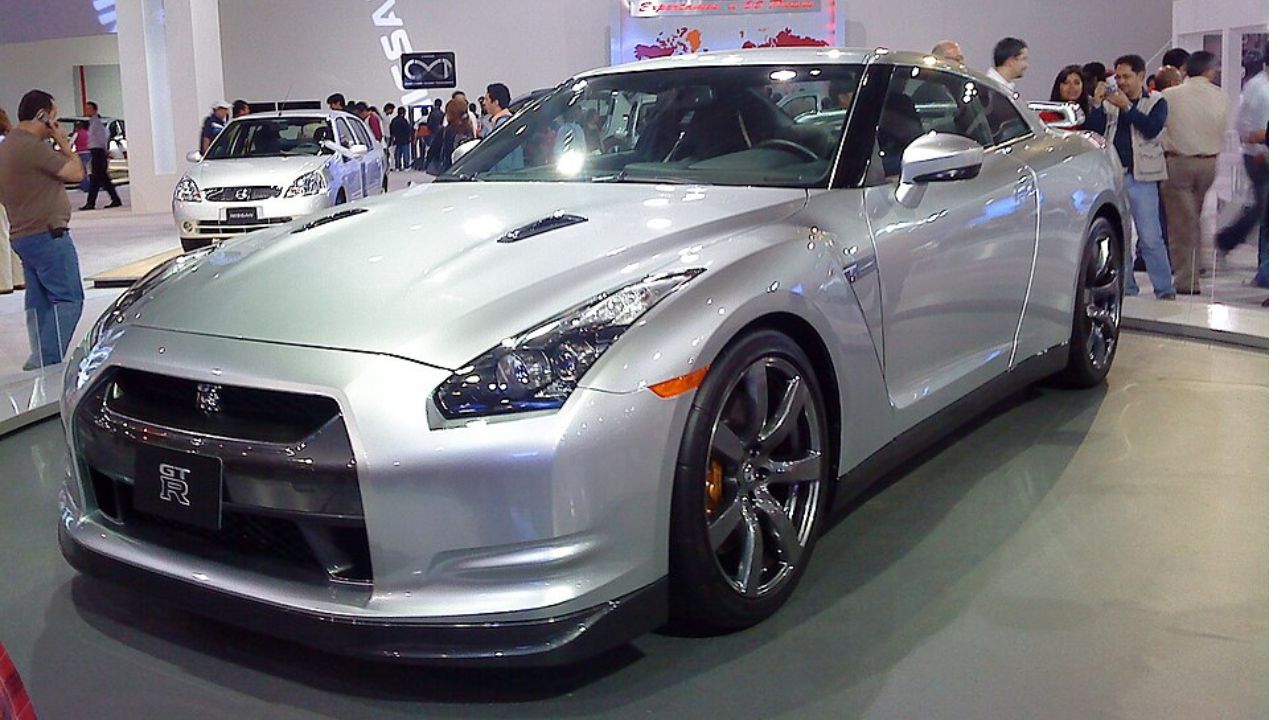
When the 2008 Nissan GT-R arrived, it faced enormous expectations as the successor to the legendary Skyline GT-R models. Rather than chasing exotic styling or exclusivity, Nissan focused on engineering and performance. The result was a sports car capable of challenging machines that cost two or three times as much, quickly earning the nickname “giant killer” from enthusiasts and automotive journalists around the world.
Nissan Built It Around Performance First
From the beginning, the GT-R was engineered with one goal: deliver world-class performance regardless of price. Every major component was designed to maximize speed, handling, and driver confidence.
Power came from a hand-assembled 3.8-liter twin-turbocharged V6 paired with a rear-mounted six-speed dual-clutch transmission. This unusual transaxle layout helped achieve excellent weight distribution, while the advanced all-wheel-drive system constantly adjusted power delivery to maximize traction.
The chassis combined lightweight materials with exceptional rigidity, allowing the suspension to work with remarkable precision. Rather than relying on massive engine displacement, Nissan used technology and careful engineering to create performance that rivaled the world’s best sports cars.
It was a car designed to outperform expectations rather than simply meet them.
Performance Shocked the Automotive World
When independent road tests began, the GT-R immediately exceeded expectations. It delivered breathtaking acceleration, extraordinary grip, and remarkable consistency under demanding driving conditions.
Perhaps most surprising was its ability to compete with far more expensive European supercars on race circuits. Magazine comparison tests repeatedly showed the GT-R matching or outperforming rivals from Porsche, Ferrari, Lamborghini, and other prestigious manufacturers.
The car’s sophisticated launch control, intelligent all-wheel-drive system, and rapid dual-clutch gearbox allowed even moderately experienced drivers to achieve impressive performance. It removed much of the intimidation traditionally associated with high-performance sports cars while remaining exceptionally capable in skilled hands.
Its combination of speed and accessibility made it one of the most talked-about performance cars of its era.
Technology Became Its Greatest Advantage
Unlike many traditional sports cars that relied primarily on mechanical simplicity, the GT-R embraced advanced electronics. Numerous sensors continuously monitored steering, wheel speed, throttle position, suspension movement, and braking to optimize performance in real time.
The onboard multifunction display also gave drivers access to detailed information including turbo boost, g-forces, lap timing, and drivetrain data. Originally developed with input from racing and simulation experts, the system reinforced the GT-R’s high-tech character.
Some purists questioned whether so much electronic assistance reduced driver involvement. However, many enthusiasts viewed the technology as an extension of Nissan’s engineering philosophy, allowing the car to achieve performance levels that would have been difficult through mechanical means alone.
The GT-R demonstrated that computers could enhance rather than diminish driving excitement.
Its Legacy Continues to Influence Performance Cars
The success of the 2008 GT-R forced the automotive industry to rethink the relationship between price and performance. It proved that advanced engineering could allow a relatively affordable sports car to compete directly with established supercars, challenging long-held assumptions about what buyers should expect at different price points.
Throughout its long production run, the GT-R received continual updates that improved power, refinement, and handling while preserving its original mission. Its reputation as a giant killer remained intact, earning respect from enthusiasts, racers, and engineers alike.
Today, the GT-R is widely regarded as one of the defining performance cars of the 21st century. Its influence can be seen in the increasing emphasis on sophisticated electronics, all-wheel-drive systems, and dual-clutch transmissions across the high-performance automotive world.
Looking back, the 2008 Nissan GT-R earned giant-killer status because it proved that intelligent engineering could overcome traditional advantages of prestige and price. By delivering supercar-level performance at a fraction of the cost, it forever changed expectations for modern performance cars.
More from Fast Lane Only
- Unboxing the WWII Jeep in a Crate
- 15 rare Chevys collectors are quietly buying
- 10 underrated V8s still worth hunting down
- Police notice this before you even roll window down
*Research for this article included AI assistance, with all final content reviewed by human editors