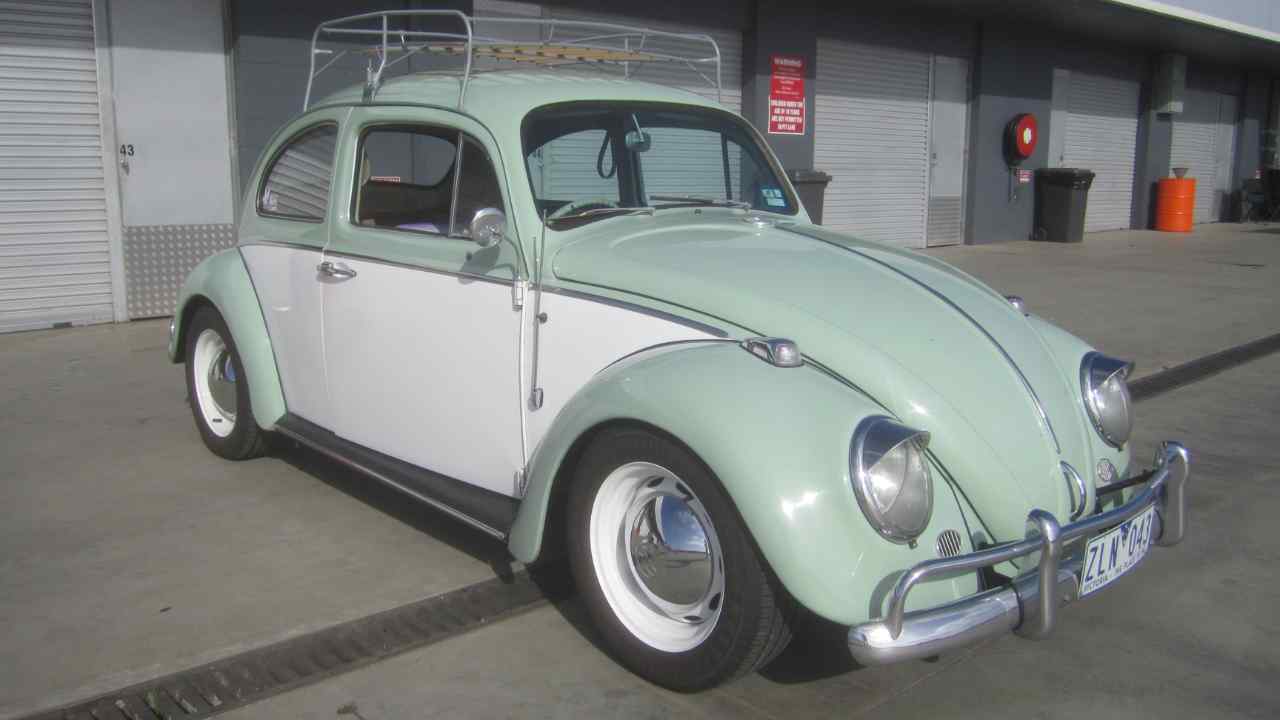
The Volkswagen Beetle disappeared from production in many countries long before the end of the 20th century, yet in Mexico it continued rolling off assembly lines for decades. What began as an affordable economy car gradually became a cultural icon, remaining in production until 2003. Its extraordinary longevity resulted from a unique combination of practicality, affordability, local manufacturing, and enduring public demand.
Mexico Embraced the Beetle as Everyday Transportation
Volkswagen established a strong manufacturing presence in Mexico during the 1960s, opening a major production facility in Puebla. As the country’s automotive industry expanded, the Beetle became one of the most affordable and dependable vehicles available to Mexican buyers.
Its air-cooled engine, simple mechanical design, and inexpensive maintenance made it well suited to daily driving. Owners appreciated that repairs could often be completed with basic tools, while replacement parts remained widely available through local suppliers.
The Beetle proved equally useful for families, students, and small business owners. Its low operating costs and dependable engineering helped it earn a loyal following that continued growing long after newer designs entered the market.
The car became woven into everyday life across the country.
It Became the Taxi Everyone Recognized
One of the biggest reasons the Beetle remained so visible in Mexico was its widespread use as a taxi, particularly in Mexico City. Thousands of bright green-and-white Beetles carried passengers through crowded streets for decades, becoming one of the city’s most recognizable sights.
Taxi operators valued the Beetle because it was economical to purchase, inexpensive to maintain, and capable of handling the demands of constant urban driving. Its compact size also made navigating congested streets easier than with many larger vehicles.
To improve passenger access, many taxi versions were modified with the front passenger seat removed, creating extra room for entering the rear seats. This unusual arrangement became a familiar feature for countless riders.
The Beetle’s role as a taxi further strengthened its reputation for reliability and practicality.
Simplicity Helped It Outlast Newer Cars
While many manufacturers focused on increasingly sophisticated technology, the Beetle continued to succeed by remaining mechanically straightforward. Its air-cooled engine eliminated the need for a radiator and cooling system, reducing maintenance requirements and making repairs simpler in many situations.
The car’s rugged construction also allowed it to withstand years of daily use. Independent repair shops throughout Mexico became highly experienced with the Beetle, ensuring owners could find affordable service almost anywhere.
Even as modern front-wheel-drive hatchbacks gained popularity, many buyers remained loyal to the familiar Beetle because they trusted its proven durability and low ownership costs.
Its greatest strength was not cutting-edge technology but dependable simplicity.
An Icon That Lives On
Volkswagen ended Mexican Beetle production in 2003 with the special “Última Edición,” bringing more than six decades of continuous production to a close. By then, millions of Beetles had been built in Puebla, many of which remained in service for years afterward.
Today, surviving Mexican Beetles are treasured by collectors and enthusiasts around the world. They continue to appear at classic car shows, cultural festivals, and enthusiast gatherings, celebrating one of the longest production runs in automotive history.
Perhaps more importantly, the Beetle remains a symbol of everyday mobility for generations of Mexican drivers. Its story is not simply one of engineering success but of a vehicle that became part of the country’s social and cultural identity.
Looking back, the strange story behind Volkswagen Beetles surviving decades in Mexico is that they succeeded by doing the ordinary exceptionally well. Affordable, reliable, and easy to maintain, the Beetle earned lasting loyalty from millions of drivers, allowing it to outlive countless newer competitors and secure its place as one of the world’s most enduring automobiles.
More from Fast Lane Only
- Unboxing the WWII Jeep in a Crate
- 15 rare Chevys collectors are quietly buying
- 10 underrated V8s still worth hunting down
- Police notice this before you even roll window down
*Research for this article included AI assistance, with all final content reviewed by human editors