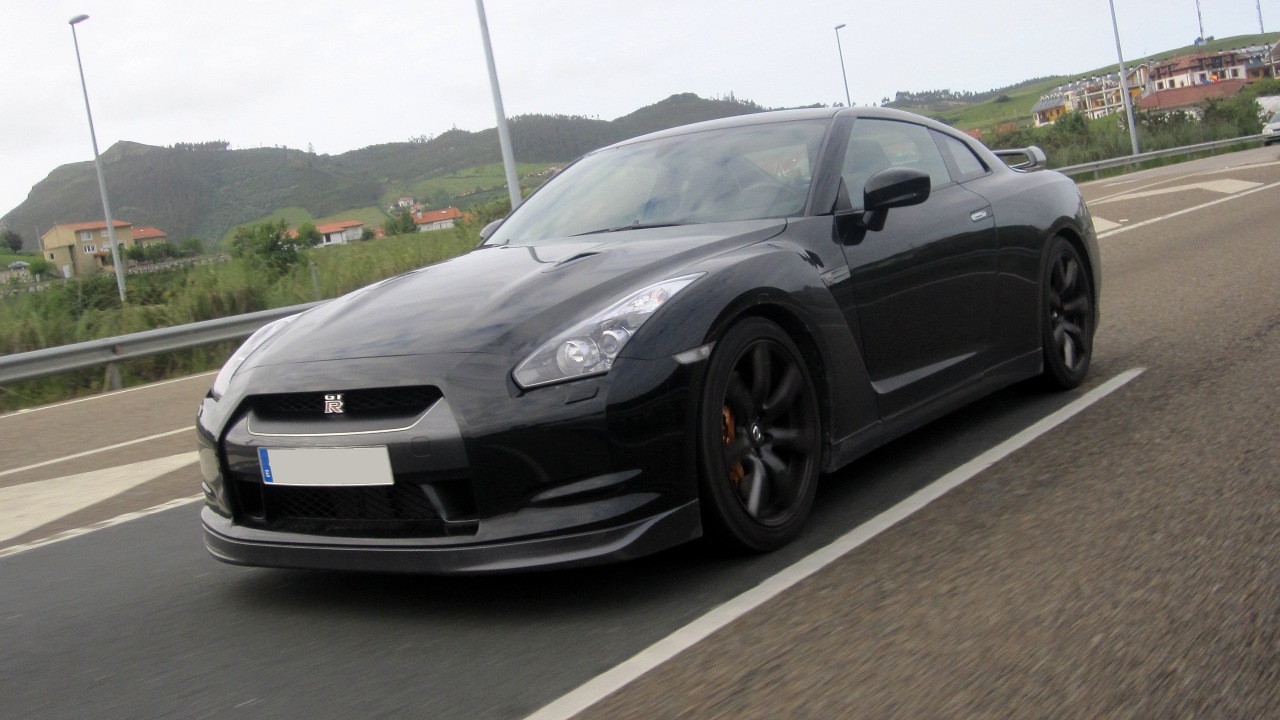
The 2009 Nissan GT-R arrived as a blunt instrument aimed at the world’s most rarefied supercars, but it carried a price tag that put it within reach of ordinary enthusiasts rather than lottery winners. With brutal acceleration, video-game electronics, and a reputation for humiliating exotics on track and on the street, it reset expectations for what a “budget” performance car could do. A decade and a half later, its mix of raw speed and relative affordability still explains why that first R35 is remembered as the supercar world’s most uncomfortable wake-up call.
Godzilla’s spec sheet was engineered to punch up
The R35 GT-R did not rely on mystique or badge prestige, it relied on numbers. When the Nissan GT first hit the market in 2009, its twin-turbocharged 3.8-liter VR V-6 was rated 480 hp and 434 lb-ft of torque, figures that put it squarely in the firing line of contemporary European supercars that cost far more. All-wheel drive and a rear-mounted dual-clutch gearbox turned that output into relentless traction, giving the car the kind of all-weather, all-surface performance that traditional rear-drive exotics struggled to match. The engineering brief was clear: build something that could run with the fastest cars on sale, then let the spec sheet do the talking.
That focus on hard data extended beyond the engine bay. Short final-drive ratios and closely stacked gears meant the GT-R stayed deep in its power band, a trait that independent testing described as “Short Gearing” and credited for its ferocious launches and lack of time-consuming shifts. The Nissan GT was calibrated so that even an average driver could access most of its performance without the finesse usually required by high-strung supercars. The result was a car that felt more like a precision tool than a temperamental toy, and that usability would become a key part of its reputation as a giant killer.
Lap times that shamed the establishment
On paper, the GT-R’s power and grip looked impressive, but it was on track where the car truly embarrassed its rivals. Nissan publicly announced that its new coupe had lapped the Nürburgring Nordschleife in under 7 minutes 30 seconds, placing it among the fastest production road cars to tackle the Ring at the time. That benchmark mattered because the circuit had become an unofficial proving ground for supercar bragging rights, and a sub-7:30 lap from a car priced well below the usual suspects sent a clear message that the performance hierarchy was changing.
Head-to-head testing reinforced that point. In one comparison at the Nürburgring, a 2009 Porsche 911 GT2 recorded a lap of 7 minutes, 49 seconds, while the Nissan stopped the clock at 7 minutes, 56 seconds. The Porsche was 6.9 seconds quicker, but it also carried a significantly higher price and demanded more from its driver to extract that edge. The GT-R’s ability to run within a handful of seconds of a hardcore 911 on one of the world’s toughest circuits, while costing far less and offering all-weather usability, underlined why it was quickly labeled a supercar killer rather than just another fast coupe.
Brutal acceleration without exotic money
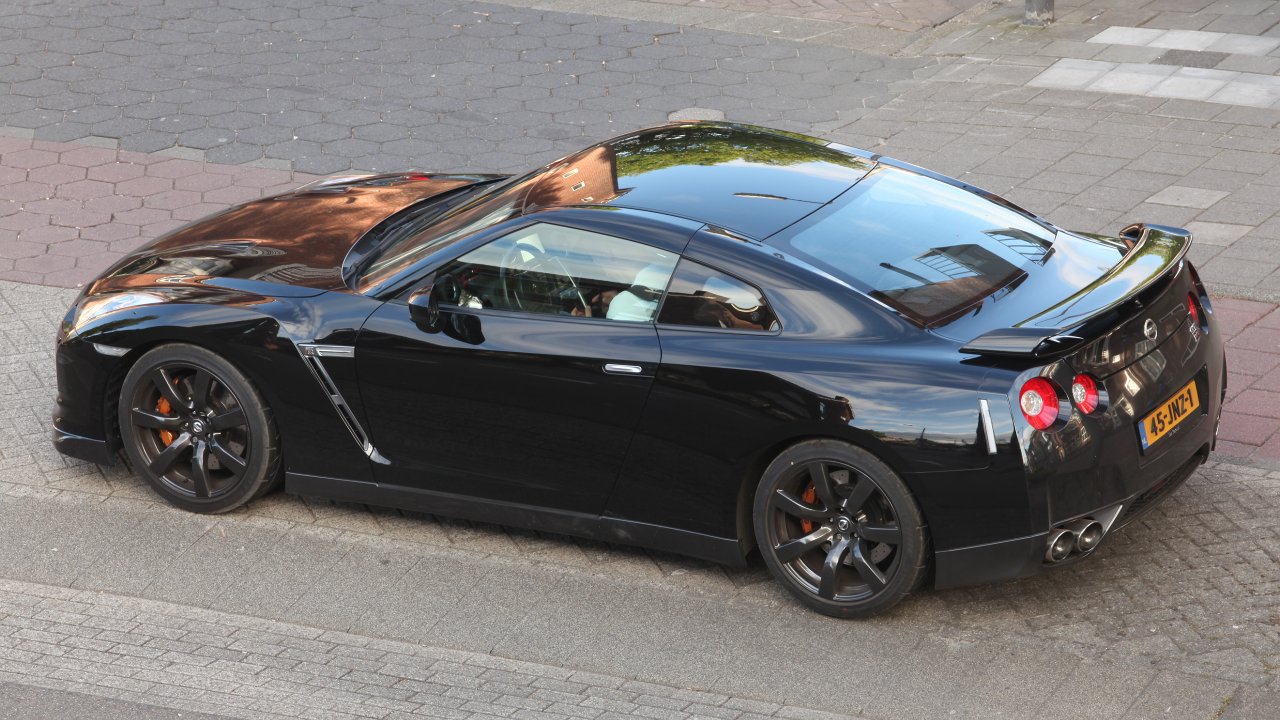
Straight-line performance was where the GT-R’s value proposition became impossible to ignore. Independent acceleration tests showed the car launching with a violence that rivaled far more expensive machinery, a product of its all-wheel-drive system, launch control programming, and that aggressively Short Gearing. The Nissan GT could rip through the quarter mile with a consistency that made it feel more like a high-end drag machine than a street car, yet it remained docile enough to commute in and drive year-round.
That dual personality was central to its appeal. Reviewers who sampled early cars described them as “built like the battleship Yamato,” highlighting a sense of solidity that contrasted with the fragility often associated with exotic hardware. By the standards of the time, the GT-R delivered supercar acceleration and track pace without demanding supercar compromises in reliability or day-to-day comfort. For buyers who wanted numbers first and leather-and-wood luxury second, it was a compelling trade.
The price that rewrote the supercar value equation
Performance alone did not make the 2009 GT-R disruptive, the sticker did. Carrying a base price of $77,840, the car undercut many of the European exotics it was chasing by a six-figure margin. On a pure cost-per-second-of-lap-time basis, it was almost impossible to match. That is why period assessments framed its value in stark terms, arguing that the combination of capability and price made it a bargain even if the number on the window sticker did not look cheap at first glance.
Part of how Nissan achieved that pricing came down to priorities. Enthusiasts have long noted that The GT-R is as fast as a Ferrari, but the interior is a lot closer to an Altima. Also, the brand did not load the car with the kind of bespoke materials and hand-finished details that inflate the cost of Italian or German exotics. Instead, it invested in powertrain, chassis, and electronics, accepting a more ordinary cabin in exchange for extraordinary performance. That trade-off helped keep the GT-R at a fraction of the price of traditional supercars while still delivering the numbers that mattered to its target audience.
A “people’s supercar killer” that still casts a long shadow
The cultural impact of that first R35 went beyond lap times and spec sheets. From the outset, it was marketed as a supercar for anyone, anytime, anywhere, a phrase that enthusiasts quickly adopted as shorthand for its mission. Over time, that positioning evolved into the idea of the people’s supercar killer, a car that could be bought used for less than $100,000 yet still run with or outrun far more expensive rivals. Even as later model years grew more powerful and more expensive, the early cars retained a special status as the purest expression of that original brief.
The GT-R’s ongoing presence in motorsport, tuning culture, and online car media has only reinforced that legacy. Modern coverage still describes it as a supercar killer that can keep rivals in the rearview mirror, and comparison tests between early and later GTRS show how little the core formula has needed to change. Plus, the car continues to command an aura drawn from classic GT-Rs that have left their mark on racing and car culture. When I look back at the 2009 model, I see a machine that did not just embarrass supercars on a budget, it permanently shifted expectations of what a high-performance car at that price could and should do.
More from Fast Lane Only: