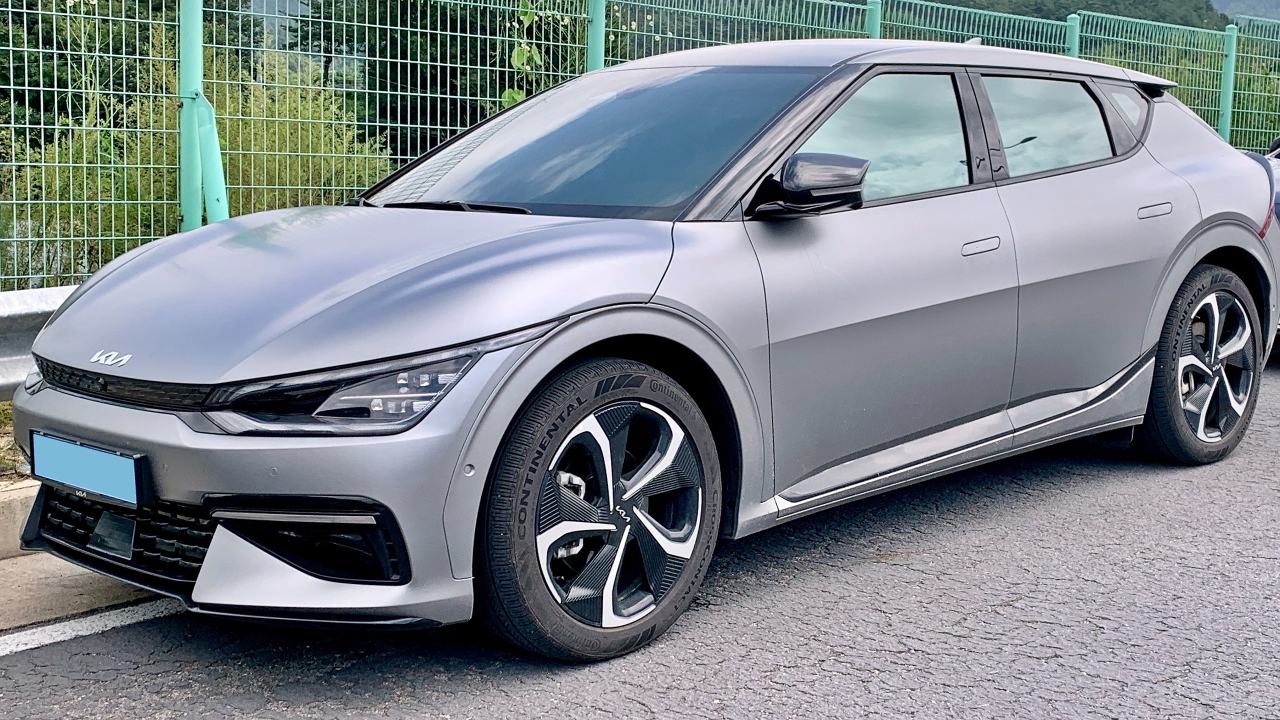
The 2022 Kia EV6 GT arrived with a blunt mission: prove that Kia could build a genuine performance car in the electric era, not just a sensible crossover with a big battery. Instead of chasing range trophies or minimalist design trends, it went after acceleration figures, chassis tuning and driver modes that would not look out of place on a European sports sedan. In doing so, it turned a pragmatic EV platform into a halo model that could credibly chase performance respect rather than just value plaudits.
From sensible crossover to performance flagship
When I look at the EV6 family, the GT stands out as the car that pushed Kia from “smart choice” to “serious threat” in the performance conversation. Earlier EV6 variants already drew comparisons to the Porsche Taycan for their balance of comfort and handling, with reviewers noting that the car drove in the same vein as the lauded Porsche Taycan rather than a soft crossover. That groundwork mattered, because it meant the GT did not have to invent a sporty character from scratch, it only had to turn up the volume on a chassis that was already praised for being a great steer and for cutting its 0 to 100 km/h time to about 5.2 seconds in all wheel drive form.
The GT then reframed the EV6 as a flagship rather than just another crossover in the lineup. Coverage of Kia’s broader transformation has pointed to the 2022 Kia EV6 as one of the turning point models that helped shift the brand from cheap to cool, listing it with details like Make Kia, Model EV6, Segment crossover and Engine Electric Motor with base outputs starting at 167 horsepower. By taking that mainstream architecture and turning it into the fastest Kia ever made, the GT became the emotional top of the range, the car that dared Kia to dream bigger and that signaled to enthusiasts that performance was now part of the brand’s core identity, not an afterthought.
Numbers that finally backed up the talk
Performance credibility starts with hard numbers, and the EV6 GT arrived with figures that were impossible to ignore. Independent testing and reviews have highlighted that the car can sprint from 0 to 62 mph in just 3.5 seconds, which is a full 1.2 seconds quicker than the already brisk Stinger GT. That gap matters, because the Stinger was previously Kia’s performance calling card, and beating it so decisively on a benchmark sprint put the EV6 GT into territory usually reserved for high end sports cars and super sedans, not family crossovers.
Those gains did not come for free, and Kia was transparent that the GT would sacrifice some range in the name of speed. Company estimates pegged the GT’s driving distance at about 206 miles, a noticeable drop compared with up to 310 miles for the long range EV6 variants. That trade off underlined the car’s priorities: this was the version built to chase lap times and acceleration bragging rights rather than maximize highway legs. Yet the underlying 800 volt architecture still allowed the battery to charge from 10 to 80 percent in roughly 18 minutes on a 350 k level Electrify America DC fast charger, which meant that even the performance flagship retained the rapid charging capability that made the broader EV6 lineup so usable in daily life.
Drift modes, twin motors and the feel of a real sports car
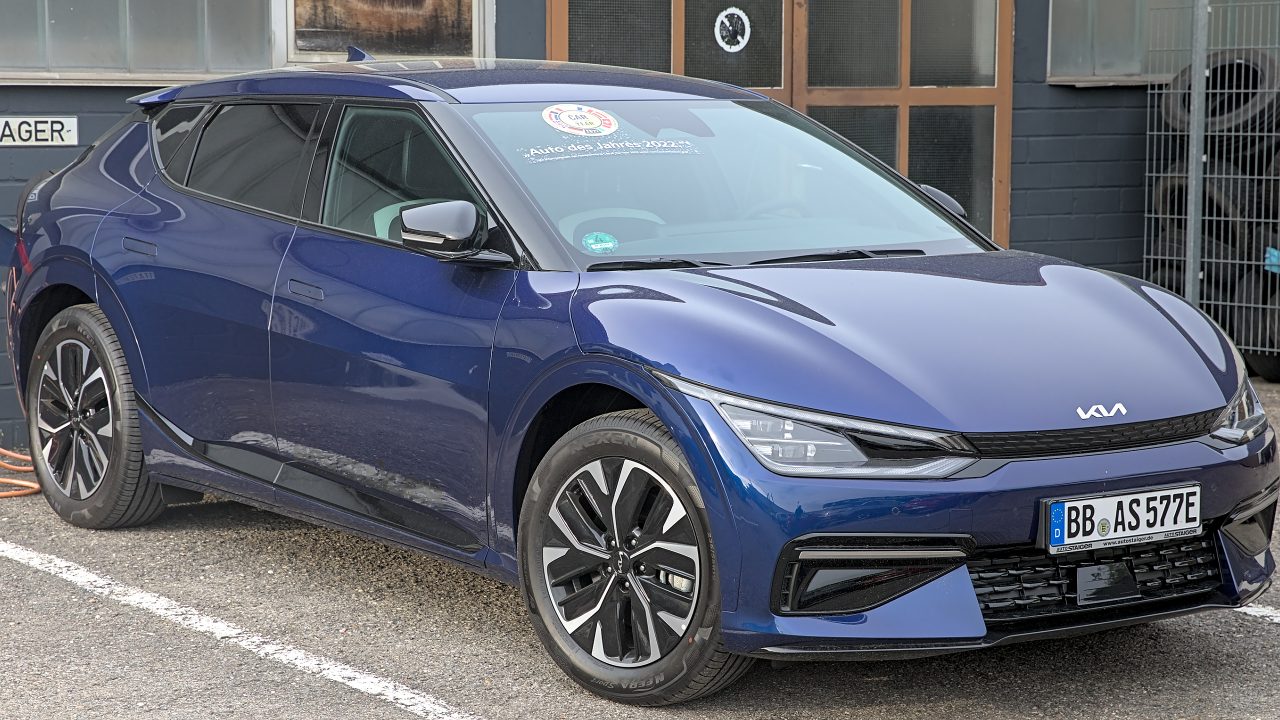
Raw speed alone does not make a performance car credible, so Kia leaned heavily into the way the EV6 GT drives. The car uses torquey twin electric motors, one at the front and one at the rear, to deliver all wheel drive traction with the immediacy that has become a hallmark of modern EVs. Reviews of the GT Line AWD versions already praised how impressive the acceleration felt from this twin motor setup, and the GT builds on that with more power, stiffer tuning and a focus on driver engagement that goes beyond straight line thrust.
One of the clearest signals of intent is the inclusion of a dedicated Drift Mode. Kia has even added a Drift Mode into the mix that prioritizes rear motor power, dials back stability control and allows as much oversteer as the driver can handle, effectively turning a practical crossover into something that behaves like a rear drive sports car when asked. Dealer level performance guides spell it out plainly in Q and A form, answering “Does the Kia EV6 GT have a drift mode?” with a simple “Yes, the EV6 GT features a drift mode for controlled oversteer.” That kind of feature is not about commuting efficiency, it is about giving enthusiasts a tool to explore the chassis on track days and closed courses, and it aligns the EV6 GT with the playful side of performance culture rather than just the clinical pursuit of speed.
Living with the fastest Kia ever made
For all the focus on lap times and drift angles, the EV6 GT still had to function as a daily driver if it wanted to win over buyers who might otherwise default to a Tesla or a German premium brand. Long term impressions from owners and reviewers have emphasized that what separates the Kia EV6 GT from supercars is not just how quick it is, but how practical it remains. Commentators have highlighted that you get blistering speed without sacrificing comfort or usability, with a cabin that still seats a family, a hatchback cargo area and the same basic ergonomics as the more sensible EV6 trims. That practicality is what allows the GT to serve as both a weekend toy and a weekday commuter, a combination that broadens its appeal beyond hardcore enthusiasts.
Living with the car has not been entirely without compromise, and some owners have pointed to the software as the weaker link compared with the hardware. A six month long term review of an EV6 GT noted that the car itself felt strong, but the interior interface and software experience lagged behind the polish of the drivetrain. Even so, the underlying platform’s ability to charge quickly, its comfortable ride and its generous equipment list have helped offset those frustrations for many drivers. In markets where Tesla is taking scalps in the EV passenger segment and where buyers also face mega COE prices and other ownership costs, the EV6 GT’s blend of performance and practicality has become a key part of its value proposition.
How the facelift and rivals sharpened the GT’s edge
The story of the EV6 GT’s performance credibility did not stop with the original 2022 model. A later facelifted version, tested on challenging roads in Scotland, arrived with more power and refinements that pushed it even closer to established performance benchmarks. Reviewers who drove that updated GT in Scotland described it as being as good as a Taycan but for roughly half the money, a comparison that would have sounded far fetched when Kia was still known primarily for budget compacts. That kind of praise suggests that the GT has not only matched its initial promise but has continued to evolve as a serious driver’s car.
At the same time, the competitive landscape has only intensified, with Tesla continuing to dominate mindshare and other brands rolling out their own high performance EV crossovers. In that context, the EV6 GT’s combination of twin motor power, Drift Mode theatrics and rapid charging has helped it stand out as more than just a spec sheet rival. Enthusiast reactions, including informal performance reviews that describe the car on a favorite road with phrases like “this thing rips” and note how well the brakes hold up, reinforce the sense that the GT delivers an experience that feels cohesive rather than gimmicky. For a brand that once had to fight perceptions of being cheap, the fact that drivers now debate whether the EV6 GT is a fitting successor to the Stinger and compare it favorably with cars like the Porsche Taycan is perhaps the clearest sign that Kia’s performance ambitions have been taken seriously.
More from Fast Lane Only: