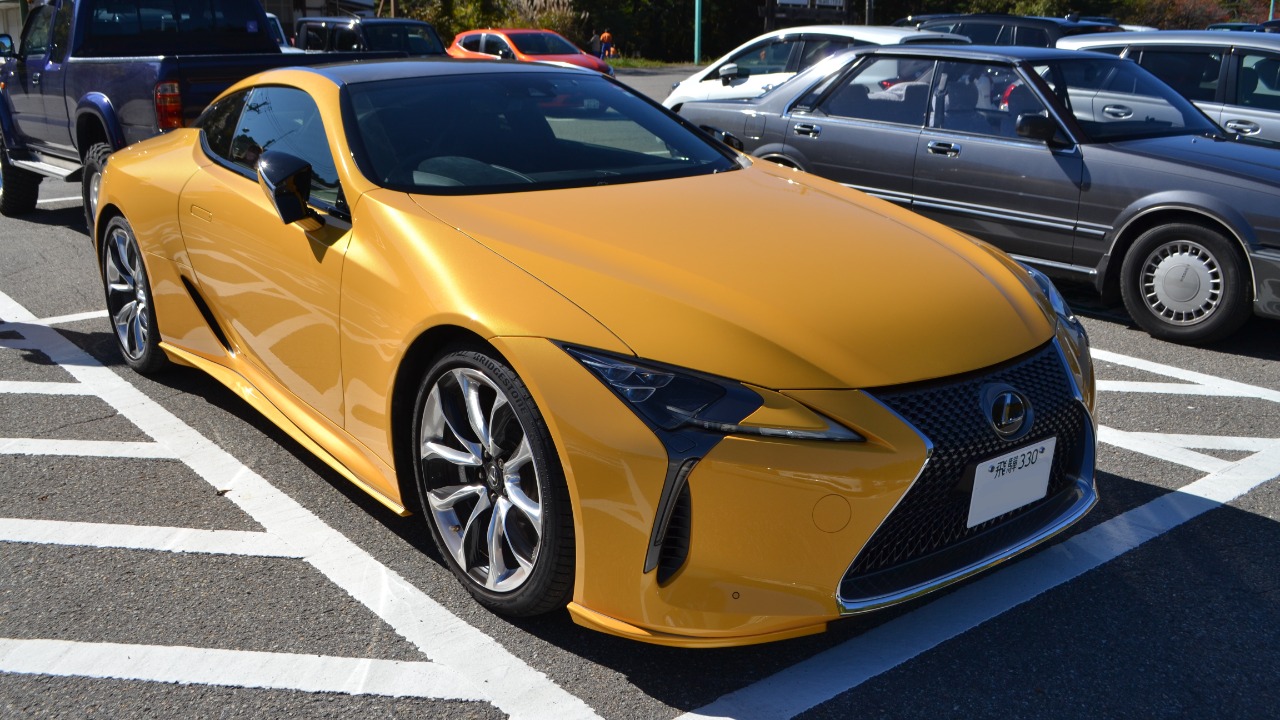
The 2023 Lexus LC 500 arrived at a moment when almost every performance car seemed to be trading cylinders for efficiency, yet this coupe doubled down on a naturally aspirated V8 that lives for revs and noise. Instead of chasing lap times with turbos and hybrid boost, it focused on drama, feel and a sense of occasion every time the starter button is pressed. I want to unpack how that decision shaped the car’s engineering, its sound and even its future place in a shrinking world of big engines.
The last romantic V8 in a data-driven era
From the outside, the LC looks like a concept car that somehow slipped past the accountants, but its real rebellion sits under the hood. The standard LC 500 uses a front-engine, rear-wheel-drive platform that was developed specifically to deliver a “uniquely exhilarating driving” experience, not just a set of numbers for a spec sheet, and that philosophy is baked into the way the chassis, suspension and steering all work together around the V8. In an age of configurable drive modes and digital trickery, the basic layout is old-school, with the engine up front, power sent to the rear and the driver sitting low in the middle of it all, as described in the official 2023 LC brochure.
The heart of that layout is a 5.0‑liter V8 that produces 471 horsepower, a figure that is quoted as the output of the “beating heart” of the LC 500 and that sets the tone for the entire car. Rather than relying on forced induction, this engine builds power with revs and rewards the driver for using the full tachometer, which is part of why reviewers keep highlighting how it “belts out” its 471 horses in a way that feels more emotional than clinical. That character is central to the LC’s identity, and it is captured clearly in performance write‑ups that focus on the 2023 LC performance rather than just its luxury credentials.
How Lexus engineered the “cry of angels”
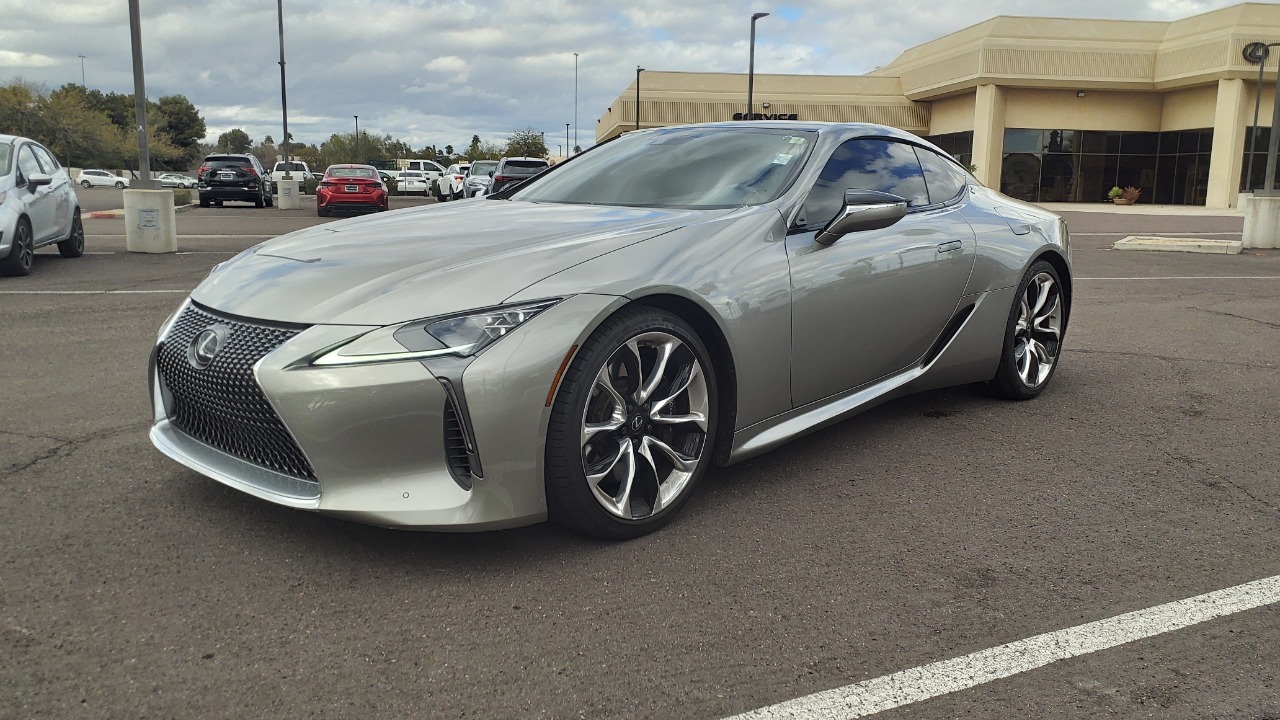
Plenty of cars are fast, but very few are memorable the moment they fire up, and Lexus decided early that the LC’s V8 needed to sound like more than just a big engine. Engineers talk about the exhaust note as a kind of mechanical music, and they even refer to it as the “cry of angels,” a phrase that hints at how carefully the sound was tuned. The system uses a complex silencer and pipe layout to create tonal richness and depth, with specific attention paid to how the exhaust pulses blend before they reach the main silencer so that the note rises cleanly with revs, a process detailed in the brand’s own look at the LC 500 exhaust sound.
Inside the cabin, the drama is amplified without resorting to fake noise, which is a key part of why the car feels so honest. Earlier coverage of the Lexus LC 500 made a point of noting that there is no artificial sound enhancement, but that the car uses a resonance tube to bring more of the natural V8 note into the interior, letting the driver hear the engine’s work without digital overlays. That same report tied the emotional impact of the sound directly to the engine’s 471 horsepower and 389 pound‑feet of torque, underscoring how the mechanical output and the acoustic experience are inseparable in this car, as described in a first‑drive review of the Lexus LC 500.
Natural sound in a world of fake theatrics
As more brands pump synthesized engine notes through speakers, the LC’s approach feels almost contrarian, and that has not gone unnoticed by enthusiasts. Owners and fans often point out that Lexus, on the LC 500 and the LFA, uses clever plumbing and acoustic tuning instead of digital tricks to get more of the engine’s real voice into the cabin, a choice that stands out in a market where even sports cars lean on software. One discussion about why more cars do not copy this “Lexus‑style natural sound amplification” highlights how rare it is to find a modern performance car that lets the engine speak for itself, and it singles out the Lexus and LFA approach as a benchmark.
That commitment to authenticity is also baked into the way the car greets its driver. Official material for the 2023 LC 500 describes how, upon startup, the V8 “thunders through” the exhaust system, creating an immediate connection between driver and machine before the car has even moved. The language used there is not the usual corporate understatement, and it reinforces the idea that the LC’s mission is to make every drive feel special, even if it is just a commute. The same document, labeled “WHAT’S NEW: 2023 LC 500 / 500h,” comes out of PLANO and opens with the word “Since,” but the detail that sticks with me is the way it frames that first bark of the 500 V8 startup as a defining part of the car’s character.
Luxury, aging hardware and the LC’s grand touring brief
Spend time in the LC and it becomes clear that the car is not trying to be a track weapon, and that is part of why the V8 feels so at home here. The cabin is trimmed in rich materials, with intricate stitching, sculpted door panels and a dashboard that looks more like a concept interior than a mass‑production design, which is why some reviewers argue that it looks more expensive than its price suggests. One detailed review of the 2023 Lexus LC 500 V8 even notes that the car seems like a bargain when you consider how it looks inside and out, while also acknowledging that some of the underlying technology is starting to feel its age, a tension that is captured in a critique of the LC 500 getting old.
That sense of being both lavish and slightly out of time is part of the LC’s charm for me. A separate deep dive into the car’s value proposition describes how “The LC Packs Everything But The Kitchen Sink,” from comfort features to safety tech, and frames The LC as one of the most underrated six‑figure cars on sale. The argument there is that the combination of a hand‑crafted feel, a naturally aspirated V8 and a grand touring ride quality makes the LC stand apart from more clinical rivals, and that the car’s generous equipment list only reinforces that impression, as laid out in a piece that calls The LC Packs Everything But The Kitchen Sink.
From hybrid option to V8‑only future
When the LC first arrived, it was offered with both a V8 and a hybrid powertrain, but the market and the brand’s own decisions have gradually nudged it toward a purer identity. Enthusiast chatter around the model’s future points to the LC500h being phased out, with one discussion explaining that, after nearly a decade of offering two distinct powertrains in the Lexus LC grand tourer, the Japanese luxury brand is moving to make the V8 the only option in both coupe and convertible form. That conversation frames the change as a kind of course correction, aligning the car’s lineup with the version that most closely matches its emotional appeal, as captured in a thread titled After nearly a decade of two powertrains.
At the same time, the LC’s V8 has started to be talked about as one of the last of its kind, especially as newer model years roll out with only minor tweaks. A video review of the 2024 Lexus LC 500 calls it “One Of The Last V8s Without A Turbo,” underlining how unusual it has become to find a big engine that breathes on its own in a modern luxury coupe. That same clip praises Lexus for sticking with this configuration and labels the LC as a kind of rolling tribute to naturally aspirated performance, a point that comes through clearly in coverage of the Lexus LC 500 as One Of The Last Without Turbo.
Why the LC 500’s V8 feels like a future classic
Looking ahead, I find it hard not to see the LC 500’s V8 as something enthusiasts will talk about in the same breath as the great engines of the past. Another in‑depth video review even asks whether this might be the “Best Japanese V8 Ever Built,” and while that is a subjective claim, it reflects how strongly the engine’s character resonates with people who care about feel as much as figures. The same review notes that, for the final model year, certain colors can no longer be ordered, a small but telling reminder that the LC’s time in showrooms is finite and that the V8 era is winding down, as discussed in a piece that labels the car a potential Best Japanese V8.
Even as the years and model updates roll on, the core of the LC 500 experience has stayed remarkably consistent, and that is exactly what makes it special. A separate video on the 2024 car again highlights the 500 badge and the way the engine defines the driving experience, reinforcing the idea that Lexus has chosen to refine rather than replace this powertrain. In a world racing toward electrification, the LC’s insistence on a naturally aspirated V8, carefully tuned sound and a grand touring mission feels almost defiant, and I suspect that is why the car is already being spoken of with the kind of affection usually reserved for classics, a sentiment echoed in coverage of the Mar review of the Lexus LC.
More from Fast Lane Only: