The Buick Gran Sport 455 occupies a short but pivotal window in American muscle history, combining big-block power with the comfort and finish that defined Buick in its prime. Collectors today are not just chasing nostalgia, they are tracking a market where limited production years and rising interest in period-correct performance are steadily reshaping values. I want to unpack exactly which years the Gran Sport 455 was built, how it fits into the broader Gran Sport story, and where prices are heading now that serious buyers are paying closer attention.
How the Gran Sport name evolved into the 455 era
The Gran Sport name did not appear out of nowhere in 1970, it was already an established performance badge inside Buick showrooms. The Gran Sport name has been used on several high-performance cars built by General Motors for its Buick brand since 1965, which means the 455-powered models arrived as a second-generation refinement rather than a first experiment. By the time the big-block cars appeared, Buick had already learned how to blend torque, trim, and a more upscale image into something that could stand apart from the louder Chevelle and GTO crowd.
That continuity matters for collectors because it anchors the Gran Sport 455 within a longer-running series rather than as a one-off curiosity. The Buick Gran Sport was introduced for the 1967 model year and, according to period coverage, the core line continued into the early 1970s before later GS models were produced from 1973 to 1975. When I look at the market data grouped under Buick Gran Sport (1967 to 1972), I see the 455 cars treated as the peak of that first wave of muscle, not an isolated submodel. That context helps explain why buyers often cross-shop earlier 400-powered cars and later 455s as part of a single narrative arc, even though the engines and performance figures changed significantly over that span.
Exactly which years Buick sold the Gran Sport 455
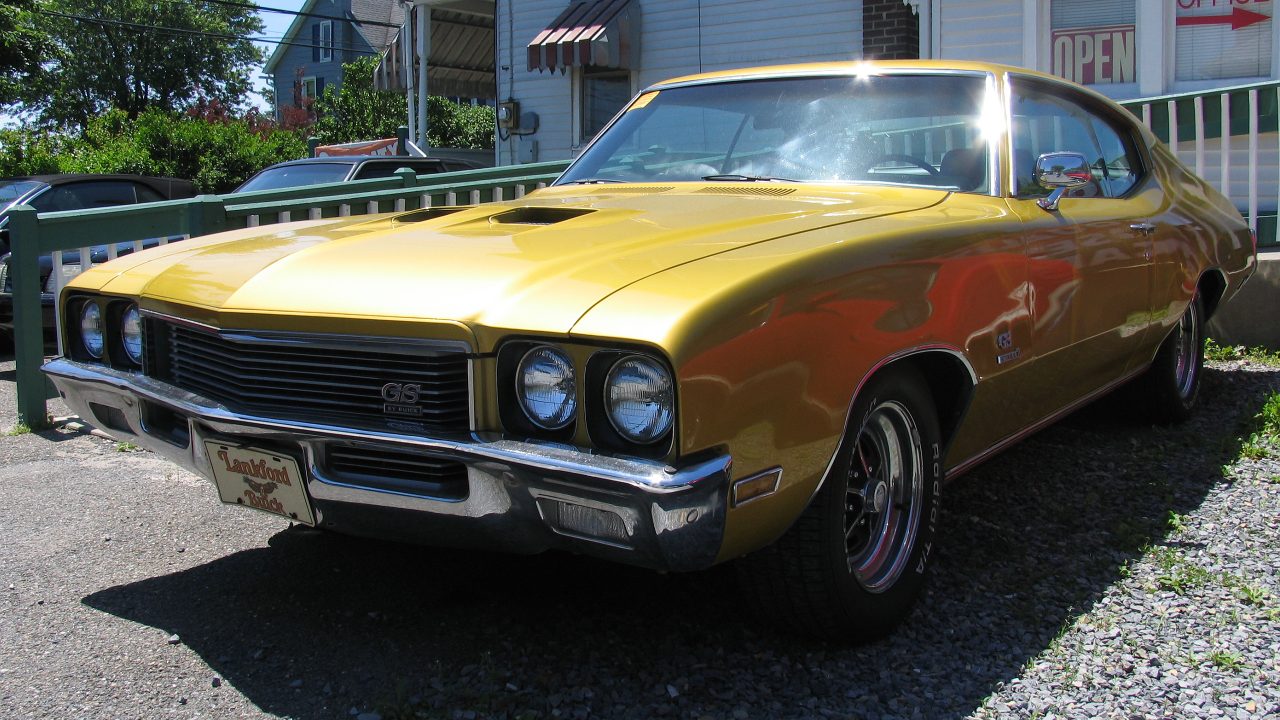
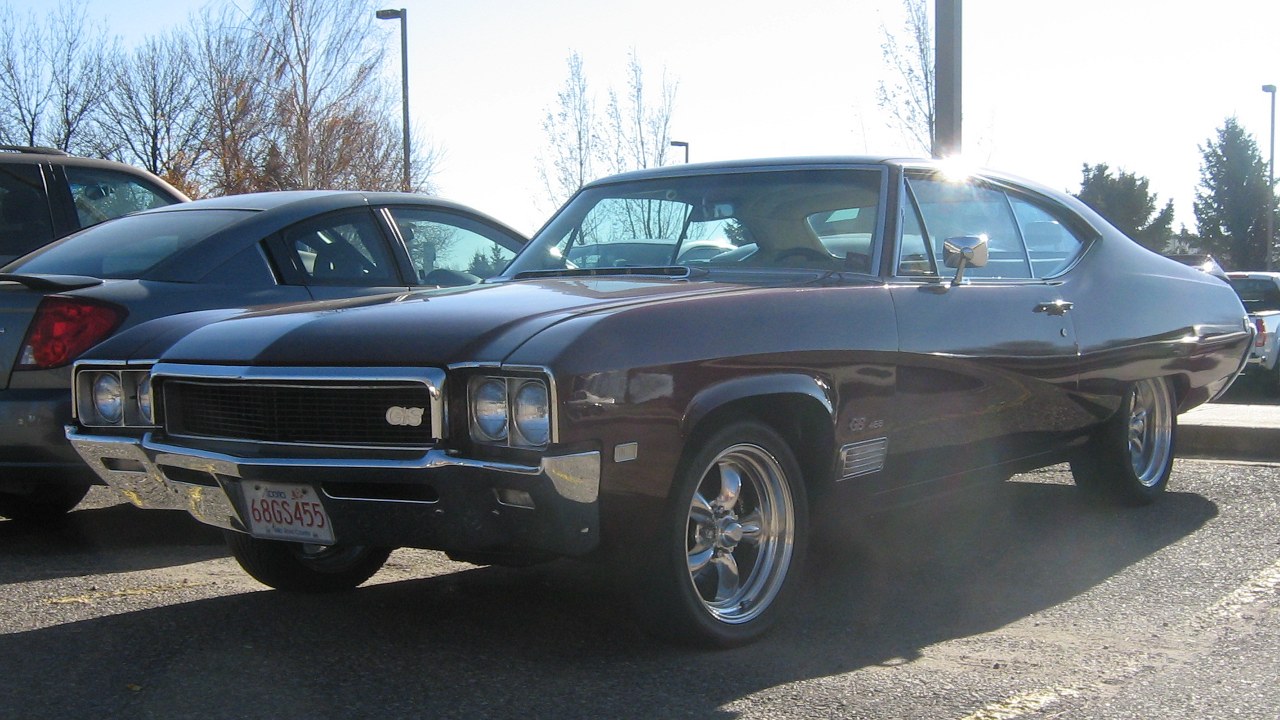
For anyone trying to decode badges and brochures, the key fact is that the Buick Gran Sport 455 was a variant of the Buick Gran Sport that debuted for the 1970 model year and ran through 1972. Market listings and model guides consistently group the Buick Gran Sport 455 (1970 to 1972) as a discrete subset, which lines up with the broader Buick Gran Sport (1967 to 1972) range. In other words, if a car is advertised as a factory Gran Sport 455, it should fall within that three-year window, even if later GS-branded Buicks carried different engines and emissions-era tuning.
Under the hood, the shift to the 455-cubic-inch big-block represented a clear break from the earlier 400-series engines. Production of the big Buick V8 family continued through 1976, and within that family the 400-based 455 was a key step in the evolution from the 399.95 cu in (6,554 cc) configuration to the larger displacement that defined Buick’s muscle peak. Period performance testing shows how dramatic that change felt on the street: Car Life managed 0 to 60 m in 6.1 seconds in a Buick GS fitted with the 455-cid, 340-hp V-8 in 1970, a figure that put the car squarely in the first rank of Detroit performance at the time. When I match those numbers to the model-year breakdown, the 1970 to 1972 Gran Sport 455 run looks less like a footnote and more like Buick’s concentrated push to claim a share of the muscle-car spotlight before tightening regulations closed the window.
Performance character and the appeal of Stage I cars
Within the already potent Gran Sport 455 lineup, the Stage I package has become the focal point for enthusiasts and investors. The 1970 Buick GS 455 Stage I is often cited as the most desirable configuration, combining the 455-cid, 340-hp engine with upgraded internals and carefully tuned induction and exhaust. Contemporary testing that recorded 0 to 60 m in 6.1 seconds in 1970 underscores how competitive the car was against better-known rivals, while still delivering the quieter cabin and richer trim that Buick customers expected. That dual personality, quick off the line yet more refined than many peers, is a big part of why Stage I cars now command a premium.
The story did not end with the 1970 model year. Though a given engine’s actual output did not change from 71 to 72, net figures made for some startling numbers on paper, especially for the 72 G S 455 that suddenly looked weaker in brochures even though the real-world experience remained similar. That disconnect between advertised and actual performance has become part of the lore that surrounds late-stage muscle cars, and it helps explain why informed buyers pay close attention to documentation and period testing rather than relying solely on factory ratings. When I look at coverage of the 1971 Buick GS 455 Stage I, I see the same basic mechanical formula carried over, which means later Stage I cars still deliver the core driving experience that collectors want, even if their published horsepower figures appear more modest.
How rarity and history shape Gran Sport 455 values
Market data shows that the Gran Sport 455 sits at the upper end of the Buick performance spectrum, but it is still more attainable than some headline-grabbing muscle icons. The Buick Gran Sport market overview for 1967 to 1972 notes that the highest recorded sale was $285, a truncated figure that clearly signals a six-figure result when read in context, while the average price for a Buick Gran Sport is $61,945. Within that broader pool, the Buick Gran Sport 455 subset from 1970 to 1972 tends to trade higher than small-block or earlier mid-range cars, reflecting both the limited production window and the performance credentials tied to the 455 engine.
Stage I variants sit on an even steeper curve. Valuation tools for the 1970 Buick GS 455 Stage I describe a spread that widens sharply as condition improves, with cars in good condition and average spec already commanding a significant premium over driver-grade examples. A similar pattern appears when I examine the 1971 Buick GS 455 Stage I, where guidance notes that the value can vary greatly depending on condition, mileage, options, and history, and that a Stage I in good condition with average spec occupies a distinct tier above standard GS 455 models. That stratification is typical of the muscle market, but in the Buick world it is amplified by the relatively small number of surviving, well-documented Stage I cars compared with more common Chevrolets or Pontiacs.
Current price trends and what buyers are paying for
Recent sales data for the Buick Gran Sport 455 (1970 to 1972) suggests a market that has matured beyond speculative spikes and is now rewarding originality and documentation. When I scan multi-year transaction records grouped under the Buick Gran Sport 455 market, I see a steady baseline for solid driver-quality cars, with sharper appreciation at the top end where low-mileage, matching-numbers examples trade hands. That pattern fits with the broader Buick Gran Sport (1967 to 1972) segment, where the average price of $61,945 masks a wide spread between project cars and concours-level restorations. The key takeaway is that the 455 badge alone does not guarantee a windfall; buyers are paying for verified history, correct drivetrains, and high-quality work.
Stage I convertibles illustrate how scarcity can turbocharge that trend. Coverage of the 1970 GS 455 Stage I convertible notes that, despite its thrilling looks and performance, the Stage 1 was not a massive hit in the marketplace, mostly because of its higher price and Buick’s more conservative buyer base. That relative indifference at the time has created a very different reality today, where surviving Stage I convertibles sit near the top of the Buick value chart. When I compare those stories with current valuation tools for the 1971 Buick GS 455 Stage I, which emphasize how values swing with condition and options, it is clear that the market is discriminating rather than indiscriminately hot. Collectors are willing to pay up, but only when the car’s specification and paperwork justify the premium.
What the Gran Sport 455’s future looks like in the collector market
Looking ahead, I see the Gran Sport 455 positioned as a solid, if still slightly underappreciated, pillar of the classic muscle segment. The fact that Production of Buick’s big-block V8 family continued through 1976 means parts and expertise remain more accessible than for some rarer engines, which supports long-term ownership and restoration. At the same time, the specific 1970 to 1972 Gran Sport 455 run is finite, and the most desirable Stage I cars are already tightly held. That combination of serviceability and scarcity tends to favor gradual, sustainable appreciation rather than boom-and-bust cycles.
For buyers and owners, the most important step is to understand exactly where a given car sits within the Buick Gran Sport hierarchy. A standard 1970 GS with the 455-cid, 340-hp engine in honest driver condition will track close to the broader Buick Gran Sport averages, while a documented Stage I, especially a convertible, can sit far above that $61,945 benchmark. The Gran Sport name has been used on several high-performance cars built by General Motors for its Buick brand since 1965, but the 1970 to 1972 Gran Sport 455 models remain the clearest expression of Buick’s big-block glory days. As more collectors recognize that, I expect the gap between well-sorted examples and compromised cars to widen, rewarding those who do their homework on years, options, and authenticity before they buy.