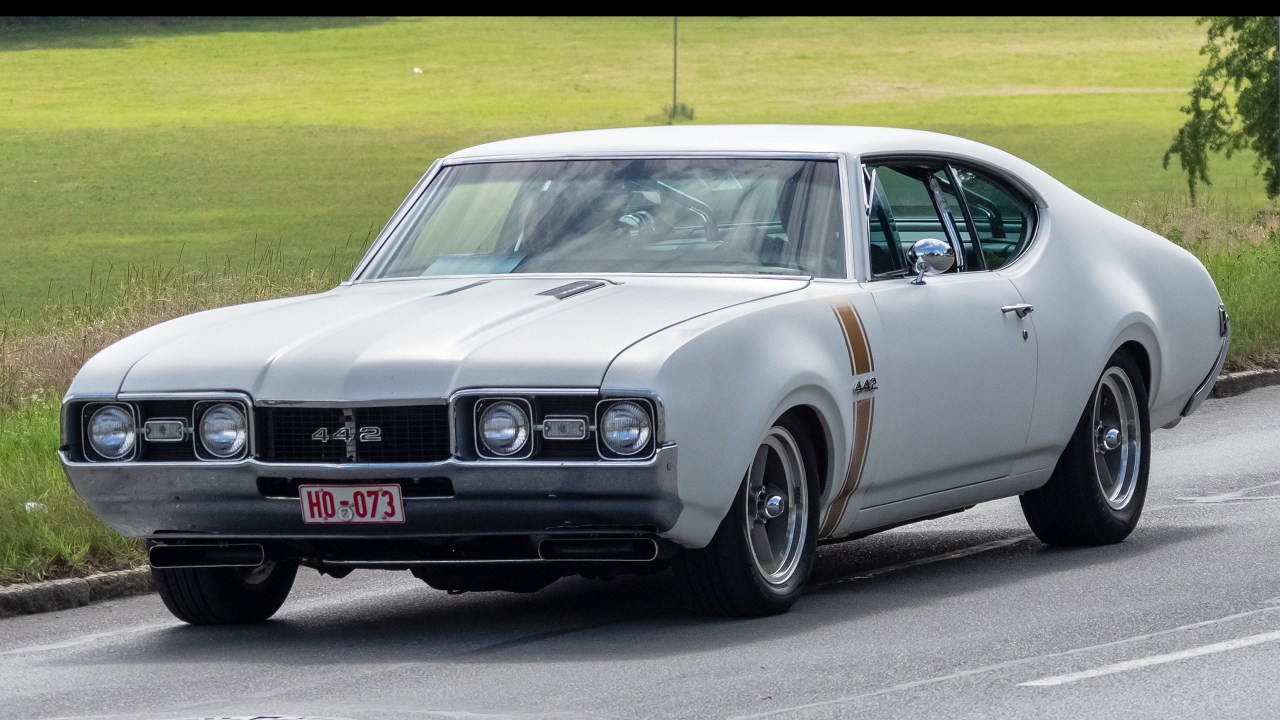
The Oldsmobile 442 W-30 sits at the intersection of Detroit performance and modern collectability, a car whose production run was short but whose impact on the muscle era was outsized. To understand what collectors pay now, I need to start with when Oldsmobile actually built the W-30 package, how it evolved across a few pivotal model years, and why certain body styles and options now command six-figure money.
That story runs from the 1960s origins of the 442 through the peak of the high-compression years and into the early 1970s, when insurance costs and emissions rules began to squeeze the option into rarity. Only by tracing that arc can I explain why a car that once served as a street-friendly performance option now trades hands at prices that rival contemporary exotics.
From option code to legend: how the 442 and W-30 came together
The 442 did not begin life as a standalone model, and that matters for understanding when the W-30 appears. The car was Introduced as an option package on the F-85 and Cutlass, then grew into its own line from 1968 to 1971, which set the stage for more focused performance variants. Earlier, in 1964, The Oldsmobile 442 originated as a package for the F-85 and Cutla models, and that incremental evolution is what allowed Oldsmobile engineers to bolt on increasingly aggressive hardware without reinventing the car each year.
By the time the second generation arrived, the brand had a clear performance mission. Coverage of the model’s history notes that the 442 became a distinct series as part of the second generation that ran from 1968 through 1972, with the W-30 options remaining available during that span of peak muscle output. One detailed overview of the Oldsmobile 442 even frames the car’s story under headings like Oldsmobile 442 Highlights and The Rise and Fall of the Oldsmobile, underscoring how central those late‑1960s and early‑1970s years were to its identity. In that context, the W-30 was not a random special edition, it was the sharp edge of a broader Evolution of the performance line.
Peak years: when Oldsmobile actually built the 442 W-30
Within that broader timeline, the W-30 package emerged as the most serious street performance specification, and its golden window is surprisingly tight. Reporting on a super-rare convertible stresses that the high-compression years, especially from 1965 to 1971, built the legend of the 442, and that the W‑30 stood out as one of the most potent factory-built street muscle packages of the era. A feature on a 1971 ragtop, dated Jul 31, 2025, notes that production slowed in 1971 as insurance rates and regulations bit into demand, but the W‑30 still delivered serious performance even when paired with a three-speed Turbo-Hydramatic automatic, which shows how late in the game Oldsmobile kept the option alive for buyers who wanted both speed and comfort Yet it was the high-compression years.
The 1970 model year is widely regarded as the pinnacle, and the factory treated it that way. Corporate archives describe the 1970 Oldsmobile 442 as a second generation model that raised the bar in the muscle car horsepower race of the day, and they highlight how the W‑30 package sat at the top of that lineup. With the W3‑series performance equipment, the car even served as a pace car for the Indianapolis 500 that year, which underlines how seriously Oldsmobile took the program With the factory’s full backing. A separate enthusiast history of the 1970 Oldsmobile 442 W-30, dated Jun 2, 2025, describes that specific configuration as a legendary muscle car that blended raw power with refined engineering, reinforcing why collectors now treat 1970 W‑30s as the benchmark specification for the entire run of the option Jun.
Production numbers and body styles that move the market
Scarcity is the other half of the W‑30 story, and the numbers get very small once you drill into specific years and body styles. A detailed breakdown shared on Jan 11, 2024, by an owner who tracked factory records notes that General Motors offered a 1970 Oldsmobile 442 W‑30 Convertible and that only 264 examples were built in 1970. That same discussion includes a personal reference to having 1 of 264 70 W‑30 convertibles and even mentions a specific car identified as #125, which gives a sense of how granular the community’s record‑keeping has become around these cars Who. When production runs are counted in the low hundreds, every surviving example becomes a known quantity, and that transparency tends to support higher prices.
The 1971 model year tightened the funnel even further. A profile of a 1971 Oldmosbile 442 W30 explains that the car was Built as a response to the Pontiac GTO, with Oldsmobile positioning the 442 as a performance option on the Cutlas platform, but by 1971 the combination of rising insurance rates and soaring gas prices had already started to choke demand. That context helps explain why a 1971 W‑30 convertible can be described as one of just a few dozen built, and why a single car can attract outsized attention among collectors Built. When I look at the market today, those tiny production figures for convertibles, combined with the broader reputation of the 442 line, are a key reason why the most desirable W‑30s now trade at values that would have seemed unthinkable when they were simply used muscle cars.
How much collectors pay for a 442 W-30 today
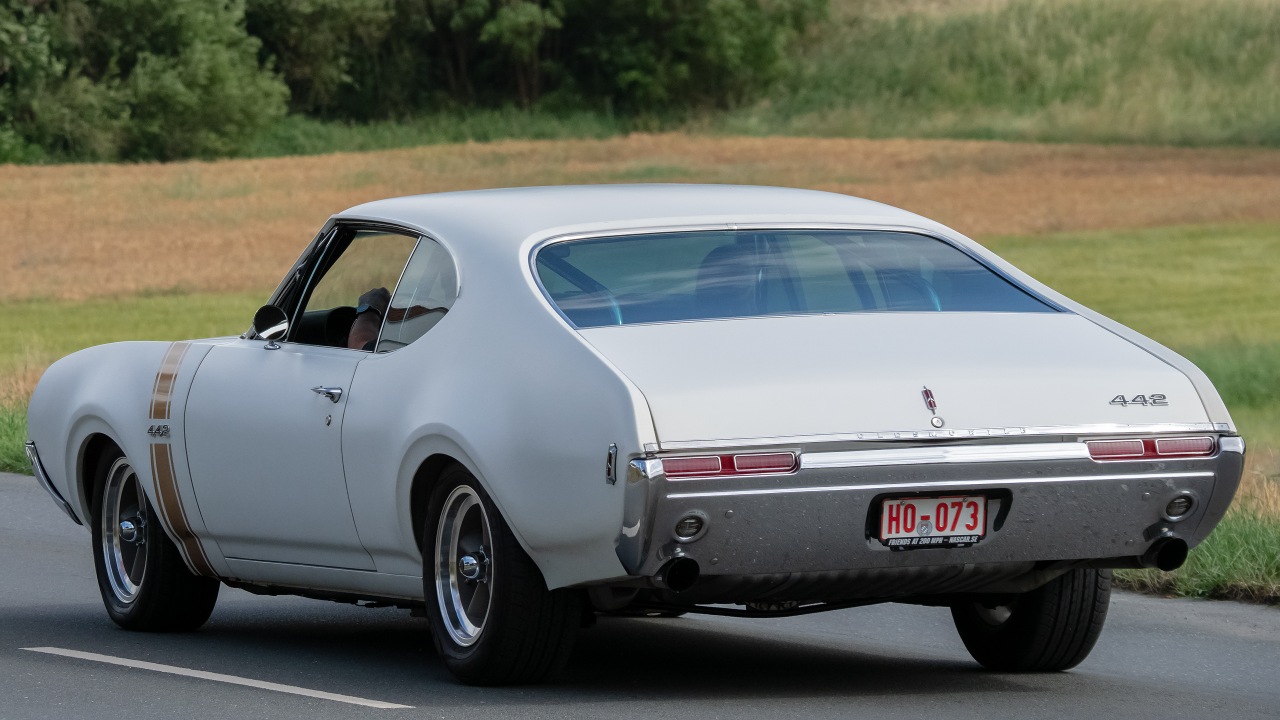
Modern pricing for the W‑30 reflects both that scarcity and the car’s place in muscle car lore. A valuation snapshot for the 1970 Oldsmobile 4‑4‑2 W‑30 shows Past sales that include a 1969 Oldsmobile 4‑4‑2 W‑30 that Sold for $76,680 in North America on Nov 8, 2025 at a GAA Classic Cars auction, alongside a 1970 Oldsmobile 4‑4‑2 W‑30 that brought $57,330 at a separate sale. Those figures illustrate how even non‑convertible W‑30s, when presented in solid condition, now command prices that put them firmly in the upper tier of classic American performance cars Past. They also show a spread between model years that tracks with how collectors rank 1969 versus 1970 in terms of styling and performance.
Private‑market commentary lines up with those auction results. A detailed post dated May 23, 2024, focused on the 1970 Oldsmobile 442 W‑30, notes that in today’s classic muscle car collector’s market, a highly original, low‑mileage 442 W‑30 can sell for over $100,000. That same discussion emphasizes that such cars routinely fetch high prices at auction, especially when they retain factory drivetrains and documentation, which is consistent with the six‑figure results seen for the best examples $100,000. When I compare those numbers with the production totals for convertibles and the broader desirability of 1970 as a model year, it becomes clear why the very top of the W‑30 market has moved into territory once reserved for European sports cars.
Why the W-30 still matters to collectors
Values alone do not explain the W‑30’s staying power, and the way enthusiasts talk about the car helps clarify why it continues to climb. A detailed feature on what is described as the most pristine 442 W‑30 ever built lays out Fast Facts that trace The Oldsmobile 442 back to its origins in 1964 as an option package for the F‑85 and Cutla models, then follow its development into a standalone performance car. That narrative frames the W‑30 as the ultimate expression of a line that began as a modest handling and power upgrade, which is exactly how many collectors see it today Fast Facts. When a car represents the high‑water mark of an entire sub‑brand, it tends to attract long‑term enthusiasts rather than short‑term speculators.
Enthusiast histories reinforce that view by placing the W‑30 within a broader arc. A comprehensive timeline of Oldsmobile 442: Evolution of the 4‑4‑2 (1964‑1991), dated Mar 28, 2023, walks through the second generation from 1968 to 1972 and notes that W‑30 options remained available even as regulations tightened. It presents Oldsmobile 442 Highlights alongside a section titled The Rise and Fall of the Oldsmobile, which underscores how the W‑30 sits at the crest of that rise before the brand’s eventual decline Evolution of the. When I look at current auction data and private‑sale anecdotes through that lens, the premiums attached to clean, documented W‑30s make sense: buyers are not just paying for horsepower, they are paying for a tangible piece of Oldsmobile’s brief moment at the front of the muscle car pack.
What to watch if you are chasing a W-30
For anyone considering a 442 W‑30 today, the production and valuation history point to a few clear priorities. First, the 1970 model year remains the sweet spot, both because the 1970 Oldsmobile 442 is recognized in corporate archives as a second generation benchmark and because With the W‑30 equipment it represented the most aggressive factory specification of its time. Second, body style and rarity matter: the 264 convertibles built in 1970 and the tiny runs of 1971 ragtops sit at the top of the market, while hardtops and post cars offer a more accessible entry point without sacrificing the core W‑30 experience Oldsmobile. Finally, documentation is crucial, because the W‑30 package can be faked cosmetically, but not on paper.
Valuation tools and enthusiast forums provide a useful reality check. A dedicated pricing guide for the 1970 Oldsmobile 4‑4‑2 W‑30 aggregates recent sales and shows how condition, originality, and options move the needle, while also recording specific auction results that anchor expectations in real transactions Oldsmobile. At the same time, community discussions about the 1970 Oldsmobile 442 W‑30 muscle car’s features and history, including posts dated Jun 2, 2025 that celebrate the 442 as a blend of raw power and refined engineering, show how much of the car’s value now rests on its cultural status as much as its spec sheet 442. Put together, those threads explain why the Oldsmobile 442 W‑30, built in relatively small numbers from the mid‑1960s through the early 1970s, now commands prices that reflect both its rarity and its enduring pull on the muscle car imagination.