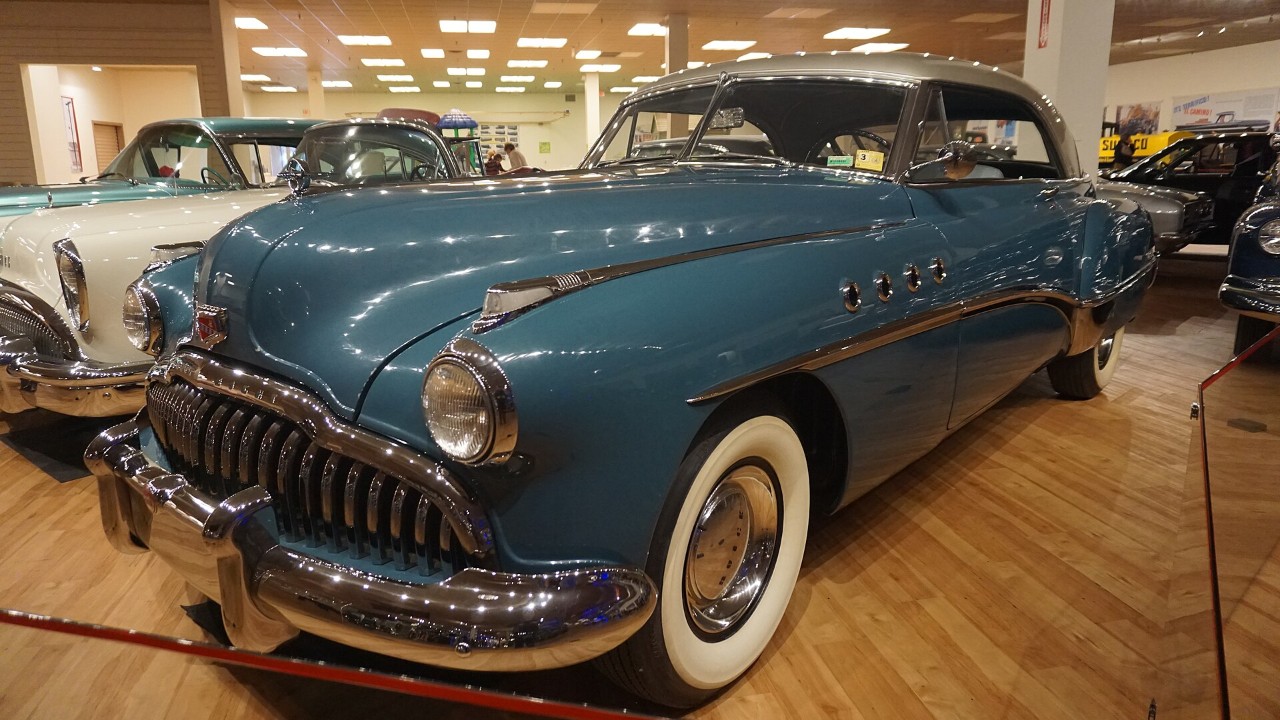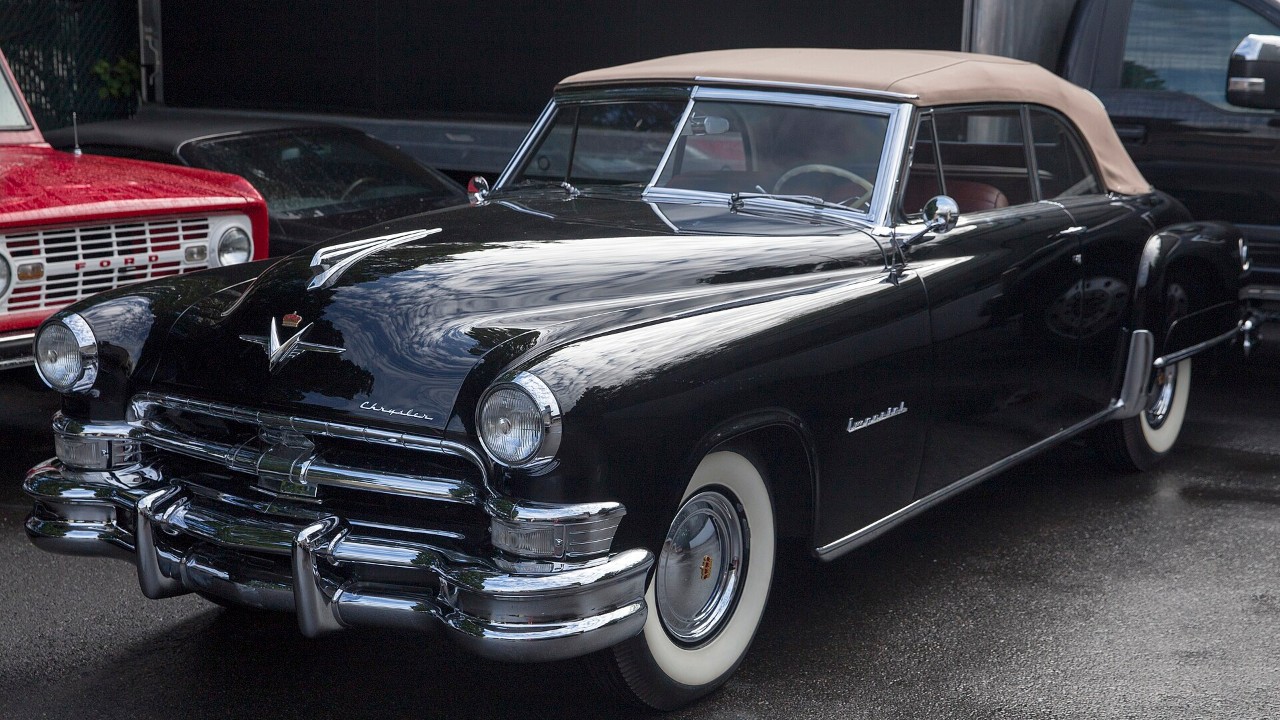
Chrysler’s Hydraguide power steering arrived on the 1951 Imperial, and no production car had offered anything like it before. In short, the system used engine-driven hydraulic pressure to do most of the work of turning the wheel. At first, on the regular Imperial, it was an extra-cost option. On the top Crown Imperial it came standard.
Today almost every car has assisted steering, so it is easy to forget how heavy a big sedan felt in 1950. A big luxury sedan took real effort to park. Hydraguide changed that, and within a few years the rest of Detroit followed.
The irony is that the idea was not Chrysler’s own. An engineer named Francis Davis had built a working system a quarter of a century earlier. Chrysler simply got it into a showroom first.
How Hydraguide power steering made the 1951 Imperial a first

The Imperial Club’s guide to the 1951 cars calls Hydraguide power steering “an industry first”. It also notes that Chrysler sold it as an option on the Imperial and made it standard on the Crown Imperial. The Truth About Cars likewise describes the system as “another industry first in a production car.” Goodwood, the British motoring site, calls it the first commercially available power steering.
Still, it was not cheap. According to The Truth About Cars, the option cost $226. That price put it firmly in luxury territory. In fact, it signaled that Chrysler treated Hydraguide as a luxury feature, in line with the Imperial’s role at the top of the range.
Chrysler’s own brochure was far less modest. It called the system “the most amazing mechanism ever designed for the automobile,” as PistonHeads recounts. The engineering gain, however, was simpler to measure. PistonHeads reports that the Chrysler steering gear cut lock-to-lock travel from 5.5 turns to 3.5.
The engineer who got there first
The story starts with Francis W. Davis, who worked at Pierce-Arrow until 1922. According to PistonHeads’ history of hydraulic power steering, Davis fitted his hydraulic system to a 1921 Pierce-Arrow roadster he owned. He then filed patents on a series of hydraulic steering ideas from 1927 onward.
Soon, General Motors noticed. After trying the system, GM signed a contract with Davis to use it on Cadillacs, and a prototype was ready by 1933. Then the Depression hit luxury-car budgets, and some people questioned whether cars even needed assisted steering. As a result, the Cadillac plan stalled.
Davis next turned to the Bendix Corporation, which took the system on and persuaded Buick to look at it. Even so, World War II put civilian power steering on hold. Meanwhile, Davis’s earliest patents ran out. PistonHeads says Chrysler based Hydraguide on those expired patents, which reflected the system Davis had used back in 1926. That’s why, in the site’s words, Davis “wasn’t to get a dime” from Chrysler’s breakthrough.
What else was new on the 1951 Imperial
Power steering was only part of the 1951 story. The Imperial Club notes that 1951 was the first year for the FirePower Hemi, Chrysler’s first overhead-valve V8. In the Imperial, The Truth About Cars says, it displaced 331 cubic inches and made 180 horsepower. Big power and easy steering made a strong pairing in a heavy car.
Meanwhile, the body lineup grew as well. In addition to the sedan, Chrysler added a two-door hardtop, a club coupe and a convertible. However, the convertible did not catch on. The Truth About Cars puts its debut-year sales at only 650, and Chrysler dropped it right away.
Shifting, by comparison, involved a clutch pedal. The Imperial Club explains that the semi-automatic Fluid-Matic Drive could be ordered with a torque converter, sold as Fluid-Torque Drive. Both versions kept a pedal labeled “Safety Clutch.” In other words, the 1951 Imperial mixed a very modern steering system with a transmission that still asked for some footwork.
How fast the rest of Detroit caught up
Even so, Chrysler’s lead did not last long. Goodwood notes that GM introduced power steering on a Cadillac in 1952. PistonHeads adds that Chevrolet brought it to more affordable cars in 1953. Mercedes-Benz followed with the 300 by March 1958.
Once buyers tried it, demand then climbed quickly. By 1956, according to PistonHeads, Detroit reported that more than one in four new cars left the factory with power steering. That year alone, more than two million cars rolled off the lines with it.
Davis lived to see his idea become ordinary equipment. PistonHeads calls him “the father of power steering” and notes that he died in 1978 at the age of 91. The top-line Crown Imperial that carried his idea as standard stayed rare: The Truth About Cars counts just 338 built in 1951 and 1952 combined.
More from Fast Lane Only