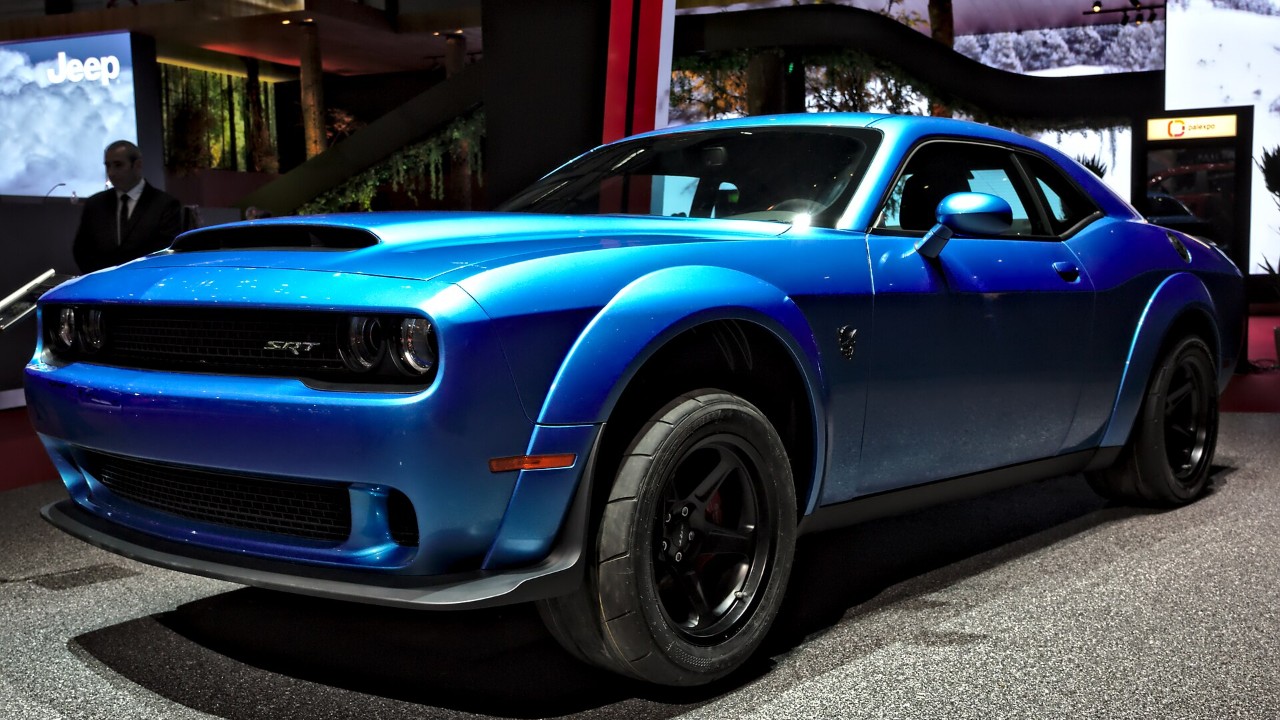
Chrysler built its Max Wedge engines for only three model years, from 1962 to 1964, yet they set the tone for a decade of factory drag cars. Detroit’s engineers wanted NHRA Super Stock trophies, and the showroom traffic that came with them.
Some of those cars now get the full collector treatment. Others, every bit as important on the strip, sit in their shadow. Meanwhile, the modern era added its own drag specials, built with warranties and window stickers instead of acid-dipped doors.
These are our picks for twelve drag cars that deserve to be the most collectible of their era. The verdict is our opinion, not a price forecast. The facts behind it come from factory figures, drag-racing records and period histories we checked, and we left out any number we couldn’t confirm.
1. 1962 Dodge Dart 330 Ramcharger 413
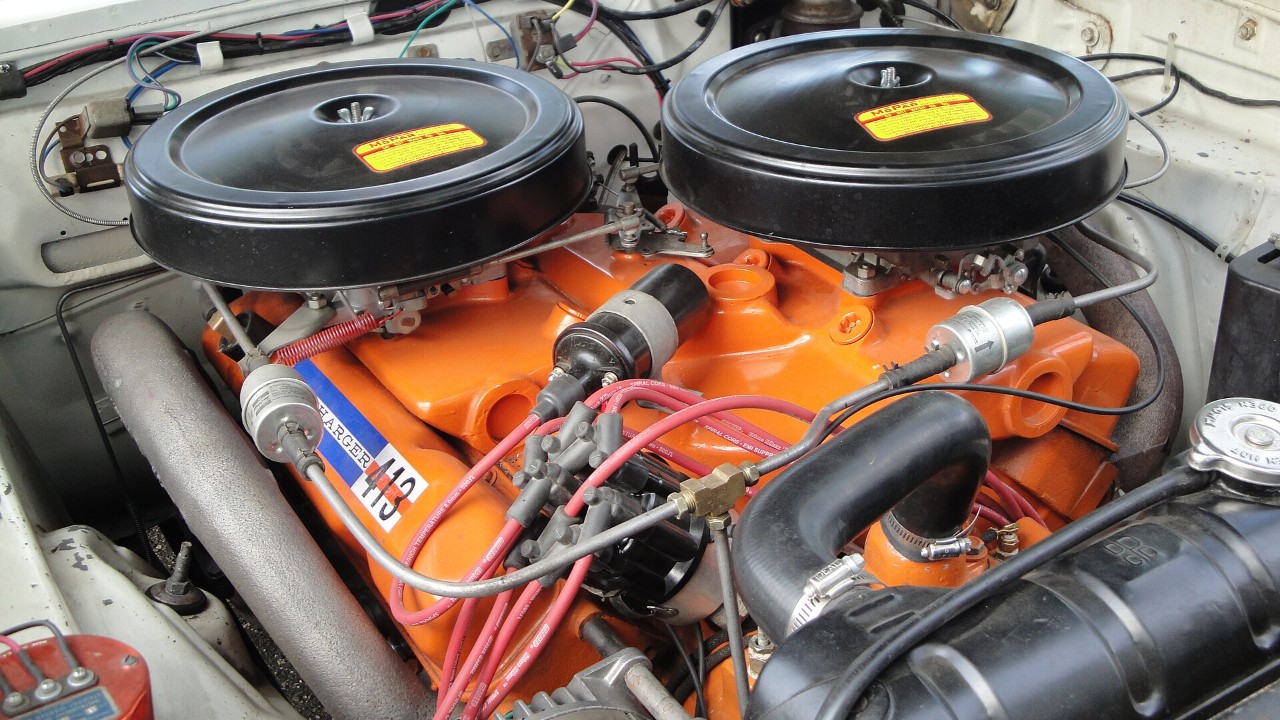
Chrysler’s engineers started work on the Max Wedge in 1959. It was a high-performance version of the RB big-block, fed by a “short ram” intake that grew out of Tom Hoover’s cross-ram designs. For 1962, Dodge sold it as the Ramcharger 413, while Plymouth called its version the Super Stock 413. It went only into the intermediate B-body Dodges and Plymouths.
The ratings were serious for the day. For example, with 11.0:1 compression, the 413 made 410 horsepower. Meanwhile, with 13.5:1, it made 420. Dodge built just 214 Ramcharger cars for 1962, and Plymouth built 298. The cars were street legal, but they were aimed squarely at Super Stock racing.
Our take: the Dart 330 is the plain-wrapper start of the whole Max Wedge story. It wears a modest trim badge. Even so, it carries the engine that put Chrysler on the map at the strip. With only 214 Dodges built, a documented car is a genuine find. If you ever see one, look for proof of the original engine first, because everything about its value rides on that 413.
2. 1963 Plymouth Savoy Max Wedge
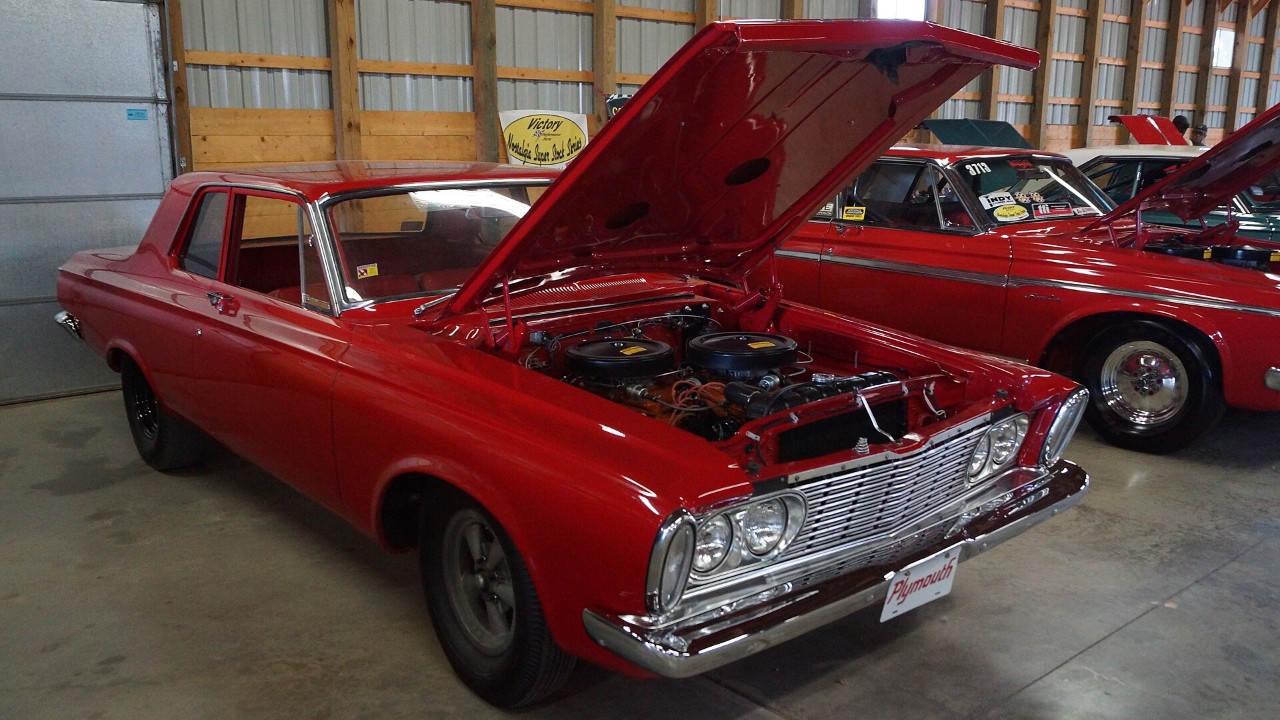
For 1963, Chrysler enlarged the Max Wedge to 426 cubic inches by opening the bore from 4.19 to 4.25 inches. As before, Plymouth sold it as the Super Stock 426. With 11.0:1 compression, it carried a 415-horsepower rating, and the 13.5:1 version claimed 425. Then, in May 1963, an improved “Stage II” engine arrived. Oddly, there never was an official Stage I.
The Savoy was the plainest model in Plymouth’s 1963 range, and that suited drag racers fine. After all, fewer frills meant less weight to haul down the quarter-mile. A Savoy with a Max Wedge looked like a fleet sedan, yet it was built to run with the fastest cars in the country.
We’d argue the 1963 Savoy is the purest expression of the early Mopar drag formula. It has no scoops, no stripes and no pretense. That makes it easy to overlook next to later Hemi cars, and that’s exactly why we think it deserves more collector attention. Before you buy, confirm whether the car carries a first-design engine or a Stage II, because the paperwork tells the story here.
3. 1963 Ford Galaxie 500 lightweight 427
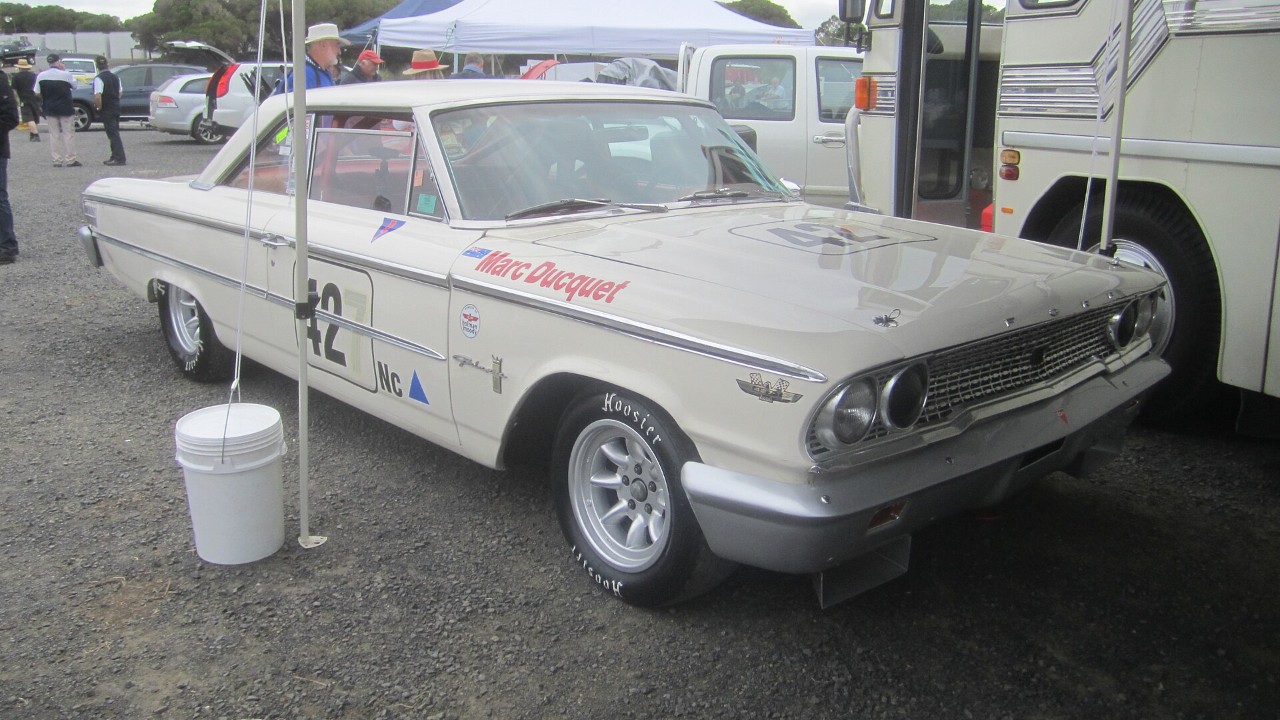
Ford answered Chrysler with a full-size fastback on a diet, announced in February 1963 as a “Special Lightweight Performance Vehicle.” The lightweight Galaxie used a 427 rated at 425 horsepower and 480 lb-ft, fed by two Holley four-barrels. Silodrome’s history of the car lists fiberglass hood, front fenders and decklid. It also lists aluminum bumpers, bell housing and transmission case, for a total saving of about 425 pounds.
Ford also stripped the cabin. The radio, heater, clock, horn and armrests went, and lightweight buckets replaced the bench. The result could run the quarter-mile in about 12.5 seconds. Silodrome counts 212 lightweights, all in Corinthian White. By contrast, RM Sotheby’s catalog puts the factory lightweight total at 50, so treat any production claim with care. RM Sotheby’s sold one in Fort Lauderdale in 2013 for $106,700.
Our take: the Galaxie lightweight shows how far Ford would go to win on Sunday. It is a big, handsome car with a racer’s bones underneath. In fact, Dick Brannan campaigned the very first of them, car number 824. If you’re looking, have an expert verify the fiberglass panels and the 427, because the conversion parts tell you whether a car is real.
4. 1968 Plymouth Hurst Hemi Barracuda
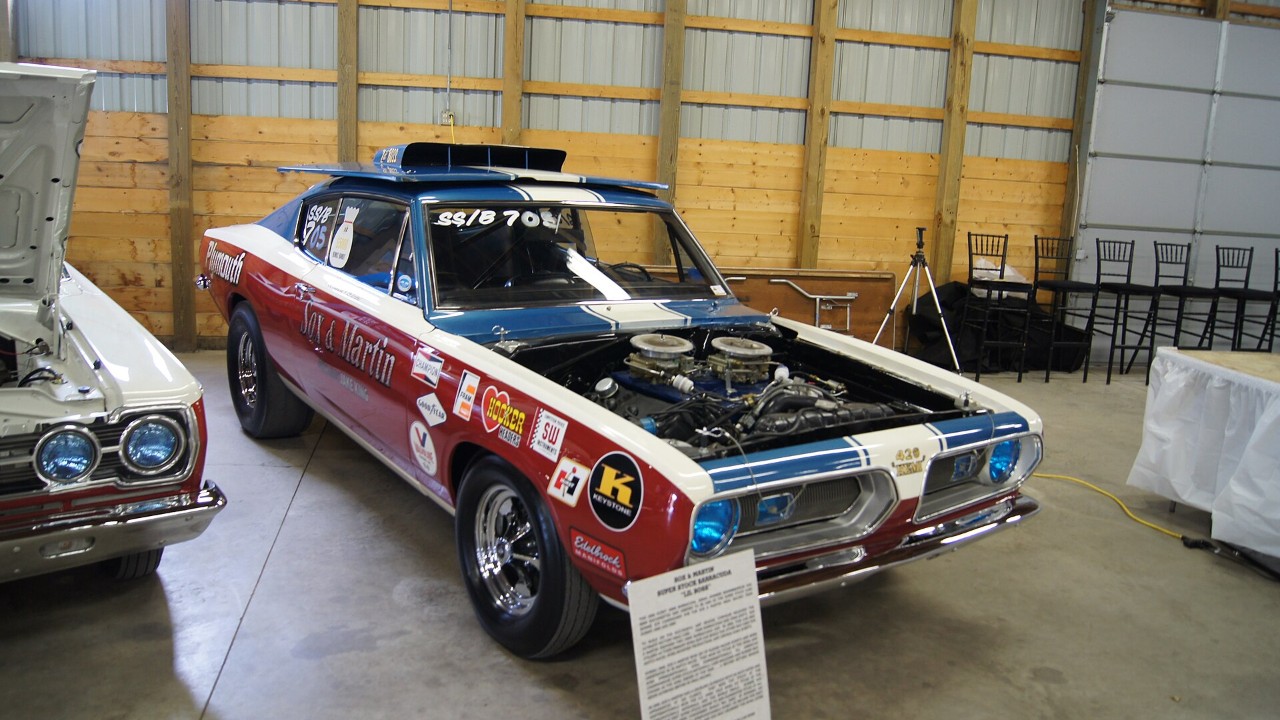
For 1968, Barracudas left the assembly line and went to Hurst, which turned them into Super Stock race cars. Above all, Hurst cut weight hard. The cars lost their window cranks, picked up acid-dipped steel parts and fiberglass fenders and hood, and got lightweight van seats. The goal was a car under 3,000 pounds with a 426 Hemi up front.
Roughly 50 Barracudas got the treatment, alongside a batch of Hemi Darts. One survivor’s history shows how long these cars stayed competitive. It set an NHRA national record of 10.17 seconds in 1974 and won the SS/AA class at Indy in 1983. In other words, that’s a long front-line career for a car built in 1968.
Our take: the Hemi Barracuda is the Plymouth half of a very small family, and it gets less attention than the Dart. Its fastback body looks lean and purposeful, and the car pictured, wearing the name “Lil Boss,” is one of the survivors. If one ever comes up for sale, expect a long racing history. That history is part of the value, so ask for every record the seller has.
5. 1965 Dodge Coronet “Color Me Gone”
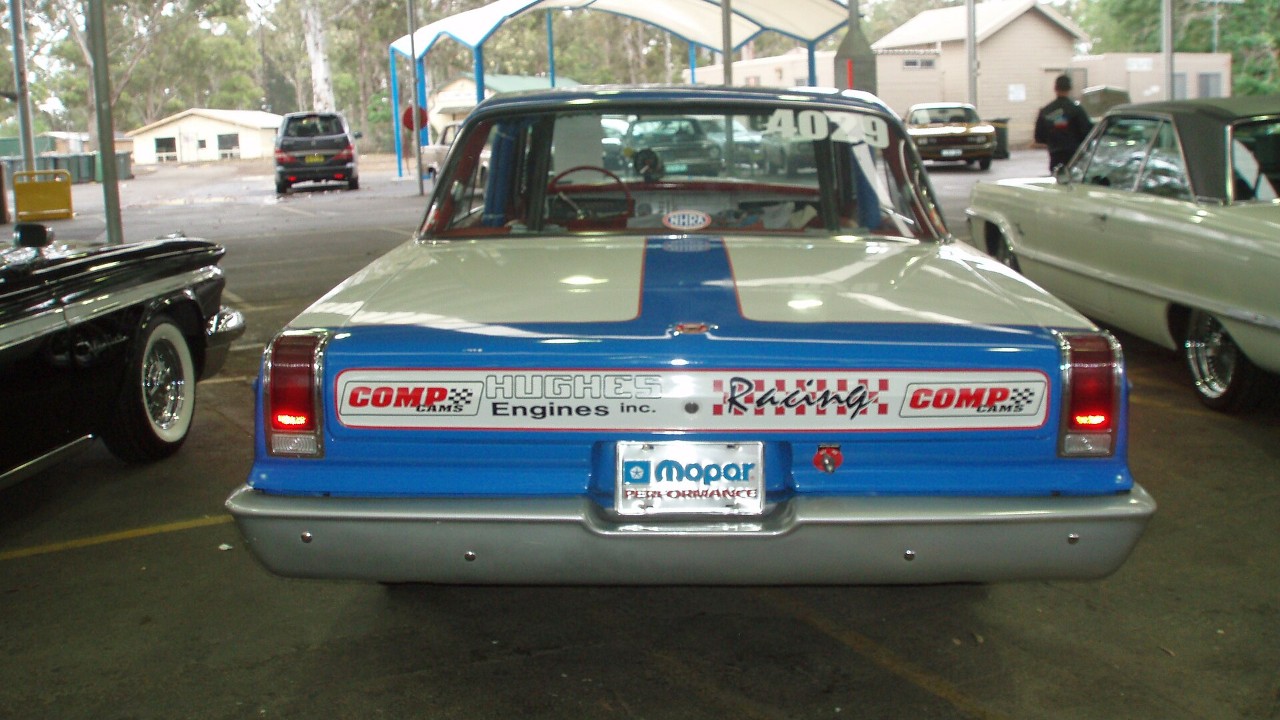
Roger Lindamood worked in Chrysler’s transmission lab and started drag racing at 35. In 1964, he won Top Stock at the Nationals in Indianapolis, beating several factory-backed teams. NHRA’s tribute to Lindamood notes that he called that win his biggest thrill. The Color Me Gone name came from a line in a 1963 hit song, and track promoters soon made it famous. Before all that, he had been one of Michigan’s top oval-track drivers until 1955.
For 1965, Lindamood moved into altered-wheelbase cars, the forerunners of today’s Funny Cars. At first, he ran on pump gas, then switched to fuel injection and nitro. Later, he added a supercharger. The 1965 Coronet pictured is a tribute car that wears the Color Me Gone name from that new chapter.
Our take: the altered-wheelbase Coronets mark the moment factory stock cars began turning into something wilder. They sit between Super Stock and Funny Car. As a result, that in-between status makes them easy to overlook. We think they deserve far more attention than they get. Lindamood died in October 2018 at 91, and his cars remain a living record of that transition.
6. 1968 Ford Mustang 428 Cobra Jet fastback
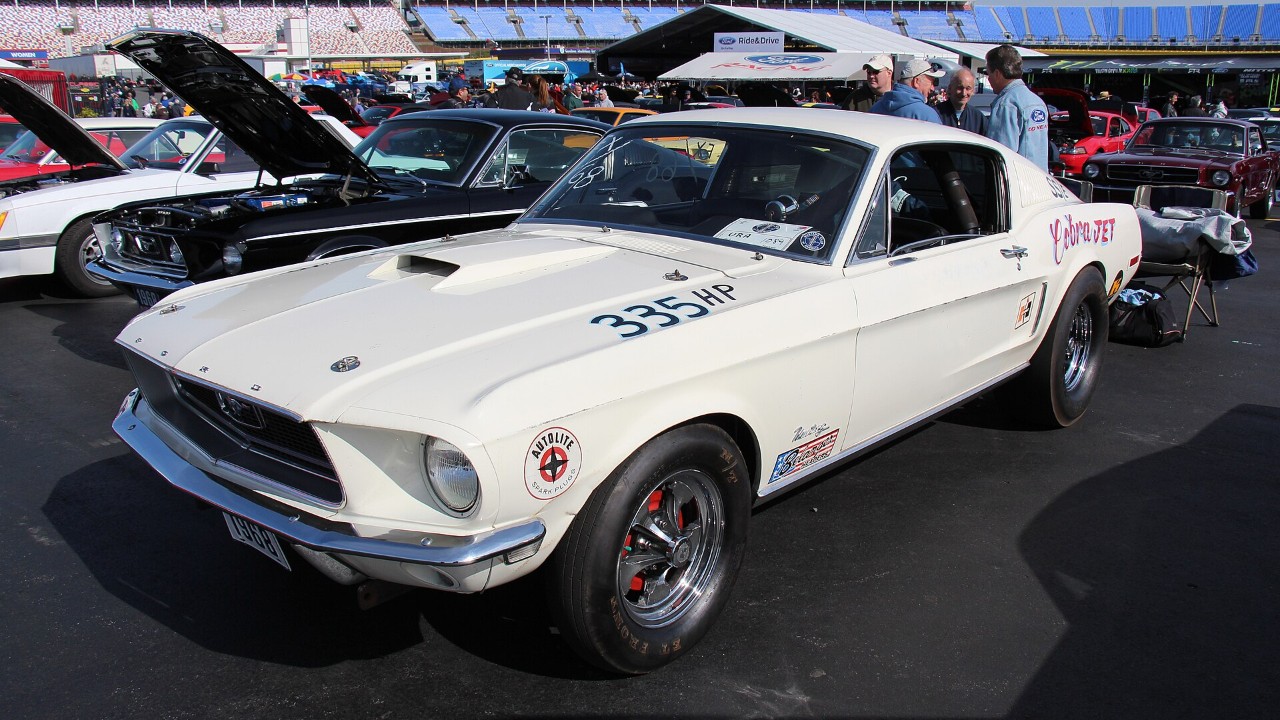
Ford built only 50 Cobra Jet Mustangs for the start of the 1968 season, and production reportedly began on December 13, 1967. The 428 engine grew out of work by Bob Tasca, a Rhode Island Ford dealer. Ford rated it at 335 horsepower. NHRA’s look back at the Cobra Jets calls that figure unrealistically low and estimates the true output at 375 to 390.
In addition, all 50 were Wimbledon White with black vinyl interiors and manual gearboxes. To save weight, Ford also removed the radio, heater, sound deadener and undercoating. At the February 1968 Winternationals in Pomona, four of them raced. Al Joniec won the SS/E final over a Max Wedge Plymouth, with a best of 11.49 seconds at over 120 mph.
Our take: the Cobra Jet won its debut, and it shows Ford’s whole drag program in one car. Its Pomona win also made the CJ name a household word among Ford fans. Even so, the 50 race-prepared cars are a different breed from the road-going CJs that followed. If you’re buying, make sure you know which one you’re looking at.
7. 1968 Dodge Hemi Dart
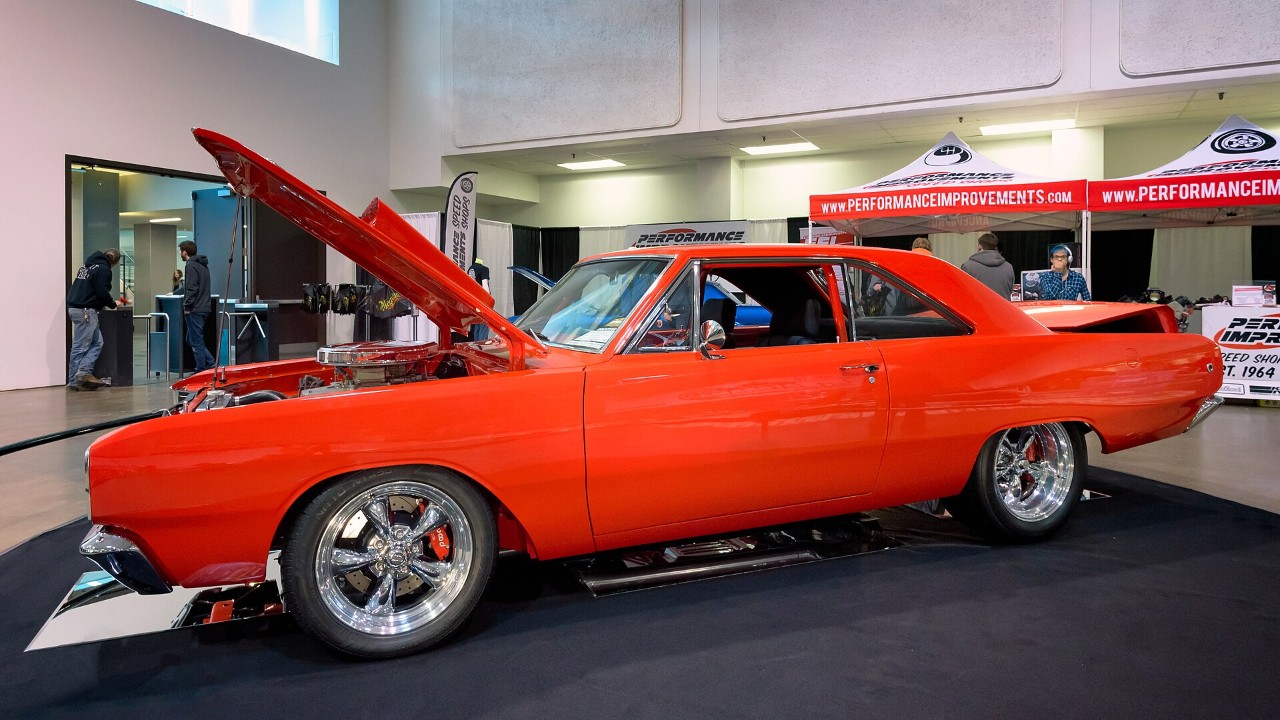
Hurst Performance converted 80 Dodge Darts for Chrysler at its Madison Heights, Michigan, facility. The work was brutal, too. According to Jalopnik’s history of the Hemi Dart, the doors were acid-dipped steel, and thin side glass hung on adjustable straps instead of window regulators. Fiberglass replaced the steel hood and fenders, and lighter seats from the A100 van replaced the standard front seats.
The rear seat, heater, radio, carpets and outside mirrors all went. As a result, the finished car weighed about 3,000 pounds. Under the hood sat a cross-ram 426 Hemi rated at 425 horsepower and 490 lb-ft. That combination ran the quarter-mile in about 10 seconds. The car cost $4,500 in 1968, and one sold for $200,000 in 2023.
Our take: the Hemi Dart is the compact-car extreme of the era. It is a small, plain body with the biggest engine Chrysler could fit. It already commands serious money, but we’d argue it still deserves more attention outside Mopar circles. If you find one, check its racing history carefully, because few of them stayed original.
8. 1969 Dodge Super Bee A12
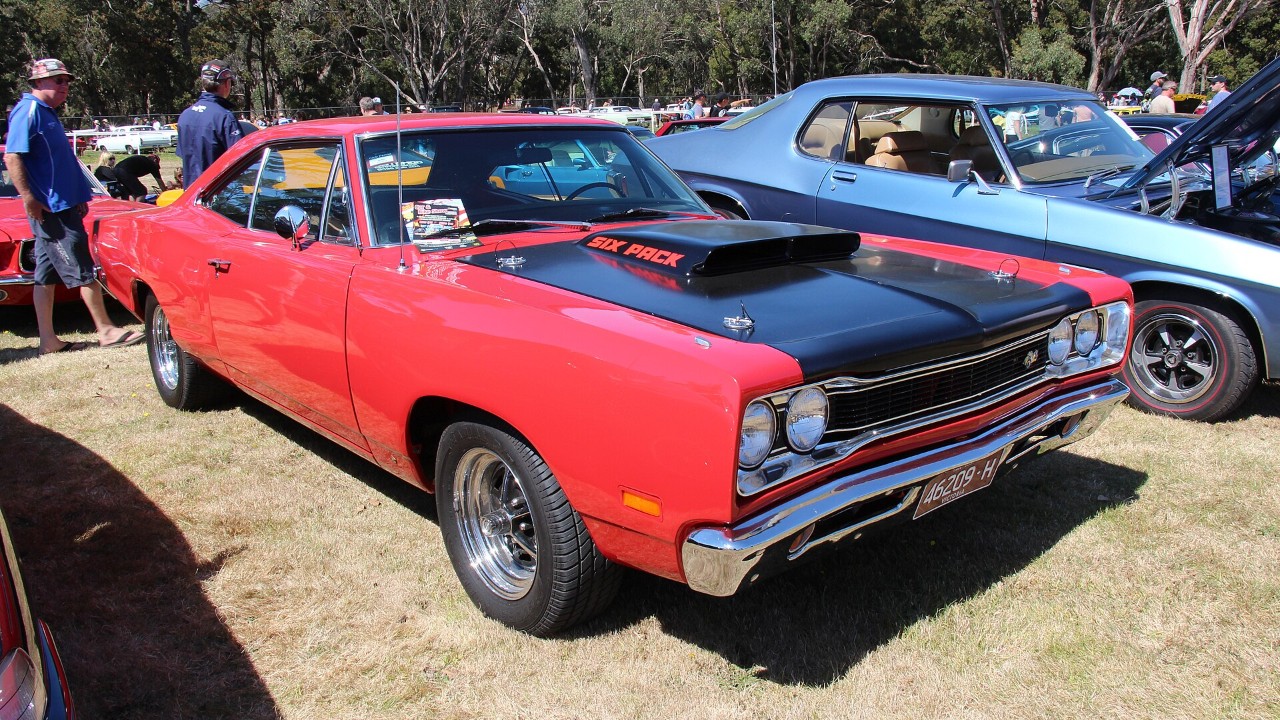
The A12 Super Bee arrived partway through 1969 as a street-legal drag package. Its 440 Six Pack used three Holley two-barrel carburetors and carried a 390-horsepower rating with 490 lb-ft of torque. A matte-black, lift-off fiberglass hood sat on four pins. Black steel wheels and a Dana 60 axle with 4.10 gears finished the job.
The package was all business, so it skipped hubcaps and luxury trim. One restored car’s documentation lists it as one of 826 A12 hardtops. Because of that small number and the unusual hood, makes the A12 one of the easier Mopars to identify at a glance. It also makes a real one a rare sight at shows.
Our take: the A12 is the working-class drag car of the late 1960s. It skipped the luxury and focused on the quarter-mile, which is exactly what its buyers wanted. In our view, it deserves collector attention on par with more famous Hemi cars, because it delivered strong performance for far less money. If you’re shopping, confirm the A12 code before anything else, since the hood and wheels are easy to copy.
9. 1962 Chevrolet Biscayne 409
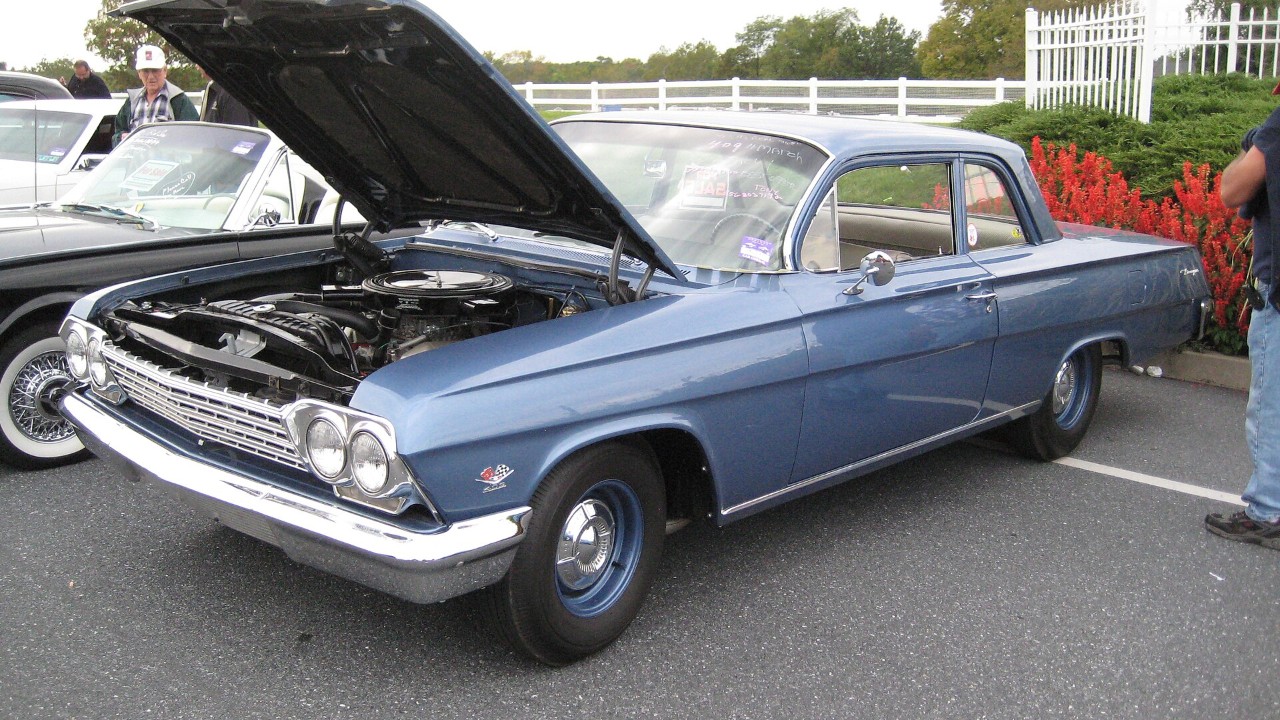
Chevrolet’s 409 grew out of the 348 big-block and reached 409 cubic inches for 1961. For 1962, Chevy offered two versions. First, a single four-barrel engine made 380 horsepower. Then came the dual-quad engine, rated at 409, which also used larger 2.19-inch intake valves. Both carried Chevy’s “Turbo-Fire” name. Underneath, the 409 used a 4.31-inch bore and a 3.5-inch stroke, a big-bore, short-stroke layout built to rev.
Drag racers like Dave Strickler, Don Nicholson and Hayden Proffitt campaigned these cars hard. According to NHRA’s history of the 409, Proffitt’s car won Stock Eliminator at the 1962 U.S. Nationals. At the same time, the Beach Boys turned the engine’s name into a hit record that same year.
Our take: the Biscayne is the stripped-down way to own a 409. It’s the plainest full-size Chevy body, and to us that is its appeal. The Impala SS gets most of the glory. In our view, though, the plain Biscayne is the more honest drag car. If you’re buying, verify that the 409 is original, because a 409 badge is easy to add to any Biscayne.
10. Hurst Hemi Under Glass Barracuda
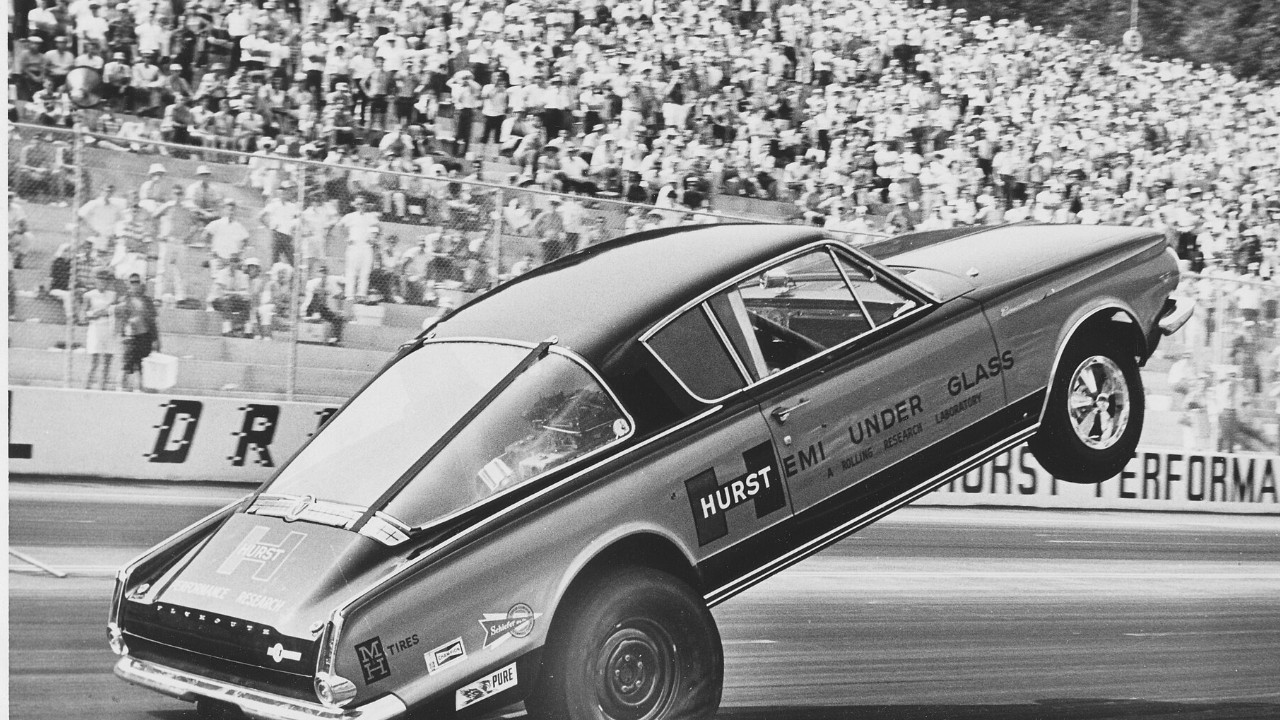
Hurst Performance ran its Hemi Under Glass exhibition cars from 1965 to 1970, each based on that year’s Plymouth Barracuda. The trick was simple, yet outrageous. Hurst mounted a fuel-injected Hemi under the huge rear window, which shifted the weight rearward. As a result, the car wheelied the length of the drag strip.
At first, Wild Bill Shrewsberry drove the car, in 1965. Bob Riggle took over in 1966 and became the driver most fans remember. Later, after Hurst was sold to Sunbeam, the car ran without the Hurst logo as simply the Hemi Under Glass. The original 1965 car was stripped for parts in 1967 and no longer exists. In 2016, Mike Mantel became the third official driver, taking over the 1968 car with the longest performing history of any Hemi Under Glass.
Our take: the Hemi Under Glass was never meant to win races. Instead, it existed to sell Hurst parts and pack the grandstands. That showmanship is exactly why we think it deserves a place among the most collectible drag cars of its era. It also spawned plastic model kits, which tells you how far its fame spread beyond the strip.
11. 2018 Dodge Challenger SRT Demon
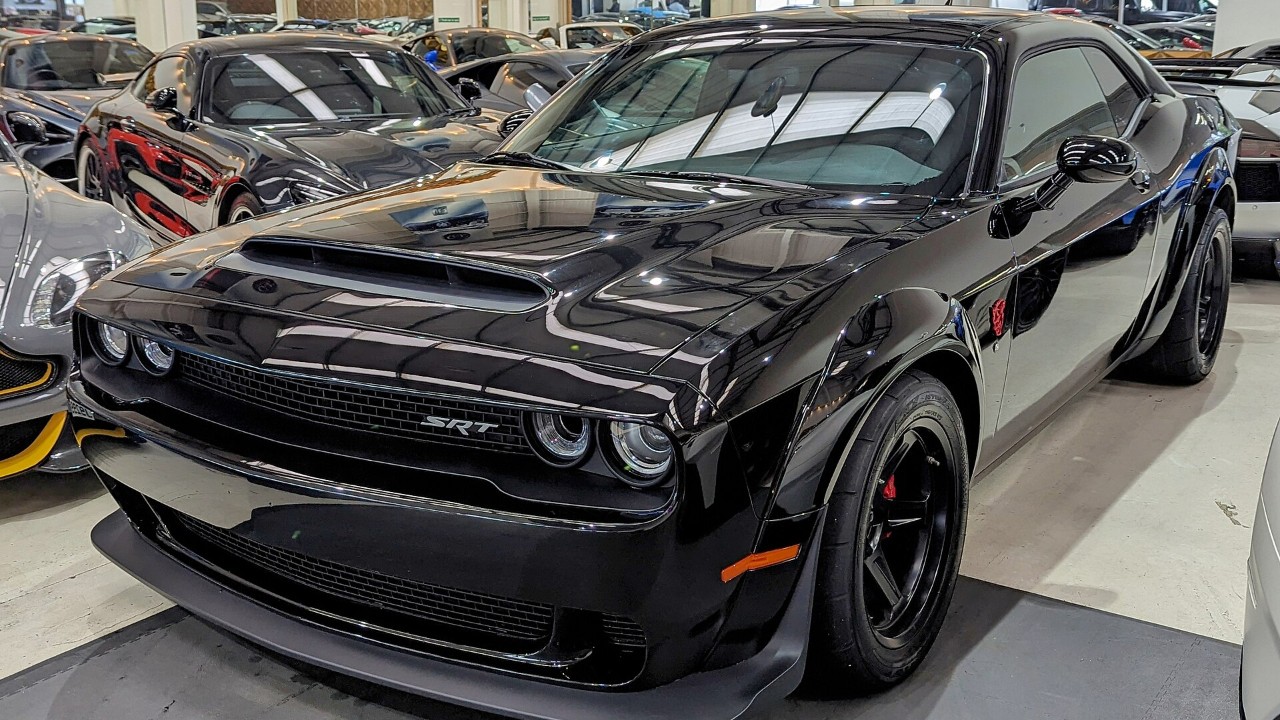
Dodge built 3,300 Demons, and every one was a factory drag car with a license plate. Production started in the summer of 2017. On 91-octane pump gas, the supercharged Hemi made 808 horsepower. With 100-octane race fuel and the red key fob, it made 840. Dodge quoted a quarter-mile time of 9.65 seconds at 140.09 mph.
However, that speed created a problem. The NHRA banned the Demon from its tracks because it lacked a certified roll cage, which the rules require for runs under 10 seconds. In other words, the car was too quick for the sanctioning body without extra safety gear. To us, that ban only added to its appeal, since few road cars ever earned one.
Our take: the Demon is the modern answer to the Hemi Dart. It’s a production car built around one job, with a factory warranty instead of acid-dipped doors. With only 3,300 made, we think it belongs in this company. If you’re buying, ask how many drag passes the car has made, because hard launches take a toll on any drivetrain.
12. 2023 Dodge Challenger SRT Demon 170
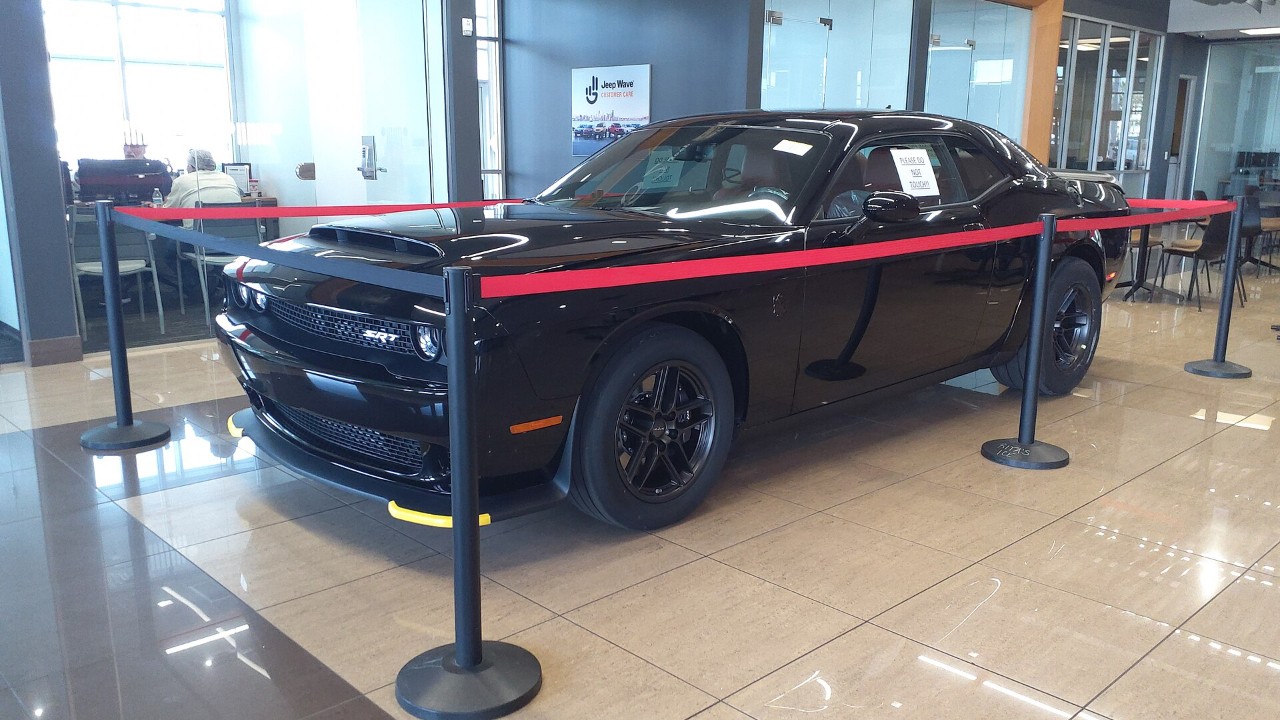
The Demon 170 was the Challenger’s last word, and it went out loud. Dodge rated it at 1,025 horsepower on E85 fuel. It claimed a 0-60 mph time of 1.66 seconds and a quarter-mile time of 8.91 seconds. Dodge planned to build 3,000 for the U.S. and 300 for Canada.
The timing gave it extra weight. Stellantis named 2023 as the final model year for the Challenger and Charger, and it marked the send-off with a series of “Last Call” models. The Demon 170 was the wildest of them.
Our take: the Demon 170 closes a chapter that the Max Wedge opened six decades earlier. It’s a factory-built drag car from a carmaker that knew it was the end of the line. That gives it a clear place in history, and we think it will be remembered as the most extreme car of its kind. If you own one, keep every document, because the final Challengers will always carry the “last of” story. The very last one, a Pitch-Black Demon 170, rolled off the line on December 22, 2023.
More from Fast Lane Only