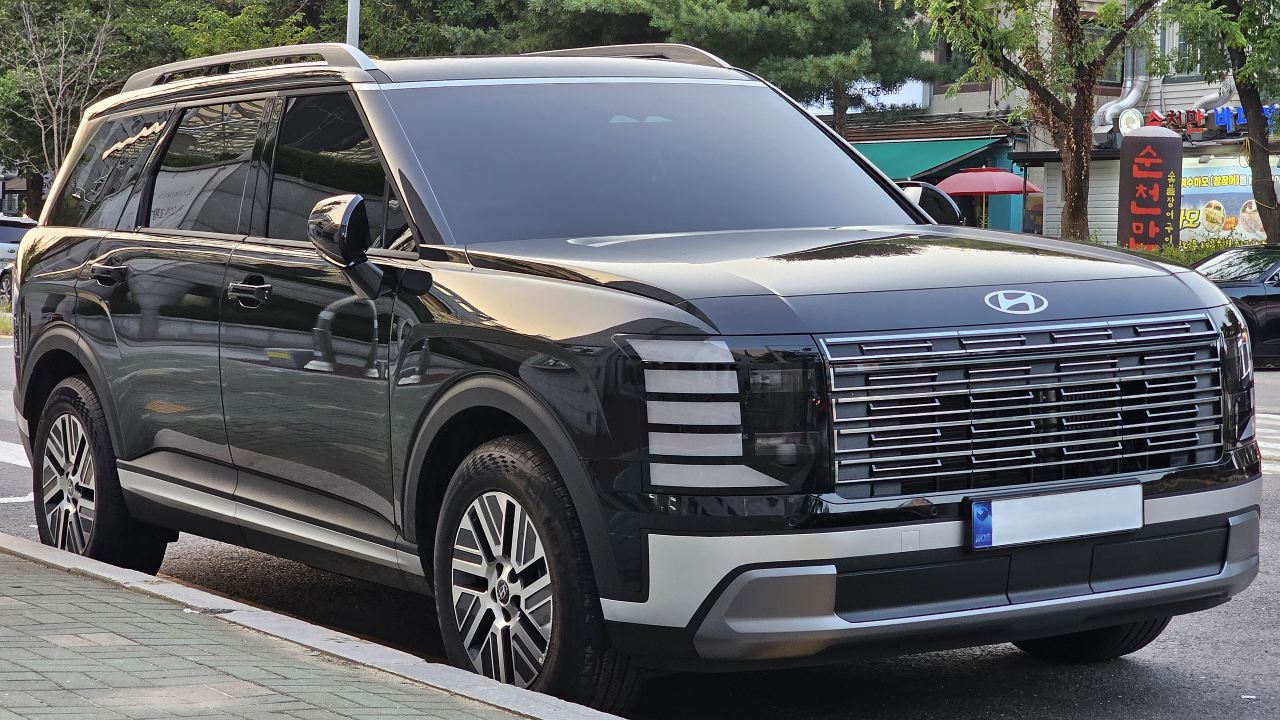
Hyundai raised the cost of entry for its new three row hybrid flagship, yet families are still lining up to sign on the dotted line. The 2026 Hyundai Palisade Hybrid arrives as a more expensive proposition than the outgoing gas only model, but a mix of efficiency, space, and perceived value has kept demand intense at dealerships across the country. Even as prices climb, the hybrid version is emerging as the configuration many family buyers now see as the default.
Sticker shock meets a bigger, richer Palisade
The latest Palisade did not sneak into the market quietly. Hyundai announced the second generation as a larger, more capable three row SUV with a clear move upmarket in design and cabin quality. Official materials describe the 2026 Palisade as a flagship SUV with a bold exterior, a premium cabin, and significantly improved capabilities, positioning it as a family hauler that can credibly rival established players while still wearing a mainstream badge. That repositioning set the stage for higher pricing, but also for buyers to expect more than just a mild refresh.
On the numbers, the shift is unmistakable. Reporting on the 2026 lineup notes that the base Palisade, before delivery fees, now carries an MSRP that rises to $38,935, a jump that reflects both the added size and the richer equipment list. Hyundai’s own consumer pages list a Starting MSRP of $32,975 for the broader Palisade range, with higher trims climbing through $33,465 and $32,450 and examples “as shown” at $41,150 and $42,075, underscoring how quickly a well equipped family SUV can approach the mid 40,000 dollar mark. Against that backdrop, the hybrid’s premium looks less like an outlier and more like the logical top of a carefully tiered pricing strategy.
The hybrid premium that shoppers keep accepting
Within that broader pricing ladder, Hyundai deliberately positioned the Palisade Hybrid as a step up rather than a niche side option. Analysis of the order guide shows that the hybrid powertrain is treated as a $2,000 upgrade over comparable gas trims, with pricing for the Blue SEL hybrid configuration starting at $45,155 including destination. That figure plants the electrified model squarely in the heart of the family SUV market, not at the fringes, and signals that Hyundai expects a meaningful share of buyers to choose it rather than treating it as a halo variant.
Retail listings and early reviews reinforce that strategy. Consumer focused breakdowns describe the Hyundai Palisade Hybrid as an extension of the existing Hyundai Palisade SUV formula, not a separate product, with the hybrid range spanning from more accessible trims up to a Calligraphy model that kicks off at $57,880. In other words, the hybrid surcharge is layered on top of an already ambitious trim walk. Yet, instead of scaring shoppers away, that structure appears to be nudging many families to stretch their budgets, especially when they compare the hybrid’s pricing to similarly equipped gasoline rivals that do not offer the same blend of efficiency and technology.
Why families still crowd showrooms despite higher prices
The willingness to absorb higher monthly payments is not happening in a vacuum. Hyundai’s own communications highlight that the latest Palisade Hybrid delivers up to 34 m per gallon and more than 600 miles of range, figures that resonate strongly with families staring down long commutes and road trip seasons. When a three row SUV promises that kind of efficiency without sacrificing space, the extra $2,000 on the window sticker starts to look like an investment that will pay back at the pump over years of ownership. That calculus is especially compelling for buyers who previously resigned themselves to full size crossover fuel bills as an unavoidable cost of hauling kids and cargo.
Real world shopper chatter backs up the sense that demand is outpacing supply. In owner forums, prospective buyers describe waiting for specific trims such as the SEL Premium Hybrid, hoping for a slightly cheaper way into the electrified lineup but finding that many others are targeting the same configuration. One shopper notes holding out for an SEL Premium Hybrid because it promised the right mix of price and features, only to discover that most people were also waiting for SEL Premium or stepping up to higher trims to get more equipment. Another thread features a family considering a 2026 Palisade Hybrid Blue with Gray Interior, debating between AWD and FWD while referencing reports of modest discounts in certain regions. The common thread is not hesitation about the hybrid premium itself, but anxiety about timing and availability, a sign that interest remains strong even as prices climb.
Value narrative: higher MSRP, still a bargain in context
Hyundai’s pricing strategy would be far riskier if the Palisade did not convincingly deliver on value. Analysts who have compared the 2026 Palisade to key competitors argue that, despite the higher base MSRP, the SUV still undercuts similarly equipped rivals from Toyota and Honda once features and interior quality are factored in. The new generation is described as larger than the outgoing model, with more attractive styling inside and out, which helps justify the move up in price. For families cross shopping three row SUVs, the question often becomes not whether the Palisade is more expensive than before, but whether it offers more for the money than the alternatives on their shortlist.
Independent reviews of the Palisade Hybrid sharpen that point. Evaluations of the 2026 Palisade Hybrid describe it as a midsize three row SUV that delivers near luxury levels of comfort and technology at a non luxury price, noting that its cabin materials, seating comfort, and tech suite rival those of premium brands. One assessment of the Palisade Hybrid states that its strengths build on the existing Hyundai Palisade SUV formula, suggesting that the hybrid does not compromise the qualities that made the gas model popular. When buyers perceive that they are getting a quasi luxury experience, complete with advanced driver assistance and a refined ride, for a price that still undercuts many premium nameplates, the higher monthly payment becomes easier to rationalize.
Incentives, awards, and the feedback loop of demand
Even with strong demand, Hyundai has shown a willingness to fine tune pricing in response to market conditions. Reporting on early lease programs for the 2026 Hyundai Palisade notes that the company has already implemented a 3 percent Price Cut On certain Hyundai Palisade Leases, particularly on The SEL trim, in order to keep payments competitive. Yet, at nearly $600 a month, the 2026 Hyundai Palisade still is not cheap, and the cited interest rate of 3.99% is described as less generous than some past promotions. The message is clear: Hyundai is not racing to the bottom on price, but it is prepared to use targeted incentives to keep traffic flowing into showrooms while preserving the Palisade’s more premium positioning.
Recognition from the broader industry has further reinforced that strategy. The Palisade has been honored as the North American Utility Vehicle of the Year, with official announcements emphasizing that the All new PALISADE earned the award from the North American Car, Uti jury. In separate corporate communications, Hyundai highlights that the recent addition of the next generation hybrid variant, with its up to 34 m efficiency and more than 600 miles of range, joins a powertrain lineup that is helping the brand gain influence in the global automotive industry. Awards of that stature feed a feedback loop: they validate existing owners, attract new shoppers who might have overlooked the model, and give dealers a powerful talking point when justifying higher prices on the lot.
More from Fast Lane Only