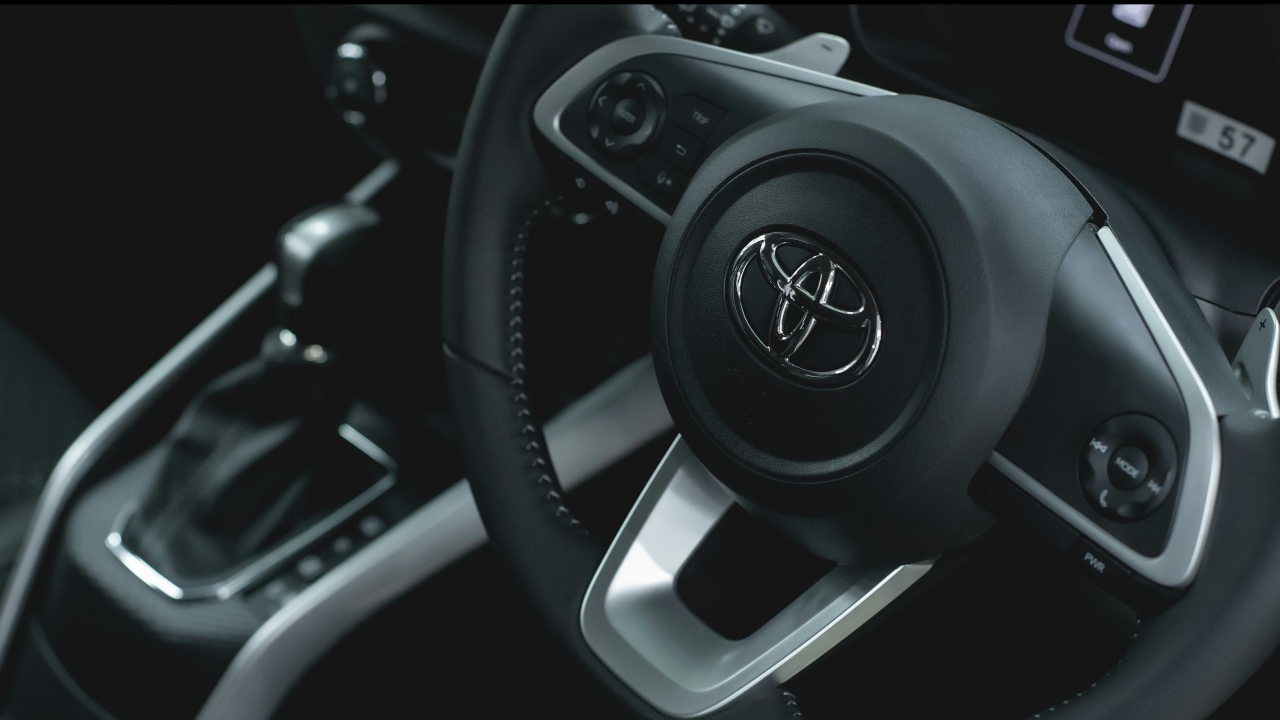
Toyota is facing a fresh wave of legal scrutiny as owners accuse the company of selling vehicles with automatic gearboxes that fail prematurely and without warning. At the center of the latest lawsuit is the UA80 eight-speed automatic transmission, which plaintiffs say is riddled with defects that undermine both safety and value. The litigation threatens to chip away at Toyota’s carefully cultivated reputation for bulletproof reliability and could reshape how the industry handles modern, software‑heavy drivetrains.
A growing stack of lawsuits over the UA80 gearbox
The newest complaint targets Toyota’s UA80 eight-speed automatic, alleging that the unit suffers from inherent flaws that cause harsh shifting, hesitation, and sudden loss of drive. According to the filings, these problems are not isolated glitches but systemic issues baked into the design and calibration of the transmission and its torque converter, which owners say can degrade “faster than expected” and lead to abrupt failures. One suit describes the gearbox as quietly failing without warning, leaving drivers with vehicles that can lurch, slip, or refuse to accelerate in traffic.
Those claims build on a series of class actions that have emerged across the United States, including a 31‑page complaint asserting that multiple Toyota and Lexus models equipped with the UA80 suffer from Transmission and Torque Converter Problems Caused by alleged Defects. Another case, brought by Plaintiff James LeBoutheller, accuses Toyota of selling vehicles with defective UA80 transmissions and then failing to provide adequate repairs once problems emerged. A separate filing by James LaBoutheller similarly contends that Toyota’s automatic gearbox is quietly failing, reinforcing the picture of a common mechanical and software pattern rather than a handful of unlucky owners.
Class actions spread across models, brands, and courts
What began as a dispute over a single transmission has widened into a complex web of class actions that span brands, model lines, and jurisdictions. One complaint focuses on 2024 and newer Toyota Tacoma trucks, alleging in a section labeled The Defect that their transmissions can hesitate, jerk, and even suffer sudden failure without warning. Another case zeroes in on the 2024 Toyota Camry, with a filing titled Suit Says Two Big Problems Mean Failed Transmissions arguing that calibration and hardware issues combine to create a heightened risk of stalling and “other dangerous situations.”
The litigation is not confined to a single state court. One group of plaintiffs has taken its case to Federal District Court in the Eastern District of New York, where the action was Filed with Multiple named owners seeking relief over UA80‑equipped vehicles. Other suits have been lodged in California and Nevada, including a complaint from an unhappy Nevada owner highlighted in coverage of Toyota Facing Class Action Lawsuit For Alleged Defective Transmissions. Collectively, these filings argue that the same core transmission architecture, shared across Toyota and Lexus models, is at the heart of a broad defect that should be addressed on a nationwide basis.
Allegations of ignored warnings and mounting dollar figures
Beyond the mechanical details, plaintiffs accuse Toyota of knowing about UA80 problems for years and failing to act. One Million Lawsuit Alleges Toyota Ignored Transmission Problems for a Decade, asserting that the company received internal data and customer complaints but did not initiate a comprehensive recall or redesign. That case, which seeks $5 million in damages, lists numerous Toyota models and even the 2024‑present Lexus TX 350 as affected, arguing that owners paid premium prices for vehicles that did not deliver the durability they were promised.
The financial stakes are rising quickly. Reporting on Another Month, Another Lawsuit notes that Toyota recently faced a separate matter involving a $5.7-bill claim, with references to $5.7 underscoring how high the potential exposure could climb if courts side with owners. Earlier filings in California have also sought about $5 million over the same UA80 transmission, while the Nevada case tied to Toyota Facing Class Action Lawsuit For Alleged Defective Transmissions alleges that internal components deteriorate “faster than expected.” Together, these suits paint a picture of a company that, in the plaintiffs’ telling, allowed a known defect to linger until it erupted into a nationwide legal battle.
Safety, reliability, and the risk to Toyota’s brand
For drivers, the core concern is not only repair bills but safety. Plaintiffs describe vehicles that hesitate when merging, surge unpredictably, or lose power in intersections, scenarios that they say create a real risk of collisions. The complaint summarized under Suit Says Two Big Problems Mean Failed Transmissions argues that the alleged defects can leave a 2024 Toyota Camry unable to respond when a driver needs immediate acceleration, while the Tacoma filing under The Defect warns of sudden failure without warning. The UA80‑focused class actions similarly claim that torque converter and software issues can cause abrupt changes in drivability that are difficult for an average driver to anticipate or control.
These narratives cut directly against Toyota’s long‑standing image as a benchmark for dependability. Coverage of Toyota Facing Class Action Over Transmissions Allegedly Plagued By Defects notes that Toyota routinely ranks among the most reliable carmakers, yet owners now allege that its latest eight‑speed transmissions are “plagued by mechanical and” software problems. Another analysis of Toyota transmissions facing multiple class actions in the U.S. describes the UA80 as less robust than its predecessor, suggesting that the shift to more complex, efficiency‑oriented gearboxes may have introduced new vulnerabilities. If courts validate those claims, the damage to Toyota’s brand could extend far beyond the cost of repairs or settlements.
A wider industry reckoning with modern automatics
Although Toyota is currently in the spotlight, the lawsuits arrive in an industry already grappling with the limits of modern automatic transmissions. Legal analysis from a firm tracking these cases points out that General Motors has faced lawsuits regarding its eight speed transmission systems and that Ford has dealt with litigation related to the Focus and Fiesta dual‑clutch units. These disputes share common themes: complex gearboxes designed for fuel economy and smoothness that instead deliver shuddering, hesitation, and premature wear, along with allegations that manufacturers were slow to acknowledge the scale of the problems.
The UA80 saga therefore fits into a broader pattern in which software‑controlled, multi‑ratio transmissions have become a legal and reputational liability across several brands. The complaints summarized under Toyota, Lexus, Transmission, Torque Converter Problems Caused, Defects, Class Action Lawsuit Says argue that calibration choices and component durability are at the heart of Toyota’s troubles, just as programming and hardware decisions have driven cases against rivals. As more plaintiffs organize into Class Action groups and as Most of the larger models from Toyota and its luxury sibling become entangled in litigation, the outcome will signal to the entire industry how courts expect carmakers to balance innovation, disclosure, and long‑term reliability in the age of increasingly intricate drivetrains.
More from Fast Lane Only