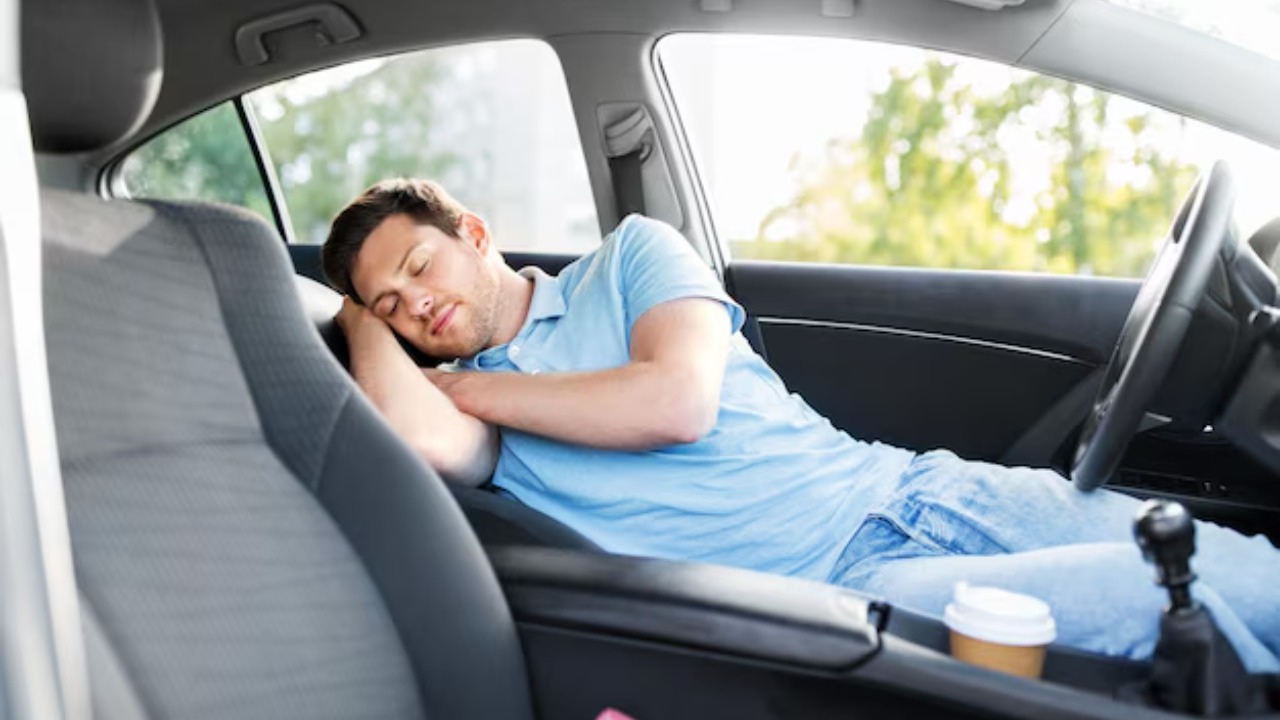
It started the way a lot of modern travel mishaps start: with a full phone battery, an empty wallet, and a parking lot that looked “quiet enough.” The plan was simple—crash in the car for a few hours, wake up early, and keep moving. Instead, I got a knock on the window and a sentence I honestly didn’t expect to hear: “You know you could be cited for sleeping in your car overnight, right?”
If you’ve ever done the quick mental math—hotel costs versus “it’ll be fine”—you already know why this matters. Sleeping in a car isn’t exactly rare, especially with rising rents, long commutes, and road trips that go a little sideways. But whether it’s allowed depends on where you are, where you’re parked, and what local rules say about overnighting, camping, trespassing, and “habitation” in a vehicle.
The knock that changes your whole night
The officer wasn’t yelling, and I wasn’t in handcuffs. It was more like a stern PSA delivered through a half-cracked window, the kind that makes you suddenly aware your back seat looks like a storage unit. He asked if I was okay, if I needed medical help, and then explained the issue: the lot didn’t allow overnight parking, and the city had rules that could treat sleeping in a vehicle as an infraction.
I tried the most universal defense—“I’m just resting”—which did not magically transform the situation. He told me I needed to move along or find a legal place to park, and that repeated complaints could lead to a citation. He wasn’t trying to ruin my life; he was responding to a call, and policies are policies, even when you’re tired and your neck is cramping.
Why “sleeping in your car” is a legal gray zone
Here’s the frustrating part: in many places, it’s not explicitly illegal to be asleep in a car. What’s often illegal is what the situation implies—camping, living in the vehicle, loitering, trespassing, or violating posted parking rules. So you can hear “sleeping in your car is illegal,” when the actual enforceable rule is something like “no overnight parking” or “park closes at 10 p.m.”
Local laws vary wildly. Some cities have ordinances about “vehicle habitation,” some focus on public safety and nuisance complaints, and others mainly enforce it through parking restrictions. The same nap can be a non-event at a rest area and a ticket in a neighborhood that’s had ongoing issues with overnight vehicles.
What tends to trigger enforcement (even if you’re being quiet)
Most people aren’t getting cited because they closed their eyes for 20 minutes. Trouble usually starts when there’s a reason someone notices: a concerned passerby calls in a “welfare check,” a business owner doesn’t want overnight cars, or parking enforcement is doing rounds. If your windows are fogged up, your seat is reclined all the way back, and you’ve got blankets piled like a tiny fort, you’re easier to spot.
Location matters a lot, too. Residential streets, business lots, parks after closing, and anywhere with “no overnight parking” signs are common hotspots. Even if you’re not bothering anyone, you might be in a spot where the rules are designed to stop exactly what you’re doing.
Private parking lots: the hidden trap
A big misconception is that a quiet retail lot is “public enough” to be safe. But private property rules can be stricter, and if a manager calls, an officer may treat it like trespassing—especially if the business is closed. Sometimes stores allow overnight parking informally, sometimes they don’t, and sometimes it depends on the specific location or whoever’s working that night.
And yes, there are places people associate with permissive parking—big box stores, truck stops, gyms—where policies have tightened. More complaints, more cleanup, more liability worries, and suddenly the “unwritten okay” becomes a tow risk. The problem is you often find out the policy when the flashlight hits your window.
Rest areas, truck stops, and “actually designed for this” spots
If you’re exhausted, the best move is to find a place that’s meant for overnight stays. Highway rest areas in many states allow drivers to sleep for a limited time, mainly to prevent drowsy driving. Truck stops and travel plazas often expect people to be there overnight, though they may have rules about where to park and for how long.
Even then, it’s not a free-for-all. Some rest areas cap the hours, some ban it entirely, and some locations post strict signage because of local issues. The theme here is simple: look for posted rules, and assume they mean what they say.
What a citation could mean (and why it’s not “nothing”)
A citation might be a parking ticket, an infraction under a city ordinance, or something tied to trespass if you refuse to leave. The consequences can range from a fine to, in more serious situations, towing or being ordered off the property. It’s not usually a dramatic criminal case, but it can still be expensive, time-consuming, and stressful.
It can also compound a rough situation. If someone’s sleeping in their car because they’re between housing or escaping a bad living situation, a ticket doesn’t exactly help. That’s part of why this issue keeps popping up in city councils and community meetings—people are trying to balance public space rules with real-world hardship.
How to handle it if someone knocks
If an officer or security guard wakes you, the goal is to keep things calm and practical. Roll the window down a bit, keep your hands visible, and answer basic questions. If they tell you to move, treat it like a safety instruction, not a debate club prompt.
You can politely ask where overnight parking is allowed nearby, or if there’s a rest area, travel plaza, or designated safe parking program in the city. Sometimes they’ll point you to a better option, especially if you’re clearly trying to do the right thing. And if you’re too tired to drive safely, it’s okay to say so—then ask what the safest next step is.
How to reduce the odds of getting cited
First, follow signs like they’re written for you—because they are. “No overnight parking,” “park closes,” and permit-only zones are the big ones. If you’re on private property, consider going inside (if it’s open) and asking if overnight parking is allowed; it’s awkward for 30 seconds, but it beats a 2 a.m. surprise.
Second, pick spots with a reason for you to be there: rest areas, travel centers, or legitimate campgrounds. If you’re using an app to find safe parking or a “safe parking” nonprofit lot, double-check hours and rules. And try to keep things low-profile—no trash, no obvious “setup,” and no lingering for days in the same place.
Why this is becoming a bigger story than it seems
On the surface, it’s about parking. Underneath, it’s about housing costs, long-distance work, and how cities respond to people who don’t have a perfect place to sleep. More folks are living out of vehicles temporarily, and more neighborhoods are pushing back, which puts enforcement officers in the middle.
Some communities have expanded “safe parking” programs—designated lots with bathrooms, case management connections, and clear rules. Others have leaned harder on citations and towing, arguing it’s a safety and sanitation issue. Either way, the number of people asking, “Wait, I can get ticketed for this?” is only going up.
What I did next (and what I’d do differently)
That night, I drove to a 24-hour travel plaza about fifteen minutes away, bought the world’s most overpriced snack as my “thank you for existing,” and slept in a place that wasn’t surprised to see me. The difference in stress was immediate. Nobody knocked, nobody cared, and I woke up feeling human again.
If I could rewind, I’d plan the stop earlier, check local rules, and avoid private lots unless I had explicit permission. The lesson wasn’t “never sleep in your car.” It was that the safest sleep is the one that’s also clearly allowed—because nothing ruins a nap like learning municipal code through a window at midnight.
More from Fast Lane Only