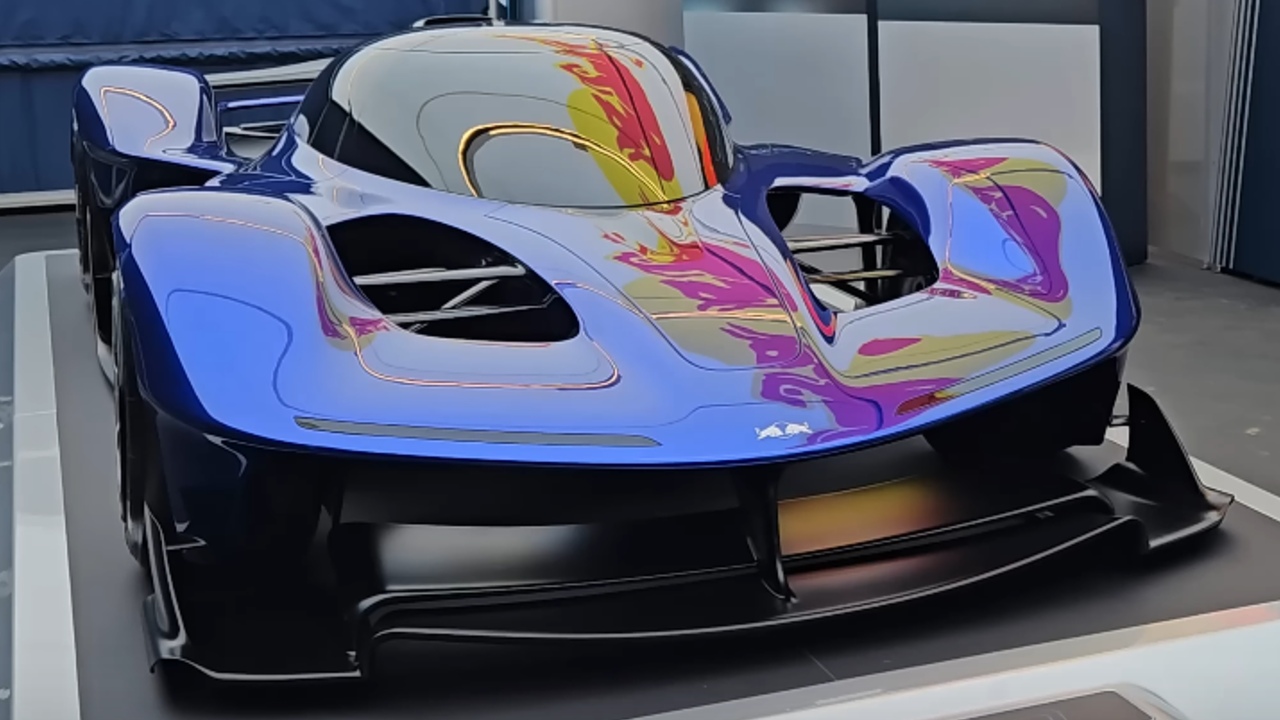
Red Bull Advanced Technologies has turned its Formula 1 dominance into a laboratory for an almost implausible track weapon, a V10 hybrid that screams to 15,000 rpm and wears a Red Bull badge instead of a race number. The RB17 is not a softened road car with racing pretensions, it is a ground-up hypercar built to chase lap times and sensory overload, with a hybrid system layered on top of a naturally aspirated engine that belongs on a starting grid. I see it less as a product and more as a manifesto about what happens when racing engineers are told to ignore road rules and simply build the fastest thing they can.
From F1 skunkworks to 50-car statement
The RB17 is the first hypercar to emerge fully formed from Red Bull Advanced Technologies, the engineering arm that usually focuses on Formula 1 projects and high-end collaborations. Instead of adapting an existing chassis, the group created a carbon fiber monocoque specifically for this car, then wrapped it in bodywork that looks closer to a prototype racer than a track-day toy. The company has been clear that the RB17 is track-only, which frees it from crash regulations, noise caps, and ride-height compromises that blunt most road-legal exotics, and that decision sets the tone for everything that follows.
Only 50 units of the RB17 are planned, a number that keeps the project exclusive while still large enough to justify the bespoke engineering that went into the car. The limited run is paired with a price that sits firmly in seven-figure territory, positioning the RB17 alongside ultra-rare machines like the Aston Martin Valkyrie rather than more conventional supercars. Red Bull has already showcased the car publicly, including a reveal at the Goodwood Festival of Speed, using those appearances to underline that this is not a concept but a production-bound machine with a clear specification and a defined build plan.
The Engine and that 15,000 rpm redline
At the heart of the RB17 is a 4.5-liter naturally aspirated V10 that revs to a scarcely believable 15,000 rpm, a figure that instantly places it in the same conversation as modern Formula 1 power units for sheer rotational speed. That number is not marketing fluff, it is a declared redline that shapes the entire character of the car, from the way it delivers power to the way it sounds as it charges down a straight. The Engine is described as no ordinary affair, and that is an understatement, because very few production-bound cars attempt anything like this rev ceiling, especially with ten cylinders instead of twelve.
The decision to go with a high-revving V10 rather than a turbocharged V6 or V8 is a deliberate throwback to an era when naturally aspirated engines defined top-level motorsport, while still embracing modern materials and control systems. Like the V12s found in the Aston Martin Valkyrie, the RB17’s powerplant is designed to thrive at extreme engine speeds, trading low-end torque for a crescendo that builds as the tachometer sweeps toward that 15,000 rpm redline. For track drivers, that means a car that rewards commitment, keeping the engine on the boil through fast corners and long straights instead of leaning on turbo torque to mask lazy gearing.
A hybrid system built for attack, not efficiency
Where most hybrids talk about fuel savings, the RB17’s electric side exists purely to make the car faster and more responsive. Red Bull adds a 200-horsepower electric motor to the V10, creating a combined output of 1,200 horsepower that pushes the car into the same performance bracket as the most extreme hypercars on sale. That motor does not just add peak power, it also fills in the torque curve, providing instant shove at lower revs and smoothing the transition as the combustion engine climbs toward its stratospheric redline.
Some descriptions of the RB17’s hardware refer to an extra 200-or-so horses from the electric motor, a phrasing that hints at how the hybrid system is tuned for real-world track behavior rather than a neat spec sheet number. The electric assistance can provide torque fill between gearshifts, keeping acceleration relentless even as the transmission swaps ratios, and it can support the V10 in situations where a purely mechanical setup might feel flat. The result is a hybrid system that behaves more like a racing energy recovery package than a road-car plug-in unit, focused on lap time and throttle response instead of range.
Weight, aero, and the pursuit of downforce
Power is only part of the RB17 story, because Red Bull has treated Weight as a central design pillar, targeting a figure under 900 kg for the finished car. That kind of mass, paired with around 1,200 horsepower combined output, yields a power-to-weight ratio that eclipses most road-legal exotics and even challenges some dedicated race cars. Keeping the car that light requires obsessive use of carbon fiber, compact packaging for the hybrid components, and a stripped-back cabin that prioritizes function over luxury, all of which reinforce the track-only mission.
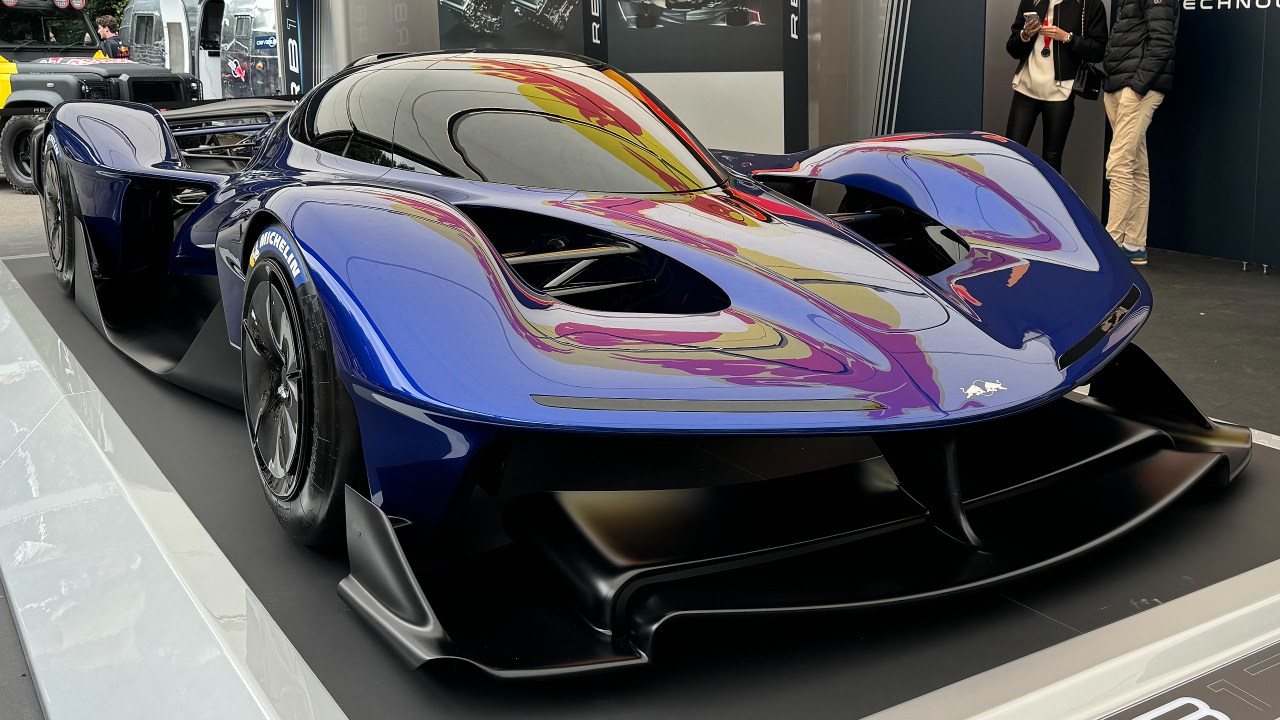
Aerodynamics are just as aggressive, with the RB17 generating nearly two tons of downforce at speed according to Red Bull Advanced Technologies. That level of aero load is made possible by a combination of sculpted bodywork, a complex rear diffuser, and underfloor tunnels that echo modern Formula 1 ground-effect designs. The payoff is not just headline grip, but stability in high-speed corners and under heavy braking, allowing the car to exploit its power and low weight without feeling nervous. Top speed exceeds 217 mph, yet the real magic is likely to be how fast the RB17 can carry speed through a corner, where downforce and chassis tuning matter more than raw horsepower.
Adrian Newey’s fingerprints and the culture of excess
The Red Bull RB17 is widely framed as the result of Adrian Newey finally being told he can do whatever he wants, a rare moment when one of motorsport’s most influential designers is given a clean sheet and a small production run instead of a rulebook. Free from the constraints of Formula 1 regulations, Newey and the team could push concepts like ground effect, packaging, and cooling to extremes that would never pass in a championship setting. The car’s proportions, with its low cockpit, pronounced tunnels, and race-car stance, reflect that mindset, looking more like a privateer prototype than a customer track toy.
Even as Newey’s career path shifts, with reports that Adrian Newey may have left Red Bull for the Aston Martin F1 team, the RB17 stands as a rolling summary of his philosophy about speed. The car’s specification sheet, from the 4.5-liter V10 and 15,000 rpm redline to the hybrid system with electric motor and limited run of 50 units worldwide, reads like a checklist of everything that excites hardcore track enthusiasts. In a market where many high-end cars chase usability and digital polish, the RB17 leans into excess, noise, and commitment, a hyper-focused machine that exists because a racing organization decided its next obsession should be a 1,200-horsepower V10 hybrid that lives for the redline.
More from Fast Lane Only: