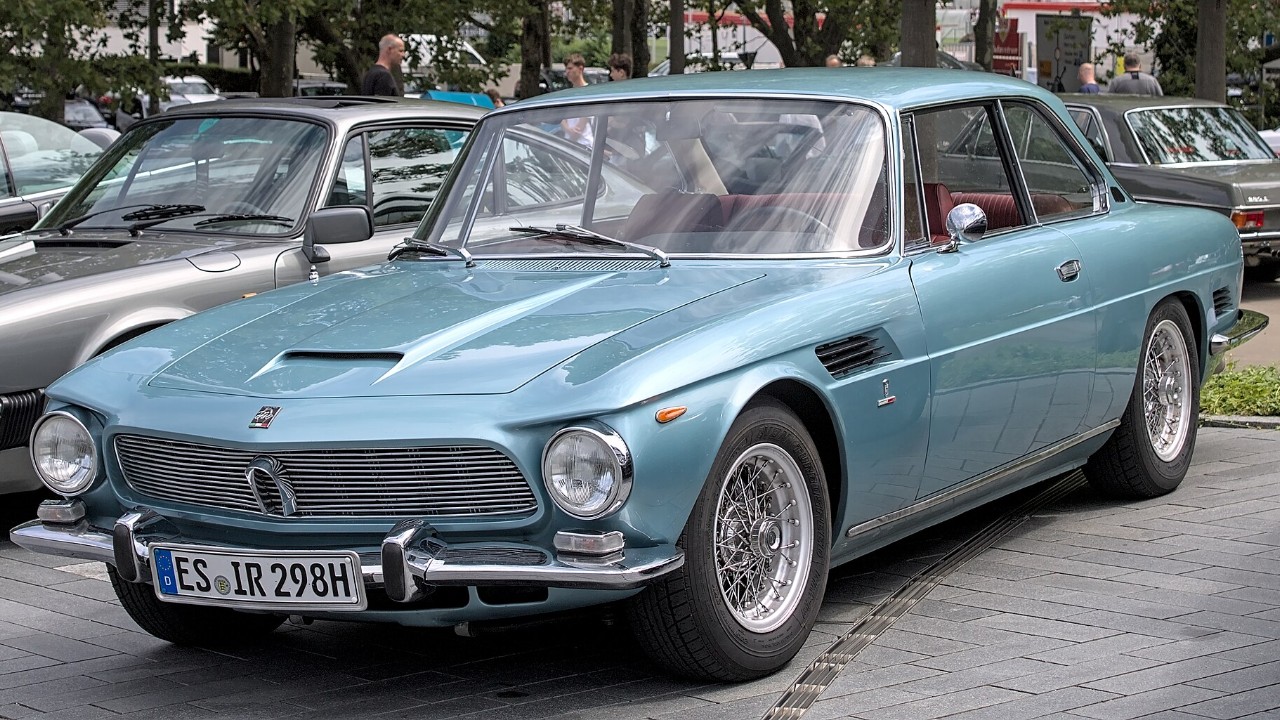
Iso started out making refrigerators, built the Isetta bubble car, and then put a Corvette V8 in an Italian grand tourer. That car was the Iso Rivolta IR 300, and Iso sold only 797 before production ended in 1970.
It was an unusual road to the luxury market. Over about two decades, the firm went from household appliances to scooters, then to a microcar that BMW built under licence. Finally, it landed on fast four-seat coupes with American engines.
The Rivolta family steered every step. Here is how a fridge maker ended up with a Corvette-powered Italian grand tourer, and what the numbers say about it.
From Isothermos refrigerators to motorcycles
The company began in 1939 as Isothermos, and it “really did start out making fridges,” according to Hagerty UK. Canada’s Ingenium museum describes it as a maker of electric heaters and refrigerators, as well as other household appliances.
Renzo Rivolta, a car enthusiast, bought Isothermos in 1942, Hagerty says. The Iso specialist Iso Restorations adds that the business started in Genoa and moved to Bresso, near Milan, that same year.
After the war, Rivolta switched to two-wheelers. According to Ingenium, the first Isoscooter and Isomoto models left the factory in 1949 and 1950. By 1950, Hagerty says, Iso was Italy’s third-largest motorcycle maker, behind Vespa and Lambretta.
The Isetta and the BMW licence
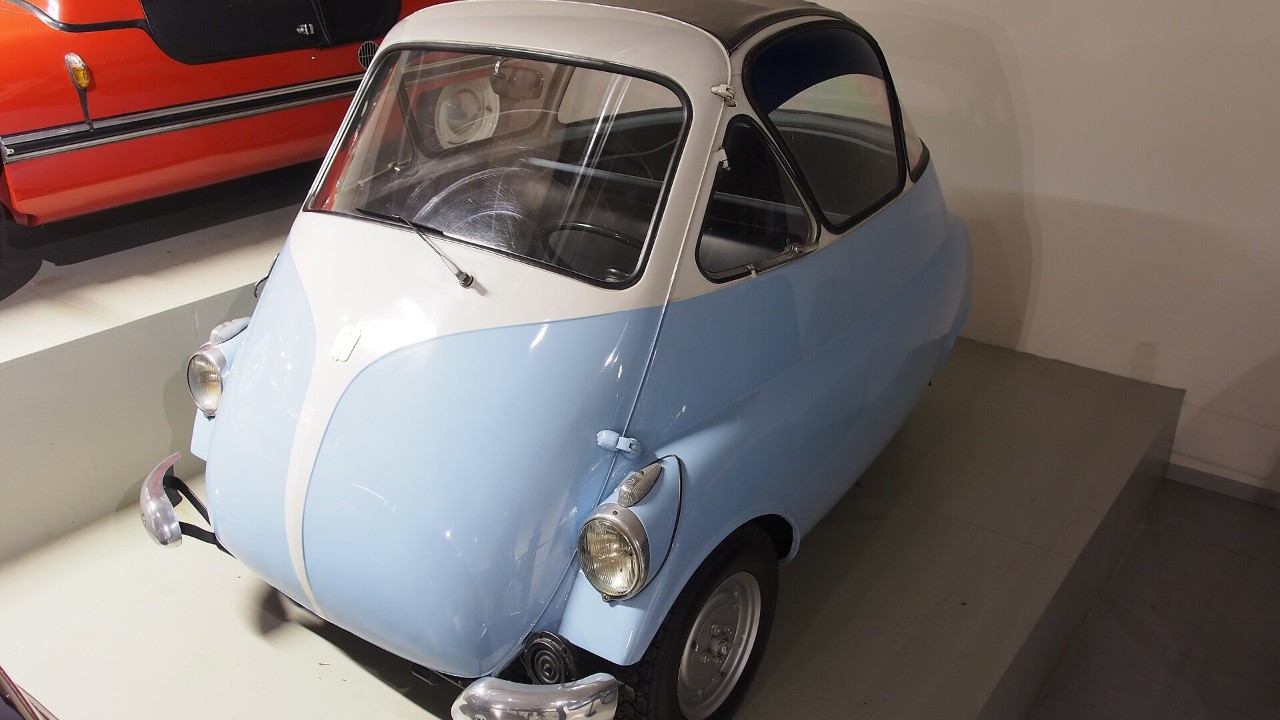
Next came a car. Iso officially presented its Isetta in April 1953 at the Turin motor show, Ingenium says. Its engine made 9.5 metric horsepower and was similar to one of the company’s motorcycle engines.
Iso Restorations says the Rivolta works near Milan built about 20,000 Isettas. Meanwhile, Iso began talks with BMW in 1954 to sell the production rights and tooling, according to Ingenium. BMW presented its own version, the BMW 250, in March 1955.
The German car went on to outsell the original by a wide margin. Between 1955 and 1962, Ingenium says, BMW delivered more than 160,000 BMW 250s and 300s. Even so, the two cars were not twins. The museum notes that the Italian and West German versions had virtually no common parts.
Building the Iso Rivolta IR 300
Later, Renzo Rivolta turned to something much bigger. According to Hagerty, a visit to the 1961 Frankfurt motor show prompted the GT project. Rivolta then hired serious talent. He commissioned Bertone to design the body, and within weeks Giotto Bizzarrini signed on to engineer it.
Bizzarrini had run experimental, sports and GT car development at Ferrari for many years, Silodrome notes. At Bertone, the styling fell to a young Giorgetto Giugiaro. Silodrome also says Bizzarrini developed a pressed and welded steel panel chassis for the new car.
That chassis came together fast. By February 1962, Hagerty says, a pressed-steel rolling chassis was ready. It used double wishbones at the front and a de Dion axle at the rear. Those were the bones of the Iso Rivolta IR 300.
The finished car appeared in 1962. Silodrome and Iso Restorations both place its show debut at the Turin Motor Show that year, while Hagerty dates the unveiling to June 1962.
The Iso Rivolta IR 300 by the numbers
Rivolta chose a proven engine instead of an exotic one. The car used “a proven, reliable, and affordable Chevrolet 327ci (5.3-litre) V8 borrowed from the Corvette,” according to Hagerty. Buyers could have it with either 300 or 340 bhp.
In fact, the “300” in IR 300 refers to the Corvette V8’s output in bhp, Silodrome says. Most cars got a four-speed or later five-speed manual gearbox, but Iso also offered a three-speed automatic.
The car wasn’t cheap. In Britain in 1965, Hagerty says, the Rivolta IR300 listed at £4,360, while the more powerful IR400 cost £5,060.
What came after the Rivolta
The Rivolta was only the start of Iso’s GT years. Hagerty says the Grifo grand tourer debuted in 1965. Iso Restorations counts 413 Grifos in total, including 90 with the 7-litre engine, before production stopped in 1972.
Renzo Rivolta died in 1966, according to Iso Restorations. His son Piero then unveiled the Lele in 1969, ready to replace the Rivolta the following year, Hagerty says. However, the company didn’t survive the decade that followed. By 1974, Iso had gone bust, and Iso Restorations ties its closure to the oil crisis.
The name came back in 2021 with the Zagato-styled Iso Rivolta GTZ, though Hagerty says that run stopped at just 19 cars. As for the original GT, Hagerty records that by the time Rivolta production ended in 1970, Iso had sold just 797 examples.
More from Fast Lane Only
- Unboxing the WWII Jeep in a Crate
- 15 rare Chevys collectors are quietly buying
- 10 underrated V8s still worth hunting down
- Police notice this before you even roll window down
This article was created with the help of AI and was reviewed and edited by Fast Lane Only editors before publication.