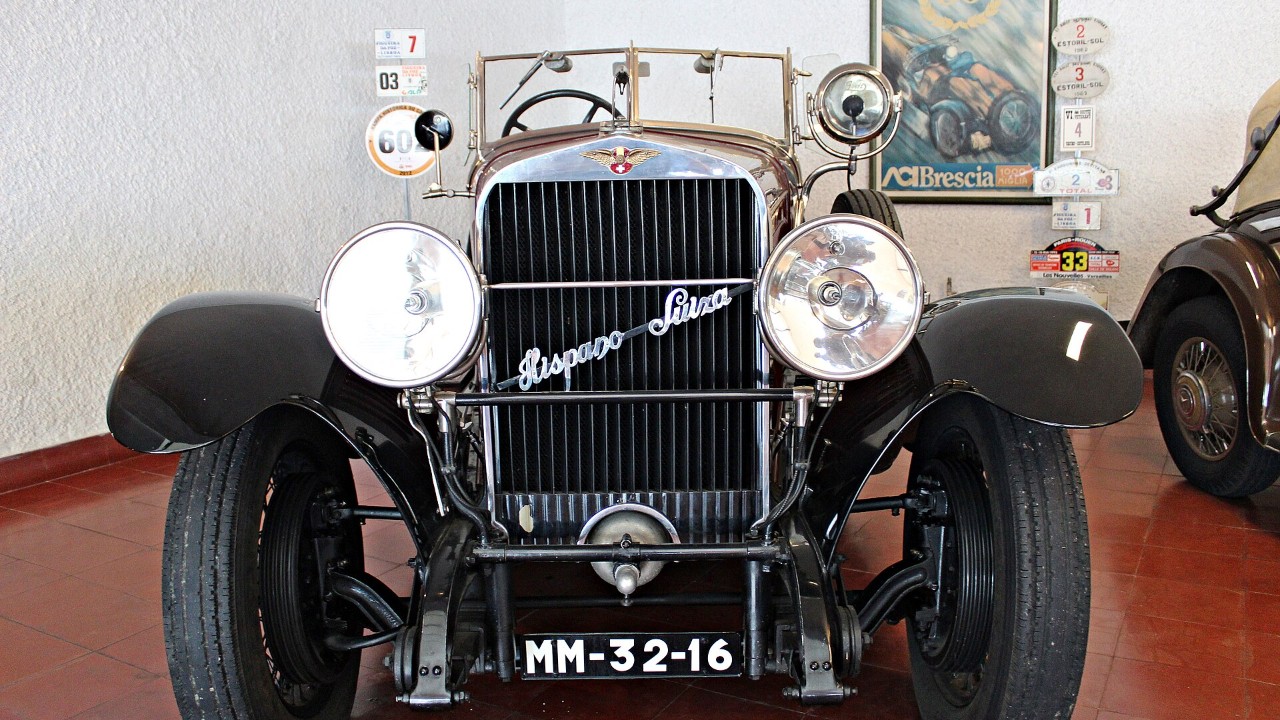
Hispano-Suiza showed its H6 at the Paris Motor Show in October 1919. The Hispano-Suiza H6 had a six-cylinder engine taken from aircraft practice, and it had servo-assisted brakes on all four wheels. Those brakes worked so well that Rolls-Royce paid to use the design.
That last detail says a lot about the car. In effect, Rolls-Royce took a licence from a company that had started in Barcelona.
The story runs through one engineer, a war full of aero engines and a stork on the radiator cap. Here is what made the car different, what it cost and what one brings today.
Before the car came the aero engines
Hispano-Suiza began in Barcelona, and it built an all-electric car as early as 1898 under founder Emilio de la Cuadra, an artillery captain, according to Car & Classic. The firm also hired the Swiss engineer Marc Birkigt. Fittingly, the name itself translates from French as “Spanish-Swiss,” RM Sotheby’s notes. Birkigt’s designs went on to shape both its aero engines and its cars.
During World War I, Birkigt’s V8 aero engines were built under licence and powered most of the French and British planes, Car & Classic says. The Revs Institute puts the total at 50,000 V8 aero engines. In other words, Birkigt was famous long before the H6 arrived.
The car carried a reminder of that war. After the war, the marque adopted the stork emblem of French ace Georges Guynemer’s squadron, whose SPAD biplanes used Hispano’s V8, according to conceptcarz.
An engine from half a V12
The Hispano-Suiza H6 used an overhead-camshaft six “derived from one-half of a proposed V12 aero engine,” conceptcarz says. It had aluminum-alloy pistons in steel liners, and the liners screwed into a light-alloy block.
RM Sotheby’s describes the H6B engine in similar terms. It had machined steel cylinders with integral combustion chambers in a cast aluminum block. It also used two valves per cylinder, a single overhead camshaft and a crankshaft on seven main bearings.
The car didn’t appear from nowhere, either. Conceptcarz says the Barcelona factory built H6 prototypes first and delivered one to King Alfonso XIII of Spain in April 1918. Production then took place at Bois-Colombes, near Paris.
How the servo brakes worked
The H6 borrowed braking power from the car itself. Energy “from the gearbox would be used to activate the brake servo,” Car & Classic explains.
In fact, Car & Classic says the brakes were servo-assisted “even more so when the vehicle was decelerating.” RM Sotheby’s calls them “unique, patented, highly advanced servo-assisted four-wheel brakes.”
Rolls-Royce takes a licence
The brakes “proved so effective that Rolls-Royce acquired the rights to build the design under license,” according to conceptcarz. Car & Classic puts it the same way: “Rolls Royce acquired the licence for the patent so it could use it on its own cars.”
The Revs Institute adds a date for the money. It says the brake system was “so exemplary that Rolls-Royce began paying royalties for it in the mid-1920’s.” In other words, a direct rival was paying for a Hispano idea.
The Hispano-Suiza H6 by the numbers
The H6B made 135 bhp and topped out at 85 mph, according to Car & Classic. Conceptcarz also gives 135 horsepower for its featured car. By 1924, the factory offered an 8-liter model called the 46CV H6C, and the 32CV car became the H6B, conceptcarz says.
The bigger car made a lot more power. The Revs Institute lists its 1928 H6C at 7,982 cc and 194 bhp at 3,000 rpm. It also says the chassis cost several thousand dollars more than a Rolls-Royce. Similarly, conceptcarz calls H6 models “expensive, often the most expensive vehicle in all of Europe.” Still, the Revs Institute says gentlemen racers favored the car for its performance and women for its style.
Production figures differ. Conceptcarz estimates about 2,158 chassis, though it notes that other sources cite 2,350 or 2,450. Kellner Frères of Paris was a prolific coachbuilder for the marque, the Revs Institute says, until the last chassis in 1938.
What an H6B brings today
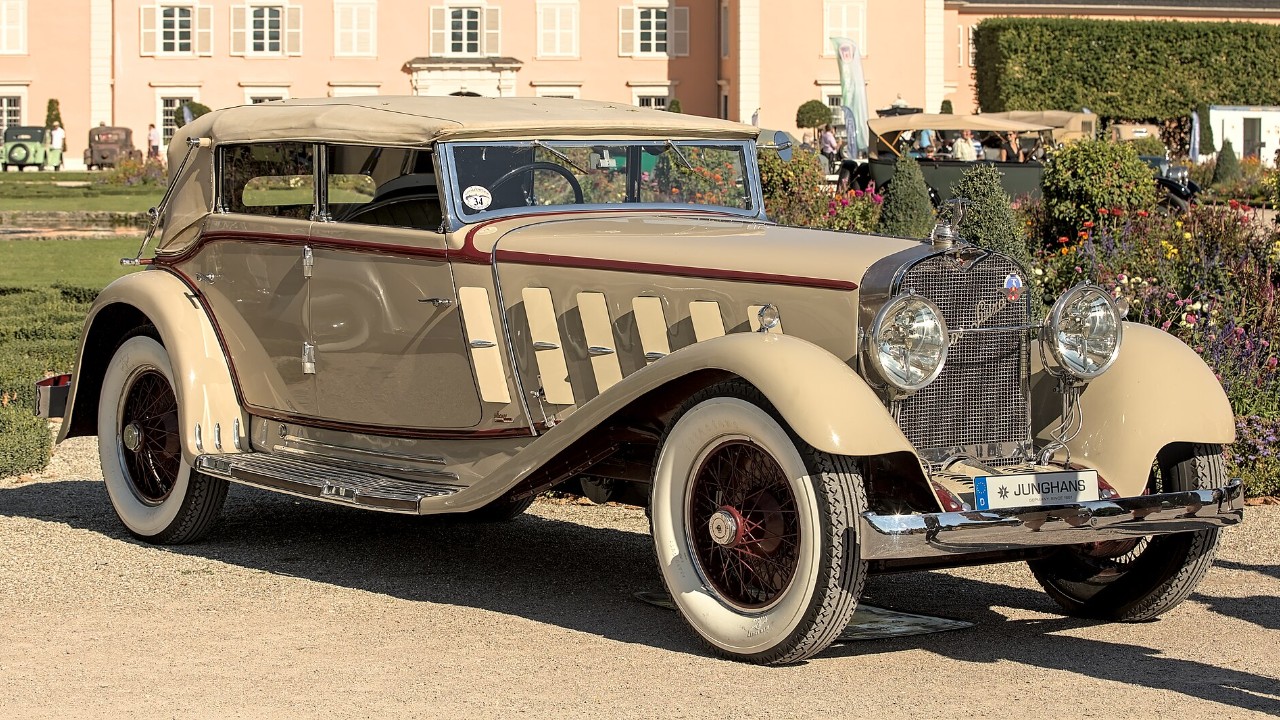
Auction results show a wide range. At its Hershey sale in 2024, RM Sotheby’s sold a 1926 H6B tourer by Hooper of London for $143,000. That car came from the Terence E. Adderley Collection.
The top of the market is much higher. RM Sotheby’s says one 1923 H6B carries a cabriolet body believed fitted around 1932 by Fernandez et Darrin. At its Monterey sale in 2025, the house sold that car for $1,127,000.
More from Fast Lane Only
- Unboxing the WWII Jeep in a Crate
- 15 rare Chevys collectors are quietly buying
- 10 underrated V8s still worth hunting down
- Police notice this before you even roll window down
This article was created with the help of AI and was reviewed and edited by Fast Lane Only editors before publication.