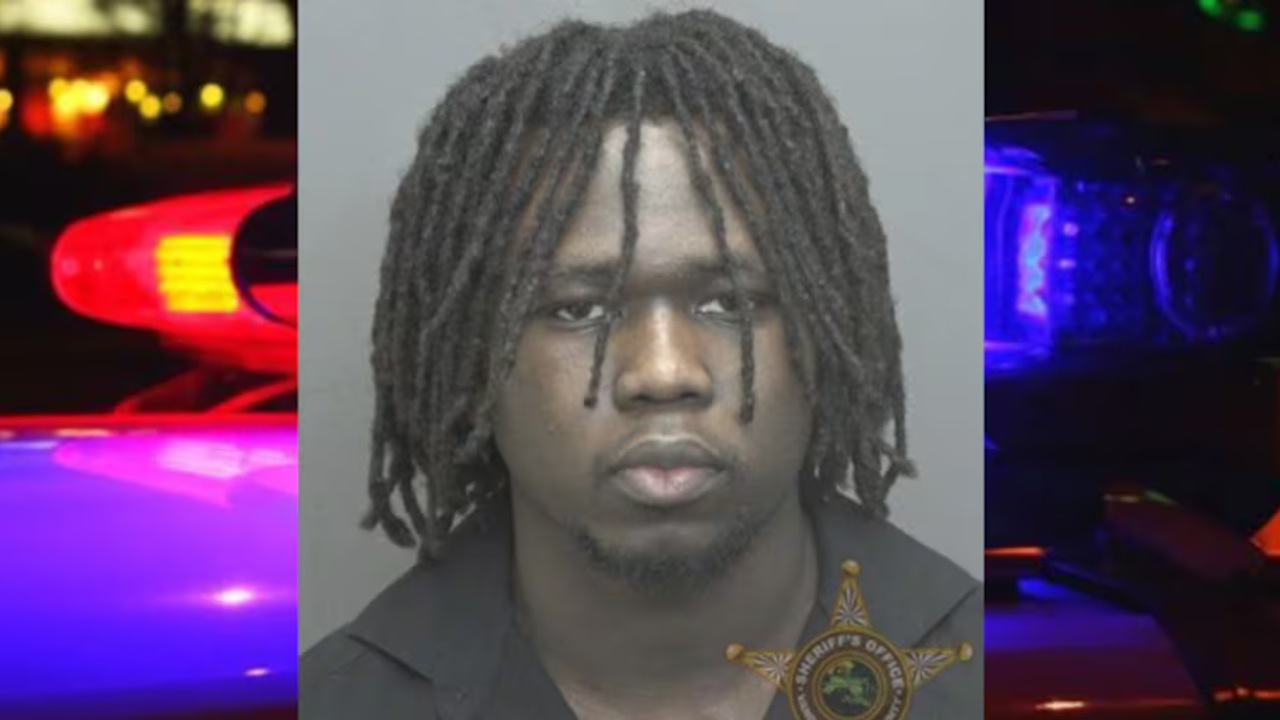
A late-night pursuit on U.S. 41 in Evansville, Ind ended with a mangled car, a stunned neighborhood, and a jail officer in handcuffs instead of behind a booking desk. The high speed chase, which investigators say topped highway limits before a violent crash, has now cost 20-year-old correctional worker Hezekiah Fils-Aime both his freedom and his job. The case has quickly become a stark example of what happens when someone entrusted with enforcing the law is accused of treating public roads like a racetrack.
The chase that turned a jailer into a defendant
Investigators say the chain of events began when Hezekiah Fils-Aime, a Vanderburgh County jail officer, was driving northbound on U.S. 41 near Lynch Road and encountered another vehicle that caught his attention. According to police, Fils-Aime later told officers he was traveling on that stretch of 41 when a Mustang pulled up alongside him, a detail that helps explain why a routine drive escalated into a dangerous contest of speed. What followed, according to multiple accounts from VCSO and Evansville Police, was a rapid acceleration that drew the attention of officers and set off a pursuit that would soon leave debris scattered across the roadway.
Once officers attempted to stop the vehicle, the driver did not yield, and the situation shifted from risky driving to an active chase. Reports from VCSO and Evansville Police describe a pursuit in which the car fled northbound despite lights and sirens, with officers tracking the vehicle as it weaved through traffic at high speed. The chase ended only when the fleeing car crashed, a “brutal” impact that left the vehicle heavily damaged and underscored how quickly a moment of reckless bravado can turn into a serious collision. By the time the dust settled, the driver who had tried to outrun the law was in custody, and officers were confronting the reality that the suspect worked inside their own jail.
From rising jail officer to inmate in the same facility
The driver taken into custody after the crash was identified as 20-year-old jail officer Hezekiah Fils-Aime, who had been employed at the Vanderburgh County Sheriff’s Office. According to county officials, Fils-Aime was a relatively new hire, part of the younger cohort of correctional staff tasked with supervising inmates and maintaining order inside the jail. That role made his alleged conduct on U.S. 41 particularly jarring, since the same standards of discipline and judgment expected in the cell blocks are presumed to carry over to life outside the facility. Instead, he was booked into the very system he once helped operate, a reversal that has drawn pointed public scrutiny.
Authorities have said that after the crash, Fils-Aime was arrested following the high speed chase with Evansville Police Department and Vanderburgh County deputies, then processed like any other defendant. Subsequent reporting described him as a former jail officer, indicating that his employment was terminated swiftly once the allegations became clear. One account noted that he ended up in jail at the very place where he worked as a Correctional Officer, a detail that underscores the personal and institutional fallout. The shift from uniformed staffer to inmate is not just symbolic; it raises questions about how thoroughly agencies vet and monitor young employees who are given significant authority over others’ liberty.
Charges, internal fallout, and a department on the defensive
Local officials have not only focused on the spectacle of the chase but also on the legal consequences that Fils-Aime now faces. Reports indicate that he was arrested after the pursuit and crash, with charges tied to fleeing police during a high speed chase and the resulting collision. While specific counts vary across early descriptions, the consistent thread is that investigators view the incident as a serious breach of both traffic law and professional duty. The fact that the chase ended in a crash, rather than a controlled stop, is likely to weigh heavily in any charging decisions and potential sentencing, since it highlights the risk posed to other drivers and pedestrians along U.S. 41.
Inside the Vanderburgh County Sheriff’s Office, the arrest has triggered internal reviews and public statements aimed at reassuring residents that the agency is not shielding its own. Officials have emphasized that Fils-Aime’s employment status changed quickly, with references to him as a former jail officer appearing almost immediately after his arrest. The department has also signaled that its professional standards unit and command staff will examine whether any policy changes or additional training are needed, particularly for younger officers assigned to high stress environments like the jail. That posture reflects a broader reality for law enforcement agencies, which must respond decisively when one of their own is accused of conduct that undermines public trust.
Community reaction and the optics of a jailer behind bars
For residents of EVANSVILLE, Ind, the image of a VCSO jail officer being led away after a crash at the end of a high speed chase has been both unsettling and oddly familiar. High profile pursuits often draw attention, but this case carries an added layer of irony because the suspect worked in a facility that houses people arrested in similar circumstances. Community members who live near U.S. 41 and Lynch Road have expressed concern about the danger posed by vehicles racing along that corridor, particularly when the driver is someone who should understand the consequences of reckless behavior better than most. The crash has renewed calls for stricter oversight of both civilian and law enforcement driving on busy arterial roads.
The optics of a jailer becoming an inmate have also fueled online debate about accountability in the criminal justice system. Commenters have pointed to the fact that Fils-Aime was quickly described as a former jail officer as evidence that the sheriff’s office recognized the seriousness of the situation and moved to distance itself from his alleged actions. Others have argued that the case illustrates how power and responsibility can be misused when younger officers are not adequately mentored or supervised. In either view, the spectacle of a correctional worker in a jumpsuit rather than a uniform has become a potent symbol of the thin line between enforcing the law and breaking it.
What the case reveals about high speed chases and law enforcement culture
Beyond the immediate drama of the crash, the incident involving Hezekiah Fils-Aime has reopened a broader conversation about high speed chases and the culture within law enforcement agencies. Pursuits are among the most dangerous activities officers engage in, and departments across the country have tightened policies to limit when and how they are authorized. When the person fleeing is a Correctional Officer, as described in one detailed account of the Indiana Arrested After Fleeing Police, Crashing Car During High Speed Chase, the episode becomes a cautionary tale about how the same adrenaline and risk that officers confront on duty can spill into their off duty lives. It also raises questions about whether agencies are doing enough to screen for impulsive behavior before handing someone a badge or a set of jail keys.
The Vanderburgh case has also highlighted the importance of transparent communication after incidents that involve law enforcement personnel as suspects. By confirming that a VCSO jail officer was arrested after a high speed chase leads to crash, and by acknowledging that he is now a former jail officer, local authorities have tried to show that there is no separate standard for those who work inside the system. At the same time, the story has underscored how quickly a promising career can collapse when a single night’s decisions collide with public safety and professional ethics. For the community along U.S. 41, and for agencies watching from elsewhere in Indiana, the brutal crash that ended this chase is likely to serve as a lasting reminder that the badge offers responsibility, not immunity, when the blue lights come on.
More from Fast Lane Only