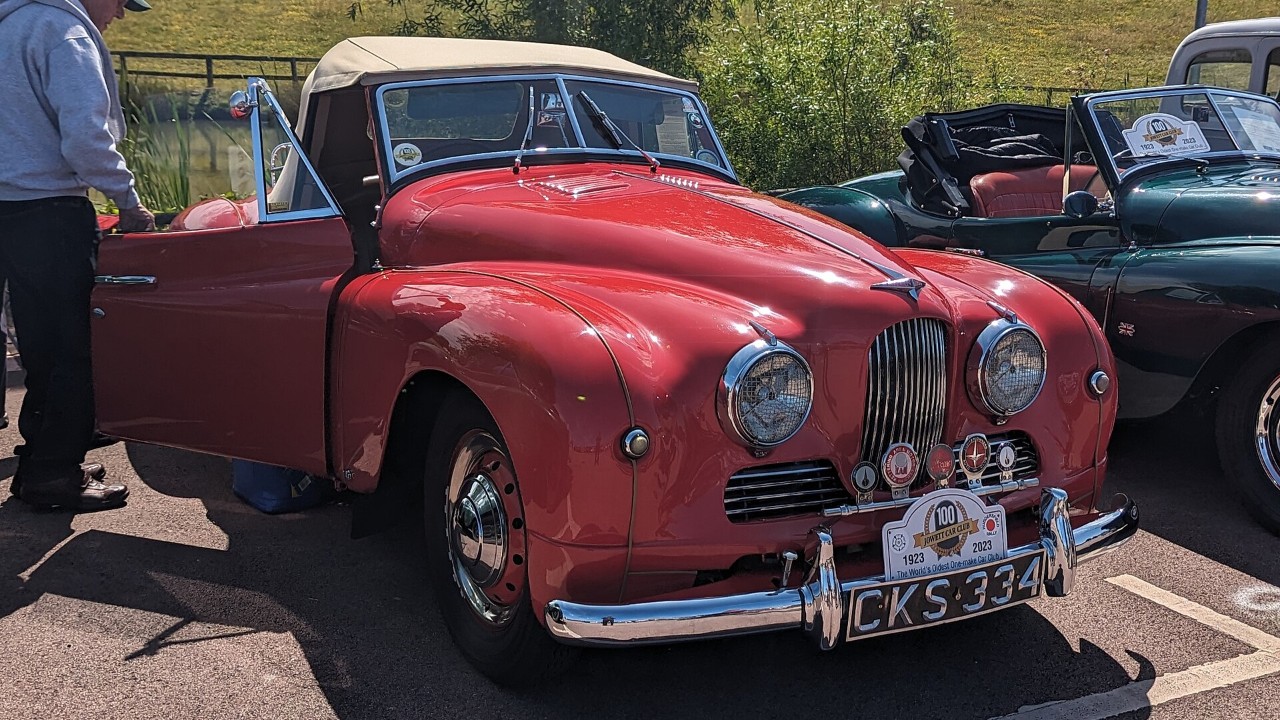
In June 1950, a small Yorkshire sports car ran 24 hours at Le Mans without trouble and won its class. The Jowett Jupiter Le Mans entry, driven by Tommy Wisdom and Tommy Wise, finished 16th overall and first in the 1.5-liter class. It did that with a flat-four engine borrowed from a family sedan.
That result put an unlikely name on the map. Jowett built cars in Bradford, and it was better known for modest saloons than for racing. Yet for three straight years, a Jupiter won its class at the world’s most famous endurance race.
Here is how a family-car maker got there, what made the Jupiter work, and why the story ended so quickly.
A sports car built from a family sedan
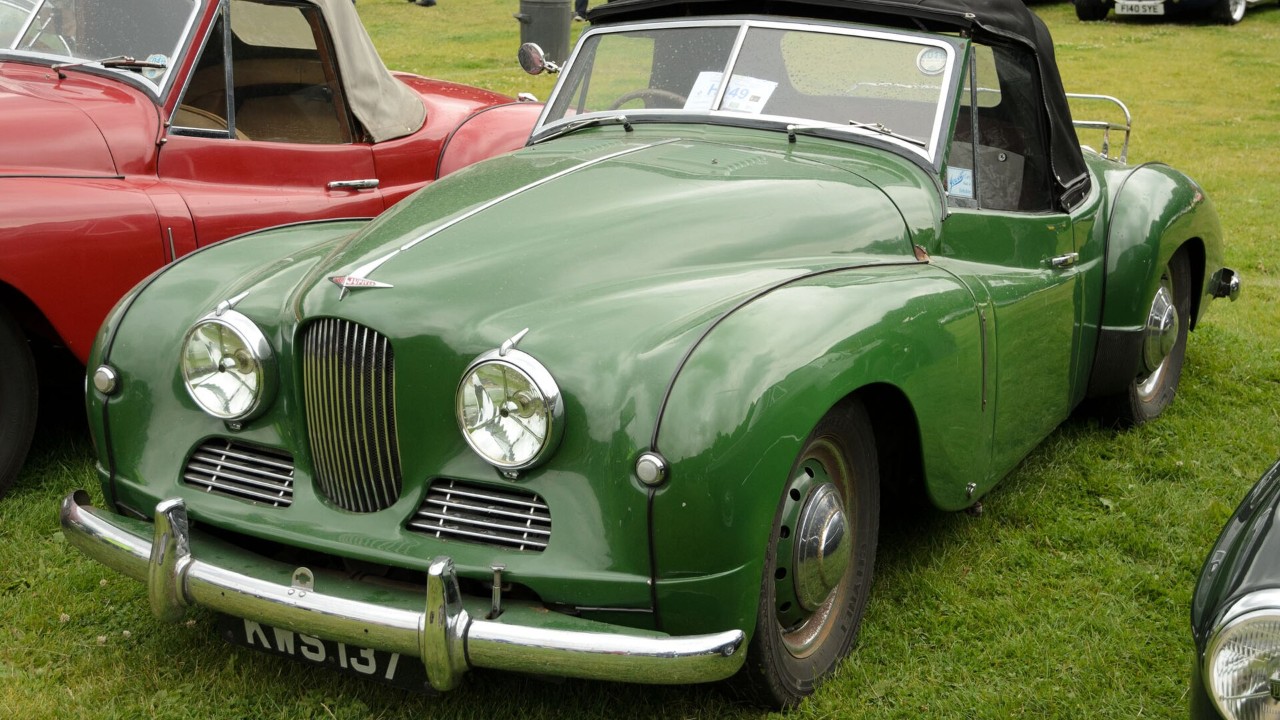
The Jupiter started with the Javelin, Jowett’s postwar saloon. Gerald Palmer designed the Javelin during the war years. However, the Jupiter itself did not come from Jowett’s own engineers, according to Motor Sport’s 1989 history of the car.
Instead, in 1949 Jowett gave a contract to ERA at Dunstable. There, Professor Robert Eberan von Eberhorst designed a tubular chassis for a tuned Javelin engine. He had earlier worked on Auto Union racing cars, New Zealand Classic Car notes.
The first chassis appeared at the 1949 Earls Court Show. Motor Sport says that frame “proved too weak,” and six more ERA prototypes followed. Meanwhile, Jowett’s chief body designer, Reg Korner, drew the open body, and production began at Bradford in 1950.
The 1.5-liter flat-four behind the Jowett Jupiter Le Mans win
The heart of the car was the Javelin’s 1,486cc engine. It was a pushrod, overhead-valve flat-four, so its cylinders lay flat and opposed, like a Volkswagen Beetle’s. That layout kept the engine low, and Jowett mounted the radiator behind it.
In Javelin tune, the engine made 50 bhp. For the Jupiter, Jowett raised the compression ratio from 7.25:1 to 8:1. As a result, output rose to 60 bhp, Motor Sport reported, with 82 lb-ft of torque.
That is not much power, even by 1950 standards. Still, Motor Sport gives its unladen weight as only about 18½ cwt. For comparison, the road car Motor Sport tested cost £1,086 17s 3d with purchase tax, which made it a real-world sports car rather than a racing special.
Twenty-four hours at Le Mans in 1950
The 1950 race ran on June 24 and 25. The car that started was an essentially stock Jupiter, wearing No. 36. According to Dennis Simanaitis’s account, the main change was a single bucket seat in place of the standard bench seat.
Wisdom and Wise then drove it for the full 24 hours. Simanaitis writes that the car ran trouble-free and won its class “with a record 75.84-mph average.” Similarly, New Zealand Classic Car puts the pace at 75.8 mph and the distance at more than 1,819 miles.
Motor Sport’s 1989 history adds the detail behind the “record” in this story. The Jupiter, it says, “beat Aston Martin’s record by 14 miles in winning the 1½-litre class.” In other words, the little Jowett covered more ground than any earlier car in its class had managed.
The class was not crowded. Viaretro’s 70th-anniversary history lists five starters, including an MG, two Simca-Gordinis and a Fiat. Even so, finishing a 24-hour race in a near-stock car was hard in 1950. Motor Sport’s August 1950 race report called it “a most impressive first appearance” and recorded the car 16th overall.
Two more class wins, then the end of Jowett
The 1950 result was not a one-off. In 1951, Marcel Becquart and Gordon Wilkins won the 1.5-liter class at Le Mans in a standard Jupiter. Then, in 1952, the same pair won it again in the lighter R1, according to the Jowett Jupiter competition history. After that, Motor Sport notes, Porsche took over the class.
The Jupiter also worked away from Le Mans. At the 1951 Monte Carlo Rally, a standard Jupiter driven by Ellison and Robinson won its class and finished sixth overall. Later that year, Hadley and Wise finished first and second in their class at the Tourist Trophy.
Off the track, though, Jowett was in trouble. Briggs Motor Bodies supplied its saloon bodies, and Ford interests took Briggs over. Briggs then stopped building Javelin bodies. Jowett reported a loss of £286,353 for 1952, according to Viaretro.
By September 1954, the last new Jupiter had left the line. That same month, International Harvester took control of the Idle factory. Finally, Blackburn Aircraft bought what remained of Jowett in 1955.
How many Jupiters Jowett built
The Jupiter was never a big seller. Factory records cited by New Zealand Classic Car show 731 standard Mark 1 cars, sold from November 1950. A further 94 Mark 1A cars followed from October 1952, with an opening boot lid.
On top of those, Jowett supplied around 69 rolling chassis. Most went to coachbuilders such as Abbott, Farina, Ghia, Mead and Radford. Some of those special-bodied cars also went rallying.
So the whole run came to fewer than 900 cars. Of those, the one that mattered most was No. 36, the near-stock Jupiter that Wisdom and Wise drove to 16th overall and the 1.5-liter class win at Le Mans on June 25, 1950.
More from Fast Lane Only