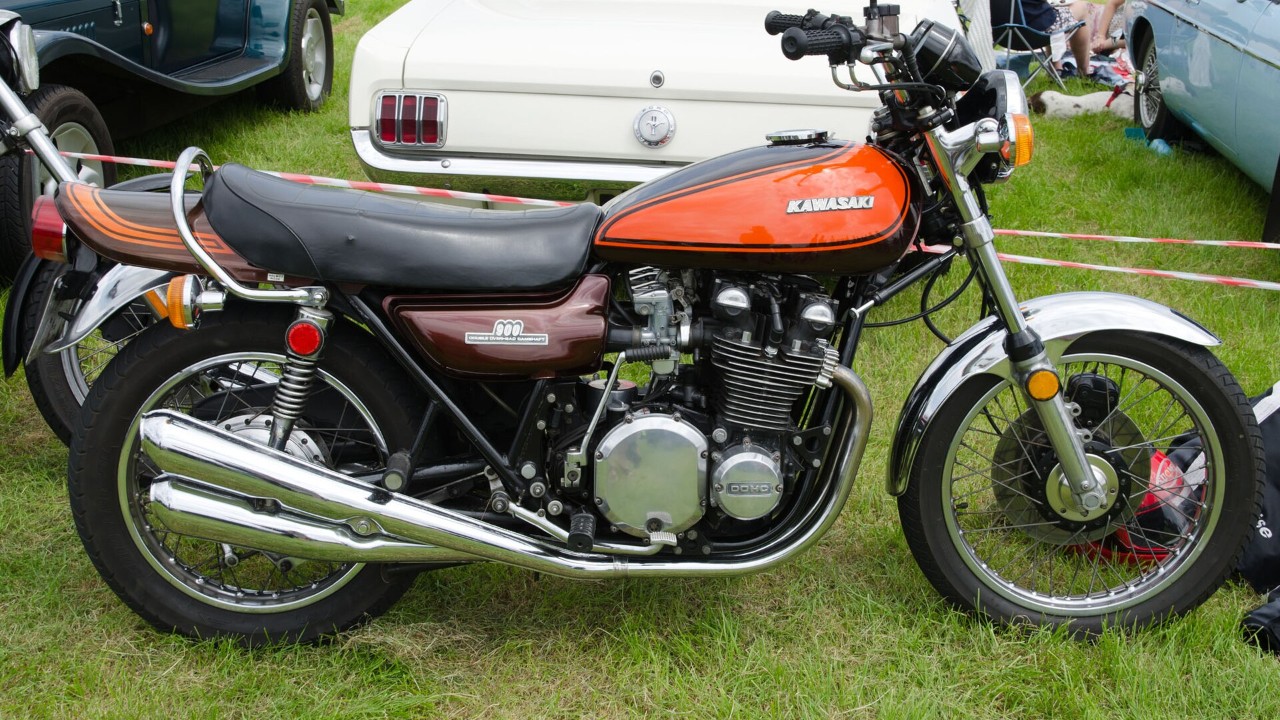
The Z1 Daytona record came on 14 and 15 March 1973, when Kawasaki ran its new 903 cc four around the banked speedway for a full day. When the clock stopped, the leading bike had covered 2,630.402 miles at an average of 109.602 mph. That is the figure Kawasaki’s own American arm gave for the run in 2016.
The Z1 was a brand-new street bike at the time. So the run was not a show for a race machine. Instead, it was a test of whether a showroom motorcycle could hold triple-digit speeds for 24 hours without coming apart.
Here is how the attempt was set up, who rode, what went wrong in the dark and what the team brought home.
Three bikes on the high banks
The team arrived at Daytona International Speedway on Wednesday, 13 March 1973, with three Z1s, officials and a crew of riders and mechanics. That date and the rest of the timeline come from a 2016 Kawasaki Motors Corp., U.S.A. release titled “So Far. So Fast.” It was part of the company’s series marking 50 years in America.
Two of the bikes were set up for the 24-hour run. According to Kawasaki, they got lowered handlebars, Goodyear racing tires and heavy-duty shocks. The third bike had limited engine changes and a full fairing, because its job was the short-distance records. RideApart’s account adds that Kawasaki had Yoshimura prepare the three machines.
Duhamel’s warm-up records
The shorter records came first. On the afternoon of 13 March, Team Kawasaki rider Yvon Duhamel took one warm-up lap. Then he set a one-lap mark of 160.288 mph, according to the Kawasaki release.
The next morning, Duhamel went for the standing-start records. He averaged 150.845 mph for 10 kilometers. Later, about 26 minutes after the start, he finished 100 kilometers at 141.439 mph. Kawasaki’s release summed up the opening day and a half with one line: “Three for three so far!”
Those runs used the faired bike. Meanwhile, the two endurance machines waited for the main event later that Thursday morning.
How the Z1 Daytona record run worked
The 24-hour attempt started on the morning of Thursday, 14 March. The team did not aim for top speed. Instead, it set a steady target of 120 mph, because a gentler pace meant less tire wear.
The routine was strict. Riders rotated through 150-mile shifts, according to Kawasaki. The bikes stopped for fuel every 37 minutes, and they got new tires every six hours. That plan kept the Z1s circulating while the riders and tires took turns resting.
The riders on the run were a mix of racers, journalists and company staff. Kawasaki lists Art Baumann, Cliff Carr, Gary Nixon, Masahiro Wada and Hurley Wilvert. It also names magazine men Cook Neilson and John Weed, plus Bryon Farnsworth of Kawasaki Motors Corp., U.S.A. Jeff Shetler and Randy Davis handled the wrenches.
Sunset came at 6:15 p.m., and the night brought trouble. Thick fog rolled over the speedway, and one bike broke a chain. Even so, the team kept riding through the dark. Farnsworth later described the night laps simply: “At 130 mph it’s difficult to stay within the lines.”
The numbers at the finish
The run ended just after 9:30 a.m. on Friday, 15 March 1973. By then, the leading Z1 had covered 2,630.402 miles at an average of 109.602 mph, according to Kawasaki’s release. The company says that beat the previous 24-hour record by nearly 20 mph.
The same figures appear in Roadracing World’s reprint of the release. In addition, Kawasaki counts 46 AMA and FIM performance records across the three days at Daytona.
Other tallies run higher, however. In its 2022 piece on a vintage film of the attempt, RideApart lists 52 world and American records. It also gives the 24-hour result as 2,630.4 miles at 109.602 mph, which matches the factory. RideApart’s list also includes all U.S. speed records from 300 to 2,500 miles and all from two to 24 hours.
The two sources differ on the one-lap figure too. RideApart gives 160.199 mph for the AMA closed-course lap, while Kawasaki gives 160.288 mph. On the 24-hour average, though, both say 109.602 mph.
The street bike behind the record
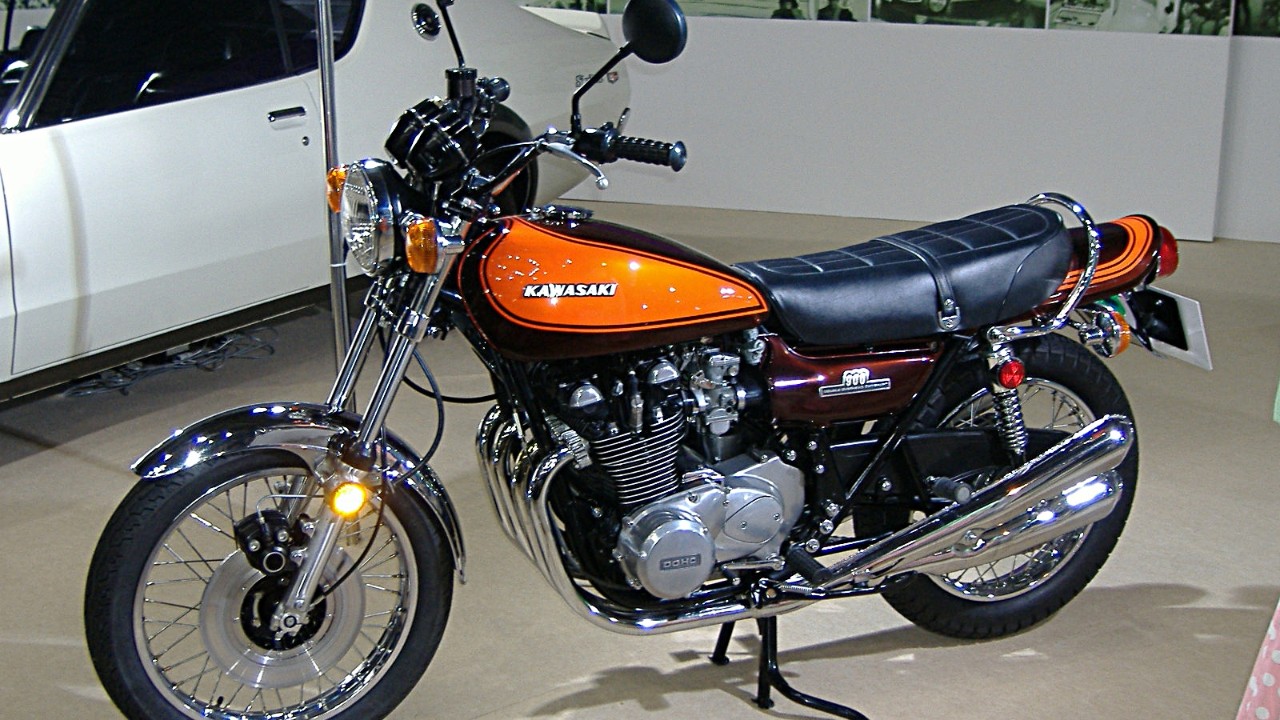
The machine that did all this sold for $1,895 in 1973, according to Kawasaki. The company billed it as the first air-cooled, twin-cam inline-four production motorcycle. It also called the Z1 the most powerful production bike of its day.
Under the tank sat a 903 cc four-stroke four with chain-driven twin overhead cams. Motorcycle Classics gives a claimed 82 horsepower at 8,500 rpm, an 8.5:1 compression ratio and four 28 mm Mikuni carburetors. It also lists a wet weight of 544.5 pounds. RideApart, by comparison, rates the engine at 81 horsepower and 54.2 lb-ft of torque.
The bike earned praise on the road as well as on the banking. In Motorcycle Classics’ history of the Z1 and its successor, Greg Williams quotes Cycle’s “Superbike 1973” test from December 1972. The testers wrote: “You can lean the Z1 way over before the pegs and stands begin to drag.”
The first bikes were not flawless, though. Motorcycle Classics notes that early Z1s stumbled off idle, and Kawasaki addressed the carburetion and ignition issues in later years. For more of the brand’s history, see our look at seven Kawasakis that became legends and the 1969 Mach III two-stroke triple.
The Z1 itself stayed in the lineup for two more years after 1973. According to Motorcycle Classics, it returned as the 1974 Z1A and the 1975 Z1B before the 1976 KZ900 took over.
More from Fast Lane Only