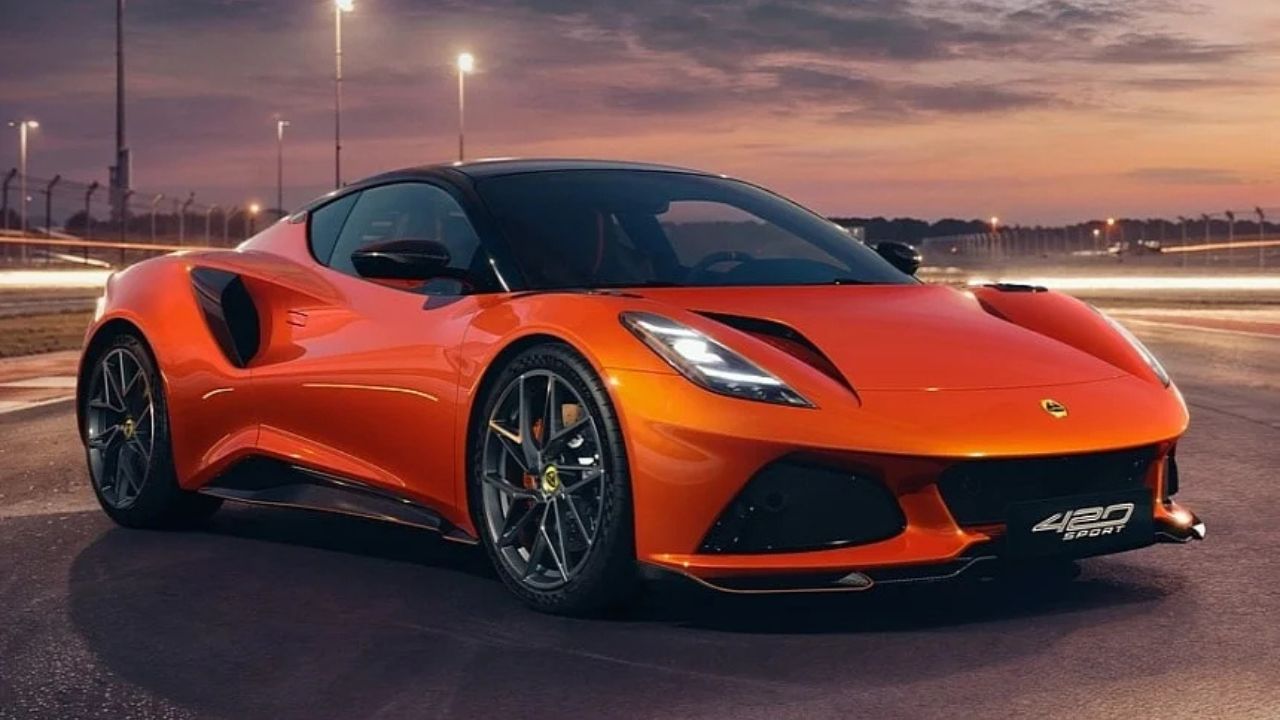
Lotus has pulled the covers off the Emira 420 Sport, a new range-topping four-cylinder variant that sharpens the brand’s last petrol sports car with more power and less weight. Positioned as the most focused Emira yet, it targets drivers who care more about lap times and steering feel than touchscreens and driver aids.
By pushing the AMG-sourced engine to 420 metric horsepower and trimming mass wherever possible, Lotus is trying to remind enthusiasts what made its cars special in the first place. The Emira 420 Sport arrives as a statement of intent at a time when the company is otherwise pivoting toward heavy-hitting electric SUVs and crossovers.
Key upgrades that define the Emira 420 Sport
The Emira 420 Sport builds on the existing four-cylinder Emira R, but the changes go far beyond a simple power bump. Lotus has taken the 2.0‑liter turbocharged engine supplied by Mercedes‑AMG and increased output to 420 PS, with torque figures raised accordingly, to create the most potent four-cylinder Emira yet, as detailed in the official debut coverage.
To match that extra power, the 420 Sport receives a series of chassis and hardware revisions. Lotus specifies a more aggressive calibration for the eight‑speed dual‑clutch transmission, with quicker shifts in the sportier drive modes and mapping that keeps the engine in its fattest torque band on track. The car also benefits from stiffer suspension settings, revised geometry and a choice of track‑oriented tires, all aimed at improving precision and grip.
Weight reduction is central to the 420 Sport brief. Lotus fits lighter forged wheels and a stripped‑back interior package that removes some sound insulation and non‑essential comfort features. The result is the lightest Emira variant, with a kerb weight that undercuts the already lean four‑cylinder models and gives the 420 Sport a clear power‑to‑weight advantage over its siblings.
Styling tweaks are subtle but purposeful. The 420 Sport gets unique wheel designs, contrasting brake calipers and specific badging, along with optional exterior packs that add more exposed carbon fiber and track‑inspired details. Inside, Lotus pairs Alcantara upholstery with contrast stitching, a smaller steering wheel and heavily bolstered seats to emphasize the car’s more serious intent.
How the 420 Sport reshapes the Emira story
Lotus has framed the Emira as its final internal‑combustion sports car, which means each new variant carries more symbolic weight than a typical mid‑cycle update. The 420 Sport effectively becomes the halo for the petrol Emira line, sitting above the existing four‑cylinder and V6 models in terms of performance focus, according to product details shared in the launch coverage.
Choosing the AMG four‑cylinder as the basis for its flagship rather than the supercharged Toyota V6 is also a statement about where Lotus sees the best blend of performance and efficiency. The lighter, smaller engine helps move mass closer to the center of the car and improves weight distribution, which in turn benefits turn‑in and mid‑corner balance. At the same time, the turbocharged four offers tuning headroom that the engineers have clearly exploited to hit the 420 PS figure.
The 420 Sport also clarifies the Emira range structure for buyers. Customers who want a more touring‑oriented experience can look to the regular four‑cylinder or V6 models with their softer suspension and fuller equipment lists. Those who care most about track days and B‑road drives are steered toward the 420 Sport, which trades some refinement for sharper responses and more feedback.
From a brand perspective, the car reconnects Lotus with its heritage of building lightweight, focused specials late in a model’s life. Previous icons such as the Elise Cup 250 and Exige Cup variants followed a similar pattern, adding power, stripping weight and tightening the chassis to create enthusiast favorites. The Emira 420 Sport plugs into that lineage and gives the petrol Emira a suitably hardcore send‑off.
Why the lightest, most powerful Emira lands at a critical moment
The timing of the 420 Sport is not accidental. Lotus is in the middle of a transformation into a global performance brand with a growing line of electric vehicles, including the Eletre SUV and Emeya sedan. Those models are aimed at new customers and markets, yet they risk alienating long‑time fans who associate Lotus with minimalist sports cars and track toys.
By launching a lighter and more powerful Emira variant now, Lotus is signaling that it has not forgotten that core audience. The 420 Sport offers a counterpoint to the company’s heavier electric offerings and gives dealers a halo product that showcases the chassis expertise that underpins the new EVs. For buyers wary of the move toward electrification, it also represents a last chance to own a new, combustion‑powered Lotus that feels unapologetically old‑school in its priorities.
The car also responds to competitive pressure. Rivals such as the Porsche 718 Cayman and Alpine A110 have carved out strong positions in the compact sports car segment, with their own lightweight or track‑focused editions. The Emira 420 Sport allows Lotus to pitch a more extreme alternative, one that leans into rawness and driver involvement rather than everyday usability. The combination of a high‑output four‑cylinder, dual‑clutch gearbox and low weight gives Lotus a clear technical story to tell against those benchmarks.
There is a regulatory dimension as well. Stricter emissions rules and fleet CO2 targets are making it harder for low‑volume sports cars to survive in their current form. By extracting more performance from the efficient AMG engine while keeping weight down, Lotus can deliver meaningful gains in speed and agility without resorting to larger, thirstier powertrains that would be harder to justify in the current climate.
What the Emira 420 Sport signals about Lotus’s next moves
Although the Emira 420 Sport is framed as a celebration of internal‑combustion performance, it also serves as a bridge toward Lotus’s electric future. The focus on weight reduction, packaging and driver‑centric ergonomics reflects priorities that the company says it will carry into its EV sports car projects. Lessons learned from the 420 Sport’s chassis tuning and aerodynamic tweaks are likely to inform the calibration of future battery‑powered models.
For the Emira line itself, the 420 Sport could mark the high‑water mark before production winds down. Lotus has already made clear that it does not plan a direct petrol successor, which suggests that the 420 Sport might be one of the last, if not the last, significant performance derivative. That prospect may drive demand among collectors who want a final‑generation Lotus with a factory‑sanctioned track package rather than an aftermarket build.
In the nearer term, the 420 Sport gives Lotus a strong story for motorsport and customer racing. The car’s lighter weight, uprated powertrain and focused suspension make it a natural candidate for one‑make series or club‑level competition, echoing the role that Elise and Exige Cup cars played for years. Even if formal racing programs are limited, the specification clearly targets owners who plan to use their cars extensively on circuit.
More broadly, the Emira 420 Sport will test how much appetite remains for pure petrol sports cars as EVs gain ground. Strong demand would encourage Lotus to keep a thread of that DNA alive in its future products, perhaps through particularly light and agile electric coupes. A cooler reception would reinforce the shift toward high‑volume crossovers and luxury‑leaning models.
For now, the Emira 420 Sport stands as a clear statement of what Lotus thinks a modern driver’s car should be: compact, relatively light, aggressively tuned and unapologetically focused on the person behind the wheel. In an era of rapid change, that clarity of purpose may be its most valuable asset.
More from Fast Lane Only
- Unboxing the WWII Jeep in a Crate
- 15 rare Chevys collectors are quietly buying
- 10 underrated V8s still worth hunting down
- Police notice this before you even roll window down
*Research for this article included AI assistance, with all final content reviewed by human editors
More from Fast Lane Only
- Unboxing the WWII Jeep in a Crate
- 15 rare Chevys collectors are quietly buying
- 10 underrated V8s still worth hunting down
- Police notice this before you even roll window down
*Research for this article included AI assistance, with all final content reviewed by human editors.