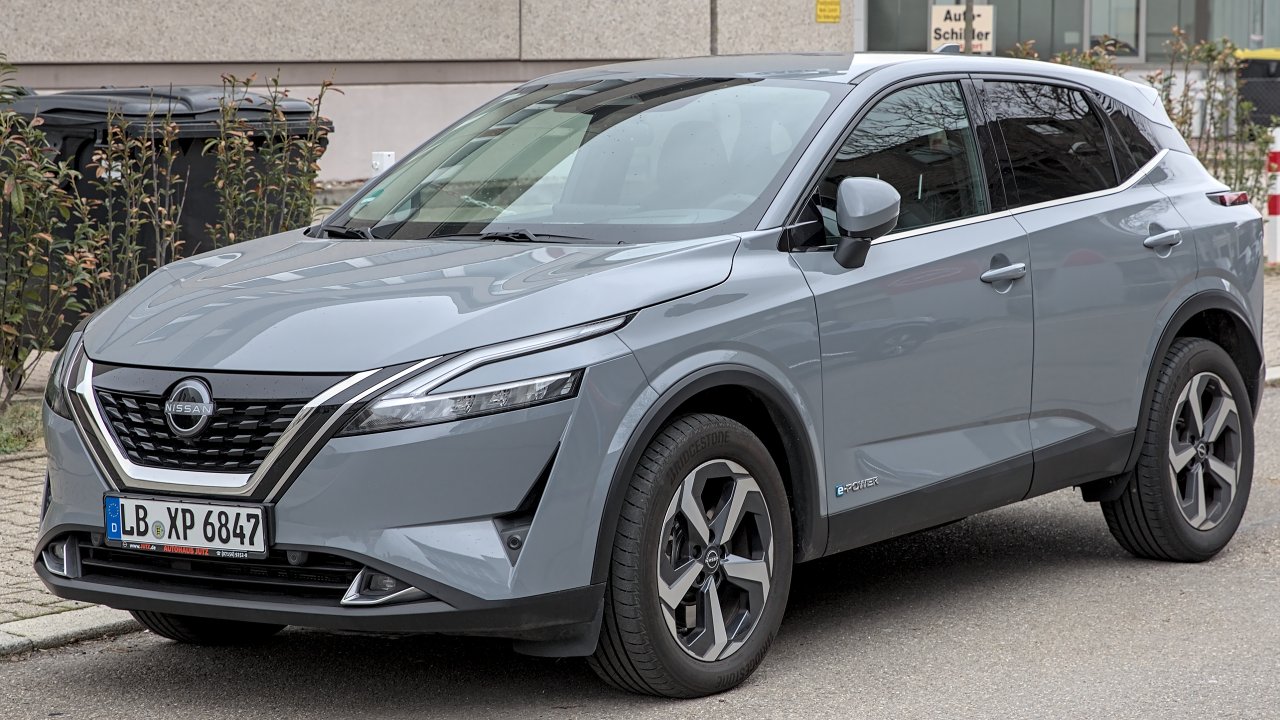
The latest Nissan Qashqai arrives not as a gentle mid‑cycle tidy up, but as a confident reset of one of Europe’s defining family crossovers. With a striking new face, a hybrid‑only powertrain strategy and a cabin packed with digital upgrades, the model that helped invent this segment is clearly intent on setting the agenda again.
Behind the visual drama sits a more strategic shift. Nissan is using the Qashqai to push its e‑POWER technology into the mainstream, positioning the car as a bridge between combustion and full battery electric motoring while also justifying higher pricing with more equipment and a more premium feel.
Design: a sharper, more assertive Qashqai
The most immediate signal of this reboot is the exterior. The 2026 Nissan Qashqai adopts a more aggressive interpretation of the brand’s “V‑Motion” front design, with a bolder grille and a more sculpted bumper that give the car a wider, more planted stance. Sharper LED daytime running lights frame the nose and help deliver the “bold restyling” Nissan has promised, while the overall length, at approximately 4,425–4,440 mm and width of 1,835–1,840 mm, keeps the Qashqai firmly in the compact SUV bracket rather than drifting into bulkier territory.
Around the back, the theme continues with a more “Striking” light signature and crisper surfacing that aims to make the Refreshed Qashqai look more upmarket without sacrificing its family‑friendly proportions. Official “Exterior and Interior Design Updates” highlight a redesigned rear treatment and fresh wheel designs that complement the more imposing front, while the brand’s own description of a “Striking, imposing” presence underlines how central this visual reset is to the car’s appeal. The result is a crossover that looks more futuristic and assertive than its predecessor, yet remains recognisably Nissan Qashqai.
Hybrid-only power: e-POWER moves centre stage
If the styling signals intent, the powertrain strategy confirms it. The new Qashqai shifts to a hybrid‑only line‑up in key markets, dropping non‑hybrid engines and accepting a significant increase in Prices, reported as almost $11,000 in some regions, as the cost of that transition. At the heart of this move is Nissan’s e‑POWER system, which uses a petrol engine solely as a generator to feed a battery and electric motor, so the wheels are driven only by electricity. This layout allows the Qashqai to “drive like an EV” while “sipping fuel like a monk”, as one reviewer of the SUV character put it, and it differentiates the car from traditional parallel hybrids where the engine can directly power the wheels.
Nissan is explicit that e‑POWER is not the final destination but “a bridge” toward full electrification, designed to ease drivers into electric‑style motoring without the need to plug in or plan charging stops. That strategy is backed by the brand’s own description of the Qashqai e‑POWER as a hybrid that makes the format “interesting again”, and by road testers who describe an SUV that feels like an EV in everyday driving. In parallel, the broader Range still references mild‑hybrid options such as a 1.3T MHV 140 VERSION with 138 bhp in some specifications, but the narrative around the latest Qashqai is clear: the future of this nameplate is defined by POWER delivered through electricity, even when petrol remains in the mix.
Cabin tech and comfort: from Google to 3D vision
Inside, the Qashqai’s reboot is just as deliberate. The cabin leans into a more digital, connected experience, with “Google built‑in” services integrated into the infotainment system on selected trim levels. That means native access to familiar apps and navigation, reducing the need to rely on a smartphone for mapping or voice assistance and aligning the Qashqai with the latest expectations for connected cars. Ambient lighting and upgraded materials aim to lift perceived quality, while the overall layout remains focused on ease of use for families stepping up from older crossovers.
Practical technology also gets a notable boost. Higher grades benefit from a 3D surround‑view camera system that allows the driver to virtually rotate the car on screen and select different camera angles for easier parking and manoeuvring, a feature highlighted as a key advance for the SUV. Elsewhere, the brand’s Nissan Intelligent Mobility safety suite brings together driver‑assist systems into a more cohesive package, while details such as a wireless phone charger and a panoramic roof on some versions underline the attempt to balance everyday convenience with a sense of occasion. Reviewers have noted quirks in equipment choices, such as the presence of that panoramic roof without heated seats in certain specifications, but the overall direction is clear: the Qashqai is being nudged further upmarket in both feel and functionality.
Market positioning and pricing: a bolder bet on value
The decision to go hybrid‑only has direct consequences for the Qashqai’s place in the market. With Prices rising by almost $11,000 in some territories as non‑hybrid models are dropped, Nissan is effectively asking buyers to pay more upfront for technology that promises lower running costs and a more refined drive. That is a significant shift for a car that has traditionally been a default choice for cost‑conscious families, and it reflects confidence in both the appeal of e‑POWER and the strength of the Qashqai brand, which has already seen third‑generation models reach about 350,000 units in sales since launch.
At the same time, the company is carefully framing the Qashqai as a “city comfort and smart SUV” proposition, emphasising its SUV character while keeping its footprint manageable for urban use. Video walk‑throughs of the 2026 Nissan Koskai, as it is referred to in some materials, stress the blend of compact dimensions with a high seating position and versatile interior, reinforcing the idea that buyers are getting more sophistication rather than simply paying for electrified hardware. In markets where the Qashqai is not officially sold, such as the USA, the car is even described as a kind of “forbidden fruit”, with enthusiasts in places like Tennessee highlighting its unique engine set‑up and efficiency, a reminder that Nissan sees global potential in this formula even where local line‑ups differ.
Legacy, rivals and the road ahead
The Qashqai’s reinvention does not happen in a vacuum. Competitors such as the 2026 Toyota Corolla hybrid, which pairs a 137 hp engine with fuel consumption of up to 24,2 km/l and its own refreshed front‑end design, are pushing efficiency and design in parallel segments. Against that backdrop, Nissan is betting that a crossover that “drives like an EV” yet avoids charging anxiety will resonate more strongly with buyers than a conventional hybrid hatchback. The Qashqai’s SUV stance, higher driving position and family‑oriented packaging give it a different kind of appeal, one that Nissan is amplifying through its emphasis on the SUV label in reviews and promotional material.
Crucially, the Qashqai’s long‑term success gives this reboot a solid foundation. With around 350,000 units of the current generation already on the road and the Refreshed Qashqai now adding a more “Striking” design, upgraded tech and the full weight of Nissan’s POWER branding, the model is positioned as a standard‑bearer for the company’s transition strategy. From the launch drives around FARO, PORTUGAL to detailed breakdowns of “Exterior and Interior Design Updates” and the capabilities of the 3D camera system, the message is consistent: this is not a cautious facelift, but a bold new chapter for a crossover that helped define its class. If buyers accept the higher prices in exchange for hybrid sophistication and digital convenience, the latest Nissan Qashqai is well placed to remain a fixture on European roads for years to come.
More from Fast Lane Only