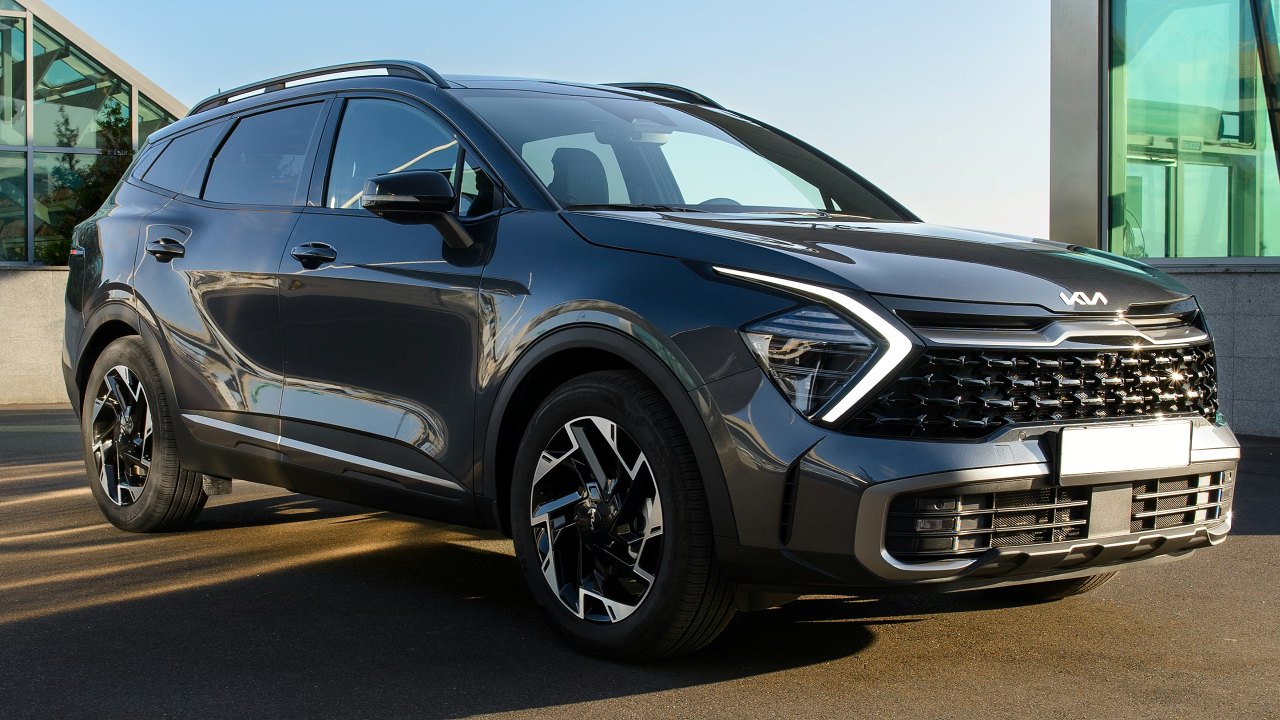
Kia just delivered its strongest year ever in the United States, crossing a symbolic volume threshold even as the broader electric vehicle market lost some heat. The company managed to grow total sales and set new internal records while its flagship EVs stumbled, a split performance that captures the messy middle phase of the industry’s shift away from gasoline.
That tension between record-breaking volume and cooling battery demand is now shaping how Kia positions its lineup, its pricing, and its technology bets for the next few years. I see a company that is celebrating a milestone, but also being forced to rethink how quickly American buyers are willing to follow it into a fully electric future.
Kia’s record year, by the numbers
Kia America closed 2025 with its highest annual sales in company history, a milestone that underscores how far the brand has come from its budget-car roots. The company reported 852,155 total units in 2025, a new all time high that pushed it past the psychological barrier of selling more than 800,000 vehicles in a single year in the United States. That figure, confirmed in Kia’s own year end release, reflects both stronger showroom traffic and a richer mix of higher margin models.
The scale of the achievement becomes clearer when set against recent history. Industry coverage notes that Kia sold +800,000 vehicles in the US for the first time in 2025, up from 739,549 the year before, a jump that would be impressive in any environment, let alone one defined by high interest rates and lingering affordability concerns. Kia itself highlighted that 2025 marked its fifth consecutive year of record retail performance in the United States, a streak that suggests the brand is not just riding a one off spike but steadily expanding its footprint with American buyers.
Gas and hybrid workhorses carry the load
Behind the headline number, the story is less about futuristic technology and more about familiar nameplates doing heavy lifting. Reporting on the sales mix points to the Carnival and Sportage as key drivers of Kia’s record, with both models posting strong gains as families and commuters gravitated toward practical, well equipped crossovers and minivans. Those vehicles, along with other combustion and hybrid models, gave Kia the volume and profitability it needed even as some of its more advanced offerings slowed.
That pattern fits with what I hear across the industry: buyers who might once have stretched for a fully electric SUV are now more likely to settle on a conventional or hybrid alternative that feels less risky on charging and resale value. Kia’s own communications emphasize the breadth of its lineup, from compact crossovers to three row people movers, and the company has been explicit that hybrids are a central part of its growth strategy in the United States. In practice, that means the brand’s near term fortunes are still tied to gasoline and hybrid workhorses, even as it keeps talking up a long term electric transition.
From EV surge to sharp slowdown

The twist is that Kia’s record year arrived just months after it was celebrating a surge in electric sales. Earlier in 2025, Kia America EV sales reached new heights, helping the brand set an all time volume record of 416,511 vehicles in the first half alone. That early momentum suggested the EV6 and the larger EV9 were finally breaking through with mainstream shoppers, supported by aggressive marketing and the appeal of fresh designs.
By the end of the year, however, the tone had changed. Coverage of Kia’s full year performance notes that EV9 and EV6 sales collapsed sharply, with one analysis describing a steep drop in demand for the company’s battery powered SUVs. Another report quantifies the damage more bluntly, stating that Kia’s EV9 and EV6 SUVs were hit hardest, with sales falling over 65% as the market adjusted to life without a key federal tax credit. The contrast between record total volume and a more than 65% slide in core EV nameplates is striking, and it highlights how dependent early stage electric demand can be on policy support and buyer confidence.
Tax credits, pricing, and the new EV reality
Analysts who follow the sector have been clear that the pullback in Kia’s EV sales did not come out of nowhere. As federal incentives changed and some buyers lost access to point of sale tax credits, the effective price of models like the EV9 and EV6 jumped overnight. Analysts say the slowdown was expected after months of warning that the market would need time to adjust to life without that government boost, and Kia’s numbers now provide one of the clearest case studies of what happens when those supports are removed before costs have fully come down.
That shift has real strategic implications. If a large share of EV demand was being pulled forward by incentives, then automakers like Kia must either absorb more of the cost through discounts or accept lower volumes while they wait for battery prices and manufacturing efficiencies to catch up. The company’s record overall sales suggest it chose a middle path in 2025, leaning on strong combustion and hybrid models to offset weaker EV performance rather than slashing prices across the board. In the short term, that protects margins, but it also risks slowing the pace at which Kia can build scale and brand loyalty in the electric space.
What Kia’s split performance signals for 2026
Looking ahead, I see Kia’s 2025 results as both a validation of its broader product strategy and a warning about the limits of current EV demand in the United States. On one hand, the brand has proven it can compete head to head with established players on volume, crossing the 800,000 mark and setting a new record of 852,155 units in a year when many rivals were flat or down. On the other, the more than 65% drop in EV9 and EV6 sales shows that even well reviewed electric models are vulnerable when incentives fade and consumer anxiety about charging and depreciation resurfaces.
That tension is already shaping how Kia and its corporate partners talk about the future. Company statements about their 2026 targets emphasize continued growth in the United States, with a particular focus on hybrids and efficient combustion models as a bridge technology. At the same time, the early 2025 surge to 416,511 vehicles in the first half and the subsequent collapse in key EV nameplates will likely push Kia to refine its electric playbook, from pricing and trim strategy to how it communicates the value of battery power without leaning on tax credits. If 2025 was the year Kia proved it could set a U.S. sales record while EV demand cooled, 2026 will test whether it can turn that split performance into a more balanced and sustainable path forward.
More from Fast Lane Only: