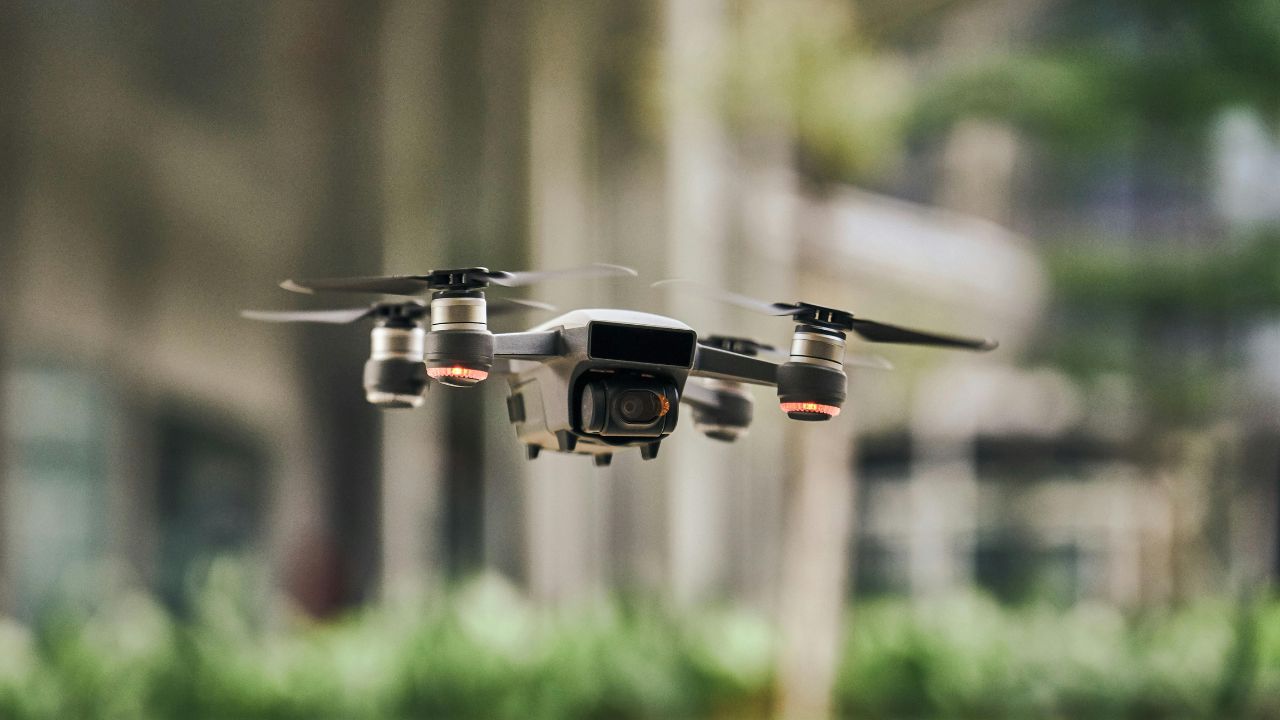
A new legal challenge is pressing federal aviation regulators to loosen flight restrictions on drones near moving vehicles used by U.S. Immigration and Customs Enforcement, arguing that current limits illegally shield immigration enforcement from public scrutiny. The lawsuit arrives at a moment when drone pilots, civil liberties advocates, and federal agencies are already clashing over how far the government can go in carving out no-fly zones in the name of security. At stake is whether the Federal Aviation Administration can keep using temporary orders to wall off immigration operations from aerial documentation by journalists and activists.
What happened
The lawsuit targets a specific set of FAA rules that restrict small unmanned aircraft from flying close to moving vehicles that carry ICE personnel or detainees. According to the complaint, those limits function as a mobile bubble around ICE convoys and transport buses, preventing drone operators from filming arrests, roadside transfers, or highway movements that would otherwise be visible from public vantage points.
Attorneys for the plaintiffs argue that this mobile buffer is not simply a safety measure, but a form of content-based suppression that violates the First Amendment. They contend that the FAA has effectively given ICE a roving exclusion zone that follows its vehicles wherever they go, even when those vehicles travel through areas where drones are otherwise allowed. The lawsuit claims that this approach exceeds the FAA’s aviation safety mandate and improperly converts flight rules into a tool for policing speech and newsgathering.
The challenge comes against a backdrop of growing frustration among drone pilots over how the FAA has used temporary flight restrictions and Notices to Air Missions, or NOTAMs, to limit flights near federal operations. Earlier this year, the agency quietly issued a NOTAM that sharply restricted unmanned aircraft activity around certain federal law enforcement movements, including immigration enforcement, then reversed that policy after a wave of criticism from industry groups and civil liberties advocates. The reversal, described in an analysis of the FAA’s recent NOTAM decision, signaled that regulators were sensitive to claims that they had gone too far.
In the new lawsuit, plaintiffs point to that reversal as evidence that the FAA has struggled to balance safety with constitutional limits. They argue that while the agency walked back some of the broadest NOTAM language, it left in place a narrower but still sweeping set of restrictions tied to moving ICE vehicles. The complaint asks a federal court to declare those limits unlawful and to bar the FAA from enforcing them in their current form.
Federal defendants have not yet filed a detailed response in court. In previous public statements about drone restrictions around law enforcement operations, FAA officials have emphasized that their primary responsibility is to protect people and property on the ground and to prevent collisions in shared airspace. They have framed temporary restrictions as targeted tools to manage risk during sensitive activities, rather than as permanent censorship of aerial photography.
Why it matters
The case reaches far beyond a narrow dispute between drone pilots and immigration authorities. It goes to the heart of how much visibility the public can maintain over law enforcement actions that increasingly play out on highways, in rural areas, and at the edges of cities where traditional ground-based reporting is difficult. Small quadcopters equipped with cameras have become a central tool for journalists and advocates who track deportation flights, roadside transfers, and large-scale immigration raids.
By limiting drone flights around moving ICE vehicles, the FAA has effectively drawn a line around some of the most sensitive moments in the immigration system. The lawsuit argues that this line deprives the public of a vital vantage point on government power, especially when those operations may involve the use of force, the separation of families, or the transfer of detainees to remote facilities. The plaintiffs claim that what happens on public roads and in open airspace should remain open to documentation, whether by traditional cameras or by drones.
The case also matters for the drone industry itself. Manufacturers, software developers, and service providers have spent years building tools that assume relatively stable rules for low-altitude flight. If federal agencies can create moving no-fly zones around their vehicles, that could introduce unpredictable constraints into route planning and automation. Delivery companies, infrastructure inspectors, and aerial photographers all rely on the ability to chart safe, legal paths in advance. A shifting patchwork of law enforcement bubbles would complicate that planning and could dampen investment in more advanced autonomous systems.
At the same time, the government’s security concerns are not hypothetical. ICE vehicles may carry detainees who could be targeted by outside actors, or agents who are transporting sensitive evidence or equipment. Federal lawyers are likely to argue that drones flying close to those vehicles present collision risks, distraction hazards, and potential opportunities for hostile surveillance. They may also point to incidents where drones have been used to smuggle contraband or to interfere with police operations, arguing that stricter rules around enforcement convoys are a reasonable response.
Courts will have to sort out how much weight to give those concerns compared with the rights of drone operators who see themselves as aerial journalists. Past First Amendment cases have recognized a right to record public officials in public spaces, but the law is less developed when it comes to aircraft that operate in regulated airspace. The plaintiffs in this case argue that once the FAA opened low-altitude skies to civilian drones, it could not then selectively close that space around specific government activities simply because those activities might be controversial.
The outcome could set a template for other agencies. If the FAA prevails, federal and state law enforcement could push for similar moving restrictions around convoys that carry prisoners, hazardous materials, or high-profile officials. If the plaintiffs win, drone pilots may gain a stronger legal footing to challenge future NOTAMs and temporary flight restrictions that appear to target newsgathering rather than genuine safety hazards.
What to watch next
The first key step will be the government’s formal response in court. Observers will be watching whether the FAA leans primarily on its general safety authority or invokes specific security assessments from ICE or the Department of Homeland Security to justify the moving vehicle limits. Any detailed affidavits or declarations about perceived drone threats around immigration operations could shape how judges view the balance between risk and rights.
Another early signal will come from how the court handles any request for preliminary relief. If the plaintiffs seek an injunction that would temporarily block enforcement of the drone limits while the case proceeds, the judge will have to decide whether they are likely to succeed on the merits and whether ongoing enforcement would cause irreparable harm. A decision to grant such relief would immediately change how drone pilots operate near ICE convoys and could spur the FAA to revise its policies even before a final ruling.
Outside the courtroom, industry and advocacy groups are likely to press for clearer, more transparent rules. Drone manufacturers and professional pilot associations have already pushed the FAA to publish more detailed justifications whenever it issues NOTAMs that restrict unmanned aircraft. They argue that vague references to federal operations do not give operators enough information to assess risk or to design technical mitigations. If the lawsuit gains traction, those groups may renew calls for public comment periods or independent review when the agency seeks to create new categories of moving restrictions.
Immigration advocates will also be watching how ICE responds. Even if the FAA ultimately retains broad authority over airspace, ICE could adopt its own internal policies that either welcome or resist aerial documentation. For example, the agency could designate specific staging areas where media and observers are allowed to film operations from the ground, which might reduce pressure to track convoys with drones. Or it could push for more aggressive enforcement of existing rules, including referrals for criminal charges against pilots who fly too close to vehicles.
More From Fast Lane Only: