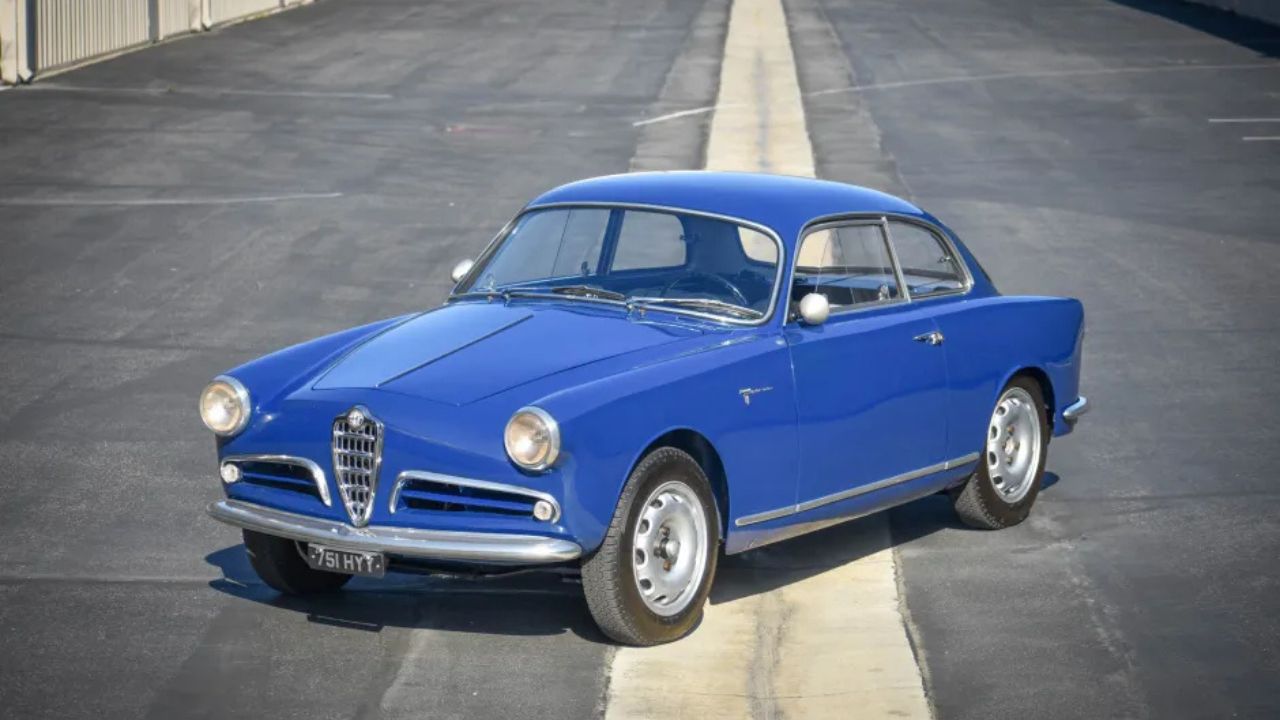
The 1957 Alfa Romeo Giulietta Sprint has survived the swings of fashion because it solved a simple problem with rare clarity: how to make a small coupe feel light on its feet without stripping away charm. Its featherweight structure, honed for competition, turned a stylish Italian runabout into a car that still feels modern in the way it moves, steers, and responds.
That focus on low mass shaped every surface and component, from the Bertone bodywork to the magnesium hardware hidden beneath the paint. The result is a car whose appeal rests less on nostalgia and more on the way its engineering choices still resonate with drivers used to far newer machinery.
The industrial roots of a lightweight idea
The Giulietta Sprint did not appear out of thin air. It grew from the ambitions of nicola Romeo, an Italian industrialist who had bought the ALFA company that had manufactured the Lombard car in the years after the First World War. That acquisition set the brand on a path from regional maker to international contender and created a culture that treated motorsport as a laboratory rather than a marketing exercise.
By the mid 1950s, Alfa Romeo had already proved that lightness and agility could win races and sell road cars. The Giulietta family was conceived as a compact range that could carry that thinking into everyday traffic. Within that family, the Sprint coupe quickly became the focal point for experimentation with materials, aerodynamics, and clever packaging that would reduce weight without making the car feel spartan.
Bertone’s shape, drawn for speed and simplicity
The design work for the Sprint was entrusted to Bertone, and specifically to Franco Scaglione, who had already shown an interest in aerodynamic, almost scientific forms. Period accounts describe how he was particularly drawn to rear and midengine solutions. As a later commentator notes in a detailed walkaround of an Alfa coupe, however, the car in question is neither rear nor midengine at all, which underlines how freely he applied racing ideas to front engine layouts in projects like the Giulietta. That tension between theoretical purity and real world constraints gave the Sprint its distinctive stance.
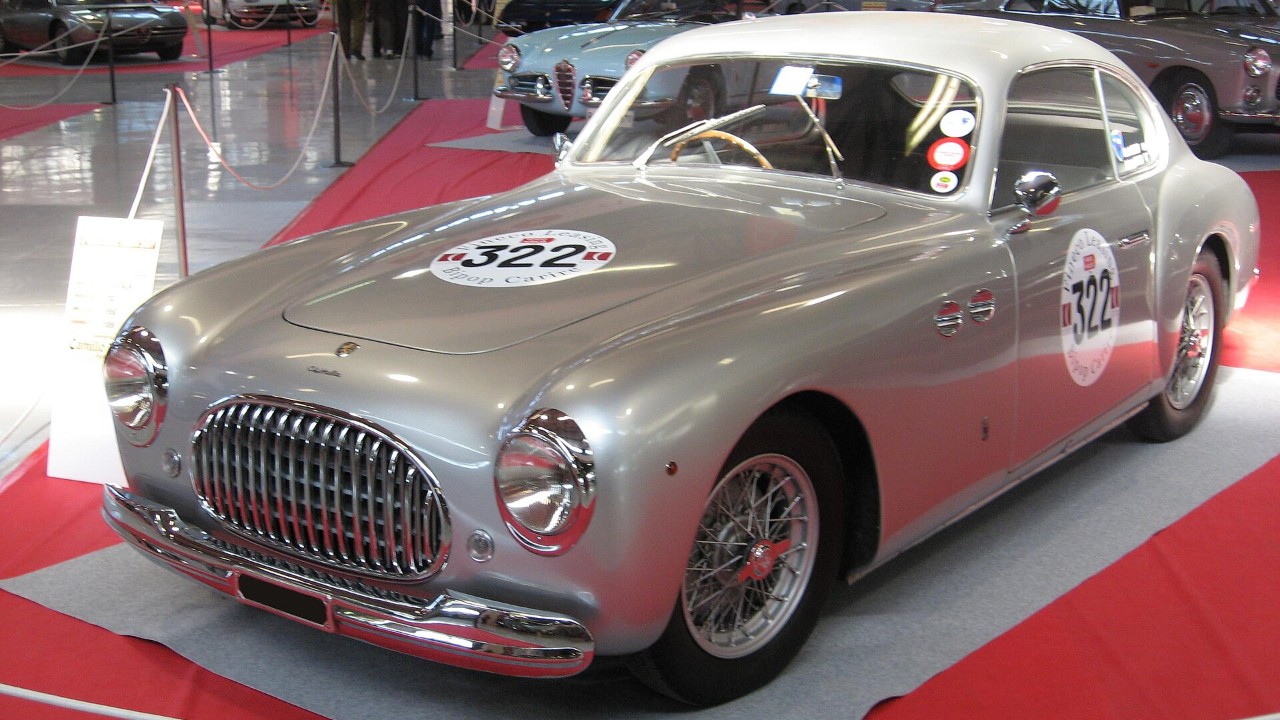
On the Giulietta Sprint, the Bertone body is clean and compact, with short overhangs and a gently tapered tail that helps stability at speed. A later experimental model, the Alfa Romeo Giulietta Sprint Speciale Prototipo, shown in Turin as the first prototype for the Alfa SS series, made this aerodynamic intent even more explicit, but the standard coupe already carried the same thinking in a subtler form. Scaglione’s surfaces were not just pretty; they were drawn to slip through the air with minimal fuss, which allowed engineers to extract more performance from a modest engine.
The choice of materials was as deliberate as the shape. Contemporary analysis of a deep blue Giulietta Sprint Veloce highlights how the car used aluminum for the hood, trunk lid, door panels, bumpers, and even the headlight surrounds. That catalog of lightweight panels kept mass low over the front axle and reduced the effort required to change direction, while also giving the car a slightly crisper feel over bumps compared with heavier steel-bodied rivals.
Inside the Alleggerita philosophy
The most distilled expression of this approach arrived with the Sprint Veloce and the even more focused Alleggerita variants. In response to growing competition in small displacement racing, Alfa Romeo introduced the Sprint Veloce in the mid 1950s, explicitly benefitting from lightweight aluminium components and a simplified interior to shave precious kilograms. A detailed drive of a surviving Alleggerita car describes how the cabin sacrifices some trim and sound deadening in the pursuit of speed, yet still retains the essential elegance of the base Sprint.
The Alleggerita cars took the concept further. To support long distance events, certain examples received a larger 22 gallon fuel tank, listed as an 85-liter unit in period specifications, which required changes to the rear structure and packaging. That choice shows how Alfa engineers were willing to accept local increases in weight if they allowed the car to stay out on track longer and avoid time lost in the pits. The rest of the chassis was pared back to compensate, with thinner glass and fewer comfort features.
Surviving documentation from a specialist dealer that has handled an original Sprint Veloce Alleggerita notes that these lightweight racing cars were built in a short production window and that unmodified examples are now impossibly rare. The scarcity reflects both the low initial build numbers and the hard lives many of these coupes endured in period competition, where accident damage and later modifications were common.
Magnesium, aluminum and the hidden diet
The Giulietta Sprint Veloce did not rely on body panels alone to keep its weight down. Under the skin, Alfa Romeo engineers used exotic alloys in places where they would make the greatest difference to handling. Contemporary technical descriptions point out that the inlet manifold and the oil sump were made of magnesium. At the same time, the Giulietta Veloce’s weight was significantly reduced compared with the standard coupe, which already sat on the lighter side of its class.
Magnesium parts cut mass from low in the engine bay, which improved the car’s center of gravity and sharpened its response to steering inputs. Combined with the aluminum hood and trunk lid, they helped the Sprint Veloce change direction with a quickness that surprised drivers used to heavier sports cars of the era. The trade off was cost and complexity in manufacturing, but Alfa Romeo treated these components as investments in both racing success and brand identity.
Alongside the magnesium hardware, the Sprint Veloce featured subtle structural tweaks. Reinforcements were added where needed for torsional stiffness, while nonessential brackets and trim pieces were removed or redesigned. The philosophy was closer to aircraft thinking than to conventional mass production, reflecting the company’s industrial background and its willingness to borrow ideas from other sectors where weight savings had long been a priority.
How the Sprint feels from behind the wheel
Modern footage of a rare Giulietta Sprint Veloce Alleggerita, driven on open roads and tight circuits, gives a clear sense of how those engineering decisions translate into motion. The car accelerates with a lively, almost impatient character, its revvy four cylinder engine working in harmony with the short gearing and low mass. The driver in that feature remarks on the way the car seems to shrink around the pilot, with steering that feels light yet precise and a chassis that encourages late braking and early throttle application.
A similar sense of agility appears in another detailed video review of a classic Alfa coupe, where the presenter, after discussing Scaglione’s interest in rear and midengine solutions, demonstrates how a front engine layout can still feel balanced if the weight distribution is carefully managed. The Giulietta Sprint benefits from this approach, placing its compact engine well back in the bay and using the lightweight front panels to keep the nose from feeling heavy.
Owners who use these cars on modern roads often comment on how little effort is required to keep pace with traffic. The Sprint Veloce does not overwhelm with raw power, but its lack of inertia means it responds instantly to every input. That quality is rare in contemporary cars burdened with safety equipment and electronic systems, and it is a major reason why the Giulietta still feels relevant to enthusiasts accustomed to far newer machinery.
Craft, restoration and the human link
The survival of these cars in such engaging condition is not accidental. Specialists like Kevin Rosson, who introduces himself in a detailed video by saying, “my name is Kevin Rosson i have a company called Southwood. and I specialize in Alf,” represent a living bridge between the original factory and current owners. His focus on Alf Romeo models, including the Giulietta Sprint Veloce Alleggerita, shows how much expertise is required to restore and maintain the delicate aluminum and magnesium components that define the car’s character.
Restorers must balance authenticity with practicality. Recreating aluminum door skins and bumpers demands traditional metalworking skills, while sourcing or refurbishing magnesium inlet manifolds and sumps requires careful handling of a material that can corrode or crack if mistreated. These challenges contribute to the high values attached to correct, numbers matching Sprint Veloce examples, but they also ensure that each surviving car carries a story of patient, skilled labor.
Enthusiast communities help keep that knowledge circulating. A dedicated group that shares images of the Alfa Romeo Giulietta Sprint Speciale Prototipo and other related cars, for instance, often discusses prototype research methods and period documentation that inform modern restorations. By comparing factory photos, show reports from Turin, and later Alfa SS production details, they refine an understanding of how the Giulietta family evolved and which features belong to which chassis numbers.
Tracing the car’s modern footprint
The Giulietta Sprint’s lightweight appeal is also visible in the way it moves through the current collector market. Listings on specialist platforms for an Alfa Romeo Giulietta Sprint Veloce Alleggerita Millemiglia finished in blue azzurro describe the car’s competition history and its eligibility for prestigious events, which depend heavily on accurate period specifications. Those advertisements often emphasize the same aluminum panels and magnesium components that engineers prioritized in the 1950s, proof that these details remain central to the car’s value.
Related sites, discovered through citation trails from detailed model features, show how the Sprint Veloce has become a touchstone for small, focused businesses. One example is a curated list of classic vehicles that highlights rare variants of the Giulietta Sprint Veloce, while another is a project management platform that, somewhat unexpectedly, appears in the same web of references because restoration shops use similar tools to track complex builds. Even a privacy policy page for a widely used spam filter appears in the same chain, a reminder of how digital infrastructure quietly supports the sharing of archival photographs and technical documents.
Social media pages dedicated to Classic Virus and similar enthusiast hubs provide a steady stream of images of restored and unrestored cars, often tagged with chassis numbers and period competition entries. These posts help historians and owners piece together fragmented histories, especially for Alleggerita cars that may have been rebodied or modified during their racing careers.
Why the Giulietta’s light touch still matters
In a market crowded with heavy, powerful performance cars, the Giulietta Sprint’s approach feels almost radical. Its creators treated weight as a primary design constraint rather than an afterthought, and they were willing to invest in materials like aluminum and magnesium to achieve their targets. That philosophy produced a car that can be enjoyed at legal speeds, on narrow roads, without relying on electronic aids.
The long shadow of that thinking can be seen in later Alfa Romeo projects and in the wider sports car world, where lightweight special editions and stripped back track models remain highly sought after. Yet few of those modern cars achieve the same balance between usability and focus that the Sprint Veloce and Alleggerita variants embody. The Giulietta offers proper seats, a usable trunk, and reasonable ride comfort, all wrapped in Bertone styling that has aged gracefully.
More from Fast Lane Only