Lucid’s Gravity SUV is no longer just a flagship electric family hauler. It is being reimagined as the centerpiece of a new robotaxi network, with Uber in the front seat and Nuro’s self‑driving brain in control. The trio is pitching this as a way to fuse luxury EV engineering, mature ride‑hailing demand, and proven autonomy into a single service that could arrive on public streets later this year.
By turning Gravity into a purpose‑built autonomous vehicle instead of a lightly modified consumer model, Lucid, Uber, and Nuro are betting that riders will pay attention to comfort and brand as much as to the absence of a human driver. The partnership unveiled at CES 2026 signals that the robotaxi race is shifting from experimental pilots to production‑intent fleets with clear commercial timelines.
From premium SUV to prototype robotaxi
The Gravity started life as Lucid’s long‑range, high‑performance electric SUV, but in Las Vegas it appeared in a very different role: a prototype robotaxi built around shared rides rather than private ownership. Uber, Lucid Group and Nuro used CES to show a production‑intent vehicle that keeps Gravity’s core EV platform while reworking the cabin and exterior for autonomous duty, including dedicated hardware for self‑driving and ride‑hailing integration. The companies described this as a prototype designed specifically for commercial launch, not a one‑off concept, underscoring that the Gravity platform is now central to Uber’s next generation of driverless services.
What makes this Gravity different is the way autonomy and passenger experience are baked in from the start. Lucid has committed to integrate Nuro’s full self‑driving stack into the SUV, turning it into a vehicle that can operate as a robotaxi rather than simply offering advanced driver assistance. Earlier partnership materials describe the robotaxi as leveraging Lucid’s EV engineering while relying on the Nuro Driver, a Level 4 system that combines automotive‑grade hardware and software safeguards for precision and reliability. That technical foundation is what allows Uber to talk about a Gravity‑based robotaxi that can handle complex urban routes without a safety driver once regulators sign off.
Inside the Lucid, Uber, Nuro triad
The Gravity robotaxi is the product of a three‑way deal that gives each company a distinct role. Lucid provides the electric SUV platform and manufacturing, Nuro supplies the Nuro Driver autonomy system, and Uber brings the global ride‑hailing network and customer demand. Earlier announcements framed this as Lucid, Nuro, and Uber Unveil Global Robotaxi at CES and Announce Autonomous On‑Road Testing, describing the service as the industry’s most luxurious robotaxi with an unprecedented in‑cabin experience. That positioning is deliberate: Uber is not just adding another generic autonomous car, it is aligning with a premium EV brand to differentiate its robotaxi offering from rivals that rely on more utilitarian vehicles.
Uber’s commitment is not purely technical, it is financial and strategic as well. Commentary around the partnership has highlighted that Uber is investing $300 m, or $300 million, in Lucid Motors as part of a robotaxi deal, signaling that the ride‑hailing company sees Gravity as a long‑term pillar of its autonomous strategy rather than a short‑term experiment. On the autonomy side, Nuro emphasizes that the Nuro Driver Level 4 system is designed for commercial deployment, and separate materials describe how Uber Licensing of the Nuro Driver allows the self‑driving AI to be integrated directly into Uber’s network. Together, those pieces create a structure where Lucid focuses on building vehicles in volume, Nuro on safe driverless operation, and Uber on turning that capability into rides that people can actually book.
Sensors, software and the “most luxurious robotaxi” pitch
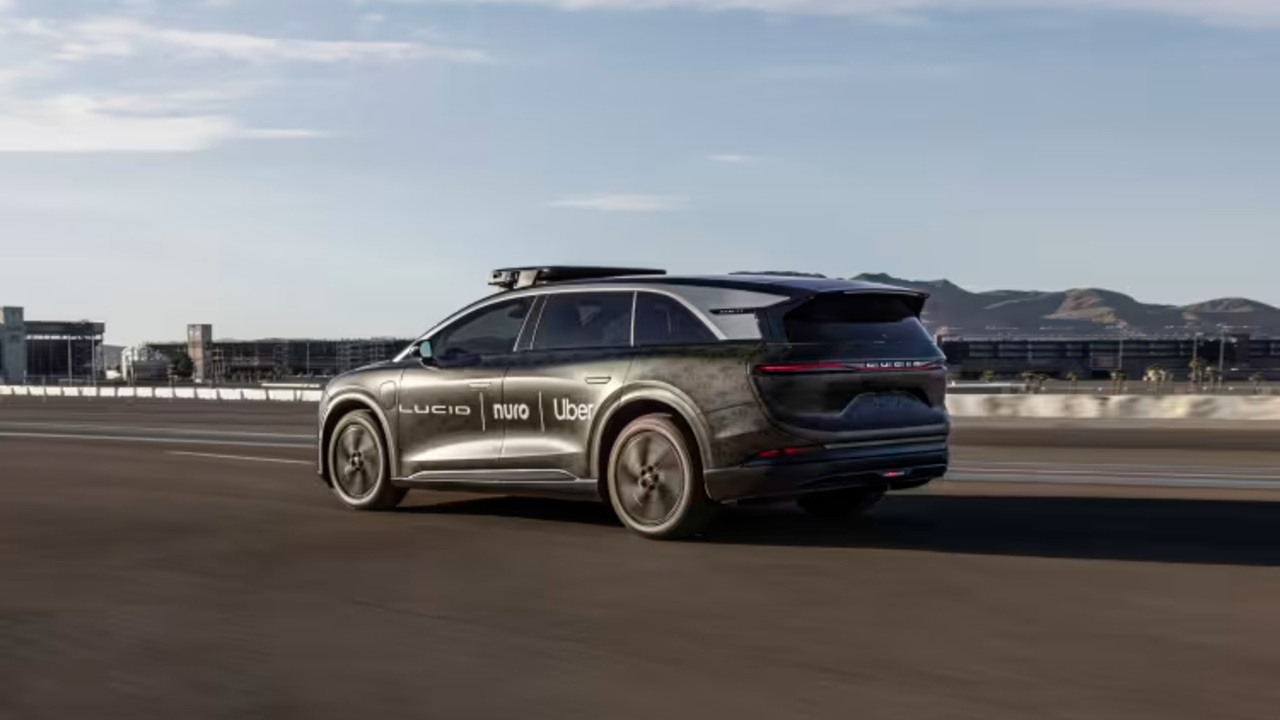
Technically, the Gravity robotaxi is being framed as a showcase for high‑end autonomy hardware and software, not just a retrofit of existing driver assistance. At CES in Las Vegas, Uber, Lucid and Nuro highlighted a self‑driving robotaxi with 360 degree autonomous sensors, a configuration meant to give the vehicle full awareness of its surroundings in dense urban traffic. That sensor suite is paired with the Nuro Driver’s Level 4 capabilities, which combine multiple sensing modalities, automotive‑grade compute, and layered safeguards to manage tasks such as navigating intersections, responding to traffic signals, and executing lane changes without human input. The companies describe this as supervised autonomous prototypes today, with a path to fully driverless operation as testing and validation progress.
On the passenger side, Uber is marketing the Gravity robotaxi as its most luxurious robotaxi, in partnership with Lucid and Nuro, and is leaning heavily on the SUV’s spacious interior and premium materials. Lucid’s own description of the project calls it the industry’s most luxurious robotaxi, promising an unprecedented in‑cabin experience that goes beyond basic point‑to‑point transport. That means features like generous legroom, large displays, and quiet electric propulsion are not just perks for private buyers but selling points for riders who might choose an autonomous Gravity over a conventional UberX. By pairing a high‑end EV with a full autonomy stack, the triad is trying to shift the narrative from robotaxis as bare‑bones shuttles to robotaxis as aspirational products that can command higher fares and stronger brand loyalty.
Timelines, testing and where Gravity will roll first
The partnership is not staying on the concept stage for long. Lucid, Nuro, and Uber have said that autonomous on‑road testing is beginning with supervised vehicles, a step that allows the Nuro Driver to learn real‑world routes while human operators monitor performance. Reporting on the CES debut notes that production of the robotaxi is expected to begin later this year at Lucid’s Arizona factory, pending final validation. That Arizona production plan is critical, because it signals that Lucid is preparing to build Gravity robotaxis alongside its consumer vehicles, rather than outsourcing or treating them as a boutique project.
On the deployment side, Uber’s Lucid Gravity robotaxis are slated to enter San Francisco next year, according to commentary from Lucid’s CFO explaining why the rideshare giant picked the electric SUV. That city choice fits Uber’s broader strategy of launching advanced services in dense, tech‑savvy markets where demand for ride‑hailing is high and regulators are already familiar with autonomous pilots. Separate coverage of the CES reveal suggests that riders will be able to ride in this self‑driving Lucid Gravity Uber robotaxi later this year, aligning with the production timeline and early testing milestones. Together, those details paint a picture of a rollout that starts with supervised testing, moves into limited commercial service in select cities, and then scales as the Nuro Driver and Gravity platform clear regulatory and technical hurdles.
Why Uber chose Gravity, and what it means for the robotaxi race
Uber’s decision to anchor its next wave of robotaxis on the Lucid Gravity rather than a cheaper, more basic vehicle says a lot about where it thinks the market is heading. Lucid executives have described how the company had a fit‑for‑purpose car with a large battery, ample interior space, and extra communication pathways that made it easier to integrate the Nuro Driver and Uber’s software stack. Analysis of the deal notes that Uber’s Lucid Gravity robotaxis will enter San Francisco next year, and that the rideshare giant picked the $80,000‑plus SUV because it could support the heavy compute, sensor load, and uptime demands of a commercial autonomous fleet while still delivering a premium passenger experience. In other words, Gravity’s engineering headroom, not just its badge, made it attractive as a robotaxi base.
That choice also reflects a broader shift in how robotaxis are being positioned. Earlier commentary on why Uber picked the Lucid Gravity as its next‑gen robotaxi points out that robotaxis require far more advanced systems for driverless rides, and that is where Nuro steps in as the autonomy provider. By combining a high‑end EV, a Level 4 autonomy stack, and Uber’s global network, the partnership is trying to leapfrog smaller pilots and move directly toward a scalable, branded service. Lucid Group LCID has already seen investor interest tied to its work with Uber Technologies and Nuro, and the CES 2026 reveal of the Lucid, Nuro, and Uber Unveil Global Robotaxi suggests that the market now views Gravity not just as a consumer SUV but as a platform for a new kind of mobility business. If the Arizona production ramp, San Francisco launch, and autonomous on‑road testing all proceed as planned, the Gravity robotaxi could become one of the first premium electric SUVs to make the jump from showroom to fully fledged robotaxi fleet.
More from Fast Lane Only: