Tesla is leaning on aggressive 0% financing offers to jolt demand for its electric vehicles in the United States just as Hyundai is celebrating another year of record sales powered by hybrids and SUVs. The contrast captures a turning point in the EV market, where early leaders are being forced into costly incentives while diversified rivals ride a broader mix of powertrains and body styles. I see a market that is not cooling so much as reshuffling, with pricing power shifting away from pure-play EV makers toward brands that can meet buyers wherever they are on the adoption curve.
Tesla’s 0% financing signals a new phase in the EV price war
Tesla’s move to offer 0% financing on select models is a clear sign that the company is prioritizing volume over margin as growth slows and competition intensifies. After years of commanding premium prices with minimal discounts, Tesla is now stacking incentives, from cut-rate loans to other perks, to keep factories running at capacity and prevent inventory from piling up. The company’s own current offers page highlights low- or no-interest financing on core vehicles, a tactic more associated with mainstream automakers clearing year-end stock than with a brand that once relied on waitlists and word-of-mouth buzz.
Reporting on Tesla’s latest push describes a “barrage of deals” that goes beyond financing, with the company rolling out multiple incentives as it races to avoid another year of slowing deliveries after a long stretch of rapid growth. One analysis notes that Tesla is using 0% financing specifically to “boost declining sales” in the same moment that Hyundai is setting records, underscoring how the EV pioneer is now reacting to market pressure rather than defining it. The shift from scarcity pricing to aggressive discounting suggests that Tesla’s core demand at previous price points has been largely tapped, and that the brand is now competing more directly with well-equipped hybrids and gasoline SUVs that sit in the same monthly payment range for many households.
Hyundai’s record U.S. sales show the power of a balanced lineup
While Tesla leans on incentives, Hyundai is closing out 2025 with momentum that looks almost old-fashioned in its simplicity: more buyers, more vehicles sold, and a product mix that matches what Americans are actually shopping for. Hyundai reported total December sales of 78,930 units, a 1% increase from the prior December and the best-ever December results for the brand in the United States. That strong finish capped a fifth straight year of record U.S. sales, a streak Hyundai itself has framed as going “5 for 5” as it stacked new highs from 2021 through 2025.
Behind those headline numbers is a strategy that looks very different from Tesla’s all-in EV bet. Hyundai’s record year was driven by a combination of hybrids and SUVs, with one report emphasizing that “Hybrids and” utility models did the heavy lifting even as the company’s pure EV sales dropped sharply in the final quarter. Another analysis notes that Hyundai ended 2025 with record U.S. sales for a third year straight, again crediting hybrids and SUVs for the surge. In other words, Hyundai is not winning because it is out-EV-ing Tesla, but because it is giving shoppers a ladder of electrification options, from conventional gasoline to hybrid to full battery electric, and letting them climb at their own pace.
EV slowdown or EV reshuffle? Hyundai’s cliff and Tesla’s crunch
The most striking detail in Hyundai’s story is that its EV sales “fell off a cliff” in the fourth quarter even as the company posted record overall results. That phrase, used in a detailed breakdown of Hyundai’s 2025 performance by Chris Chilton, captures how quickly demand can shift when incentives, charging anxiety, and interest rates collide. Yet the same report stresses that Hyundai still ended the year with record U.S. sales, which tells me the issue is not that Americans have stopped buying electrified vehicles altogether, but that they are gravitating toward hybrids and plug-in hybrids that feel like lower-risk steps away from gasoline.
Tesla is facing the mirror image of that problem. With no hybrids or gasoline models to fall back on, any softening in pure EV demand hits its top line directly, which helps explain why the company is resorting to 0% financing and a wave of deals to keep sales from slipping further. One analysis of Tesla’s incentives describes the company introducing a “barrage of deals” to move as many EVs as possible before year end, a tactic that would have been unthinkable when waiting lists stretched months and buyers accepted price hikes without blinking. The juxtaposition with Hyundai, which is logging record sales even as its EVs stumble, suggests that the EV market is not collapsing so much as fragmenting, with early adopters largely served and more cautious buyers now dictating the pace.
Hyundai’s SUV and hybrid formula is hitting the U.S. sweet spot
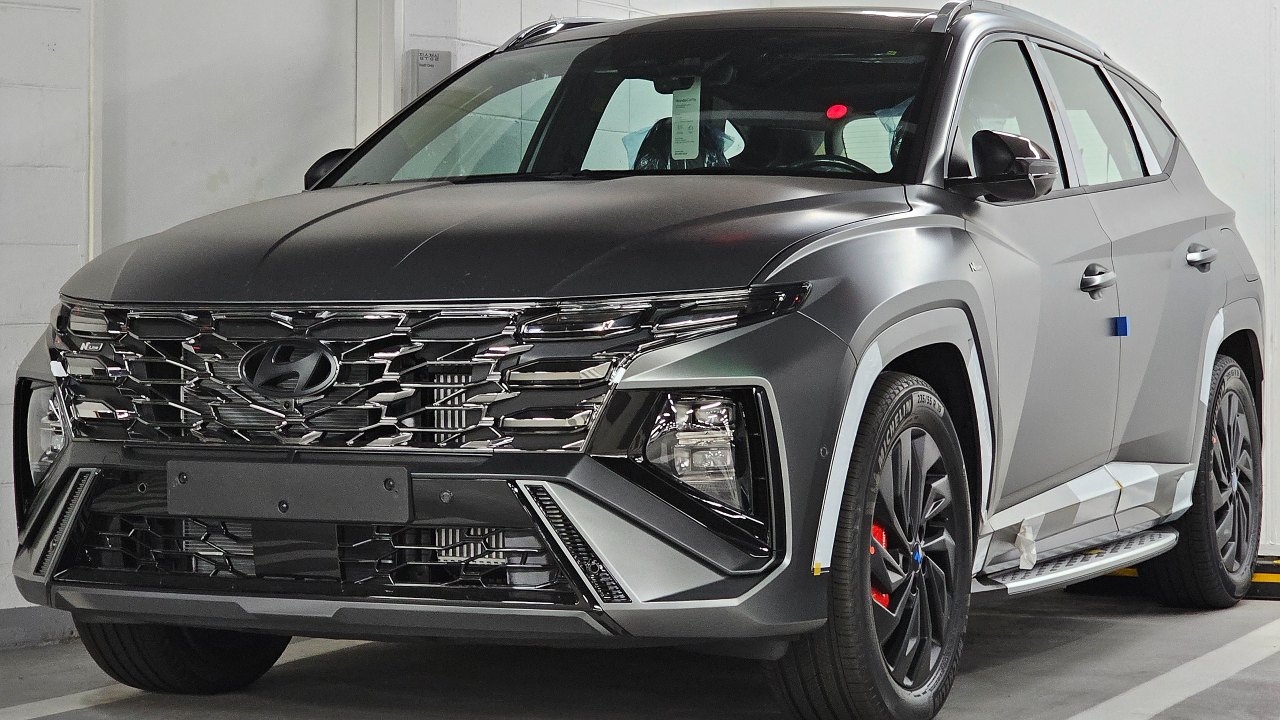
Hyundai’s success is not just about offering multiple powertrains, it is also about putting them in the right shapes and sizes. Americans continue to flock to crossovers and SUVs, and Hyundai has leaned into that preference with models like the Tucson, Santa Fe, and Palisade. A detailed sales breakdown notes that Hyundai’s best selling car in 2025 was its Tucson compact SUV, which the report explicitly identifies as an SUV, and that Americans “can’t get enough” of two of Hyundai’s SUVs in particular. Another analysis credits Hyundai’s SUV lineup with carrying the brand through a year of economic uncertainty and market turmoil, reinforcing how central these vehicles are to its record performance.
Hybrids are woven directly into that SUV strategy. The same reporting that highlights Hyundai’s record U.S. sales points to “Hybrids and” SUVs as the key drivers, indicating that buyers are not just choosing these body styles, they are also opting for electrified versions that promise better fuel economy without the range and charging trade-offs of a full EV. By offering hybrid variants of core models like the Tucson and Santa Fe, Hyundai is effectively using its most popular vehicles as on-ramps to electrification. That approach stands in contrast to Tesla’s lineup, which is entirely electric and concentrated in a handful of models, leaving it more exposed when shoppers decide they want the familiarity of a gasoline engine backed by a battery rather than a battery alone.
What Tesla’s incentives and Hyundai’s records reveal about the next phase
Put side by side, Tesla’s 0% financing blitz and Hyundai’s record U.S. sales tell a story about where the power lies in today’s car market. Tesla is still a dominant EV brand, but it is now behaving like a volume automaker under pressure, using free financing and other deals to keep its growth narrative alive. Hyundai, by contrast, is using its record streak to support both its stock price and its bargaining position with buyers, with one report noting that the company’s strong U.S. performance has helped drive its share price higher while also enabling attractive deals for shoppers. The fact that Hyundai can offer discounts from a position of strength, rather than desperation, gives it more room to maneuver as the market evolves.
I see these trends converging on a simple reality: the next phase of electrification in the United States will be defined less by headline-grabbing EV launches and more by the quiet grind of monthly payments, fuel bills, and charging convenience. Tesla’s 0% financing shows that even the category’s icon is not immune to those fundamentals. Hyundai’s five-year run of record sales, capped by December’s 78,930 units sold, shows what happens when a brand aligns its lineup with those same household calculations. As incentives proliferate and hybrids keep gaining ground, I expect more automakers to follow Hyundai’s multi-path strategy, and more EV specialists to find themselves, like Tesla, paying up to keep their early lead from slipping away.
More from Fast Lane Only: