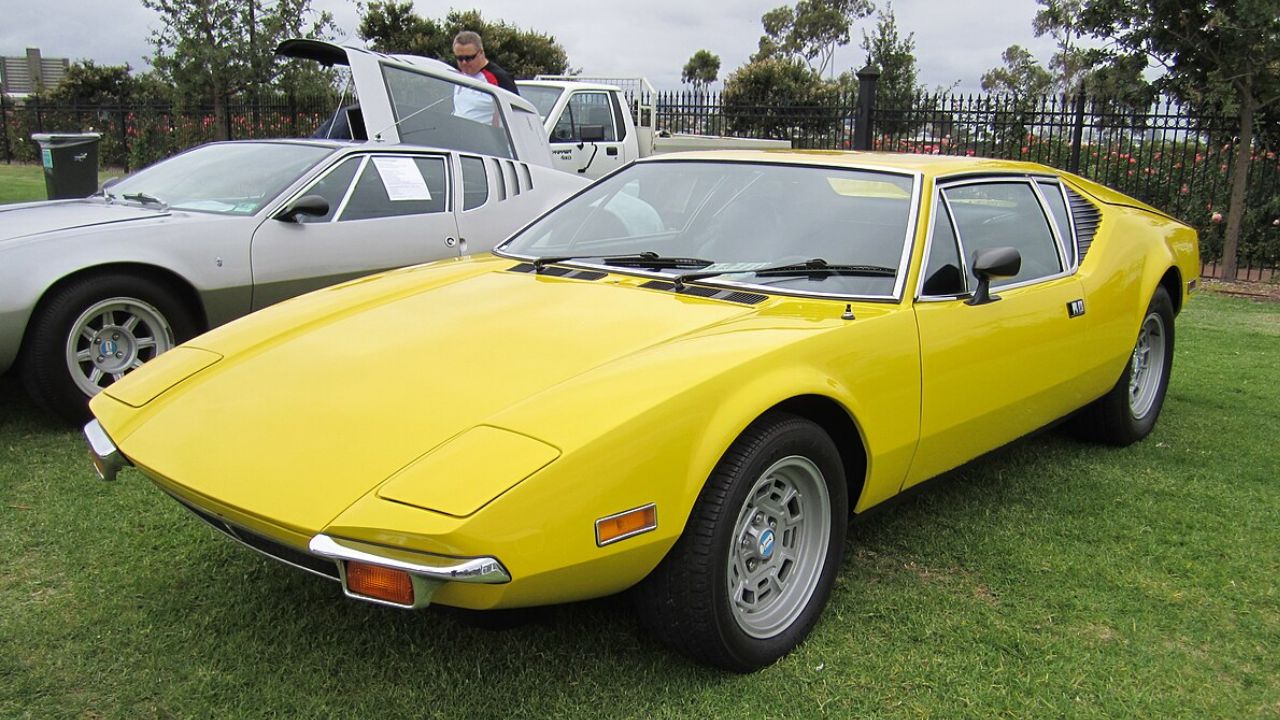
The 1971 De Tomaso Pantera is a famously straightforward idea: an Italian-designed mid-engine chassis wrapped around readily available American V8 power. That simplicity is part of the car’s charm, but it also meant the early cars could be sensitive to heat management in real-world driving. Over time, many owners have treated cooling as one of the first areas to sort out—not to change the car’s character, but to make it more comfortable and dependable in modern traffic.
Why the early cars earned a “runs hot” reputation
The Pantera’s mid-engine layout puts the radiator up front and the engine in the rear, connected by long coolant tubes running through the chassis. That design works well when everything is clean, sealed, and flowing as intended, but it adds more places for restrictions, trapped air, and aging components to cause trouble. Add in stop-and-go driving and higher ambient temperatures than the car might have faced in period, and owners can end up watching the gauge more than they’d like.
It’s also worth remembering that these cars are now decades old, and cooling problems aren’t always “design flaws” so much as the cumulative effect of scale buildup, tired hoses, corroded radiators, and fans that don’t move as much air as they once did. The Pantera community has discussed these issues for years, and the most common fixes tend to be practical, well-understood upgrades rather than radical re-engineering.
Radiator improvements that keep the stock layout
One of the most common paths is improving the radiator while keeping the basic front-mounted arrangement. A modern, higher-efficiency radiator core can dissipate more heat than an older unit, especially if the original has internal corrosion or partial blockage. Owners often focus on fit and airflow management rather than simply choosing the largest radiator possible, since sealing and ducting can matter as much as raw surface area.
When replacing a radiator, many enthusiasts also take the opportunity to refresh related wear items like the radiator cap and hoses. A cap that can’t maintain pressure, for example, can lower the boiling point and make marginal cooling systems act worse than they are. Doing the “boring” maintenance alongside the shiny new part is usually what turns a partial improvement into a lasting fix.
Fans, shrouds, and airflow control
Cooling isn’t only about liquid temperature—it’s also about controlling where air goes. Electric fan upgrades are popular because they can provide stronger airflow at idle than older fans, especially if the car spends time in traffic or parade-speed cruising. Owners frequently pair fan changes with a proper shroud or more complete sealing around the radiator so air is pulled through the core instead of around it.
Airflow control extends beyond the radiator box, too. The Pantera’s front trunk area and nose can allow air to take the path of least resistance unless it’s guided. Simple improvements—like tightening up gaps and making sure factory-style panels and seals are present—can improve real-world results without changing the car’s appearance.
Coolant pipes, hoses, and the “hidden” restriction points
Because coolant has to travel from the engine bay to the front radiator and back again, the condition of the long pipes and the hose connections matters a lot. Any internal corrosion, denting, or accumulated debris can reduce flow and raise temperatures, especially under sustained load. Many owners inspect these lines during restoration or major service, since problems here can mimic a bad radiator or a weak pump.
Hose quality and routing are another frequent focus. A hose that looks fine externally can soften internally with age, and a slight kink can become a major restriction when hot. Replacing aging hoses, checking clamps, and verifying that nothing rubs or collapses under suction is often an unglamorous but highly effective step.
Thermostat choice, bleeding, and getting the system filled correctly
Mid-engine cars with long coolant runs can be more sensitive to trapped air than front-engine designs. If the system isn’t bled well, pockets of air can reduce circulation and make temperatures swing unexpectedly. Owners who’ve chased intermittent overheating often find that careful filling, proper bleeding, and verifying consistent circulation makes a bigger difference than swapping parts repeatedly.
Thermostat selection and condition also play a role. A thermostat that sticks or opens late can cause sudden heat spikes, and replacing it during cooling system refreshes is common preventative maintenance. The goal usually isn’t to run the engine “colder than designed,” but to make sure it reaches temperature predictably and stays there.
Real-world driving upgrades: oil cooling, timing, and tune basics
Sometimes the temperature problem isn’t solely the radiator loop. Engine tune—especially ignition timing and mixture—can influence how much heat the engine sheds into the cooling system. A car that’s not running as it should can feel like it has a cooling limitation when it’s really an overall setup issue, so owners often check basics before assuming hardware is the only answer.
Some owners also look at oil cooling as part of the broader heat-management picture, particularly for spirited driving. Engine oil carries heat away from internal parts, and keeping oil temperatures in check can complement a healthy coolant system. Done thoughtfully, these changes can make the Pantera feel less stressed without taking away the raw, mechanical personality that draws people to the car in the first place.
What’s interesting is that the most successful cooling “mods” on a 1971 Pantera usually aren’t dramatic—they’re cumulative. A clean, well-sealed radiator setup, strong idle airflow, unrestricted coolant plumbing, and careful bleeding tend to add up to a car that behaves more like you always hoped it would. For many owners, that’s the sweet spot: keeping the original concept intact while making it friendlier for modern roads and modern expectations.