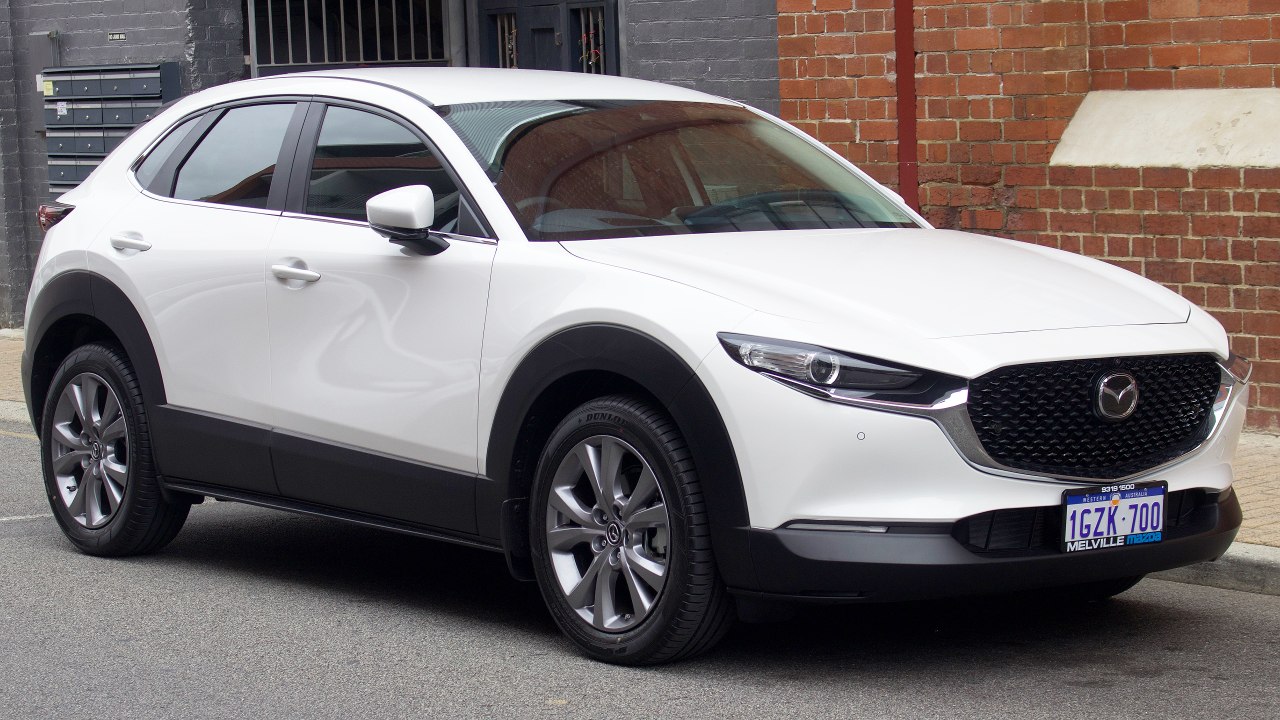
The Mazda CX-30 has quietly shifted from showroom staple to statistical outlier, with sales plunging even as the crossover retains a strong reputation among drivers and reviewers. Rather than a simple story of fading demand, the slump reflects a deliberate recalibration by Mazda that collides with a tougher economic backdrop and intensifying competition in compact SUVs. The result is a model that remains widely admired, yet suddenly far less visible on the sales charts.
Behind the headline numbers lies a strategic bet: Mazda is trading volume for pricing power and brand positioning at a moment when tariffs, inflation, and shifting consumer expectations are reshaping the market. The CX-30’s apparent fall from grace says less about the product itself and more about how a smaller automaker is trying to survive, and even thrive, in a segment dominated by giants.
From showroom star to statistical slump
The CX-30 entered the market as one of Mazda’s most compelling crossovers, praised for its driver-focused dynamics and near-premium cabin in a compact footprint. That reputation has not evaporated, yet sales have dropped sharply, enough that broader auto sales roundups now flag the model as a weak spot in Mazda’s lineup and suggest the CX-30 “desperately needs an overhaul” to regain momentum. At the same time, Mazda’s overall U.S. performance has been mixed rather than catastrophic, with the company reporting 26,169 sales in Sept 2025, a decline of 12.3% year over year, while Still, YTD volume edged up 2% to 319,664, a reminder that the CX-30’s collapse is not simply a mirror of the brand’s total trajectory.
Within that context, the CX-30 stands out as an anomaly, a model whose downturn is far steeper than Mazda’s aggregate numbers. Industry commentary has grouped it among the notable laggards of late 2025, even as rivals such as the Winner, Kia, pushed total U.S. sales to 852,155 units on the strength of a refreshed lineup and aggressive pricing. The contrast underscores how a crossover that once anchored Mazda’s growth has become a drag on its quarterly scorecard, feeding the perception that the CX-30 has lost its footing in a segment that rarely forgives stagnation.
A deliberate pullback, not a product failure
Despite the grim charts, Mazda has been unusually clear that the CX-30’s sales collapse was, in its telling, largely intentional. Company representatives have framed the 2025 volume cut as a strategic move to protect profitability and brand equity rather than a reaction to waning interest, a point echoed in a widely shared Sales Reality Check that described the sharp drop as “not a failure” but a conscious decision to limit supply. In that framing, Mazda CX-30 demand remains healthy, yet the automaker is choosing to sell fewer units, prioritizing margins and pricing discipline over chasing every possible sale.
That narrative is reinforced by reporting that Mazda’s leadership weighed the impact of tariffs and broader trade uncertainty and opted to pull back on CX-30 allocations rather than discount heavily to maintain share. One analysis notes that the company’s explanation to Jan and other observers emphasized policy pressures and cost structures, suggesting that the CX-30’s slump “had nothing to do” with the vehicle’s underlying appeal and everything to do with how Mazda wants to position itself in a volatile market. In this view, the crossover’s downturn is less a verdict on the product and more a reflection of a brand that would rather be smaller and more profitable than overextended and vulnerable.
Tariffs, inflation, and the cost of staying premium
Even if Mazda insists the CX-30’s decline is by design, the backdrop against which that decision was made is hard to ignore. Although 2025 was a decent year for some automakers, ongoing concerns over inflation and trade uncertainty prevented that period from being broadly celebratory, especially for companies with thinner margins and less scale. Reports on the CX-30’s trajectory point directly to tariffs as a key factor in Mazda’s calculus, with the company indicating that higher trade costs made it less attractive to push volume at the expense of profitability.
For a brand that has spent years nudging its image toward the premium end of the mainstream spectrum, absorbing those costs without eroding its positioning is a delicate task. Rather than flood dealers with inventory and resort to deep discounts, Mazda appears to have chosen to keep CX-30 supply tight, even if that meant a visible hit to its sales line. Analysts who have examined the company’s statements to Jan and others argue that this approach aligns with a broader strategy of treating the CX-30 as a higher value, lower volume offering, one that can sustain richer transaction prices even as competitors lean on incentives to move metal in a choppy economy.
Lease deals and the paradox of a “popular” crossover
Complicating the narrative is the fact that Mazda has not abandoned the CX-30 in the marketplace. On the contrary, the company rolled out flexible 2026 Mazda CX-30 Lease Deals Now Available The Mazda CX promotions in late 2025, highlighting the crossover’s engaging performance and premium feel as selling points for value-conscious shoppers. Those offers suggest Mazda still sees the CX-30 as a core product worth spotlighting, even as it trims overall volume and refrains from the kind of fire-sale tactics that can damage residual values and brand perception.
This creates a paradox: the CX-30 remains heavily marketed as one of the most driver-focused crossovers in its class, yet its presence in sales rankings has shrunk dramatically. Industry observers note that Mazda’s messaging continues to emphasize the CX-30’s strengths, from its cabin quality to its dynamics, while the company quietly accepts lower unit counts as the price of maintaining that positioning. The result is a crossover that can feel ubiquitous in advertising and enthusiast circles but scarce in raw registration data, a disconnect that fuels the impression of a “popular” model that somehow no longer sells.
Competitive pressure and what comes next
Even if Mazda’s pullback is intentional, the CX-30 does not operate in a vacuum. The compact crossover segment is crowded with fresh metal, and rivals have not stood still while Mazda manages its exposure to tariffs and inflation. The Biggest Winners and Losers in Auto Sales analysis that spotlighted the CX-30’s weakness also highlighted how brands like Kia have capitalized on the moment, with the Winner, Kia, leveraging a broad lineup to reach 852,155 units and capture shoppers who might once have considered a Mazda. In that environment, a deliberate retreat risks ceding mindshare as well as market share, especially if consumers interpret thin inventory as a sign that the model is being de-emphasized.
Inside Mazda’s own portfolio, the CX-30 also faces internal competition from newer or repositioned crossovers, including successors to The CX-3 and other models that promise similar practicality with updated styling and technology. Commentators such as Kristen Brown have framed the CX-30’s slump as part of a transition phase, in which Mazda is reshaping its crossover lineup and deciding which nameplates will carry the brand into the next cycle. The Sales Reality Check discussions around Mazda CX strategy suggest that the company is comfortable letting the CX-30 play a more selective role, focusing on customers who specifically seek its blend of driving engagement and refinement rather than chasing every buyer who walks into a showroom.
What remains uncertain, and Unverified based on available sources, is whether Mazda plans a major overhaul or successor to reinvigorate the nameplate, or whether the CX-30 will gradually become a niche choice within the range. For now, the model’s story is one of deliberate scarcity layered on top of genuine economic headwinds, a case study in how a well-regarded crossover can slide down the sales charts without losing its core appeal. The slump is real, but so is the strategy behind it, and the next few years will reveal whether Mazda’s bet on a leaner, more premium posture for the CX-30 pays off in a market that rarely rewards hesitation.
More from Fast Lane Only