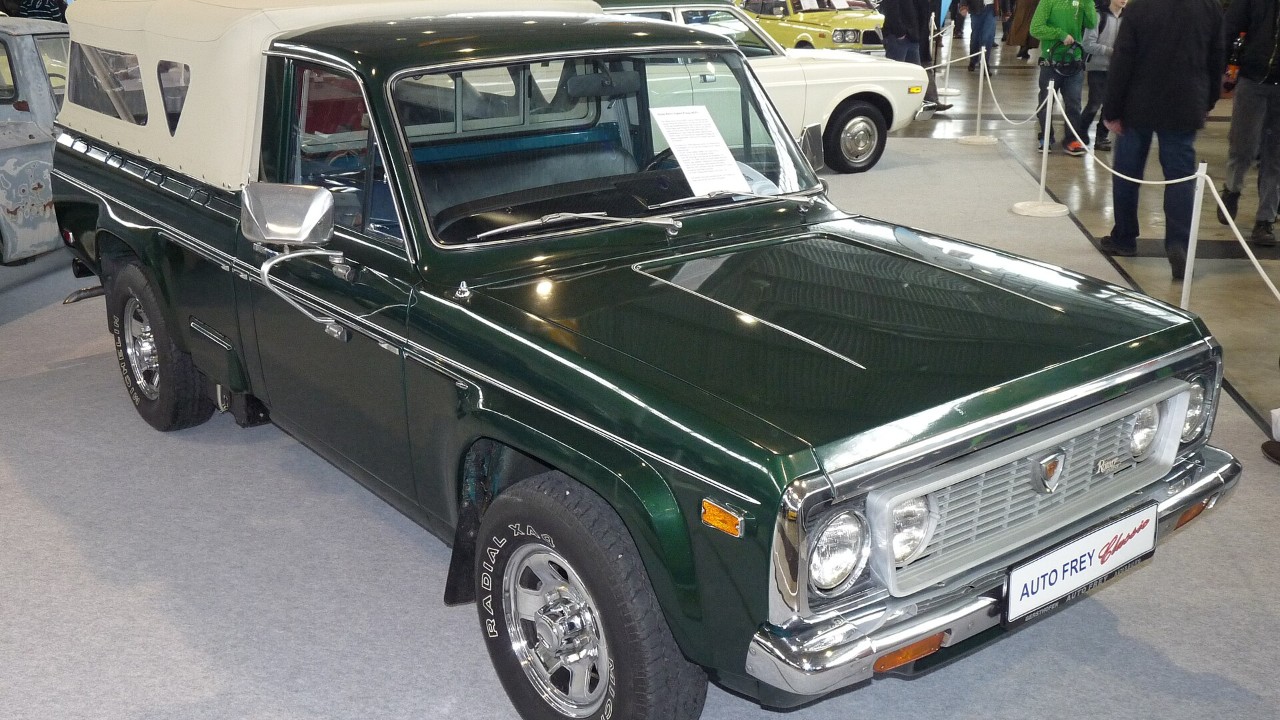
In 1974, Mazda built 14,336 examples of its Rotary Pickup, the Mazda REPU, for North America. Then sales stalled, Mazda paused production for the 1975 model year, and only 632 trucks followed for 1976. One last batch of 1,161 closed out the run in 1977.
Those numbers tell the story of a bold idea that met bad timing. Mazda put its twin-rotor Wankel engine in a small pickup just as fuel prices climbed and the economy slowed. As a result, the truck with more power than any compact pickup of its day turned into a short-lived curiosity.
The production figures here come from a 50th-anniversary history published by Motor1. Old Cars Weekly, CarsGuide and Mazda’s own MazdaStories site fill in the engine, the market and the trucks’ later changes. Where those sources disagree, the text says so.
What the Mazda REPU was
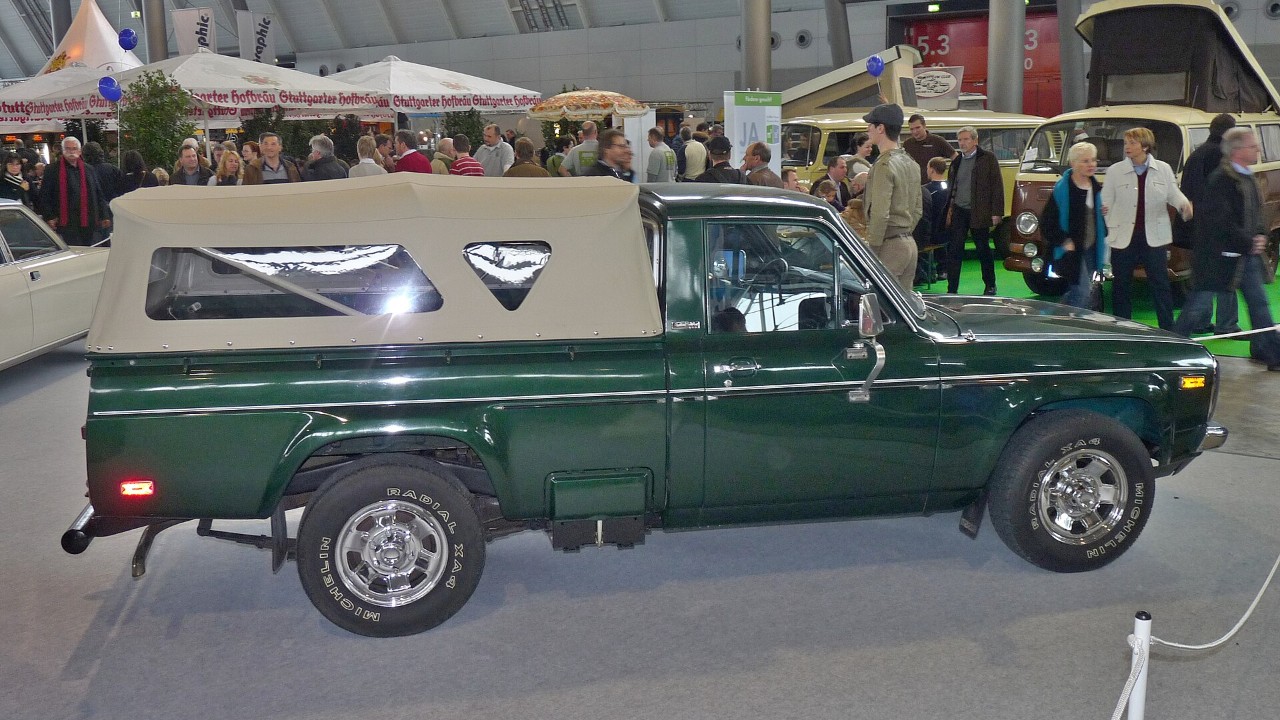
REPU is short for Rotary Engine Pick Up, according to MazdaStories, which says Mazda limited sales to North America from 1974 to 1977. Motor1 adds that Mazda developed the truck specially for the U.S. market.
Under the hood sat a Type 13B twin-rotor Wankel, with a chamber volume of 654 cc per rotor, Motor1 reports. Instead of pistons moving up and down, a rotary engine uses rotors that spin inside a housing.
Several outlets describe the REPU as the only rotary-powered pickup. Motor1 calls it the world’s only Wankel pickup and says it remains the only one of its kind. Similarly, Old Cars Weekly calls it the first and only rotary engine-powered pickup.
More power than any compact pickup
The rotary gave the little truck a real edge. Old Cars Weekly describes a 1.3-liter rotary that made 110 hp, besting all other compact pickups of the day. By comparison, it says, Mazda’s conventional 1974 pickup had 85 hp.
Motor1 puts the REPU’s top speed at over 99 mph, with a 0–62 mph time of nine seconds. Period testing was a little slower. According to CarsGuide, Road & Track recorded 0–60 mph in 11 seconds flat and a quarter-mile in 18.3 seconds.
CarsGuide describes the engine as a 13B with four ports and a four-barrel carburetor. It also notes the truck’s flared fenders, round taillights, and a battery mounted under the bed.
Why Mazda skipped the 1975 model year
The REPU launched into a rough market. Old Cars Weekly recalls the fuel-starved 1970s, with odd-even gasoline rationing, long lines at the pumps and high prices. Fuel use mattered, and CarsGuide puts the REPU’s consumption at about 14.3 L/100 km.
Motor1 says the economic recession and rising fuel prices pushed many buyers toward smaller, cheaper commercial vehicles. So many REPUs went unsold that Mazda paused production for the 1975 model year, it reports. That gap is why the record jumps straight from 1974 to 1976.
CarsGuide offers one more detail about that missing year. It says Mazda restamped many unsold 1974 trucks with an “S” prefix so they could be sold as 1975 models.
The Mazda REPU production numbers, year by year
Motor1 gives the clearest breakdown. Mazda built 14,336 Rotary Pickups for North America in 1974 alone. After the 1975 pause, 632 rolled off the line in 1976, and the final 1,161 followed in 1977.
Other sources round things differently, however. Old Cars Weekly says Mazda sold about 15,000 units in the United States and Canada before it discontinued the truck. CarsGuide estimates just over 15,000 in total, but it puts 1976 output at about 700 and 1977 at about 3,000. Even so, Motor1 and CarsGuide both show that 1974 trucks made up the large majority.
The last trucks and the REPU today
For its final year, Mazda gave the truck a moderate redesign. CarsGuide lists updated electrical systems, a cab stretched by 100 mm and a five-speed manual gearbox. It also puts the price at about US$3,500 at the time.
The REPU even earned a win in competition. According to CarsGuide, Malcolm Smith and Jack Sreenan drove one to overall victory at the 1975 SCCA Mojave 24 Hour Rally. Meanwhile, MazdaStories profiles a 1974 truck that now works as a shop truck, complete with its “rotary power” decal on the back.
Mazda never built another rotary pickup. Production ended in 1977, Motor1 reports, with the 1,161 trucks of that final model year.
More from Fast Lane Only