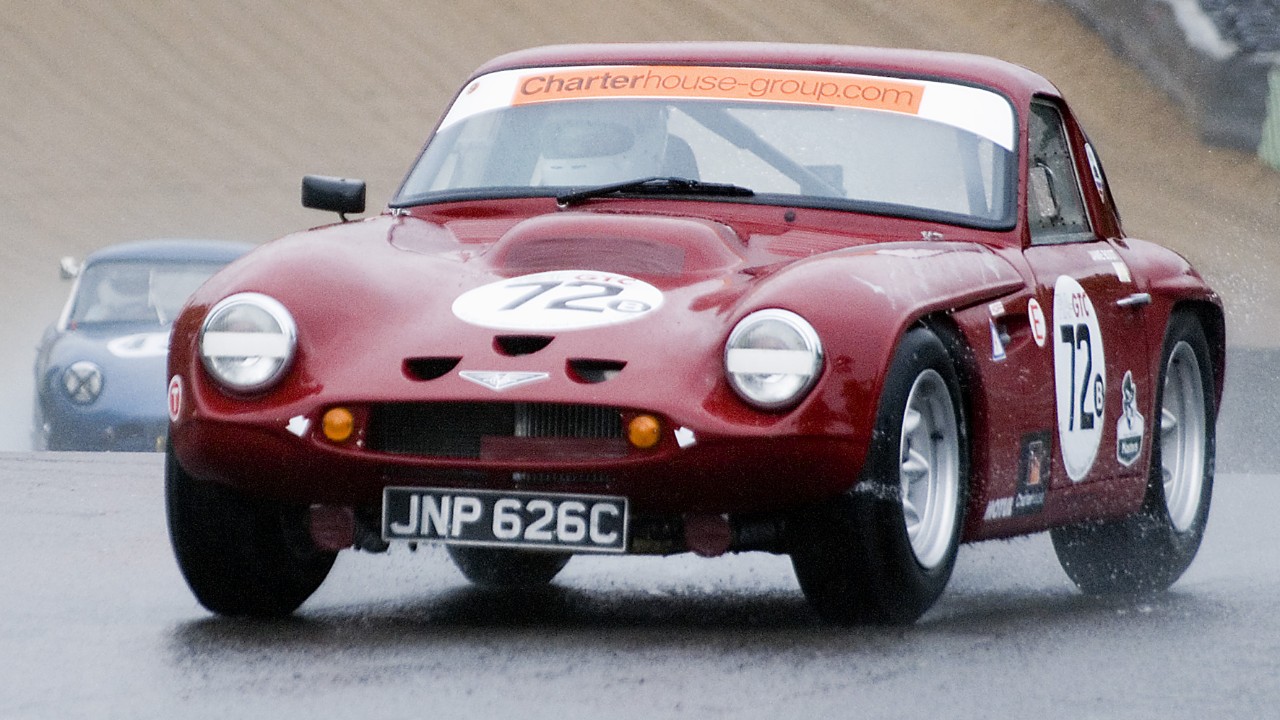
The TVR Griffith 200 was a small British fiberglass coupe with a Ford 289 V8 installed on Long Island, New York. Jack Griffith, a Ford dealer there, then sold it in America from 1964. It was light and very quick, and a dock strike cut it off almost as soon as it got going.
At first, TVR built the body and chassis as its Grantura. Griffith’s idea was to fit the same Ford V8 that powered the Shelby Cobra, a car he already sold.
Still, nobody agrees on exactly how that idea started. The story comes in two versions, and both happen in Griffith’s own workshop.
The engine-swap legend, told two ways
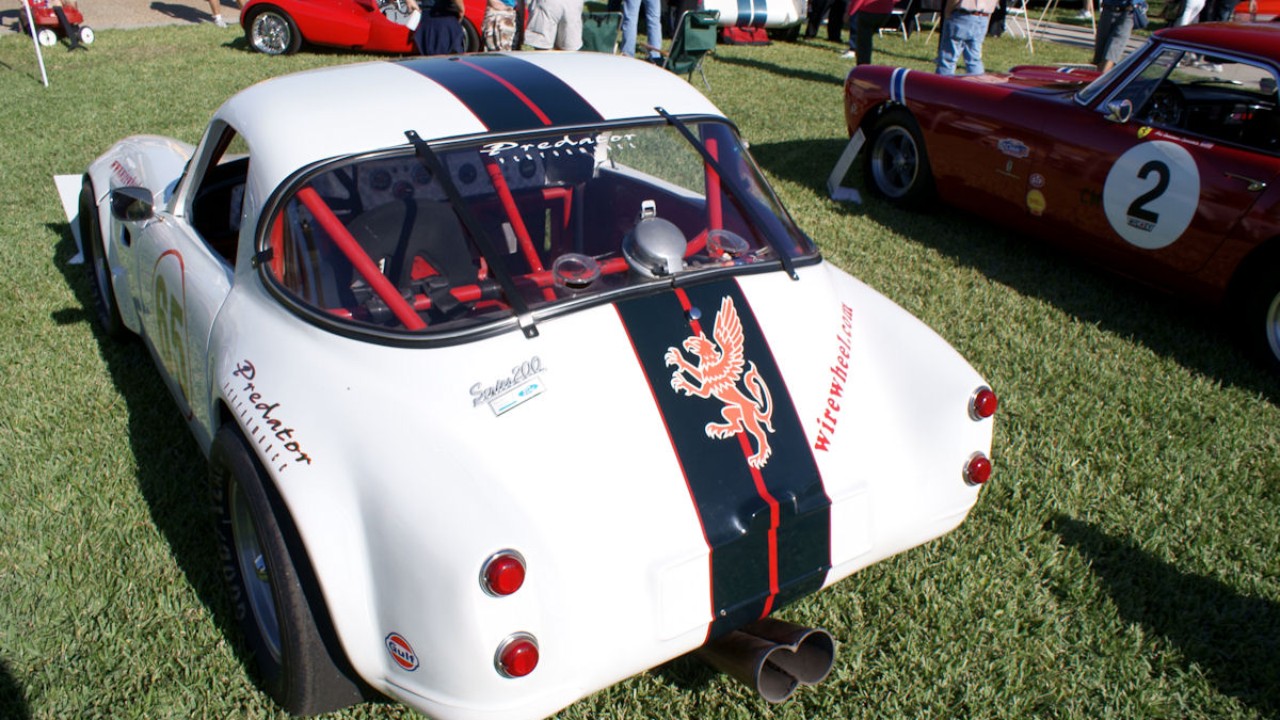
The first version comes from Lancaster Insurance’s history of the car. In 1963, racer and TVR importer Dick Monnich visited Griffith’s workshop with his TVR Grantura Mk III. As a result, the little coupe caught Griffith’s interest.
The TVR Car Club tells it differently and calls the tale “stuff of legend.” In its version, Gerry Sagerman’s Mk III Grantura race car sat in the shop alongside Mark Donohue’s AC Cobra. Supposedly, Griffith’s mechanics swapped the engines “because they could.” The transplant didn’t quite work, but Griffith liked the idea.
Either way, the result was the same. David Hives of Blackpool then redesigned the chassis so the V8 would fit, according to the club. That turned a garage stunt into a properly engineered car.
Who Jack Griffith was
Andrew “Jack” Griffith was a Long Island Ford dealer, a Ford performance distributor and a Shelby Cobra franchisee, Lancaster says. He also collected and stored AC Ace bodies before they went on to California.
For its part, TVR needed the business because money was tight. A cut in Britain’s Purchase Tax had hurt the kit-car market and left the company in financial trouble. By March 1964, Ford had approved Griffith’s use of its “Windsor” V8 in the Grantura.
How the TVR Griffith 200 came together
TVR supplied fiberglass bodies already fitted with steering, brakes and suspension. Then it shipped them across the Atlantic without an engine or gearbox. They went to Griffith’s works in Syosset, New York, for final assembly, and each one got a Griffith Motors chassis number, the club says.
Fitting the Ford took real force. The conversion moved the main chassis members nine inches further apart and strengthened the front suspension pick-up points, Lancaster reports. It also altered the lower tube cross member. In fact, workers used 16-pound sledgehammers on the frame during installation.
The numbers behind the car
The engine was Ford’s 289 V8, displacing 4,727cc. According to the TVR Car Club, it made 195 bhp in standard form or 271 bhp in HiPo form. The club lists 0–60 mph in six seconds for the standard car and five for the HiPo, with top speeds of 140 and 150 mph.
In addition, pricing was simple. The Griffith 200 cost $3,995 in the US, and the 271-bhp engine added $495, per Lancaster. Meanwhile, the sales copy for that option claimed 145 mph and 0–60 mph in 3.8 seconds.
Later, a British road test went further. In October 1965, John Bolster of Autosport tested “Chassis No. 1,” which Chris Lawrence Racing had fitted with modified suspension and brakes. He recorded 0–60 mph in 5.2 seconds and a top speed of 163 mph, Lancaster says.
From the 200 to the 400, then the dock strike
The Griffith 400 replaced the 200 in November 1964. Unlike the 200, it wore the “Manx” tail from the 1800S. It also added a larger radiator, twin electric fans, redesigned rear suspension and a Salisbury limited-slip differential. The club says those changes were meant to cure problems with the 200.
Britain got its own version too. TVR launched it in January 1965 at the Racing Car Show at Olympia, London. The UK car had the 400-style tail but kept the Griffith 200 name. Car magazine tested one in October 1965 at £1,693, against the £1,935 Marcos 1800.
By then the supply line had broken. In January 1965, a dock strike on the US East Coast cut off cars to Griffith. As a result, both companies eventually collapsed. Arthur and Martin Lilley rescued TVR in November 1965.
How many TVR Griffiths were made
Even so, production counts are only approximate. The TVR Car Club lists about 192 Griffith 200s and 59 Griffith 400s, and it counts about 42 UK cars separately. After the rescue, TVR built ten more Griffith 200s from leftover factory stock. According to both the club and Lancaster, the eleventh car became the first short-wheelbase Tuscan.
More from Fast Lane Only