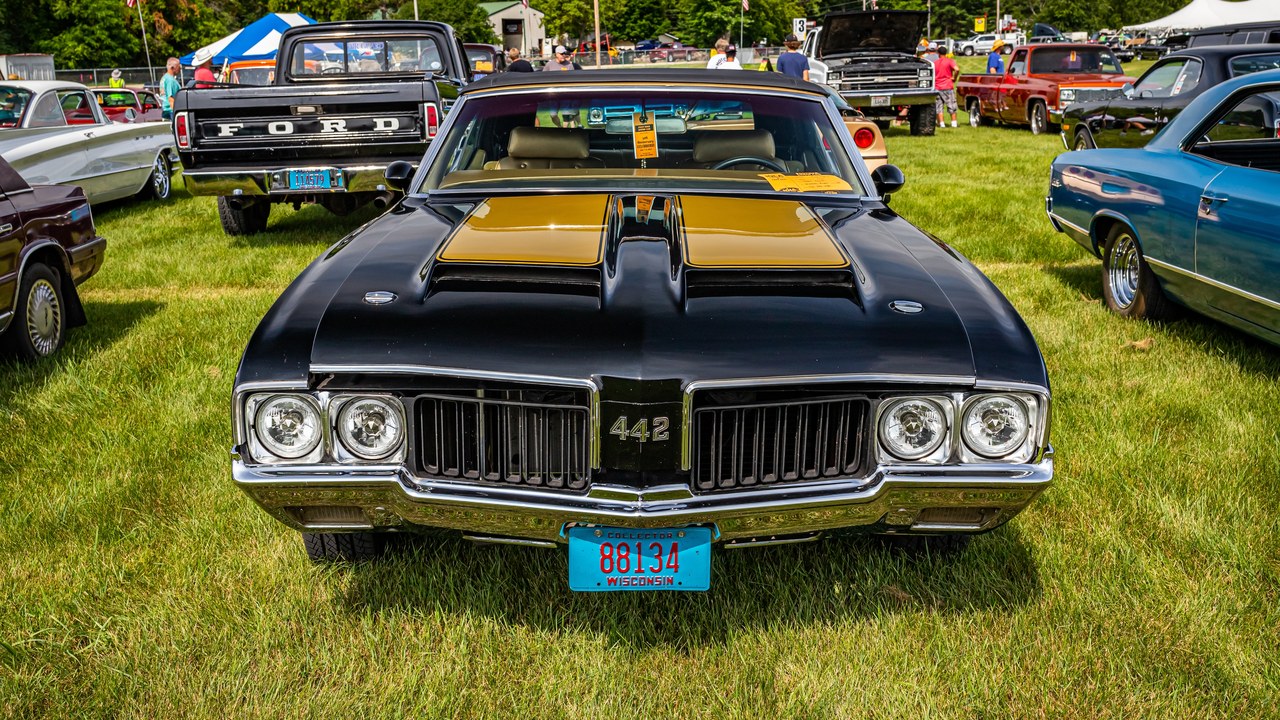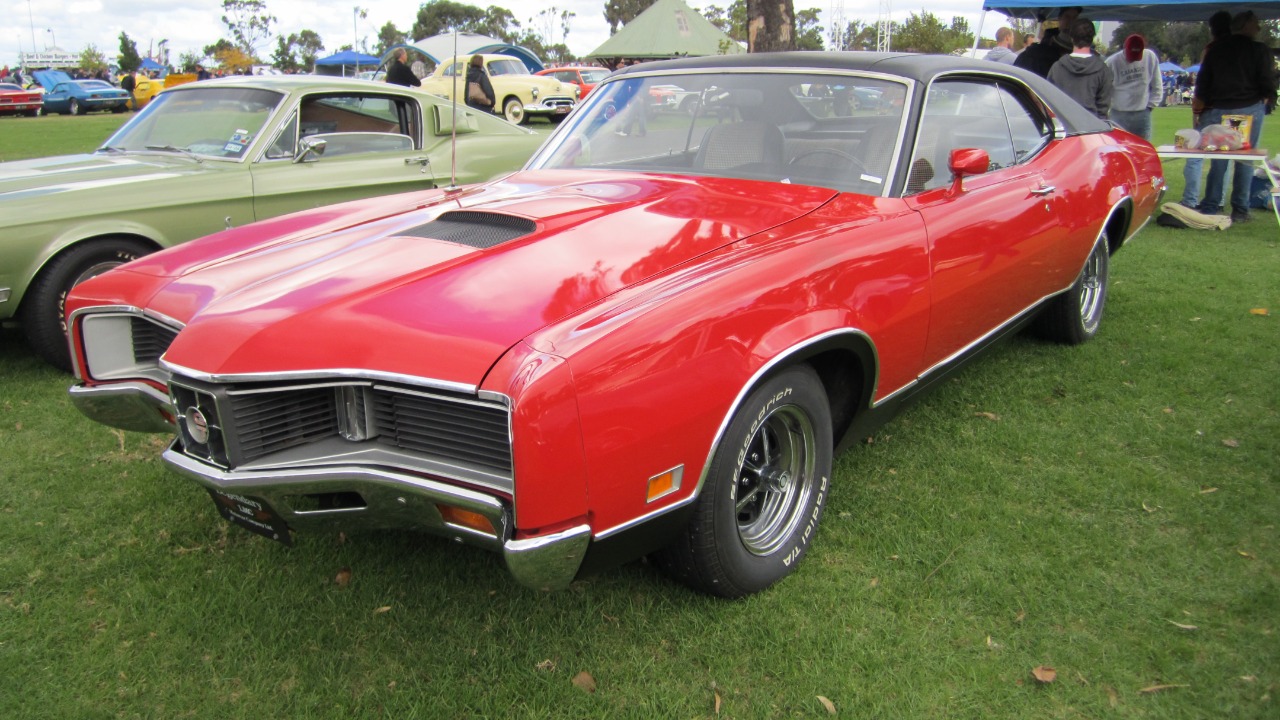
The 1970 Mercury Cyclone Spoiler had the hardware, the looks, and the racing pedigree to stand shoulder to shoulder with the era’s headline muscle cars, yet it rarely gets mentioned in the same breath as the big-name legends. You see the same pattern over and over: the spotlight goes to the Plymouth Superbird or the Ford Torino, while Mercury’s most serious street-and-track weapon lingers in the background. If you care about performance history, that quiet treatment does not match what this car actually achieved.
Look closely at the numbers, the engineering, and the stories that have surfaced from barns, junkyards, and auction blocks, and you start to realize how much you have been missing. The Cyclone Spoiler was built in tiny quantities, packed Mercury’s most serious big-block power, and drew directly from the brand’s NASCAR ambitions, yet it still trades more like a cult favorite than a blue-chip celebrity. That disconnect is exactly why it deserves a fresh look from you now.
The NASCAR roots everyone forgot
If you want to understand why the Cyclone Spoiler mattered, you start with racing. The Cyclone line was not a styling exercise, it was Mercury’s answer to full-size performance luxury cars that could actually win on superspeedways. For the second generation of the Cyclone, the car stood on its own and then, in its third generation, cemented a reputation by crushing rivals on NASCAR’s big tracks, even embarrassing its Ford Torino cousins. That success carried into the fourth generation introduced for 1970, which powered Mercury to numerous victories well into the decade, so the Cyclone Spoiler you see in show photos is really a road-going extension of a competition program.
The connection to stock-car racing was not subtle. The Cyclone Spoiler II was a high-performance variant of the third-generation Cyclone, built specifically to compete in NASCAR, and only 50 examples were produced for homologation. Earlier, the 1969 Spoiler II had been designed specifically for NASCAR racing as a modified version of the standard Mercury Cyclone and featured aerodynamic tweaks that came straight from prototype aero work. When you see a bright Competition Green Mercury Cyclone Spoiler II pop up on social media with the reminder that Everyone remembers the Super Bird, you are being nudged to notice that Mercury was playing in the same league as the Super Bird and other aero warriors, just without the same marketing megaphone.
Styling and hardware that should have been iconic
On paper, the 1970 Mercury Cyclone Spoiler had everything you expect from a halo muscle car. In 1970 they decided to make a performance model of the Cyclone and call it the Cyclone Spoiler, and it featured more aggressive styling and the most powerful engine in Mercury’s lineup. Period photos and modern listings show the car Packing a 429ci Cobra Jet V8 under that long, sculpted hood, often paired with a four-speed “Toploader” manual. One bright orange example in the Hagerty Marketplace was described as packing a correct matching-numbers 370 hp Ford 429 Cobra Jet engine, which underlines how serious the factory specification really was.
The design language was just as purposeful. Though the Cyclone Spoiler (listed as Mercury Cyclone Spoiler – 2) offered a similarly aggressive shape to the Torino, it was distinguished by hidden lamps starting in 1970 and a more upscale, almost European sense of proportion. The 1970 Mercury Cyclone Spoiler 429 Cobra Jet combined that 429 figure with a uniquely underrated style that set it apart from more familiar muscle cars and gave it a sophisticated look unlike anything else in Ford’s lineup. When you compare it to the more common Ford Torino or even the Cougar, you start to see how Mercury was trying to carve out its own identity, and how easily that nuance gets lost when history is told only through the biggest badges.
Rarity that rivals the legends
One reason you do not see the Cyclone Spoiler at every cruise night is simple: there were not many to begin with. Despite the success on the racetrack, just 1,631 Mercury Cyclone Spoiler models were built in 1970, all with Ford’s top 429 Cobra Jet engine and ram air induction, and only 865 were fitted with the four-speed manual. That is limited-production territory by any standard, and it helps explain why you are more likely to encounter one in an auction catalog than in your local classifieds. When a 4,459 mile survivor surfaced as a one-of-one 1970 Mercury Cyc example, it was treated as a true time capsule, the kind of car that usually lives only in stories.
The deeper you dig, the more you realize how thin the herd has become. Enthusiasts in dedicated groups will tell you that The Cyclone was not just a dressed-up Cougar, and that it shared its DNA with the Torino but wore a longer, lower, more aggressive body. Yet even among those fans, you see posts where someone says I would say this is probably the Rarest 70 cyclone built, because each surviving car seems to have some unusual combination of color, options, or drivetrain. When a forgotten example of Mercury’s rarest muscle car turned up crushed in a Michigan junkyard, the story of Hank, a lifelong gearhead with a particular love for classic American Mopars, underscored how even dedicated enthusiasts can overlook these cars until it is too late.
Performance pedigree hiding in plain sight
From a performance standpoint, you are not giving up anything by choosing a Cyclone Spoiler instead of a more famous rival. On the performance side, the Cyclone Spoiler is described as not getting enough credit, even with the big-block power and serious chassis tuning that Mercury had developed for the Cyclone GT. The Spoiler Boasted Hidden Performance Pedigree, and that phrase captures how the car’s capability was often masked by Mercury’s quieter image compared with Ford or Plymouth. When you factor in the Super Cobra Jet packages that turned the Mercury Cyclone Spoiler Super Cobra into an ultra-rare, track-ready machine, you start to see how much performance was left on the table in the public imagination.
The racing department was thinking even bigger. Aiming to rival Plymouth’s Superbird, Mercury even teased a Spoiler II concept with a “beaked” nose and Boss 429 power, a wild vision of what the aero wars could have looked like if the rulebook had stayed open. That project never reached showrooms, but it shows you how seriously Mercury took the idea of turning the Cyclone and Spoiler II into full-fledged NASCAR weapons. When you watch a road-trip video where a host walks around a 1970 Mercury Cyclone Spoiler with Rich, the owner, you can see how that competition mindset translated into the stance, the hood scoops, and the way the car sits on its wheels.
Why the Cyclone Spoiler is finally getting its due
For years, the Cyclone Spoiler sat in the shadow of more famous nameplates, but you can feel the tide starting to turn. Over the years, after production ceased, the Skipper went on to attain a cult status among collectors, with original versions popping up at auctions across the world, and that same pattern is now emerging for Mercury’s forgotten muscle. As more people learn the backstory, you see one-owner, one-of-one 1970 Cyclone Spoiler SCJ cars being introduced on video by experts like Diego Rosenberg and Luke, and you see barn-find stories where someone who did a little bit of homework LONG before the deal suddenly realizes what they have when a Cyclone Spo finally receives some attention.
More from Fast Lane Only