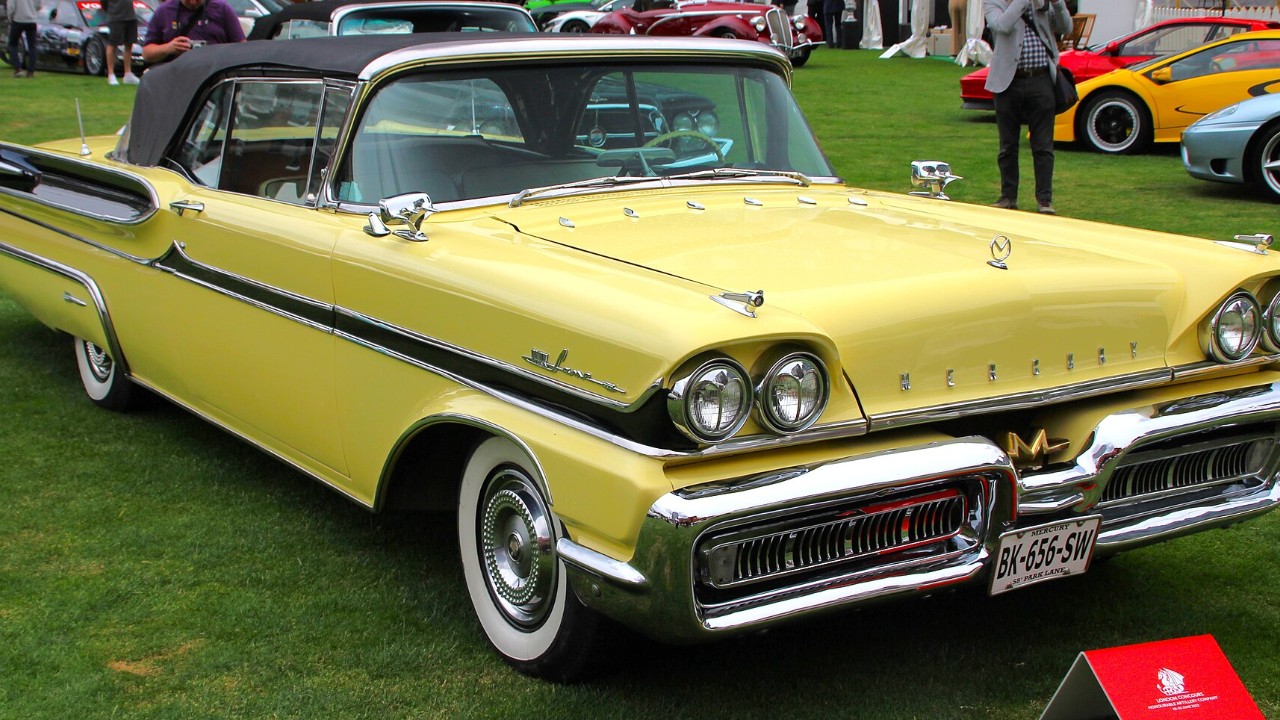
The 1958 Mercury Super Marauder put three two-barrel carburetors on a 430-cubic-inch V8 and claimed 400 horsepower. That number beat the year’s Chrysler 300D on paper. Yet experts think only about 100 buyers took the option, and Mercury dropped it after one season.
The engine came from Ford’s new MEL family, short for Mercury-Edsel-Lincoln. Mercury used it to rebuild its whole engine lineup for 1958, even though the body was in its second year. The Super Marauder sat at the very top of that lineup.
Today, though, it is one of the least known big-power options of the 1950s. Here is what it was, how it worked and why so few exist.
The 430 V8 behind the Mercury Super Marauder
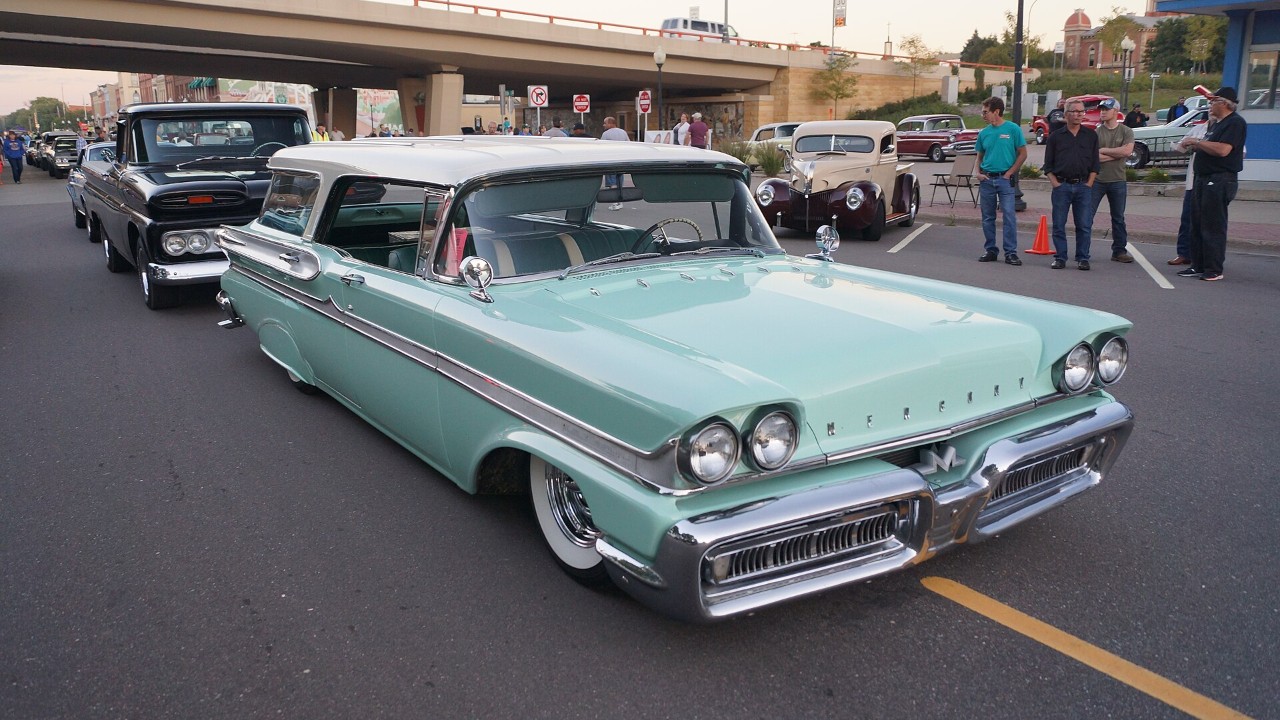
At first glance, the base engine was already big. According to Mac’s Motor City Garage, the 430 had a 4.30-inch bore and a 3.70-inch stroke. It was the largest MEL engine in 1958, and Ford meant it mainly for Lincoln.
In Mercury’s standard tune, Mac’s says, the 430 ran 10.5:1 compression and one Holley four-barrel. That version made 360 hp at 4,800 rpm. Mercury sold it as the Marauder 430.
Below it, meanwhile, sat a smaller 383. Classics on Autotrader’s 1958 Mercury Super Marauder buyer’s guide lists the 383 at 312 hp as standard on the Monterey. It also lists a 330-hp 383 for the Montclair and wagons. Then came the 360-hp 430, standard on the Park Lane.
Three carburetors and 500 lb-ft
Bill Stroppe of Long Beach, California, developed the Super Marauder package, Mac’s reports. Stroppe was Ford’s West Coast performance specialist and a friend of Benson Ford. He swapped the single four-barrel for three Holley 2300 two-barrels on a dual-plane aluminum intake. Mac’s adds that the carburetors were vacuum-actuated.
Interestingly, he left most of the engine alone. Compression stayed at 10.5:1, and the standard camshaft stayed too. Even so, the rating climbed to 400 hp at 5,200 rpm and 500 lb-ft of torque at 3,200 rpm. Mac’s points out that this was an SAE gross rating.
The package also looked the part. It wore finned rocker covers and a cast aluminum air cleaner. According to Mac’s, former Ford stylist and Rod & Custom editor Lynn Wineland styled that air cleaner housing.
A 400-hp claim that beat Chrysler
Above all, Chrysler’s 300D was the rival in 1958. Mac’s lists its 392-cubic-inch Hemi V8 at 380 hp. So the Mercury won, at least in advertised ratings, as Mac’s puts it.
Autotrader goes further. It calls the Mercury the first domestic vehicle to advertise a 400-horsepower engine. However, Mercury marketed it far less hard to performance buyers than Chrysler marketed the 300D, Mac’s notes.
Timing hurt, too. Hagerty says the Super Marauder arrived as a midyear change. Autotrader dates its availability to March 1958.
Which 1958 Mercury could get one
The 1958 lineup gave buyers plenty of choice. According to Autotrader, the Monterey and Montclair rode a 122-inch wheelbase, while the new Park Lane used a 125-inch chassis. Mercury then added the low-priced Medalist in the middle of the year.
In other words, these were big, heavy cars. Autotrader puts a typical 1958 Mercury at about 4,300 pounds, stopped by 11-inch drum brakes at each corner. The Turnpike Cruiser package also added a power Breezeway rear window and twin antennas in a forward pod.
Here the sources split. Mac’s says factory materials listed the engine for the Park Lane and Montclair convertibles, the Turnpike Cruiser and the station wagons. It adds that the engine also turned up in other body styles, possibly because dealers sold the hardware over the counter.
Autotrader, by contrast, says buyers could order it in any model. That even included the low-priced Medalist two-door sedan. The two sources also differ on gearboxes. Mac’s says the Super Marauder came only with the Multi-Drive Merc-O-Matic automatic. Autotrader, though, describes it paired with a three-speed manual.
Lincoln got the three-carburetor setup as well, according to Mac’s. Its version, however, skipped the lettered air cleaner.
How many were sold, and how many remain
The 1958 Mercury did not sell the way Ford hoped, Autotrader says. Mercury built 133,271 cars that year, and a Montclair two-door hardtop listed at $3,284. Only 6,407 buyers chose the Turnpike Cruiser.
Against those numbers, the Super Marauder barely registered. Mac’s cites experts who put production at around 100. Autotrader likewise estimates sales at 100. Neither figure comes from a factory record, so both remain estimates.
After that, Mercury pulled the plug. Hagerty says the company chose not to continue the Super Marauder for 1959. As for survivors, Autotrader estimates that fewer than 10 of the roughly 100 cars still exist.
More from Fast Lane Only
- Unboxing the WWII Jeep in a Crate
- 15 rare Chevys collectors are quietly buying
- 10 underrated V8s still worth hunting down
- Police notice this before you even roll window down
This article was created with the help of AI and was reviewed and edited by Fast Lane Only editors before publication.