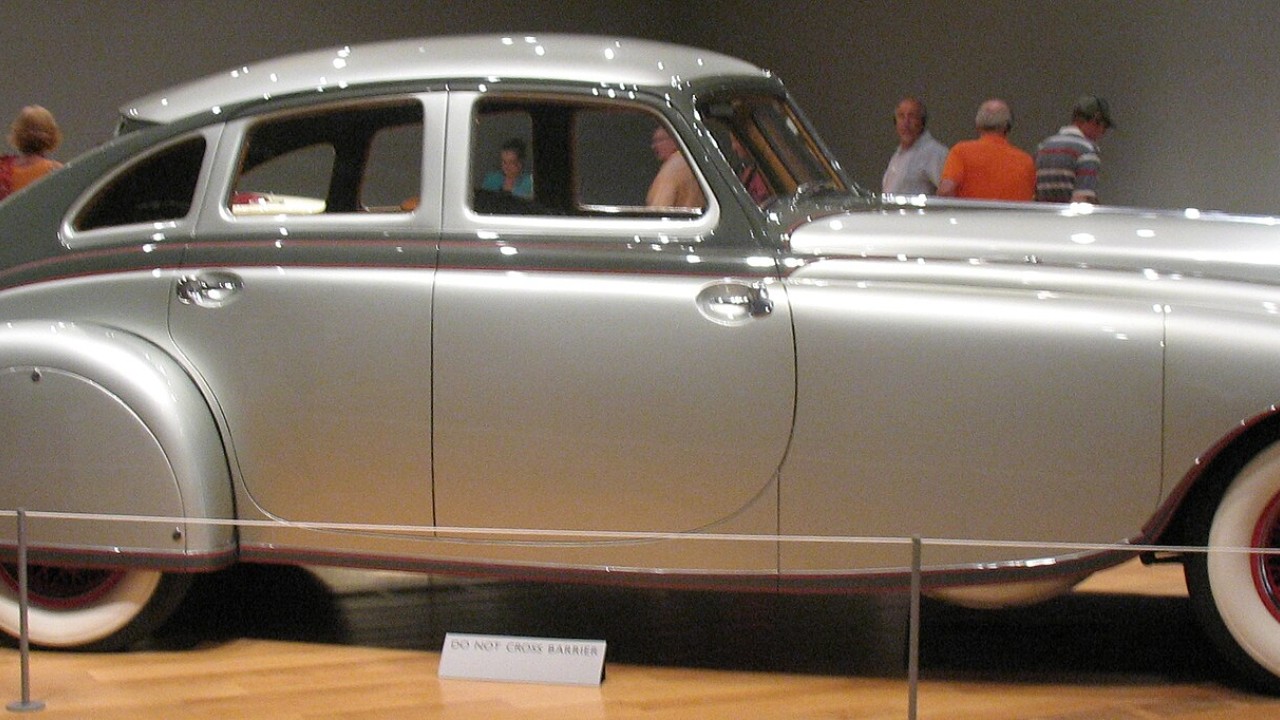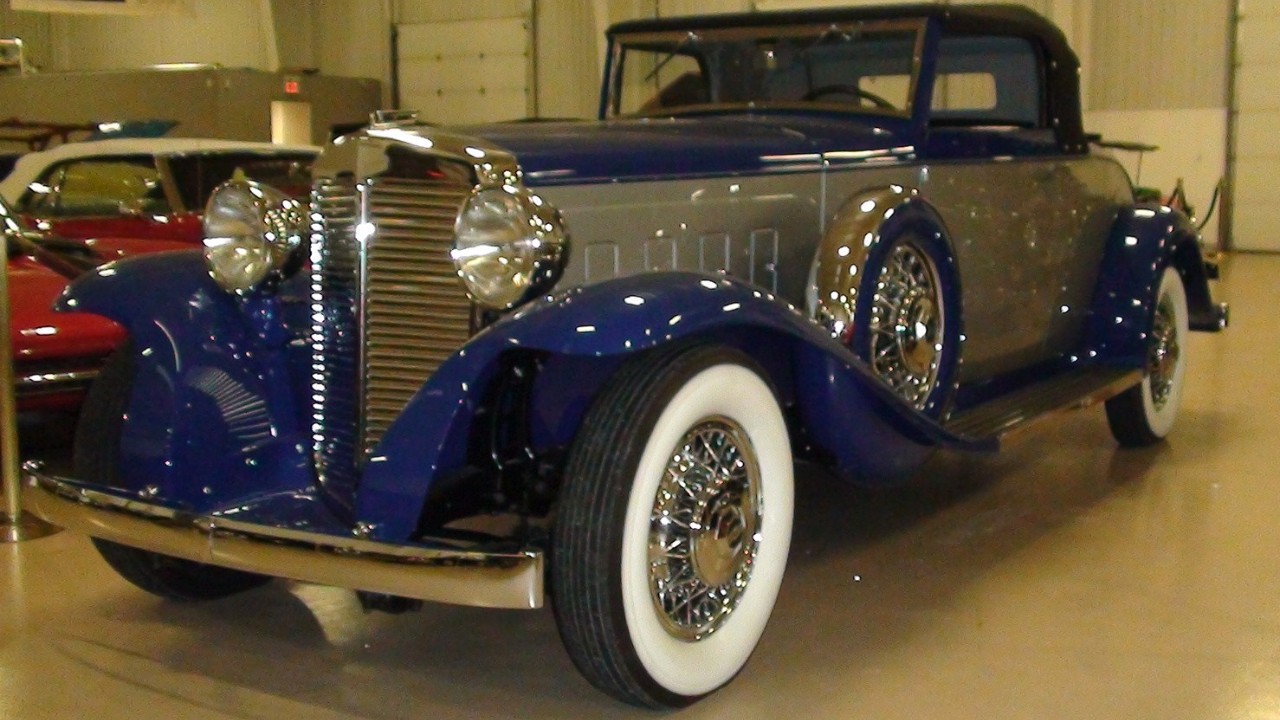
The 1931 Marmon Sixteen carried a 491-cubic-inch V16 made almost entirely of aluminum, rated at 200 horsepower. Its body lines, though, came from a teenager. Walter Dorwin Teague Jr. was a 19-year-old drafting student at MIT when he styled the car for his father’s design firm.
Marmon was a small automaker trying to match Cadillac’s new V16. It reached the market more than a year late. Even so, its engine was bigger and more powerful than the Cadillac’s.
Then the Depression arrived. Marmon built only a few hundred Sixteens before the company itself was gone.
Howard Marmon’s aluminum V16

Howard Marmon was an engineer first. His father helped found Nordyke & Marmon, the family business. According to Curbside Classic, he studied engineering at the University of California. He built his own car in 1901, also using aluminum. Later, a Marmon, the Wasp, won the first Indianapolis 500 in 1911 with Ray Harroun driving. By the end of World War I, Howard Marmon had also reached the rank of lieutenant colonel.
Marmon began V16 experiments in 1926 by joining two of its straight eights, Mac’s Motor City Garage reports. Then the company started over from scratch. The finished engine had a 3.125-inch bore, a 4.00-inch stroke and 490.8 cubic inches, which most sources round to 491.
The block was aluminum, with steel sleeves lining the cylinders, Curbside notes. Mac’s lists 200 hp at 3,400 rpm, a 45-degree bank angle and one camshaft in the block working overhead valves. It also puts the engine’s weight at 930 pounds. A single Stromberg two-barrel downdraft carburetor sat between the banks, while Cadillac ran its plumbing outboard. In 1930, the Society of Automotive Engineers gave Howard Marmon its annual award for the year’s top engineering achievement, Curbside says.
Marmon never published a torque figure. However, Curbside and Conceptcarz both estimate it at close to 400 lb-ft. Aluminum also went into much of the chassis, according to Conceptcarz, not just the engine.
How an MIT student styled the Marmon Sixteen
For the body, Marmon went to Walter Dorwin Teague Sr., a leading industrial designer of the Art Deco era. The Sixteen was his firm’s first car job, according to Curbside Classic. However, he handed the actual design work to his son.
Teague Jr. was 19 and in his first year studying drafting at MIT, Curbside says. Conceptcarz agrees that the son, an MIT student, sketched the lines and details. Still, his father received most of the credit. The younger Teague later built a distinguished career in industrial design of his own, Curbside notes.
LeBaron built bodies such as the five-window Victoria coupe. Curbside counts eight standard body styles, plus two or three full customs. Marmon called it “The World’s Most Advanced Motorcar.”
Marmon against Cadillac
Cadillac got there first. It introduced its V16 in January 1930, Mac’s says, while Marmon reached full production only by spring 1931. Conceptcarz dates the Marmon’s debut to the Chicago Auto Salon in November 1930, with deliveries starting in April 1931.
On paper, Marmon still won several rounds. Cadillac’s V16 displaced 452 cubic inches, against Marmon’s 491. It also used a cast-iron block, according to Curbside. Meanwhile, Curbside writes that Cadillac’s V16 came from Owen Nacker, a former Marmon engineer.
Price was close, too. Mac’s lists the Sixteen at $5,090 to $5,440 on a 145-inch wheelbase. By comparison, Conceptcarz says initial prices started at $5,200, about $750 below an equivalent Cadillac. Curbside also notes that a Sixteen chassis cost about half as much as a Duesenberg chassis.
A few buyers went further. Conceptcarz lists two special-order cars bodied by Waterhouse on a 154-inch chassis, each priced at $6,800. Curbside also mentions a reputed factory certificate saying each Sixteen ran 210 miles at the Indianapolis Motor Speedway, the last ten at full throttle and at least 105 mph.
Why so few Marmon Sixteens exist
Scale was the real problem. In 1928, its biggest year, Marmon built fewer than 15,000 cars, Mac’s reports. General Motors, by contrast, built about 1.5 million.
Then the Depression deepened. Conceptcarz says Marmon built just over 200 Sixteens in 1931 and only 86 in 1933. Both Curbside and Mac’s put the total at about 390, though some estimates run lower.
Conceptcarz says Marmon was in receivership by May 1933, and Mac’s dates the bankruptcy filing to that month. Howard Marmon later co-founded Marmon-Herrington, a four-wheel-drive truck maker. As for the cars, Conceptcarz puts survivors at about 70, and Curbside cites one count of 68.
More from Fast Lane Only
- Unboxing the WWII Jeep in a Crate
- 15 rare Chevys collectors are quietly buying
- 10 underrated V8s still worth hunting down
- Police notice this before you even roll window down
This article was created with the help of AI and was reviewed and edited by Fast Lane Only editors before publication.