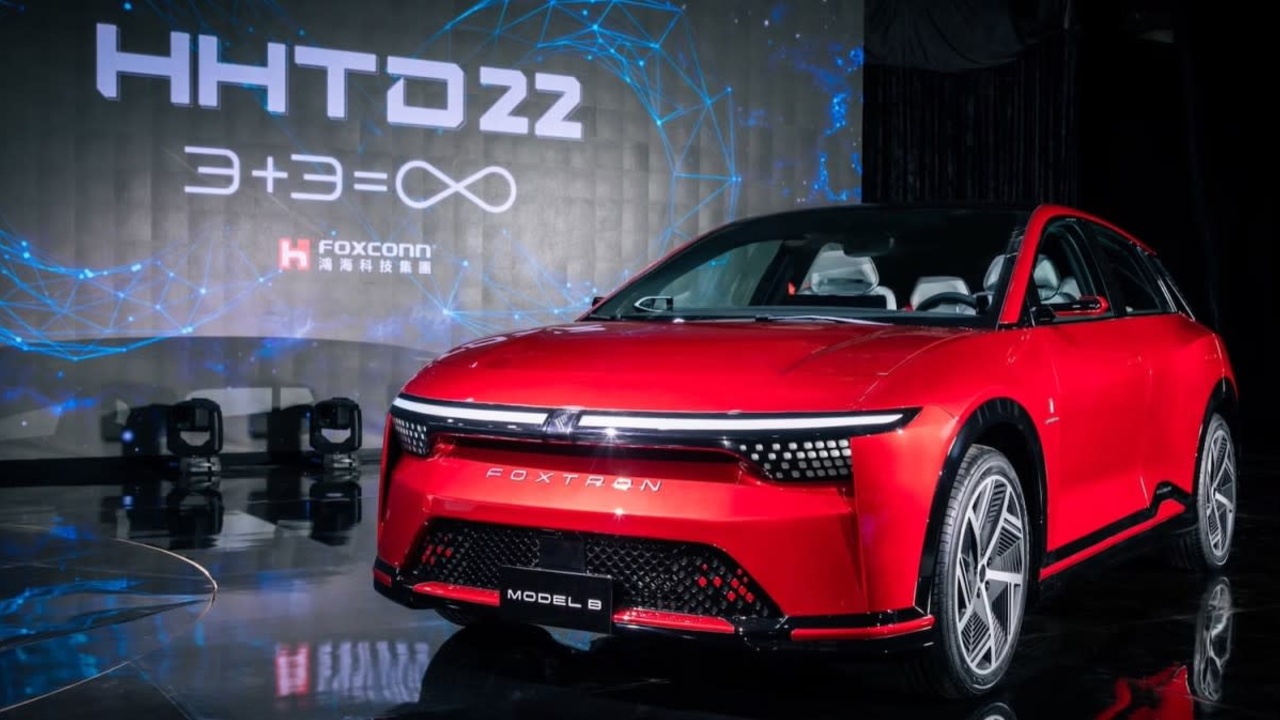
Mitsubishi is preparing a compact electric hatchback with a quoted 400-HP output, and the most surprising detail is not the power figure but the factory address. The car is set to be developed and built with Foxconn, the same contract manufacturing giant that assembles iPhones and other consumer electronics, turning a smartphone-era supply chain into the birthplace of a new performance EV. The project signals how legacy carmakers and tech manufacturers are converging around electric platforms, software, and flexible factories in ways that would have seemed improbable only a few product cycles ago.
A 400-HP hatchback born from an unlikely pairing
Mitsubishi has signaled that its next halo EV will not be a traditional flagship sedan or SUV but a compact hatchback tuned to deliver 400-HP, a figure that plants it firmly in hot-hatch territory. Rather than relying on its long-standing alliance with Nissan, Mitsubishi has turned to Foxconn to co-develop and manufacture the vehicle, underscoring a willingness to break with familiar patterns as it rethinks its electric strategy. The decision to pursue a small, powerful hatchback reflects a belief that electric performance can be packaged into city-friendly footprints, a contrast to the large, heavy EVs that have dominated early adoption.
The partnership is more than a contract for extra capacity. Mitsubishi and Foxconn are described as sharing EV development and manufacturing, indicating that Foxconn will contribute not only assembly lines but also platform and component expertise. This arrangement sits alongside Mitsubishi’s existing joint-venture commitments, rather than replacing them, which suggests the company is layering new collaborations on top of its traditional structures instead of tearing them down. The 400-HP hatchback, previewed as a New Mitsubishi EV Is Coming, But It Won, Be Made by Nissan, becomes a test case for whether a legacy automaker can gain speed and flexibility by tapping a tech-centric partner without losing control of brand identity or engineering priorities.
Foxconn’s EV ambitions move from phones to fast cars
For Foxconn, formally known as Hon Hai Precision Industry Co, Ltd, the Mitsubishi project fits neatly into a broader push to become a major player in electric mobility. The company has already unveiled its own crossover SUV and pickup truck as part of an expanding EV line, positioning itself as a contract builder for big-brand clients in much the same way it became the primary manufacturing partner for App devices. By offering ready-made platforms and production capacity, Foxconn aims to shorten development cycles for automakers that lack the capital or time to build new EV factories from scratch.
This strategy mirrors a wider trend among technology firms. Why Foxconn, Xiaomi Group and others are Pivoting toward EV creation is rooted in the belief that electric vehicles are, at their core, software-defined electronics on wheels. Foxconn Moving has already signaled interest in building vehicles not only for Mitsubishi but also through associations with other carmakers in different countries, effectively turning its manufacturing footprint into a shared resource for the auto industry. In that context, a 400-HP Mitsubishi hatchback rolling off the same lines as smartphones is less a novelty and more a logical extension of Foxconn’s ambition to apply its mature supply chains to smarter mobility.
Japanese performance heritage meets tech-driven platforms
Mitsubishi’s decision to channel its performance ambitions into a compact EV aligns with a broader Japanese pattern of experimenting with small, sporty electric concepts. Honda, for example, has previewed a potential sporty EV that rides on the same platform as its Urban EV hatch, using a shared architecture to support both practical and enthusiast-oriented models. This approach treats the electric platform as a flexible base, where software tuning, motor output, and battery configuration can create distinct personalities without requiring entirely separate vehicle programs.
That philosophy dovetails with Mitsubishi’s 400-HP hatchback, which is expected to leverage Foxconn’s modular EV know-how while drawing on Mitsubishi’s own experience with compact performance cars. The company has a history of using small vehicles to showcase advanced technology, and its return to markets such as the United Kingdom has been framed around new models whose names, prices, and specifications will be detailed closer to launch. Further information on these vehicles is still pending, but the Foxconn-built hatchback is poised to serve as a statement piece, signaling that Japanese brands can maintain their performance heritage even as they outsource parts of the manufacturing process to tech-focused partners.
Why tech manufacturers want a stake in the EV boom
The deeper story behind Mitsubishi’s Foxconn tie-up is the structural shift that is pulling electronics manufacturers into the heart of the auto industry. Electric vehicles rely heavily on high-voltage battery packs, power electronics, and sophisticated software, all areas where companies like Foxconn and Xiaomi Group already operate at scale. By Pivoting toward EV creation, these firms are betting that their experience in sourcing semiconductors, managing complex global logistics, and integrating hardware with software can translate directly into competitive advantages in vehicle production.
Foxconn’s own EV roadmap illustrates this logic. The company has launched multiple prototype vehicles and has publicly stated that it aims to build EVs for potential big-brand clients, replicating its contract manufacturing model from consumer electronics. Its work with Mitsubishi, alongside other associations with carmakers in various countries, shows how it intends to offer a menu of platforms and services rather than a single branded product line. For automakers, this arrangement promises faster access to cutting-edge electronics and scalable production, while for Foxconn it opens a path to higher-margin, longer-lifecycle products than typical smartphones or tablets.
Trust, quality, and the new supply chain politics
As automakers lean on tech manufacturers, questions of quality and brand trust inevitably surface. Enthusiast communities have long drawn sharp distinctions between Japanese engineering and lower cost alternatives, as seen in debates where riders insist that Chinese bikes are not just as good as Japanese bikes, even when specifications appear similar on paper. These perceptions matter because Mitsubishi is effectively asking customers to accept that a car built by a contract manufacturer best known for phones can still embody the durability and refinement associated with Japanese brands.
Foxconn’s track record in high-volume, high-precision electronics production gives it a strong starting point, but vehicles introduce different expectations around safety, longevity, and aftersales support. Mitsubishi’s continued commitment to its existing joint-venture structures, even as it inks a deal with Foxconn to share EV development and manufacturing, suggests that it understands the need to balance innovation with continuity. The 400-HP hatchback will therefore be judged not only on its acceleration or styling but also on whether the collaboration can deliver the kind of reliability that buyers associate with established Japanese manufacturers, while leveraging the speed and flexibility of a tech-driven supply chain.
More from Fast Lane Only