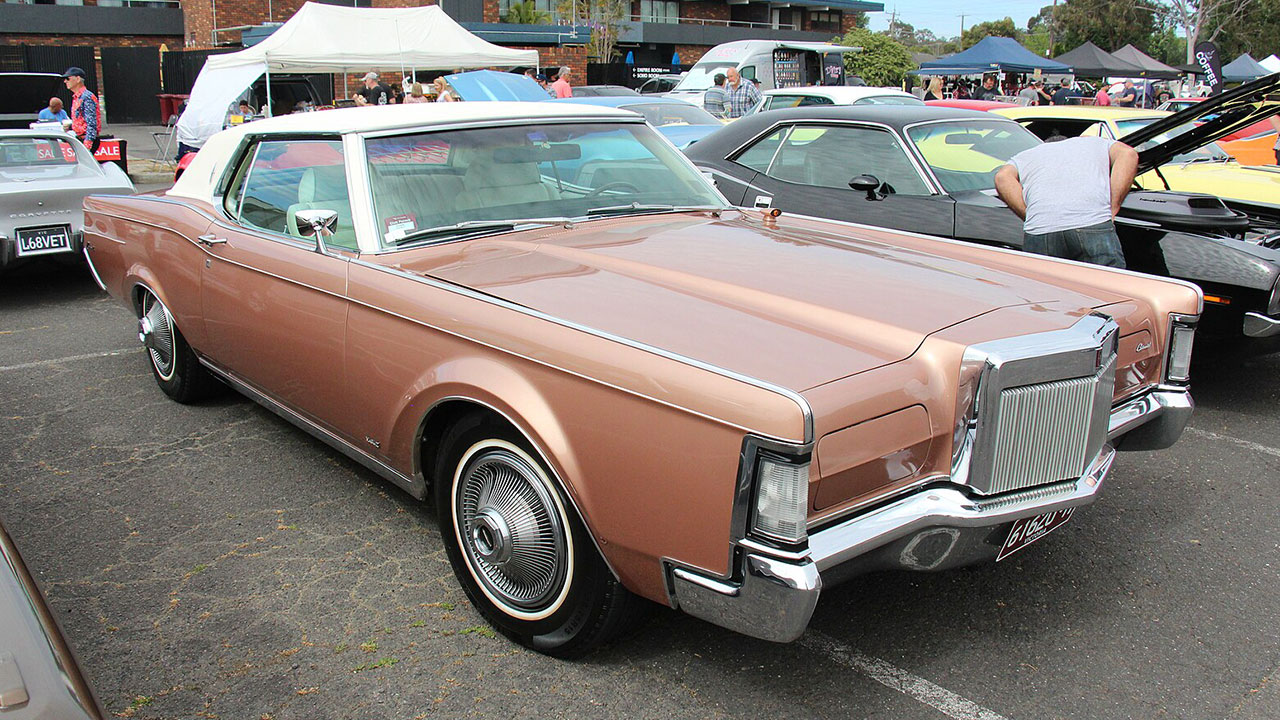
The 1969 Lincoln Continental arrived at the end of a tumultuous decade with an unapologetic vision of American luxury. Long, formal, and quietly overengineered, it combined a stately presence with a level of comfort that still feels indulgent more than half a century later. Among collectors and enthusiasts, it now stands as both a rolling time capsule and a benchmark for what a flagship sedan can be.
Viewed today, its blend of restrained styling, massive V8 power, and lounge-like interiors sets it apart from modern luxury machines obsessed with screens and aggressive lines. The 1969 Continental did not need to shout; it simply arrived, and everyone understood its status.
A Flagship Shaped By Its Era
By 1969 the Continental name already carried serious weight. Lincoln had spent the 1960s turning it into a symbol of executive transport, political motorcades, and high-end personal cars. The fourth-generation design, introduced earlier in the decade, centered on crisp, slab-sided bodywork and a near-architectural sense of proportion. Even as styling trends shifted toward more flamboyant curves, the Continental stayed calm and rectilinear.
The 1969 model year represented an evolution of that formula rather than a clean break. Sedan and coupe versions stretched to roughly 224 inches in length, with a wheelbase around 127 inches, dimensions that gave the car its limousine-like stance. The proportions were deliberate: a long hood to signal V8 power, a formal roofline to frame the rear doors, and a short rear deck that kept the design from feeling tail-heavy.
Lincoln’s designers focused on visual solidity. Doors closed with heavy, reassuring weight, the fenders sat high and flat, and the grille emphasized width over height. Chrome was present but not cartoonish, used to outline windows, bumpers, and that broad front fascia. The overall impression was one of quiet authority rather than flash.
Power, Weight, And Effortless Motion
Under the hood, the 1969 Continental typically carried a big-block V8 that prioritized torque and smoothness over high-rev theatrics. In an era before downsizing and turbocharging, displacement was the luxury metric of choice. The engine’s broad torque curve let the heavy sedan surge forward with minimal throttle, a trait that owners prized for highway cruising and city traffic alike.
A three-speed automatic transmission came standard, tuned for soft, nearly imperceptible shifts. Paired with power steering and power-assisted brakes, the drivetrain turned a very large car into something that felt almost weightless from behind the wheel. The objective was not sportiness but serenity; the driver should feel insulated from harsh shifts, sudden jolts, or frantic engine noise.
Ride quality reflected the same mindset. Soft coil springs, generous suspension travel, and sound-deadening materials created what many drivers described as a floating sensation over imperfect pavement. Where some contemporaries allowed more body motion in corners, the Continental accepted a bit of roll as the cost of comfort. The priority was to keep passengers relaxed, not pinned into their seats.
Inside: A Living Room On Wheels
The cabin of the 1969 Lincoln Continental remains one of its strongest calling cards. Lincoln treated the interior as a selling point equal to the engine or styling, with wide, plush seats, deep carpeting, and extensive use of padded surfaces. Front and rear bench seats allowed three-abreast seating, though many cars were optioned with individual front seatbacks and a large center armrest that created a more lounge-like feel.
Materials leaned heavily on vinyl and cloth, with leather available on higher trims. Wood-grain appliqués framed the dashboard and door panels, creating a visual link to high-end furniture of the period. Switchgear was large and clearly labeled, designed so that drivers could operate windows, lights, or ventilation by feel alone.
Luxury also meant quiet. Engineers packed the body with insulation to reduce wind and road noise, and the thick doors helped seal out the outside world. When the V8 settled into a low idle, the interior felt more like a private room than a car, especially in the rear seat, where legroom and headroom were generous even for tall passengers.
Technology And Convenience Features
By current standards the 1969 Continental’s features seem simple, yet at the time they signaled serious sophistication. Power windows and power front seats were common, and many cars included automatic climate control that maintained a set cabin temperature without constant driver adjustment. An AM/FM radio with multiple speakers brought high-fidelity sound to long trips.
Optional equipment pushed the luxury envelope further. Tilt steering columns, power door locks, and rear-seat controls for ventilation or audio made the car feel closer to a chauffeured limousine than a typical family sedan. Some models offered cornering lights that illuminated the road when the driver signaled a turn, a small but thoughtful safety feature that also added a sense of theater at night.
Safety engineering, still in its relative infancy, showed up in padded dashboards, recessed controls, and energy-absorbing steering columns. These details did not dominate marketing in the way horsepower and comfort did, but they reflected the broader industry shift toward occupant protection.
Design Details That Still Turn Heads
Several styling cues keep the 1969 Continental visually compelling even among modern traffic. Thin roof pillars and a large glass area give the car an airy look that contrasts with today’s thick-pillared sedans. Long, straight character lines along the sides emphasize length and convey a sense of motion even when the car is parked.
Up front, the wide grille and quad headlamps project a formal, almost ceremonial attitude. The rear treatment, with horizontal tail lamps and a clean trunk lid, avoids gimmicks and instead relies on proportion. Many examples wear restrained wheel covers rather than flashy alloys, a choice that reinforces the car’s understated confidence.
Color palettes of the era also add to the car’s appeal. Deep greens, rich blues, and subtle metallics flatter the bodywork, while interior hues range from conservative black or tan to bold reds and blues. When restored with period-correct materials, the effect is closer to a mid-century living room than a modern car cabin.
Luxury Rivalry With Cadillac
The 1969 Continental did not exist in a vacuum. Its most direct rival was Cadillac, particularly the personal-luxury Eldorado and the larger DeVille and Fleetwood models. The competition between the two brands shaped many decisions about styling, equipment, and performance. Contemporary comparisons of the arch-rival Eldorado and Lincoln’s Continental line highlight how each manufacturer tried to capture affluent buyers with distinct personalities.
Cadillac often leaned into more flamboyant styling and front-wheel-drive innovation on the Eldorado, while Lincoln emphasized rear-wheel-drive solidity and a more conservative exterior. Buyers who preferred sharp fins and bold chrome often gravitated to Cadillac, whereas those who valued a quieter, more formal presence tended toward Lincoln. Both approaches delivered comfort, but the Continental’s restraint has aged particularly well as design tastes have shifted toward cleaner lines.
Pricing and positioning placed the Continental firmly in the upper tier of American luxury. It was not a mass-market car, and ownership signaled a certain level of success and taste. Corporate executives, professionals, and public figures all used the model as a statement piece, whether they drove themselves or rode in the back.
How The 1969 Continental Influences Modern Luxury
Many of the traits that defined the 1969 Lincoln Continental continue to shape expectations for high-end cars. The emphasis on quiet cabins, effortless acceleration, and intuitive controls remains central to modern luxury design. Even as technology has advanced, the core idea that a flagship should reduce stress for its occupants has not changed.
Modern sedans and SUVs echo the Continental’s priorities in different ways. Adaptive suspensions and active noise cancellation pursue the same goal of isolating passengers from rough roads and outside noise. Large touchscreens have replaced many physical switches, yet the best luxury interiors still aim for clarity and ease of use, a digital echo of the Continental’s straightforward dashboard.
Designers also continue to draw on the appeal of long, clean bodylines and strong horizontal themes. Several recent luxury models reference classic proportions with long hoods, short rear decks, and relatively upright rooflines. While safety regulations and aerodynamics have reshaped silhouettes, the visual language of authority and calm that the Continental perfected still resonates.
Collector Appeal And Market Perception
Among collectors, the 1969 Lincoln Continental occupies an interesting niche. It is not as universally recognized as iconic muscle cars of the same period, yet its combination of comfort, presence, and relative affordability has drawn a growing following. Enthusiasts who appreciate mid-century design and relaxed cruising often seek out clean examples.
Survivor cars with original paint and interiors are especially prized, since they preserve the textures and colors that defined the era. Restorations can be challenging because of the car’s size and the complexity of its trim, but the results are striking when done carefully. The market tends to reward well-documented cars with low rust and intact interiors, as replacing upholstery and chrome can quickly exceed purchase price.
Some owners choose tasteful modifications, such as modern radial tires, upgraded brakes, or discreet audio improvements, to make the car more usable on contemporary roads. Others keep their Continentals as close to factory specification as possible, treating them as historical artifacts. In either case, the car’s core appeal remains its ability to glide along in comfort while drawing admiring looks.
How It Drives In The Twenty-First Century
Driving a 1969 Continental today highlights both how far automotive technology has advanced and how much the fundamentals of comfort still matter. Steering feels light and somewhat vague compared with modern systems, yet the car tracks straight at highway speeds. The brakes require a more deliberate foot, but they deliver smooth, progressive stopping once the driver adjusts.
The V8’s character stands out most. It delivers a deep, relaxed soundtrack and strong low-end pull, making the car feel unhurried rather than slow. Acceleration is adequate for current traffic, especially when the engine is well maintained, though the car’s weight and gearing discourage aggressive driving. The Continental prefers steady, measured inputs and rewards drivers who treat it as a long-distance companion instead of a back-road toy.
Visibility, aided by the thin pillars and large windows, is excellent compared with many modern vehicles. Parking such a long car can be challenging in tight urban spaces, but the clear sightlines and predictable shape make the task easier than the dimensions suggest. On open roads, the car settles into a relaxed rhythm that still feels special.
Why Its Luxury Still Feels Relevant
The enduring appeal of the 1969 Lincoln Continental comes down to its clarity of purpose. Every major decision, from the engine size to the seat design, served the goal of making passengers feel calm and important. There was no attempt to turn the car into a sports sedan or a technology showcase. Instead, it delivered a focused experience built around comfort, space, and presence.
Modern luxury vehicles often juggle competing priorities: performance, fuel efficiency, digital connectivity, and advanced driver assistance. The Continental reminds designers and buyers that simplicity can be powerful. A car that does a few things extremely well, such as ride quality and quietness, can leave a stronger impression than one that tries to excel at everything.
More from Fast Lane Only
- Unboxing the WWII Jeep in a Crate
- 15 rare Chevys collectors are quietly buying
- 10 underrated V8s still worth hunting down
- Police notice this before you even roll window down
*Research for this article included AI assistance, with all final content reviewed by human editors.