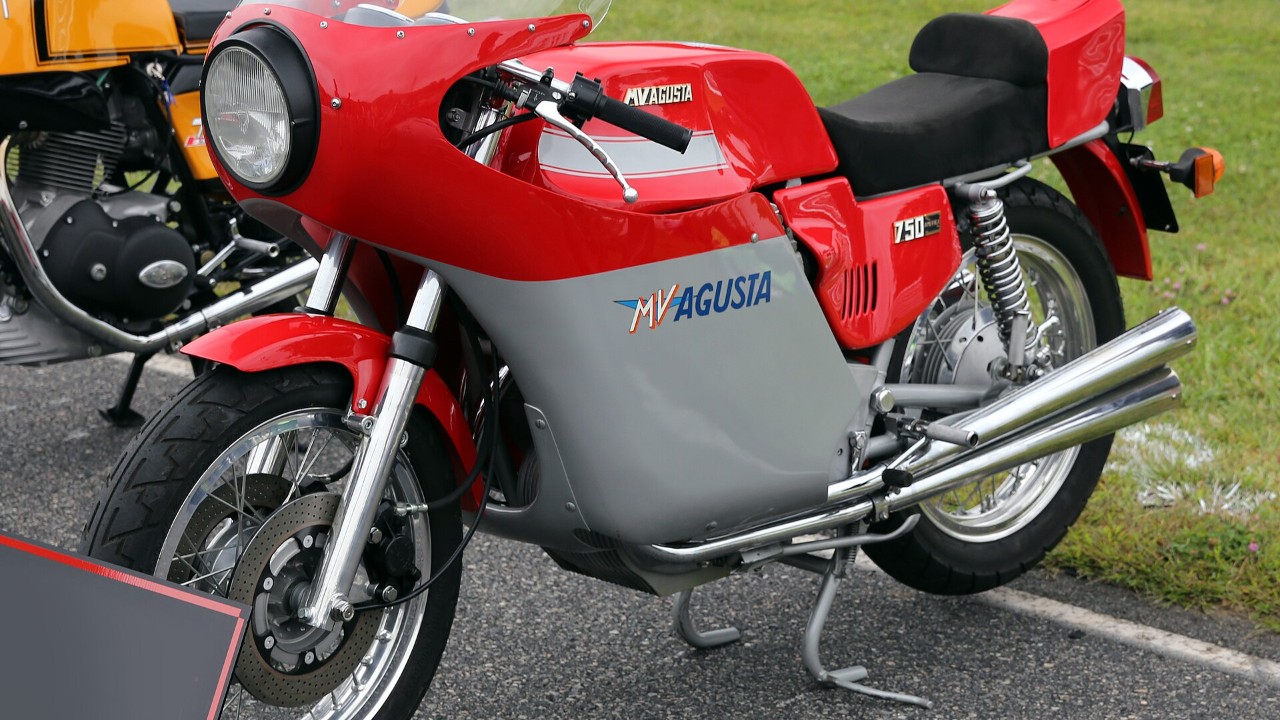
In 1975, the most expensive motorcycle sold in the United States was Italian. The MV Agusta 750S America cost $6,000, and buyers who paid it got a four-cylinder engine with racing roots. In fact, that price tells you a lot about how Italy built bikes in that era.
Italian makers rarely chased the biggest sales numbers. Instead, they built bikes with strong engines, sharp styling and short production runs. As a result, many of them are hard to find today, and the good ones reward the hunt.
These are our picks for eight Italian motorcycles worth collecting, from a six-cylinder Benelli to a small single sold under a Harley badge. The verdicts are our opinion. Even so, the years, figures and production numbers come from period histories, museum records and auction catalogs.
1. 1975 MV Agusta 750S America
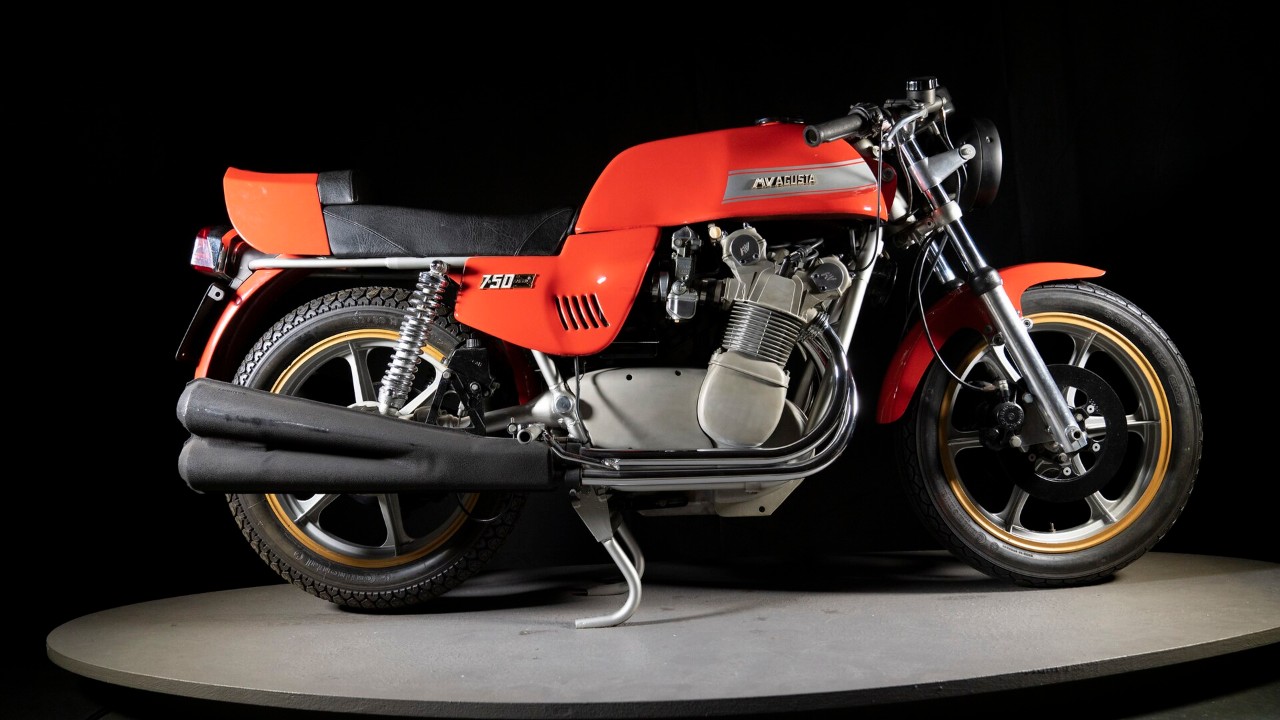
The America exists because two Americans asked for it. In 1974, MV’s U.S. importer Chris Garville and dealer Jim Cotherman visited the factory to request a revised 750 for American riders. MV answered by taking the bore to 67 mm, which raised displacement from 743 cc to 789 cc.
According to Motorcycle Classics, the result made 75 hp at 8,500 rpm. Meanwhile, gears drove the twin camshafts, and a shaft took power to the rear wheel. As many as 540 Americas may have been built, including European bikes, and about 200 were sold in the U.S. The bike was no featherweight, though. In a separate profile, the same magazine put the MV Agusta 750S America at 562 pounds wet, roughly 70 pounds more than shaft-drive rivals such as the BMW R90S.
The bike also carried the glow of MV’s four-cylinder racers, which dominated the 350 cc and 500 cc classes with John Surtees, Giacomo Agostini and Mike Hailwood aboard. Our take: this is the blue-chip Italian classic of the 1970s. If you find one, check the engine numbers and the paperwork before anything else.
2. 1975 Benelli 750 Sei
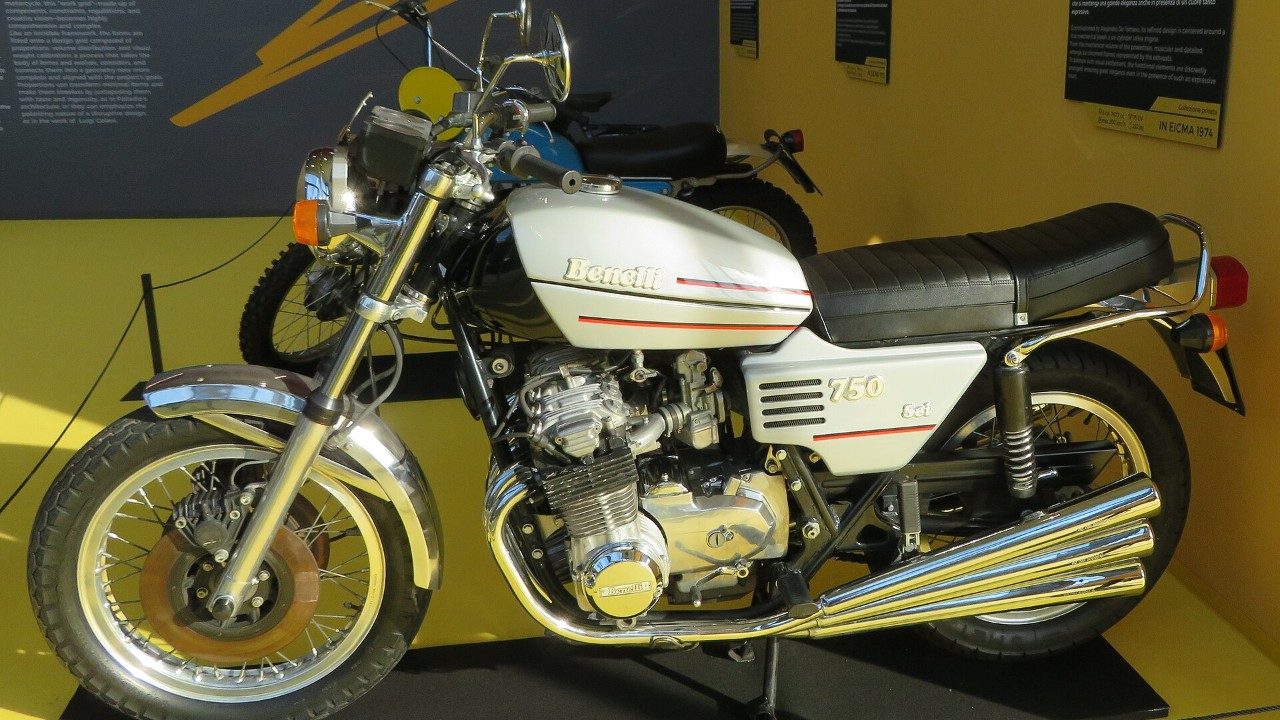
Alejandro de Tomaso wanted Italy’s top sporting motorcycle, and the 750 Sei was his answer. Its 747 cc air-cooled inline-six used the Honda CB500 four as a starting point, with two extra cylinders. It made 76 hp at 9,000 rpm. In fact, de Tomaso first wanted it badged as a Moto Guzzi.
Benelli fed the six with three Dell’Orto carburetors and gave it six mufflers. Above all, that exhaust note is the reason we would buy one. In total, Benelli had sold about 3,200 of the 750 by 1979. A bigger 900 Sei followed that year, and fewer than 2,000 of those were built across four versions.
In our view, the Sei is one of the most fun bikes on this list to own. Six cylinders in an Italian frame make it a sure crowd-pleaser. However, three carburetors to balance and six mufflers to replace add up, so find a specialist before you buy.
3. 1983 Ducati 900 S2
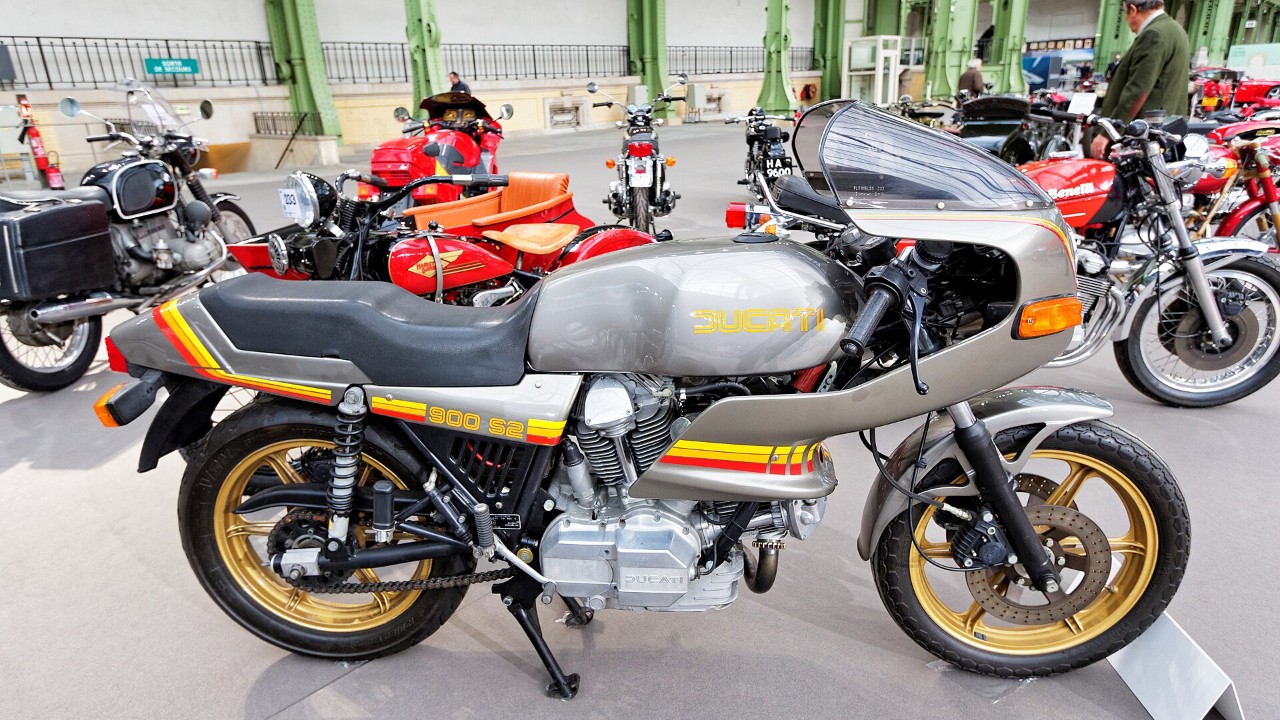
Ducati released the 900 S2 in 1982 as a direct replacement for the 900 SS. It had a tough act to follow, because many riders rate the 900 SS among Ducati’s finest twins. The S2 answered with a better gearbox and the same frame as the Mike Hailwood Replica, which helped its handling.
Ducati also built only 1,236 of them. By 1985, a deal was in place to sell the company to Cagiva, so the S2 belongs to the last years of the old Ducati. This exact bike came from a Stockholm motorcycle museum’s collection. Silodrome reported that Bonhams offered it in Paris on February 4, 2016, with an estimate of €7,000 to €9,700.
Our take: the S2 is a smart way into an early-1980s Ducati twin, with Hailwood Replica bones under plainer clothes. Better yet, low production keeps it interesting at any show. Then again, an estimate is only a guide, so check recent results before you set a budget.
4. 1972 Ducati 450 Scrambler
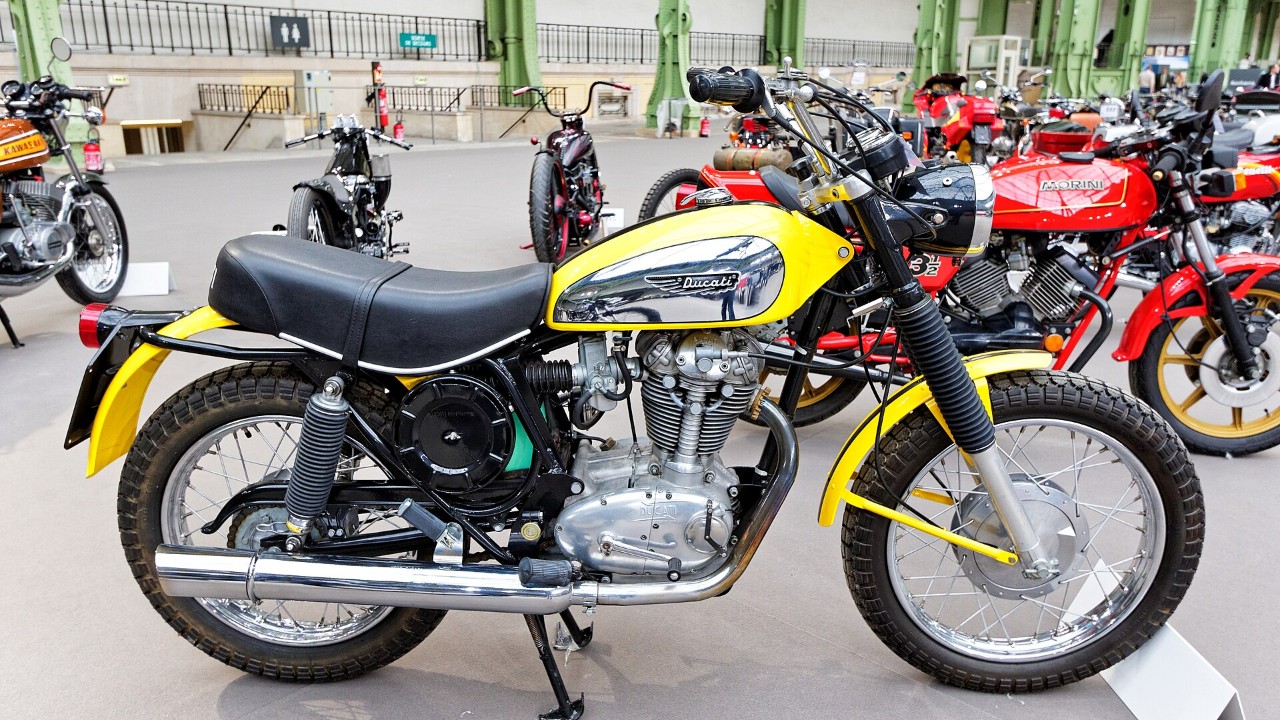
Ducati built its original Scrambler series from 1962 to 1974. The idea is credited to America’s Berliner Motor Corporation, and the range ran from 250 cc to 450 cc. The 450 arrived in 1969, and in the U.S. it went by the name “Jupiter.”
Under the tank, though, the 450 used a single overhead camshaft driven by bevel gears. That was race-bred engineering on a bike meant for dirt roads and weekend fun. Similarly, this 1972 example came from the same Swedish museum consignment as the 900 S2. A preview of the sale listed its Bonhams estimate at €9,800 to €14,000.
In other words, the auction experts expected this single to bring more than the 900 superbike. In our view, that says everything about how far the Scrambler has come. Buy the best original one you can afford, since period parts and paint are hard to replace.
5. 1992 Moto Guzzi Daytona 1000
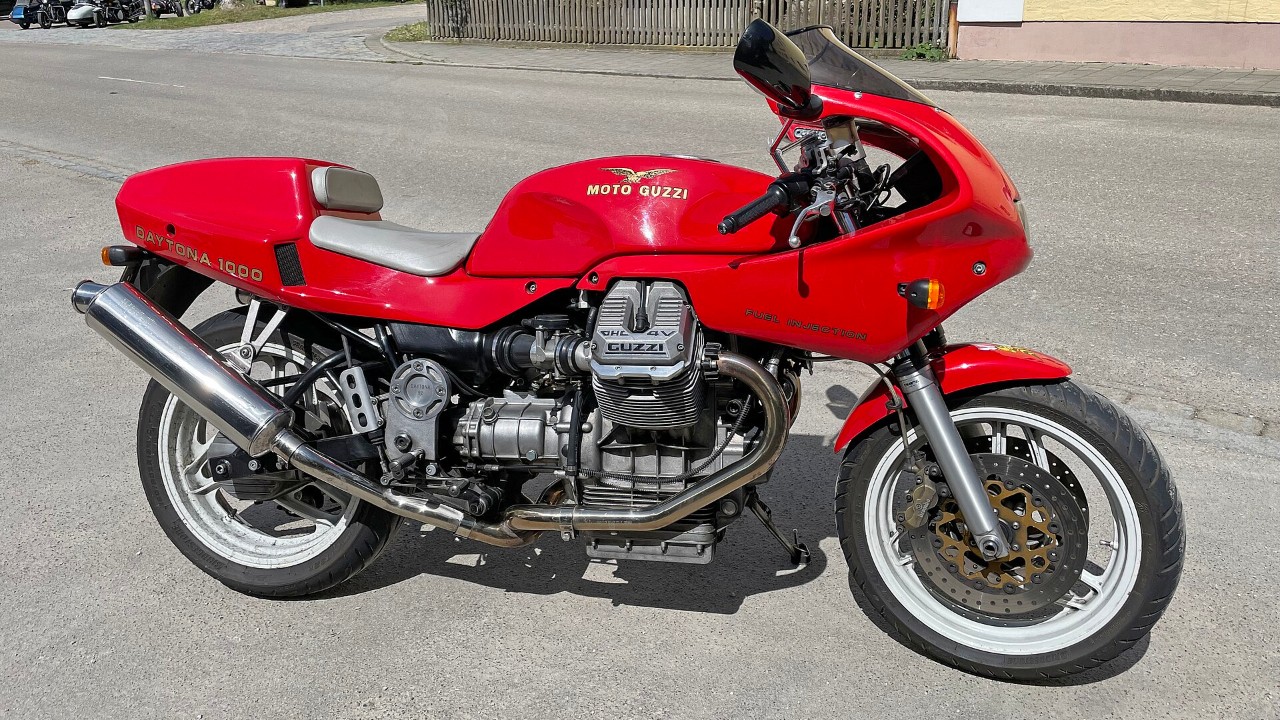
The Daytona began with a dentist. Dr. John Wittner, a former dentist turned endurance racer, built Guzzi race bikes that won the 1984 and 1985 U.S. Endurance Championship. Then Alejandro de Tomaso summoned him to Italy to help create a new superbike.
The result used a 992 cc air-cooled, eight-valve, 90-degree V-twin with high-mounted cams driven by two toothed belts. In fact, only the crankshaft and cases came from the standard Guzzi engine. According to Motorcycle Classics, it made a claimed 95 hp at 8,000 rpm and reached 145 mph. Weber-Marelli fuel injection fed it, and a chrome-moly spine frame held it together.
Guzzi built just over 1,000 from 1992 to 1995, and the bike cost $14,195 new. Later, Wittner’s bikes also won the 1987 Pro Twins series. Meanwhile, the name honors the Florida circuit, where Guzzi won the 250-mile endurance race in 1985. Our take: this is the most underrated Guzzi of the modern era. Expect to wait for a good one, and favor bikes with a known service history.
6. Laverda 1200 Mirage
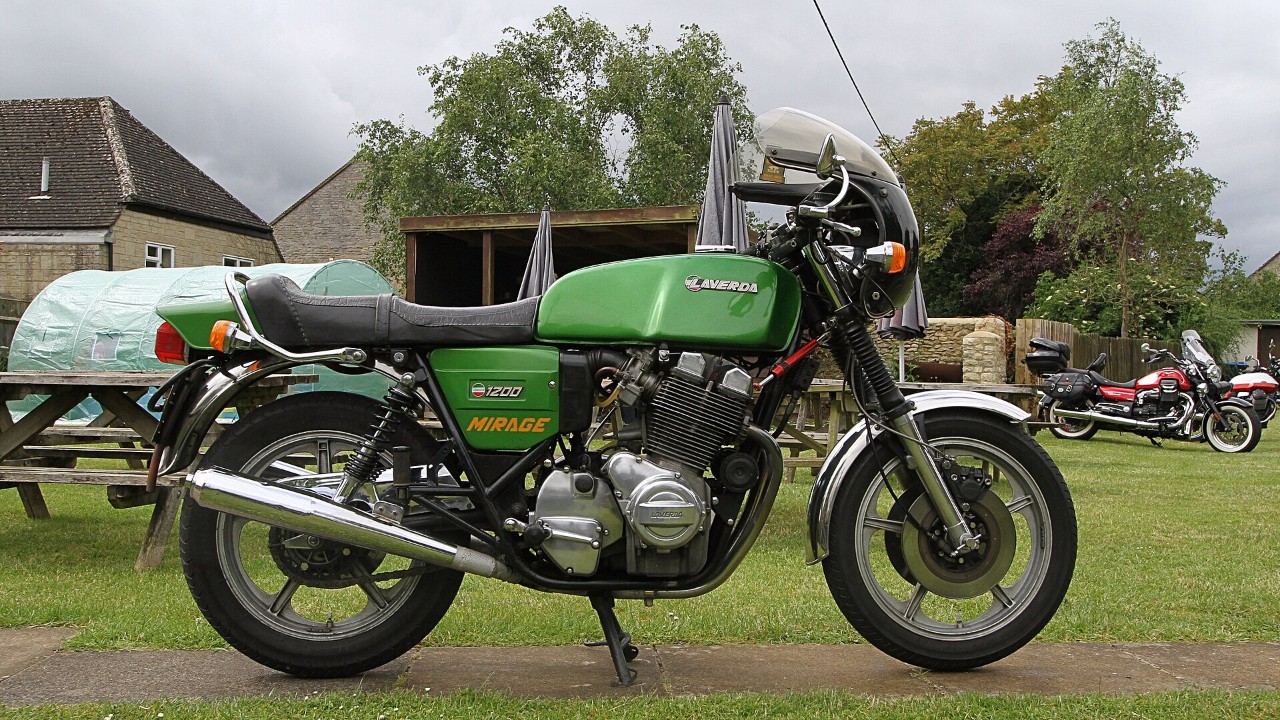
Laverda’s roots go back to 1873, when Pietro Laverda started an agricultural engine business in Breganze. His grandson Francesco founded the motorcycle company in October 1949. By the 1970s, the firm was building big, tough triples, including the 90 hp Jota of 1976.
The 1200 TS Mirage took that triple to 1,115 cc, one of the largest engines Laverda ever used. Laverda built it in 1978 and 1979, and it made 73 hp and 40 lb-ft of torque. It was no lightweight, either, at 545 pounds. By comparison, the Jota made more power from less displacement, so the Mirage leans toward relaxed, torquey road riding.
In our view, the Mirage is a muscle bike with an Italian accent. It is less famous than the Jota, so it often costs less too. If you want one, look for a bike that has been ridden regularly, because these big triples like to be used.
7. Moto Guzzi 850 Le Mans III
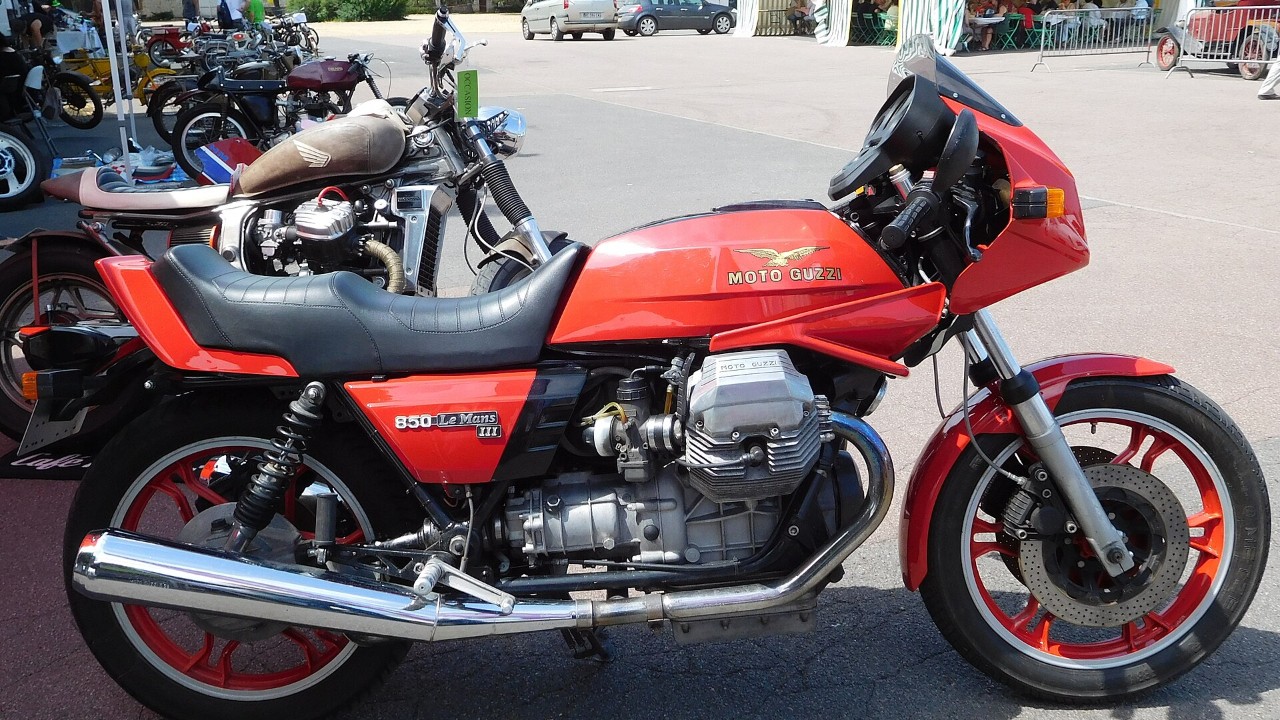
The original 850 Le Mans went on sale in 1976 as a cafe racer with clip-on bars and a small bikini fairing. It made 71 hp, up from the 53 hp of the V7 Sport, and it could reach 130 mph. By 1981, Guzzi was ready for a third version.
Then the Le Mans III arrived, and it ran from 1981 to 1985. It got revised cylinder heads and barrels with squared-off cooling fins, so you can spot one by the engine alone. Guzzi also gave it bodywork in the style of the V50 Monza and a large white-faced Veglia tachometer in a rubber binnacle. In total, Guzzi built 9,866.
Our take: the III is the Le Mans to ride, not just to admire. In our view, it has the look of the series and is the easiest to live with. With nearly 10,000 built, you can also be picky about condition.
8. Aermacchi Harley-Davidson Ala Verde
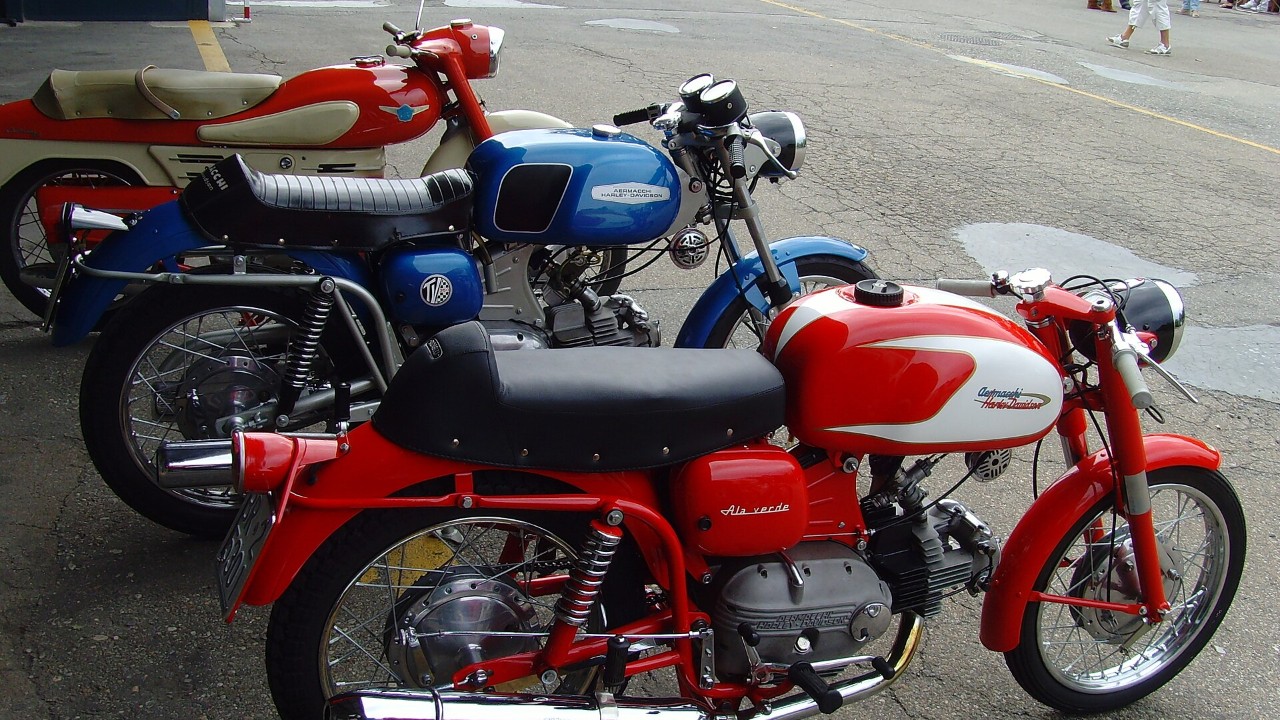
Aermacchi started as Aeronautica Macchi, an aircraft maker whose first flying boats date to 1917. Its bike names borrowed the Italian word “ala,” meaning wing, so Ala Verde means Green Wing. Around 1960, Harley-Davidson bought a 50 percent share of the company.
The Ala Verde used a 246 cc OHV single that made 18 hp, according to the National Motorcycle Museum. Its cylinder leaned forward until it sat almost flat, an unusual look that let the bodywork help channel cooling air. In America, Harley first imported the 250 as the Wisconsin, then quickly renamed it the Sprint. According to the museum, the 175 and 250 versions began a 15-year run.
Our take: the Ala Verde is the most affordable way into Italian bike history on this list. It also tells a great story, since it links an Italian aircraft builder with Milwaukee. For more bikes that collectors chase, see our list of vintage motorcycles collectors are quietly hoarding, and our earlier picks of motorcycles worth collecting.
More from Fast Lane Only