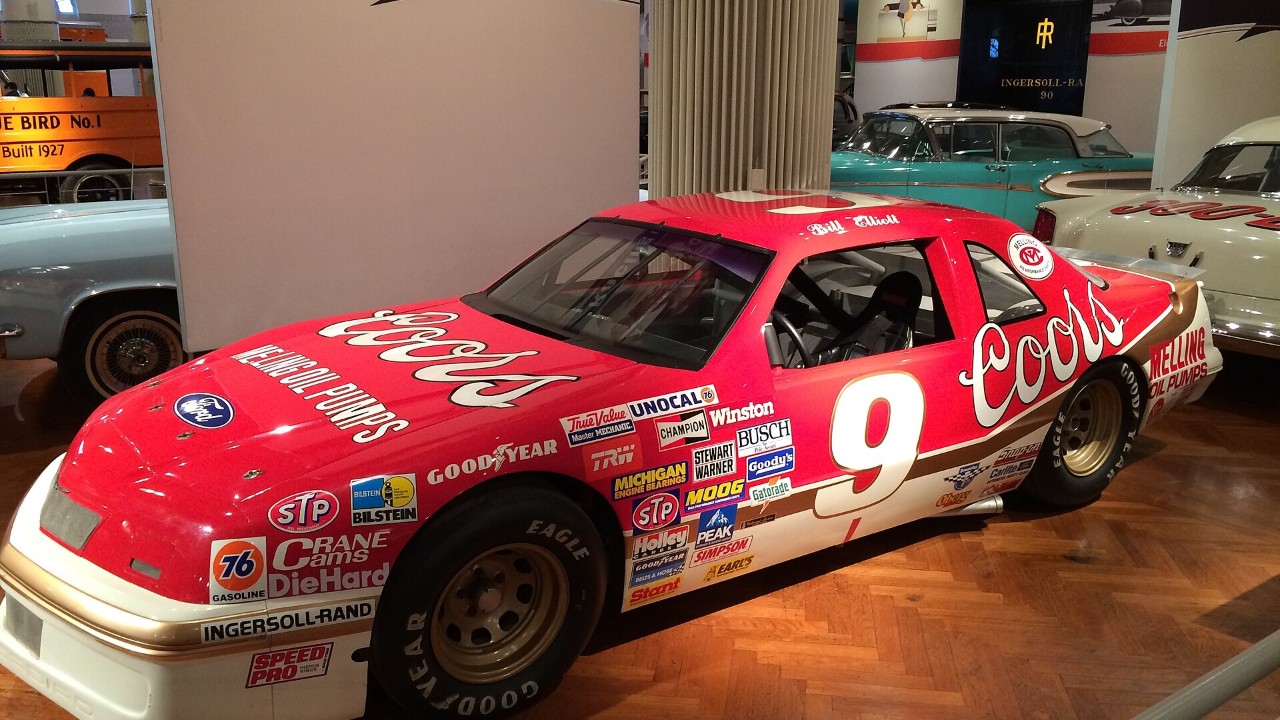
The Bill Elliott Talladega record took less than 45 seconds to set. On April 30, 1987, Elliott qualified his Ford Thunderbird for the Winston 500 at 212.809 mph. Nearly four decades later, NASCAR’s own Hall of Fame lists it as the fastest qualifying lap in Cup history.
That number is more than a track record. It sits at the top of the sport’s books because the rules changed soon after. As a result, a lap from the late 1980s has outlived every car, engine and driver that came after it.
Below is the car that did it, what Elliott said about the run and why the mark has never fallen.
Bill Elliott’s Talladega record lap
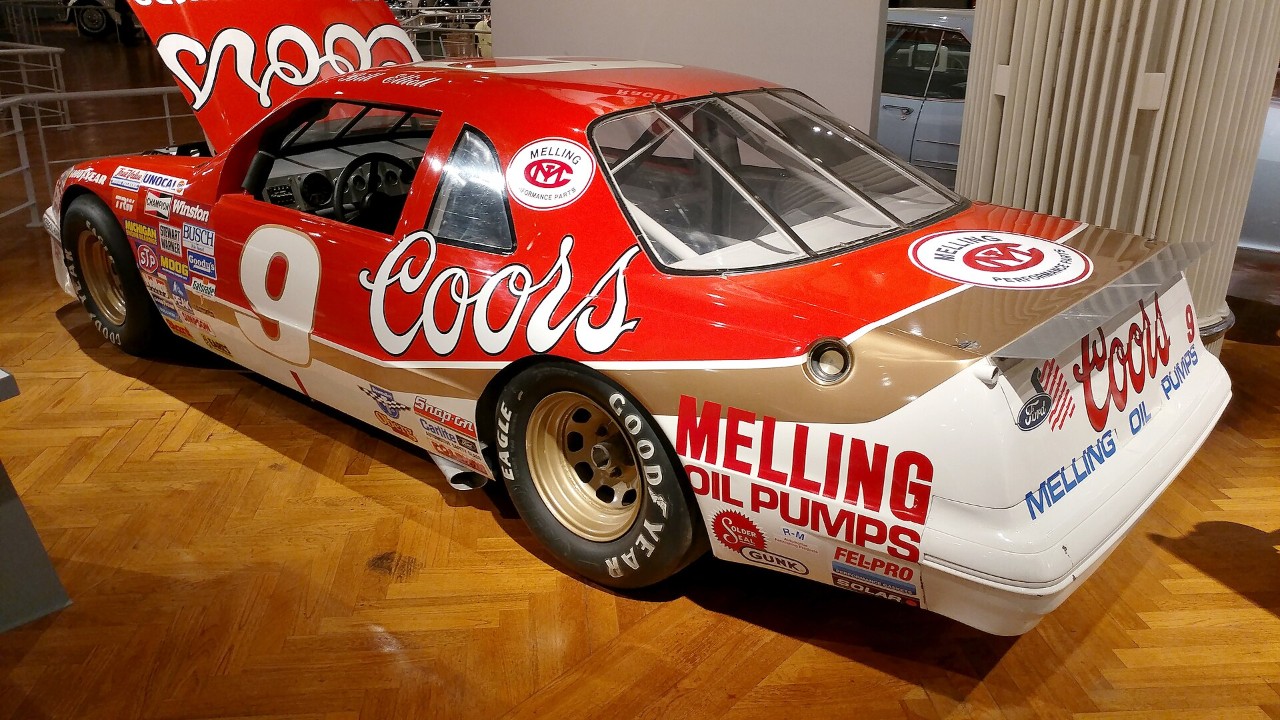
NASCAR’s own list of all-time qualifying records puts Elliott on top at Talladega with 212.809 mph, dated April 30, 1987. In its 2019 records gallery, the sanctioning body goes further. Its caption says Elliott “set the fastest lap in NASCAR history” that day.
The 2.66-mile oval in Alabama was the right place for it. According to the Elliott Racing Heritage site, the lap took 44.998 seconds and earned him the Busch pole for the race. In fact, he had already set a speed record that season. NASCAR’s same list shows Elliott holding the Daytona qualifying record too, at 210.364 mph, from February 9, 1987.
The NASCAR Hall of Fame tells the story the same way. Writing for the Hall’s blog in 2024, Tom Jensen says Elliott put Harry Melling’s Ford Thunderbird on the pole at 212.809 mph. He adds that the lap “remains the fastest single qualifying lap in NASCAR Cup Series history.”
The Coors Thunderbird under the paint
Elliott ran the No. 9 Coors Ford Thunderbird, according to RACER. The car itself now belongs to The Henry Ford museum. Melling Racing Enterprises gave it to the collection.
The museum is blunt about what “stock” meant in 1987. Its catalog says stock cars of the 1980s “only looked stock.” Underneath the Thunderbird body, it lists a purpose-built steel tube frame with racing suspension and brakes.
The engine was a Ford V8 with overhead valves and 351 cubic inches. The Henry Ford rates it at 625 horsepower and calls it “a racing engine that no Ford dealer ever sold.” Meanwhile, the car weighed 3,700 pounds and used a four-speed manual gearbox. That works out to 5.9 pounds per horsepower, by the museum’s own figure.
The car was not a one-race wonder, either. According to the museum, Elliott also won the 1987 Talladega 500 in it.
What Elliott said about 212 mph
Thirty years after the run, Elliott looked back on it with RACER. Going fast at Talladega, he explained, meant trimming the car to the edge. “You still had to do everything you could to make the car really uncomfortable to run fast,” he said.
He also described rivals who went too far. “There were guys over there before qualifying taking the rear spoilers off, but you couldn’t drive them,” Elliott told RACER. Instead, his team took off as much downforce as the car could handle and no more.
Fans at the track loved it. “The fans went nuts,” Elliott said. “The faster the better.” For the team, though, the lap was the payoff for years of work. “We put a lot of effort into our speedway programs and already had really good power,” he said.
The pole did not turn into a win. RACER notes that Elliott had an engine issue in the race and finished 22nd. Even so, he sees the lap as the family’s signature. “I think the qualifying record at Talladega just kind of puts an exclamation point on our legacy,” he said.
Why no one has gone faster
The rules changed almost at once. According to Jensen’s Hall of Fame history, NASCAR required smaller carburetors when it returned to Talladega later in 1987. Then, in 1988, it introduced restrictor plates, which limit the air and fuel flowing into the engine.
That is the reason the mark has lasted, according to NBC Sports. In 2017, Daniel McFadin wrote that the record stood in part because of “NASCAR’s restrictor plates that rob engines of horsepower.” By then, the top qualifying speeds in the two latest Cup races at Talladega were 193.423 mph and 192.661 mph.
The gap has held into the current decade. In April 2026, Andrew Gamble of The Express wrote that the record came before the restrictor-plate era. For that reason, he argued, it will remain unbroken.
Where the record car lives now
The family connection has carried on as well. In May 2017, NBC Sports reported that Chase Elliott wore shoes honoring his father’s run, 30 years after it happened.
The Thunderbird itself is safe, too. The Henry Ford lists Elliott’s 1987 car as part of its collection, though its catalog marks it as not on public exhibit. According to the museum, it is the car that set “NASCAR’s all-time speed record” at 212.809 mph.
More from Fast Lane Only