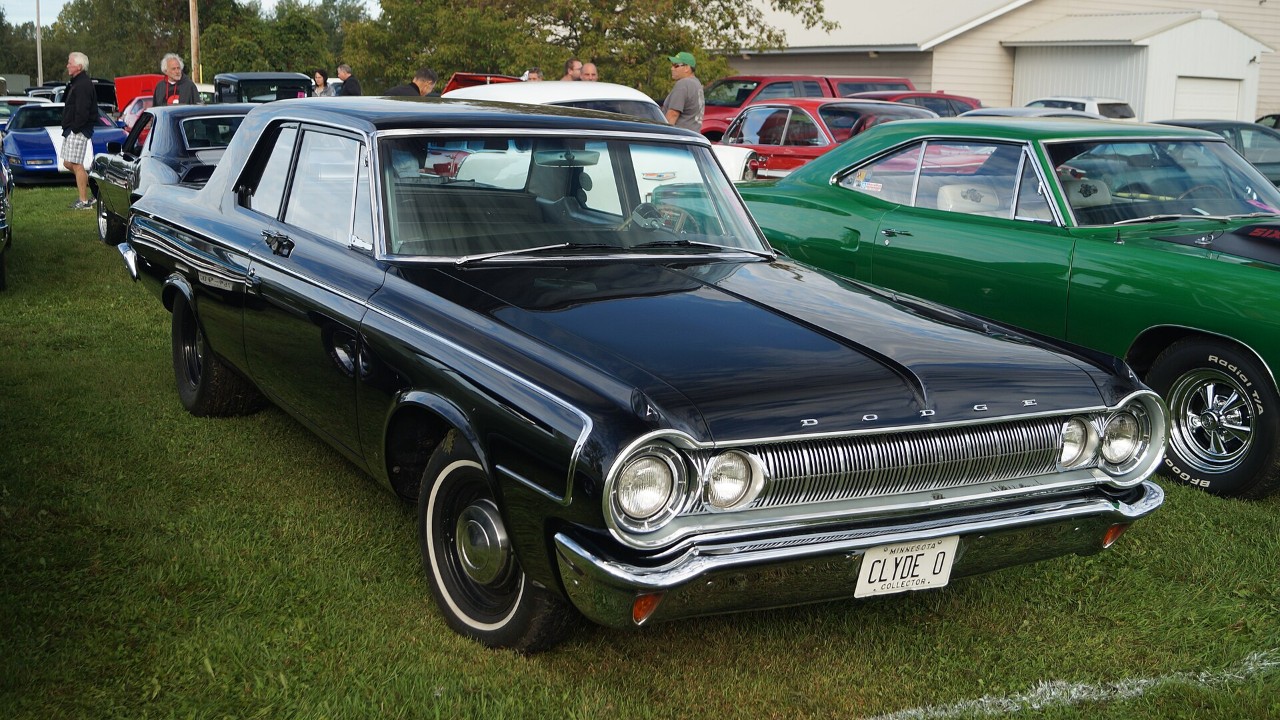
In 1964, Ford built exactly 100 Fairlane Thunderbolts, while about 55 lightweight Dodge 330 sedans got race Hemi engines. Those drag cars came from the factory with one job: win on Saturday night at the local strip. Racers then spent the next decade building gassers in their own garages to beat them.
Not every drag car from that era deserves a spot in your garage, though. Some were too fragile to drive, while others have been copied so often that the real ones are hard to find. The ones we’d keep share a simple trait: they still make sense whether you race them, show them or just start them up on a cold morning.
So these are our picks, 10 drag cars we’d refuse to give up. Our facts come from factory records, museums and period tests. The verdict, that we’d keep every one of them, is our own opinion.
1. 1964 Dodge 330
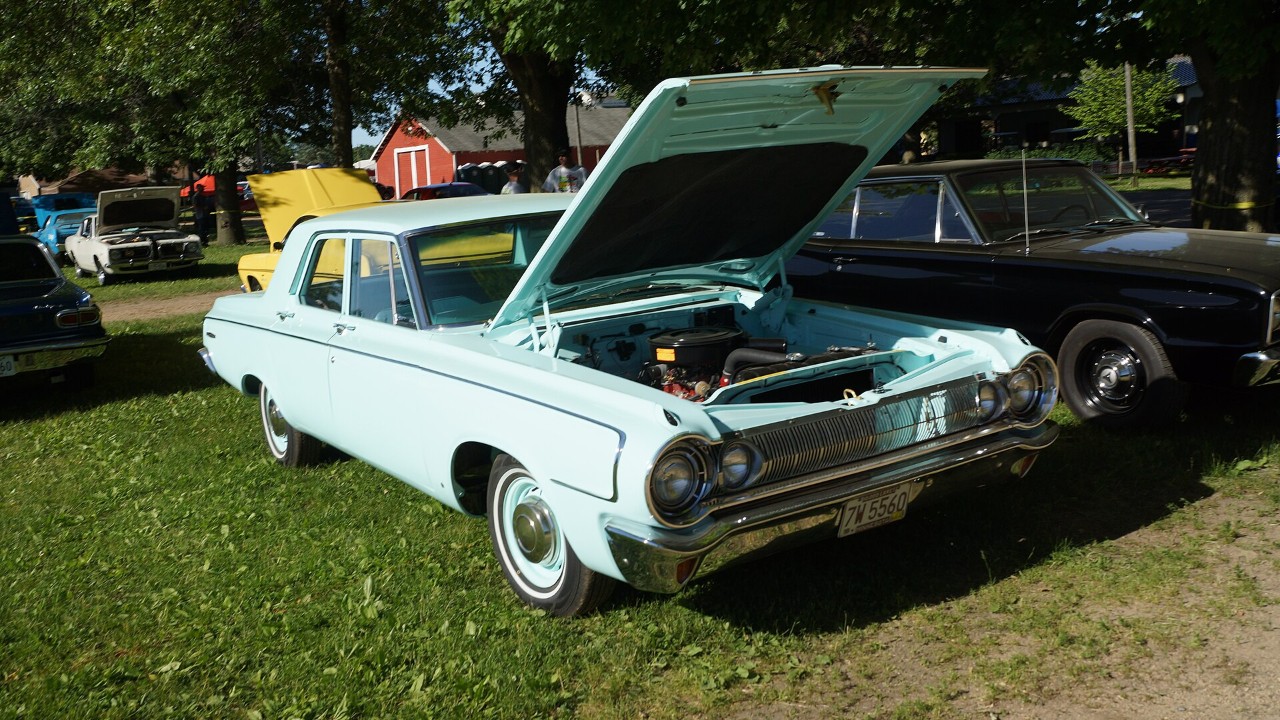
The Dodge 330 sat just under the mid-trim level in Dodge’s 1964 lineup. In our view, that plain-wrapper status made it a smart base for drag racing, since a basic body gives a race engine less to carry. Also, 1964 was the last year NHRA allowed Chrysler’s lightweight package.
Dodge built about 55 of those lightweight cars, according to the Museum of American Speed’s history of Dick Landy’s 330. They used aluminum for the hood, front fenders, front bumper and other panels. Under the hood sat a 426 Race Hemi with 12.5:1 compression and two 770 CFM Holleys on an aluminum cross-ram intake. On June 12, 1964, Landy’s Dodge 330 won its class at Riverside, California, and the museum calls it the first factory-built 426 Hemi car to win a sanctioned drag race.
Later that year, Landy moved its wheels forward for A/FX racing, and the museum says it became the first stocker to reach 130 mph in the quarter mile. Our take: even a plain 1964 Dodge 330 like the one pictured carries that history. If you’re shopping for a lightweight, insist on documentation, because the real ones are few.
2. 1968 Dodge Hemi Dart
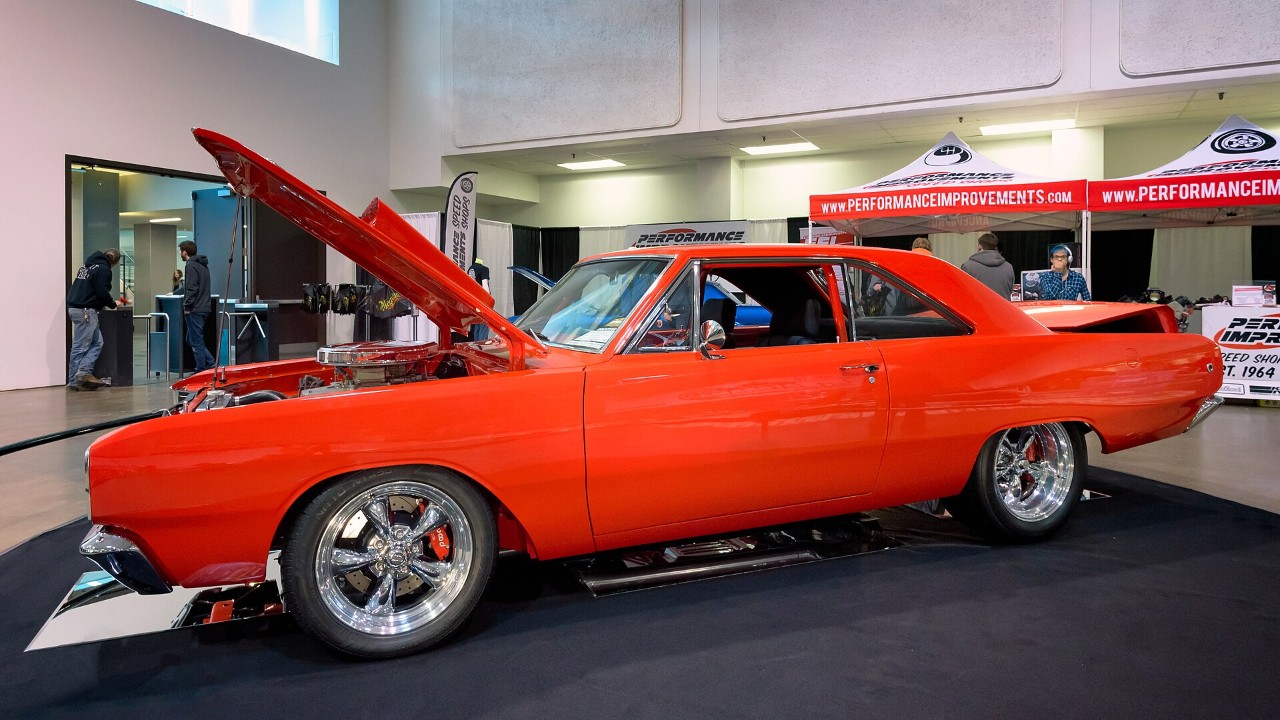
Four years after the Dodge 330, Dodge tried again in a smaller car. It built 80 Hemi Darts in 1968 at its Hamtramck plant, with VIN code LO23. The L stood for Dart, the O for Super Stock and the 23 for a two-door hardtop. Dodge sold them “as is,” without any warranty.
The 426 Race Hemi got 12.5:1 compression, an aluminum cross-ram intake and twin 770 CFM Holleys. Meanwhile, Dodge stripped the body hard. It used fiberglass front fenders and a scooped fiberglass hood, thin Corning Chemcor side glass and Bostrom A100 seats. Ready to race, a Hemi Dart weighed 3,020 pounds. Dick Landy’s four-speed car ran 10.46 seconds at 131.19 mph in October 1968, according to Dodge’s own LO23 history.
Those cars are now worth far more than the $5,146 sticker. In 2022, Mecum sold Ron Mancini’s automatic Hemi Dart for $302,500 in Kissimmee. In our view, it’s the purest factory drag car Chrysler ever built. If you find one, verify the LO23 VIN first.
3. 1969 Chevrolet Camaro COPO 9560 ZL1
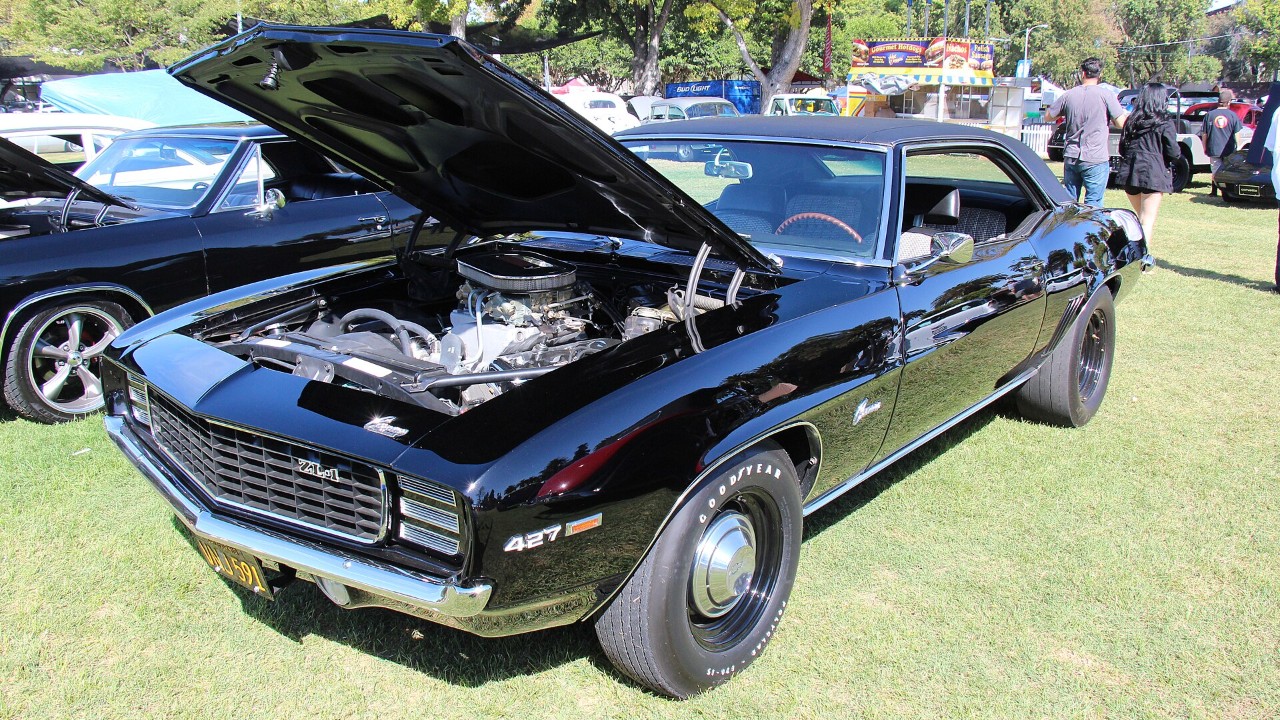
Fred Gibb sold Chevrolets at an Illinois dealership and also ran a drag racing team. He wanted Chevrolet’s aluminum race engine in the Camaro, and Chevrolet’s Central Office Production Order system offered a way to get it. Under COPO 9560, Chevrolet fit the aluminum ZL1 427 into the Camaro, and Gibb ordered 50 cars to help qualify the engine for racing.
The ZL1 used aluminum for the block, heads and intake, and Chevrolet rated it at 430 horsepower. However, the price ran to $7,919 new, and Gibb couldn’t sell most of his cars. In fact, Gibb returned 37 of them to GM, according to Racecar.com’s report on car No. 30. Altogether, Chevrolet built 69 COPO 9560 Camaros.
The story behind the order is as good as the car, as we explained in why the 1969 COPO Camaro wasn’t supposed to exist. Our take: an aluminum big-block in a small car remains the drag racer’s dream formula. If you’re shopping, expect clones, and pay only for a car with ironclad paperwork.
4. 1963 Ford Galaxie 500 XL 406
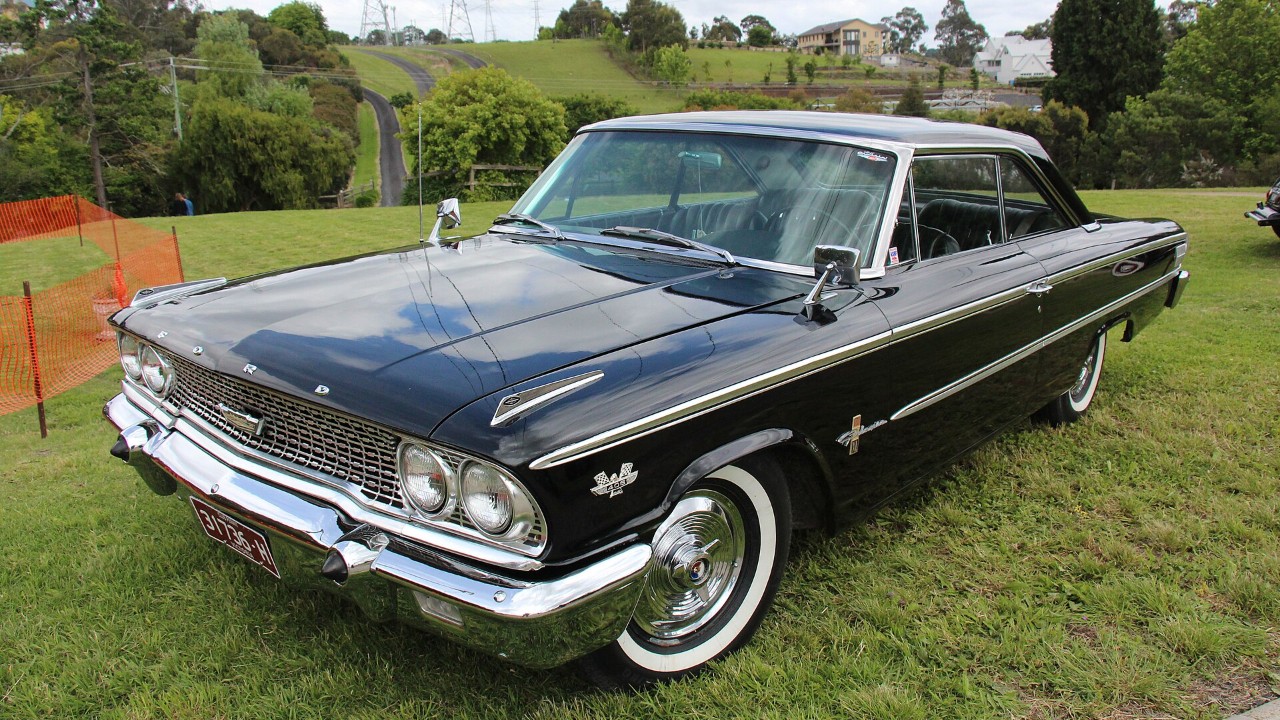
Ford’s 406 V8 arrived during the 1962 model run, in four-barrel or triple-carb “six-barrel” form. Then, partway through 1963, Ford added the Sports Roof, a lower fastback roofline. Ford designed it to cut drag and lift on NASCAR tracks, and it became the industry’s first official “half-year” model.
Buyers liked the look as much as racers did, so the Sports Roof outsold the square-roof Galaxies. Later in 1963, a 427 replaced the 406 for racing, rated at 425 horsepower. Ford also built lightweight Galaxies with fiberglass panels for the drag strip. At the 1963 Winternationals, Bill Lawton’s Tasca Galaxie made the best pass at 12.50 seconds and 116.60 mph. Even so, Ford gave up on the project because the cars stayed too heavy.
That’s why we like the 406 XL Sports Roof pictured here. It’s the full-size street car behind the drag program, with the same fastback shape. In our view, it’s the drag car you can take on a road trip. If you’re buying, confirm the 406 with the engine code, since engines are easy to swap.
5. 1955 Chevrolet gasser
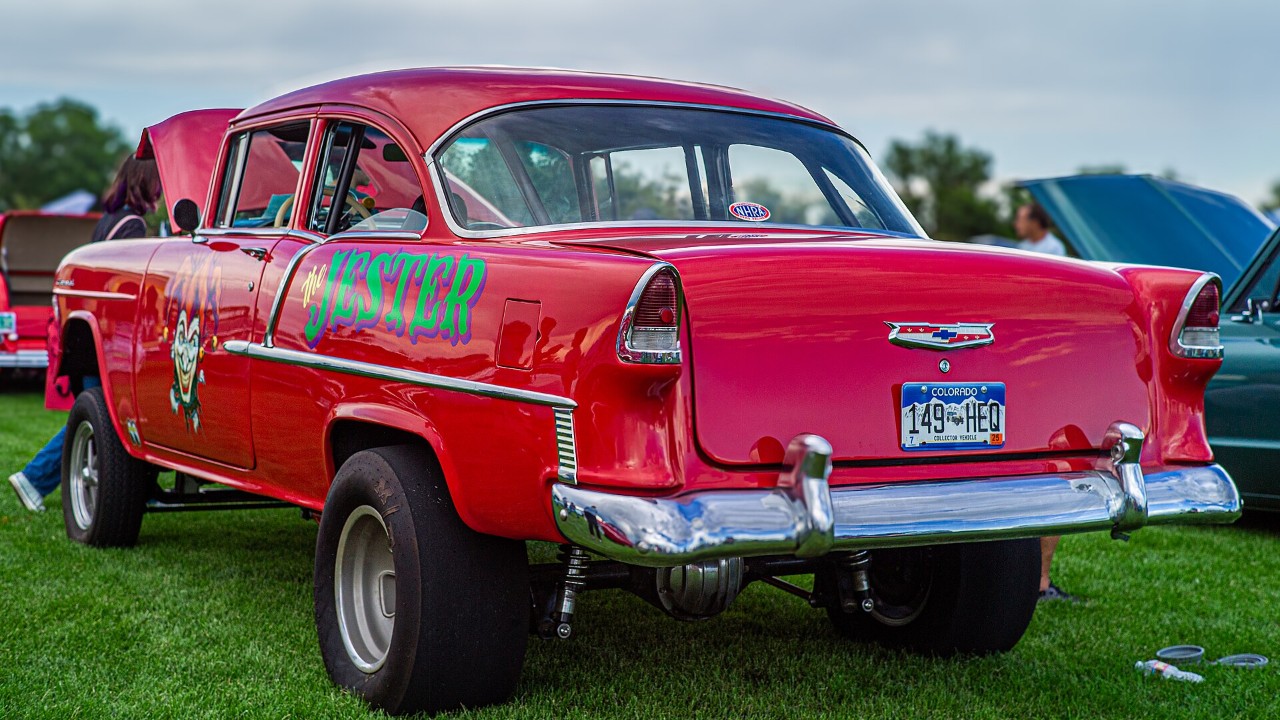
A gasser is a hot rod built for drag racing in the gasoline-fueled classes, rather than the methanol or nitromethane classes. Builders raised the front end because it improved weight transfer under hard acceleration. They also used beam axles, which weighed less than independent front suspension. The result looked top-heavy, and that stance became the look of an era.
The 1955 Chevrolet was a natural starting point. That year, Chevrolet introduced its first small-block V8, a 265-cubic-inch engine with up to 195 horsepower. Postwar Willys arguably made a better gasser chassis than the 1955 to 1957 Chevrolet. Even so, in our view the Chevy’s roomy body and new V8 make it a great alternative.
Our take: a 1955 Chevy gasser like the one pictured is the most usable car of the type. It has a real back seat and a big trunk, and parts are easy to find. That makes it the gasser we’d drive most often. If you buy one, though, have the front axle and steering checked, because many were home-built.
6. 1941 Willys Americar gasser
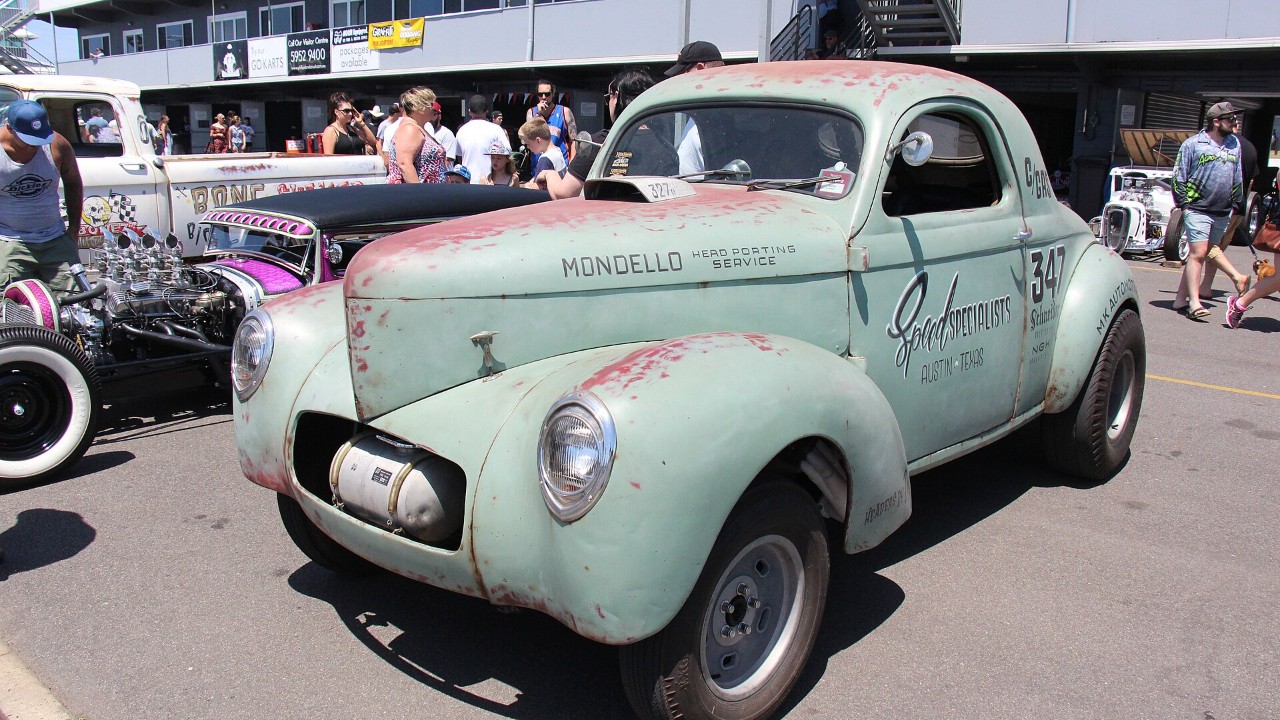
Willys built its small cars from 1937 to 1942, but the Americar name applied only to the 1941 and 1942 models. Stock, the car used a 2.2-liter Go-Devil four-cylinder making 60 horsepower. It sold for about $630, and Willys moved 22,000 of them in 1941.
The coupe became a favorite hot rod body. Owners often replaced the Go-Devil engine after failures or parts shortages, so stock examples are now rare. Meanwhile, Willys coupes from 1937 to 1942 became some of the most popular gasser bodies of the era. “Ohio George” Montgomery ran a 1933 Willys in A/GS, and the Stone-Woods-Cook team won A/GS in 1965.
Our take: the 1941 Willys gasser is the purest form of the idea, with a tiny, light body and a huge V8 sitting high on a straight axle. It’s the car most people picture when they hear the word gasser. If you shop for one, ask whether the body is original steel or a reproduction.
7. 1969 Ford Torino Cobra Jet
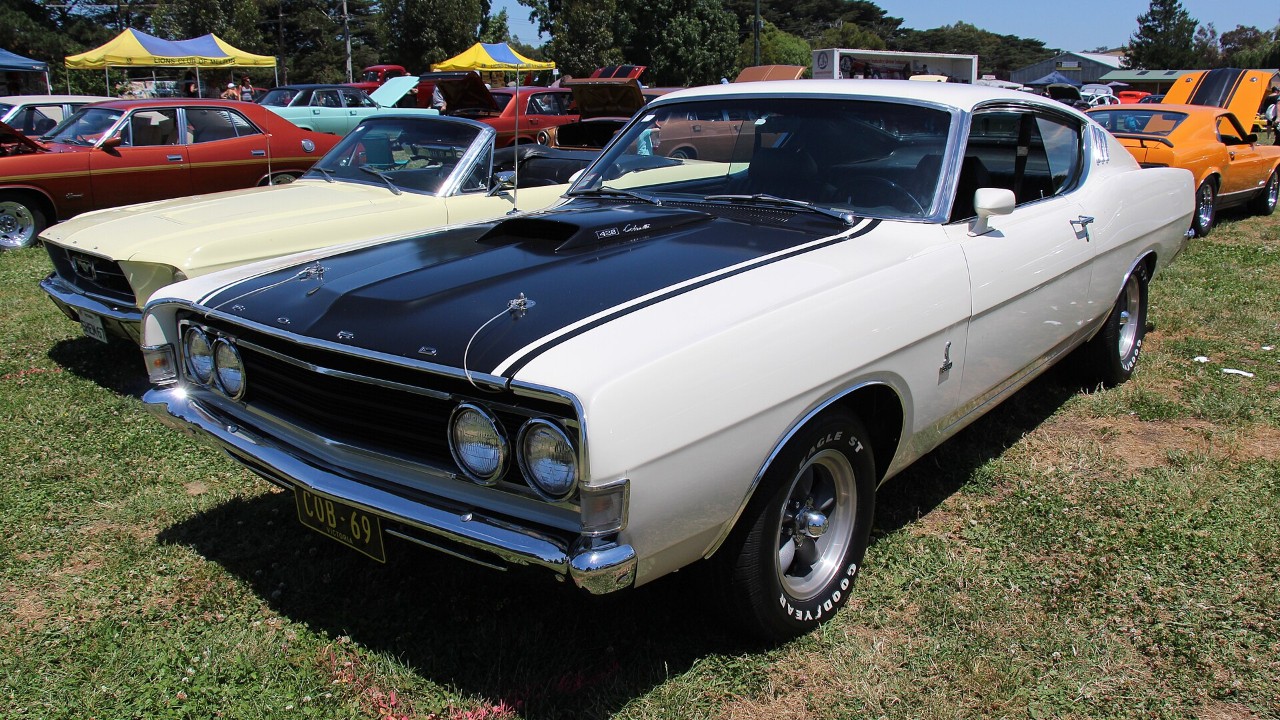
Ford’s 1969 Cobra was its answer to the Plymouth Road Runner. It came standard with the 428 Cobra Jet V8, a four-speed manual and competition suspension, in SportsRoof or hardtop form. Ford rated the 428 CJ at 335 horsepower, though the engine was widely believed to be underrated. A 735 CFM Holley four-barrel fed it.
Buyers who added Ram Air got a working hood scoop with “428 Cobra Jet” emblems. Road Test magazine ran a Ram Air Cobra through the quarter mile in 15.07 seconds at 95.74 mph. However, the magazine said the lack of a tachometer and a tricky shifter likely hurt that time. Ford never published separate Cobra production numbers, but it built 129,054 Torinos for 1969.
For more on the nameplate’s range, see 8 Torinos that showed what Ford could really build. In our view, the Torino Cobra Jet is the drag car hiding in a family-size body. If you’re buying, check the hood scoop emblems and engine codes, because Ford marked Ram Air cars differently.
8. 2011 Dodge Challenger Drag Pak
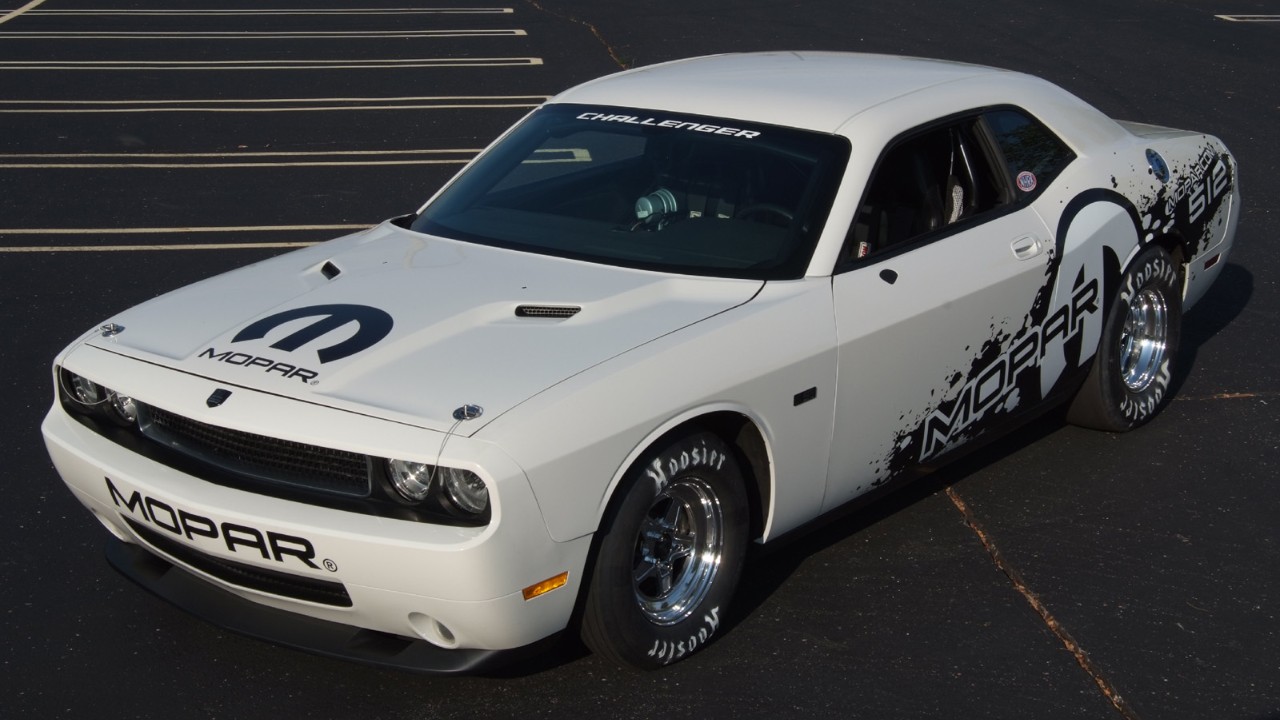
Mopar announced the V10 Challenger Drag Pak on October 5, 2010, for production in 2011. It used an 8.4-liter V10 related to the Viper’s, although Mopar said it wasn’t exactly the same engine. Mopar planned to build 70 of them.
This was a race car sold by a carmaker, not a street car. It came with a solid rear axle, a fuel cell, upgraded rear gears and a race-prepped two-speed automatic. An optional Competition Package added an eight-point roll cage, a six-point harness and a window net. The price was $85,512, according to Motor Authority’s report on the launch.
Our take: the 2011 Drag Pak is the modern heir to the 1968 Hemi Dart, a factory-built car that needs no street compromises. If you buy one, ask for its racing logbook and service records, because these cars live hard lives at the track.
9. Chevy II Nova gasser
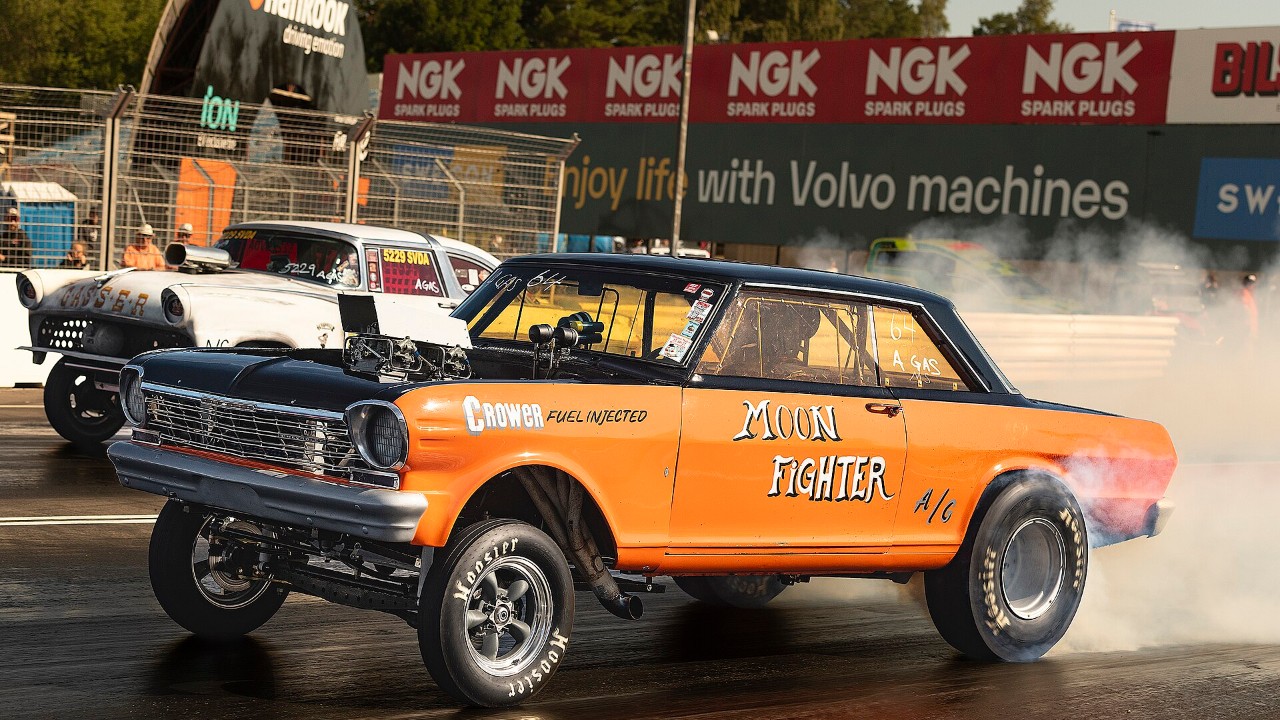
The Chevy II debuted for the 1962 model year, with the first car leaving the Willow Run plant in August 1961. Nova was the top trim, not a separate model. At first, Chevrolet offered only a four and a six, so the Nova couldn’t officially get a V8.
That changed in 1964, when the first factory V8, a 195-horsepower 283, joined the lineup. Then, for 1965, a 327 with up to 300 horsepower arrived. Before that, V8 swaps were common among enthusiasts, which made the Chevy II a natural gasser candidate. Also, NHRA let late-model cars into the gas classes starting in 1967.
The gas classes didn’t last much longer, because NHRA eliminated them in 1972. Our take: a Chevy II gasser like the one pictured combines a compact body, small-block power and that classic nose-up stance. It’s a lighter, cheaper road to the gasser look than a Willys. If you shop for one, check the front suspension and frame work, since most are home-built.
10. 1964 Ford Fairlane Thunderbolt
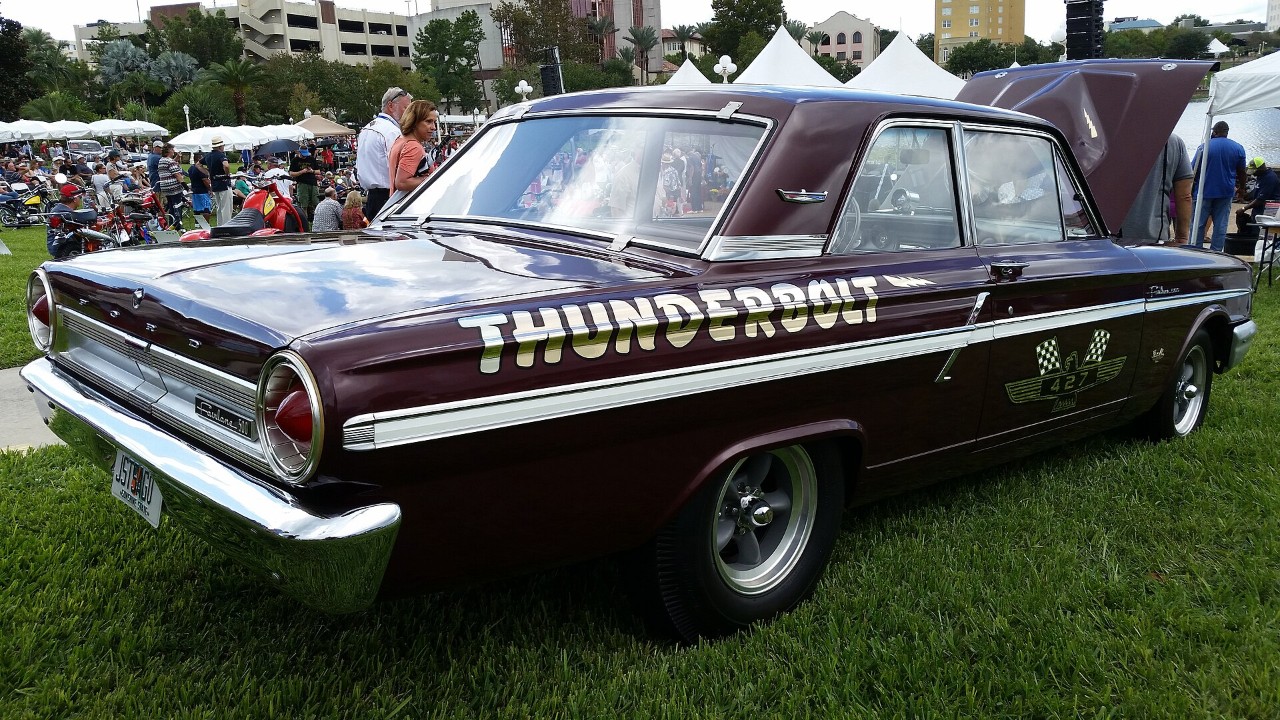
Look inside a Thunderbolt and you notice what’s missing. Ford deleted the radio, heater, carpeting, sun visors, spare tire and jack. In place of the normal front seats, buyers got lightweight units borrowed from the police package or the Econoline van. Andy Hotton’s Dearborn Steel Tubing did the work on partly built Fairlane 500 bodies, finishing 100 cars in all.
Up front, the hood had no hinges or latch at all, because pins held it down. Its raised teardrop bulge pulled hot air out of the engine bay. Beneath it sat a 427 FE high-riser with twin four-barrels, rated at 425 horsepower and 480 lb-ft at 3,700 rpm. Ford also hung fiberglass doors and front fenders on the body and fitted Plexiglas glass to the sides and rear.
For a closer look at that stripped cabin, read why the 1964 Ford Thunderbolt skipped comfort features in pursuit of speed. In our view, a car this single-minded is the one we’d fight hardest to keep. Shoppers should know that 49 cars had four-speeds and 51 had automatics, so check that the gearbox matches the records. Gas Ronda took the NHRA’s national Top Stock crown in a Thunderbolt in 1964.
More from Fast Lane Only