If you’ve ever rolled up to a red light, felt the engine shut off, and had that half-second of “Wait… did my car just stall?”—you’re not alone. Auto start-stop systems are now standard on a ton of newer vehicles, and for some drivers they’re a mild curiosity. For others, it’s a daily annoyance that shows up at every single intersection like an overeager backseat driver.
What’s making people extra twitchy lately is a simple problem: in some cars, the “off” switch is hard to find, doesn’t stay off, or doesn’t exist at all. That’s led to a wave of owner complaints online, dealership counter questions, and plenty of driveway Googling. And yes, it’s especially frustrating when you swear you’ve looked everywhere on the dash and still can’t make it stop.
Why your car keeps shutting off (and why it thinks it’s helping)
Auto start-stop is designed to cut engine idling when you’re stopped, then restart the moment you release the brake (or press the clutch in a manual). The pitch is straightforward: less fuel burned at idle, fewer emissions, and a small boost to official efficiency numbers. In slow city driving, the savings can be real—though usually modest for most drivers.
The system also isn’t just guessing. It’s watching a bunch of conditions like engine temperature, battery charge, cabin cooling demand, steering input, and how hard you’re pressing the brake. If everything checks out, it shuts down; if not, it’ll keep the engine running, which is why it sometimes feels inconsistent in different weather or traffic.
First things first: does your car actually have an “off” button?
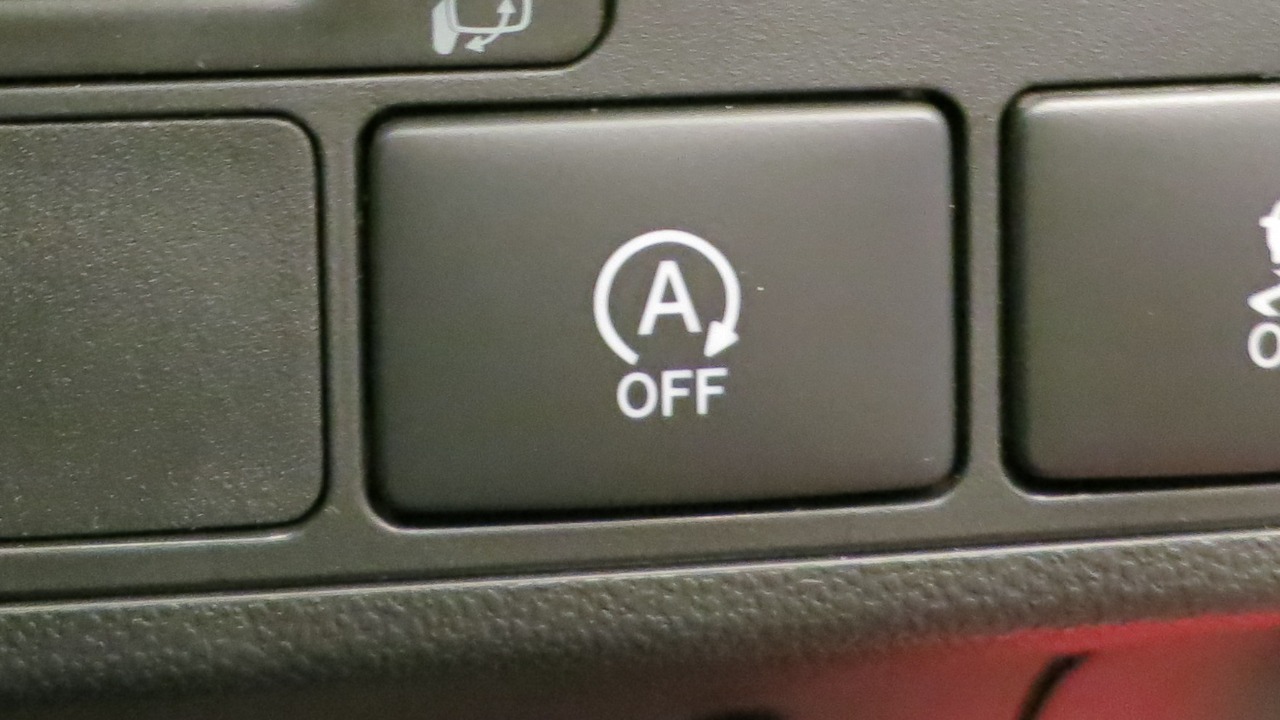
Some cars have a dedicated start-stop disable button, but it might not be where you expect. Common spots include near the gear selector, along a row of buttons by the climate controls, on the left side of the steering wheel near other driver-assist switches, or tucked into a touchscreen menu. The icon often looks like an “A” with a circular arrow, sometimes with the word “OFF” nearby.
Here’s the catch that trips up a lot of people: in many models, the button only disables it for that drive cycle. Turn the car off and back on, and start-stop defaults right back to enabled. That’s not a defect—it’s usually how the system is designed, often to meet regulatory and certification targets.
If there’s no button, the touchscreen might be the “button”
Some manufacturers moved the control into the infotainment system, which is about as popular as moving the hood release into a phone app. Look for menus like “Vehicle,” “Driving,” “Engine,” or “Efficiency,” and then something labeled “Auto Start/Stop,” “Stop/Start,” or “Idle Stop.” If your car has customizable drive modes, the setting might live inside “Eco,” “Comfort,” or “Individual” mode options.
One more twist: some cars only let you change the behavior when you’re parked, or they gray out the option while moving. If you’ve been hunting through menus at a stoplight (no judgment), you might not see the full set of controls. Safest bet is to check while parked and take a quick scan through the settings without rushing.
Why it feels extra aggressive lately
Drivers often notice start-stop more in hot summers and cold winters, but the reasons can be counterintuitive. In mild weather, the system has an easier time meeting all its “OK to shut off” conditions, so it triggers more often. When it’s extremely hot or cold, it may actually shut off less if the car needs the engine running to support heating, cooling, or defrost performance.
Battery health also plays a big role. If your battery is strong and fully charged, the car feels confident cutting the engine at every stop. If the battery is weak, you might get fewer stop events—or warning messages—because the car doesn’t want to risk a slow restart.
Common reasons you can’t disable it (even when you’re sure you should be able to)
A surprising number of owners are pressing the right switch but expecting the wrong outcome. On many cars, disabling start-stop doesn’t remove the system permanently; it just pauses it until the next restart. If you start the car, drive, and notice it’s back on tomorrow, that’s typically “normal,” even if it’s not your favorite feature.
Another common issue is that some trims, regions, or model years don’t include an off switch at all. Manufacturers sometimes vary features based on emissions rules, available options, and software versions. Two cars that look identical inside can behave differently, which is maddening when your friend says, “Just hit the button,” and your dash is button-free.
Quick ways to make it trigger less (without hacks)
If your car has drive modes, try switching out of Eco mode. Eco often encourages start-stop and can make it more eager to shut down quickly at stops. Comfort/Normal or Sport sometimes reduces how often it activates, depending on the vehicle’s programming.
You can also experiment with brake pressure. In some cars, a firm brake press at a stop is what “confirms” you’re really stopped and ready for engine-off; easing up slightly can keep it running. That’s not a universal rule and you shouldn’t compromise safety or roll forward, but it can explain why it feels like it activates the moment you clamp down at a light.
If the restart feels rough, slow, or shuddery, that’s worth a check. Start-stop depends on a healthy battery (often an AGM or enhanced flooded battery), a beefier starter or integrated starter-generator, and updated software. A tired battery can make the whole experience feel clunky, and some cars will behave oddly if the wrong battery type was installed.
What about aftermarket “start-stop eliminators” and coding?
There are products and software coding options that remember your last start-stop setting or disable it more permanently. They’re popular because they solve the “I have to press this button every time” problem in a tidy way. But they’re not one-size-fits-all, and they can come with trade-offs like warranty questions, diagnostic trouble codes, or conflicts with software updates.
If you’re thinking about this route, it’s smart to research your exact year, model, and engine—then weigh the pros and cons like you would with any modification. Some solutions are plug-and-play modules; others require coding tools and a bit of nerve. If your car is still under warranty, asking the dealership what they’ve seen (and what they’ll tolerate) can save you a headache later.
When it’s worth asking a dealer (or a trusted shop) for help
If you truly can’t find any way to disable it—and you’ve checked both physical buttons and touchscreen settings—it may be that your model simply doesn’t offer a user-facing off switch. A dealer can confirm this quickly using your VIN and the official documentation. They can also check for software updates that improve restart smoothness or adjust system behavior.
It’s also worth getting the battery and charging system tested, especially if the start-stop behavior seems unpredictable or the car is a few years old. Modern vehicles can be picky about battery spec and state of charge, and start-stop systems tend to reveal battery weaknesses earlier. Think of it as your car’s way of saying, “Hey, I’m monitoring things,” whether you asked it to or not.
The bottom line: you’re not crazy, it really can be that hard
Auto start-stop is one of those features that sounds simple but ends up feeling personal. Some cars give you a clear button; others hide it in menus; others bring it back every ignition cycle; and a few don’t let you disable it at all. If it’s driving you up the wall, the most practical path is to confirm what your specific car allows, then decide whether a daily button press, a settings tweak, or a carefully chosen workaround makes the most sense for you.
More from Fast Lane Only