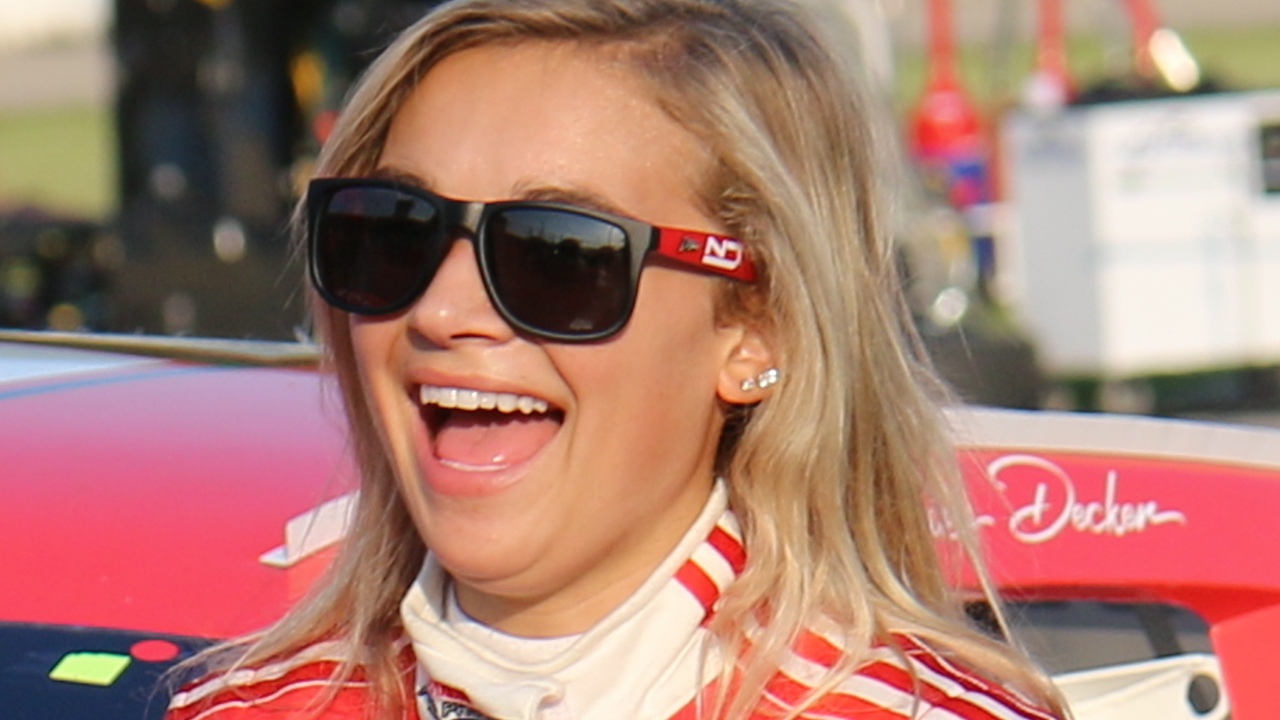
Natalie Decker did not ease into motherhood. Less than a year after welcoming her first child, the part-time NASCAR racer has secured a coveted start at Daytona, turning a life milestone into a launchpad back to one of stock car racing’s most intimidating stages. Her rapid return places her in a rare group of drivers who have navigated childbirth and then strapped back into a race car at nearly 200 miles per hour.
Her Daytona entry is more than a feel-good comeback. It highlights how a new generation of competitors is refusing to choose between elite performance and family life, and it tests how far NASCAR’s ecosystem has come in supporting women who want both.
From nursery to superspeedway
Decker’s path from delivery room to Daytona garage has unfolded at a pace that would be ambitious in any sport, let alone one that demands extreme physical resilience and mental focus. She became a mother less than a year ago, then confirmed that she would be back in the field for Daytona, turning what could have been a long hiatus into a compressed, carefully managed reset of her career. The decision underscores her determination to remain relevant in a series where part-time drivers often fade from view if they step away for even a single season, a risk she has mitigated by locking in a high-profile start at one of NASCAR’s most visible events.
Her return is not a ceremonial lap. Decker has secured a competitive seat, continuing her relationship with the 92 Chevrolet for DGM Racing in the Xfinity Series, the same organization that fields a full-time entry with driver Josh Bilicki. That continuity matters, because it allows her to reenter the sport with a team that already understands her driving style and communication habits, rather than starting from scratch with new engineers and crew members. The Daytona start will also be her first NASCAR race as a new mother, a detail she has embraced publicly as part of her identity rather than something to downplay.
Making history in a male-dominated paddock
Decker’s comeback carries historical weight inside the garage. Ahead of her return to racing after childbirth, she has been recognized as joining a rare list of NASCAR drivers who have given birth and then come back to compete at the national level. That scarcity is not a reflection of women’s ability to race after pregnancy so much as a sign of how few have been given sustained opportunities in the sport’s upper tiers. By taking the green flag at Daytona, she is not only resuming her own career but also expanding the reference points for what a NASCAR driver’s life can look like.
The significance has not been lost on Decker herself. In recent interviews, she has spoken about how she had always wanted to be both a mother and a NASCAR driver, describing the moment as “Everything coming together” as she prepared for her return. In another appearance, she was introduced as the first woman in NASCAR to return to the racetrack after delivering a baby, a milestone that underscores how unusual her path remains. That framing places her story at the intersection of performance and representation, where each lap she runs at Daytona will be watched not only for its competitive implications but also for what it signals to other women considering a future in stock car racing.
Balancing diapers and data sheets
Behind the symbolism is a more granular reality: the logistics of balancing a newborn with the demands of a national racing schedule. Decker has described motherhood as a long-held dream that now coexists with the equally long-standing ambition to race in NASCAR, framing her life as a convergence of two goals rather than a trade-off. That mindset has shaped how she approaches training, travel, and recovery, with race weekends now layered on top of the routines of feeding schedules and sleepless nights that define early parenthood.
Her preparation for Daytona has unfolded in parallel with that new domestic rhythm. Decker has spoken about how returning to the car as a new mom requires both physical recalibration and mental clarity, particularly at a track like Daytona where the margin for error is slim and the pack racing style demands constant awareness. In a separate conversation about her upcoming Daytona run, she discussed how this would be her first NASCAR start as a new mother, highlighting the emotional weight of strapping into the 92 Chevrolet for DGM Racing with her child now part of every career decision. That dual focus, on family and performance, is reshaping how she and those around her define success.
The Daytona stage and a sponsor’s surprise
Daytona is an unforgiving place to stage a comeback, which is precisely why Decker’s entry has drawn attention. The track amplifies everything, from drafting strategy to pit road execution, and it offers little protection for drivers who are even slightly off their game. For a part-time competitor, the stakes are even higher, because a single race can influence future opportunities. Decker’s choice to return at Daytona signals confidence in her readiness and in the equipment that DGM Racing is providing, including the 92 Chevrolet for DGM Racing that has become her primary platform in the Xfinity Series.
Her Daytona program has also been shaped by a personal twist. Ahead of the race, Decker received what she described as her “best” Valentine’s surprise, a gesture that came from her husband Derek and her Daytona sponsor. The surprise centered on a custom designed T.N. Dickinson’s car, a tailored livery that underscored how her commercial partners are leaning into her story as a new mother returning to NASCAR. That collaboration illustrates how modern sponsorships increasingly value authenticity and narrative, with Decker’s family life and competitive ambitions woven together in the branding that will circle Daytona’s high banks.
What Decker’s return signals for NASCAR’s future
Decker’s rapid transition from childbirth to Daytona start is more than a personal milestone; it is a test case for how NASCAR accommodates and celebrates drivers whose lives do not fit the traditional mold. Her presence as a new mother on the grid challenges long-standing assumptions about the career arc of female competitors, particularly in a series where full-time seats are scarce and interruptions can be costly. By securing a Daytona entry less than a year after giving birth, she has demonstrated that stepping away for family reasons does not have to mean stepping out of contention for meaningful rides.
The broader implications extend beyond her own results. Decker’s visibility as a new mom in NASCAR, from television interviews to social media clips where she speaks about Everything coming together, offers a tangible example for younger drivers and fans who might otherwise see motherhood and motorsports as mutually exclusive. If her Daytona run with the 92 Chevrolet for DGM Racing proves competitive, it could encourage teams and sponsors to view parental leave not as a liability but as a phase to be planned around, much like an injury or a temporary move to another series. In that sense, every lap she completes at Daytona will contribute to a quiet but meaningful recalibration of what is considered possible in stock car racing’s most traditional corners.
More from Fast Lane Only