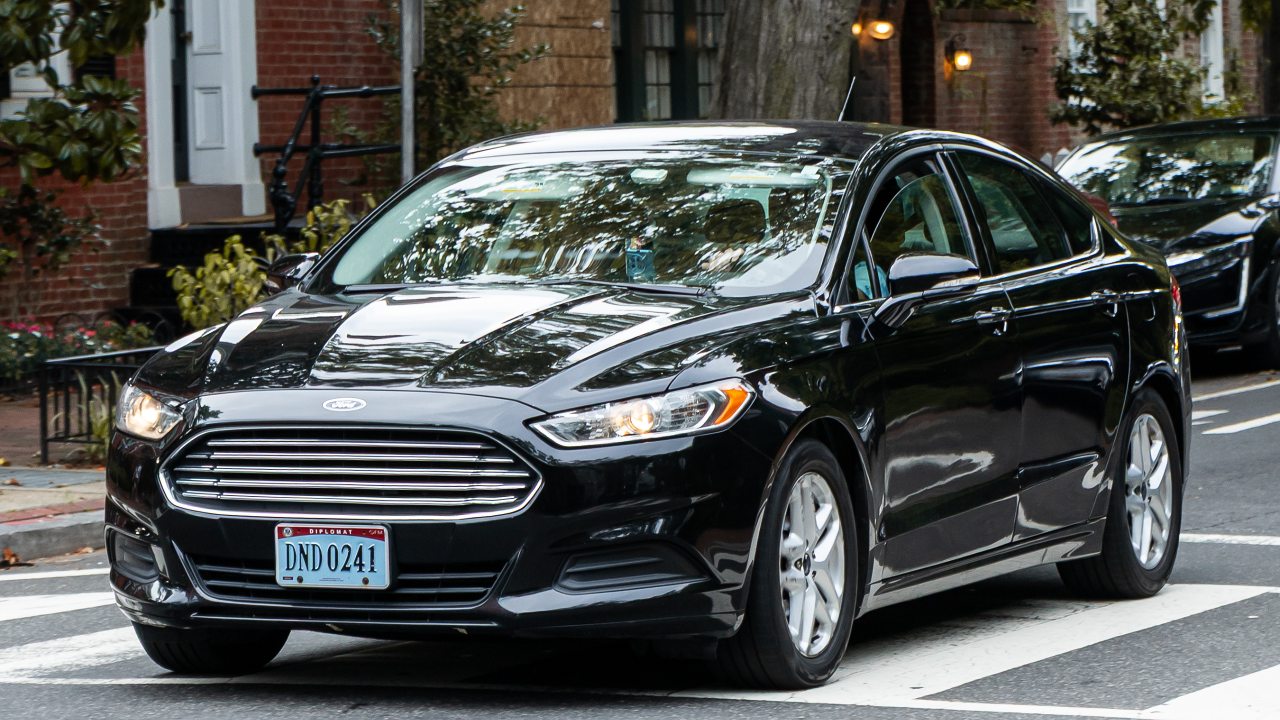
Ford spent the past several years betting that American drivers would happily trade sedans for trucks, SUVs, and crossovers. Now its leadership is signaling that the cost of abandoning traditional cars may be higher than expected, and that a new generation of sedans, likely electric and more affordable, is back on the table. The company is not simply revisiting nostalgia, it is reassessing a strategic pivot that left a gap in its lineup at a time when price sensitivity and efficiency are again shaping demand.
Hints from Ford executives, from chief executive Jim Farley to executive chairman Bill Ford Jr, point to a growing recognition that the brand cannot rely on high-margin trucks alone. The same decision that freed resources for the Bronco and Maverick also removed lower, lighter vehicles that could help meet affordability and efficiency targets, especially in an electric era. The question inside Ford is no longer whether sedans are dead, but how they might return without repeating past financial mistakes.
How Ford Talked Itself Out of Sedans
Ford’s retreat from sedans was deliberate and highly public. The company pledged in 2018 to phase out most traditional cars in the United States and followed through when it ended production of the Fusion in 2020, leaving the market to rivals that kept compact and midsize four doors in their portfolios. That decision cleared the decks for a lineup dominated by pickups, SUVs, and crossovers, a strategy that aligned with short term consumer trends and helped justify heavy investment in models such as the Bronco and the Maverick. Executives framed the move as a necessary shift away from low margin vehicles that had already cost the company billions in losses.
Jim Farley has since acknowledged that the sedan business was painful, making it clear that Ford lost billions in that segment before pulling the plug. However, he has also indicated that the company’s earlier approach to cars was flawed, not the idea of sedans themselves. The focus then was on conventional gasoline models fighting brutal price wars, rather than on distinctive products that could leverage new platforms or electrification. That context helps explain why Ford was willing to walk away from the Fusion and its peers, even as it now studies how a different kind of sedan could fit into its future.
The Affordability Squeeze Changes the Math
What has changed most sharply is the affordability landscape. Trucks and large SUVs remain profitable, but their prices have climbed to levels that shut out a significant share of buyers, especially younger customers and households squeezed by higher borrowing costs. Affordable models like the Maverick have shown how much latent demand exists for simpler, cheaper vehicles that still feel modern and useful. The strong response to that compact pickup has forced Ford to confront the limits of a portfolio built around expensive hardware, and to consider whether a low slung car could deliver similar value with even lower costs.
Jim Farley has been explicit that sedans could be part of the answer. On the eve of the Detroit Auto Show he told reporters that traditional cars might help improve affordability, and he cautioned that the company should “never say never” about bringing them back. In a separate interview in Detroit he openly acknowledged the possibility of a sedan return, tying it to the need for more accessible products rather than to any sentimental attachment. The logic is straightforward: a lighter, more aerodynamic vehicle can be cheaper to build and to electrify, which matters as Ford tries to broaden its customer base without sacrificing financial discipline.
From “Never Again” to “Never Say Never”
The rhetorical shift from finality to flexibility has been striking. Only a few years ago, Ford’s public stance suggested that sedans were a relic of a past era, incompatible with its vision of a truck and SUV centric future. Now Farley is careful to leave the door open, repeating that the company should “never say never” when asked about the segment. That change in tone reflects not only market pressures but also internal reflection on what the company may have given up when it exited a huge global market for four door cars.
Farley has also used public forums to test interest in a different kind of Ford sedan. In social and media appearances he has floated the idea of an affordable high performance electric four door, hinting at a car that would be rear wheel drive and built on a new EV platform. Those comments suggest that if sedans return, they will not simply revive the Fusion formula, but instead aim to combine efficiency and driving excitement in a way that fits Ford’s performance oriented image. The company appears to be probing whether customers would embrace a car that sits somewhere between a practical family sedan and a modern interpretation of a four door Mustang.
Electric Platforms and the Lure of a New Sedan
The electric transition is central to Ford’s reconsideration of sedans. Farley has already hinted that a new electric sedan could ride on a dedicated EV architecture, with rear wheel drive and high performance variants that showcase what the technology can do. A lower, more aerodynamic body style reduces energy consumption, which in turn allows smaller, cheaper battery packs for a given range. That dynamic is particularly attractive for a company that has struggled to make money on larger electric trucks and SUVs, where heavy batteries and complex packaging drive up costs.
Earlier commentary from Farley indicated that if Ford reenters the sedan space, it would likely do so with an EV that avoids the mistakes of its previous gasoline cars. He has pointed to the possibility of a four door model that leverages lessons from the Mustang and from the company’s newer electric platforms, rather than simply electrifying an old design. That approach aligns with his acknowledgment that Ford lost billions on its earlier sedans, but could potentially earn a return if it builds a distinctive electric car that commands a premium while still undercutting the price of large trucks. The challenge will be to balance performance aspirations with the affordability goals that are driving the conversation in the first place.
Internal Doubts and a Quiet Course Correction
Signals from inside Ford’s leadership suggest that the rethink goes beyond Farley’s public musings. Executive chairman Bill Ford Jr has offered what amounts to a quiet mea culpa, telling Autocar that the company may be missing out by not offering regular small cars. His comments, described as a “full disclosure,” acknowledge that the earlier decision to abandon traditional cars might have overlooked enduring demand for simpler, more efficient vehicles. That kind of reflection from the family scion underscores how deeply the question of sedans now runs inside the company’s strategic debates.
At the same time, reporting on Ford’s internal work indicates that teams are already exploring ways to bring back small cars in some form. The focus appears to be on vehicles that can be built cheaply enough to serve as true entry points into the brand, while still meeting modern expectations for safety, connectivity, and, increasingly, electrification. The company’s experience with the Maverick, which has shifted strategy conversations around affordability, is likely informing those efforts. If Ford can translate the Maverick’s formula into a compact sedan or hatchback, it could regain ground in a segment it once dominated, without repeating the financial missteps that drove it out.
More from Fast Lane Only