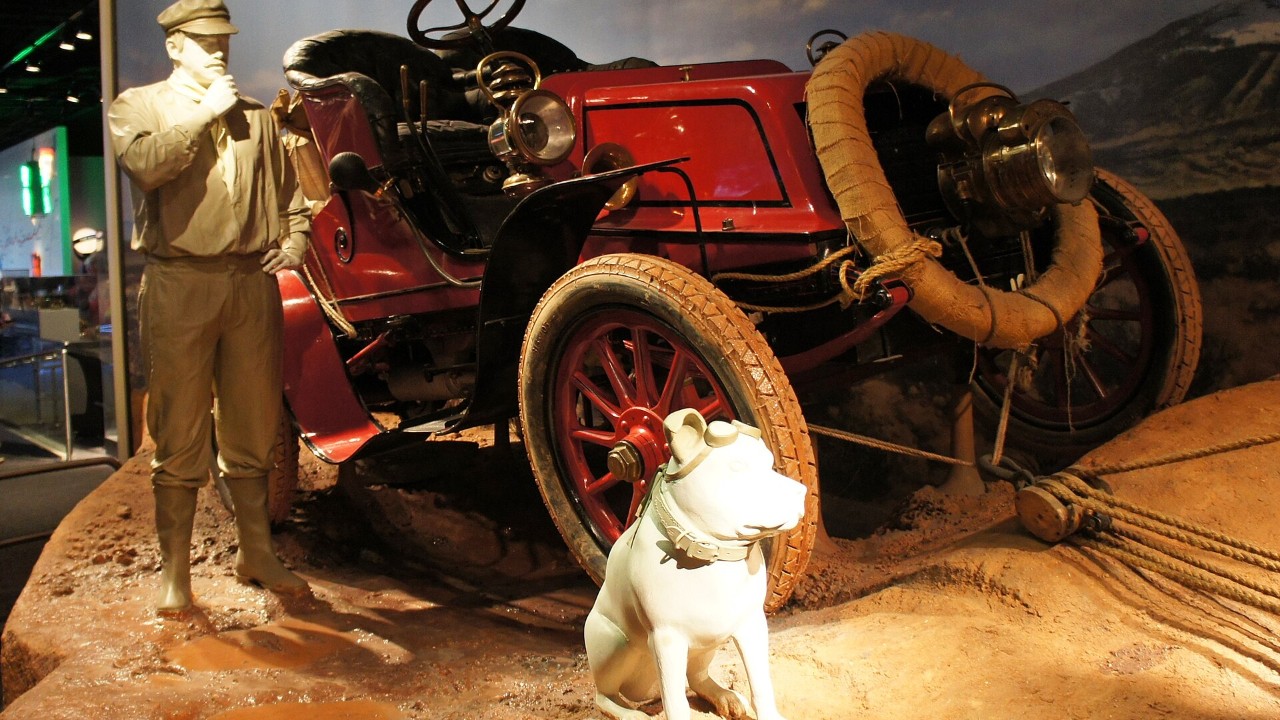
In May 1903, a Vermont doctor named Horatio Nelson Jackson accepted a $50 bet that he could drive a car from San Francisco to New York. He bought a used Winton, hired a mechanic and left within days. Sixty-three days later he rolled into Manhattan, and four decades after that he handed the car to the Smithsonian.
It is a story about a bet, a tired two-cylinder touring car and a country with almost no roads built for automobiles. It also has a dog in goggles. Most of all, though, it shows how quickly a stunt can turn into a turning point.
Here is what the record says about the trip, the car and where it sits today.
The $50 bet that started Horatio Nelson Jackson’s drive
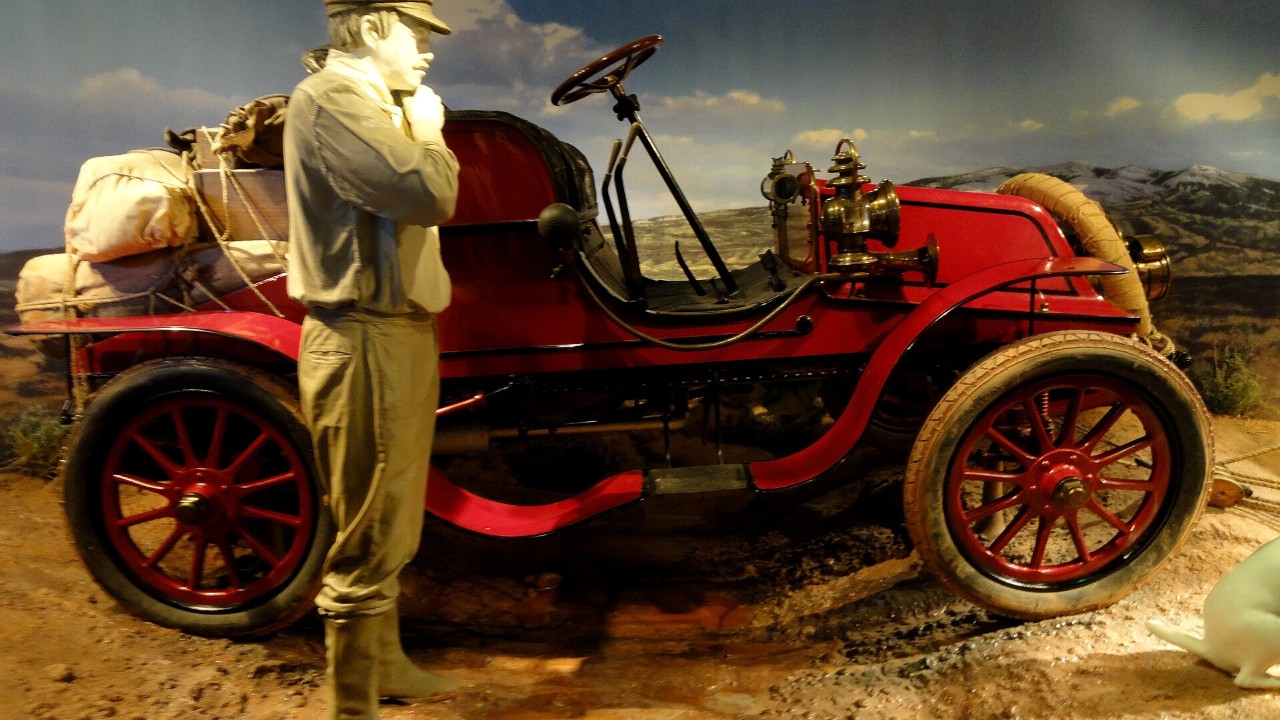
Jackson was a physician from Burlington, Vermont, visiting San Francisco in the spring of 1903. On May 18, as a guest at the city’s University Club, he agreed to a $50 wager that a car could cross the country in less than 90 days. That date and detail come from Wikipedia’s Horatio Nelson Jackson entry, which cites the Ken Burns and Dayton Duncan book Horatio’s Drive.
Atlas Obscura says the bet was made “over drinks” at the club. At that point, cars were mostly driven in cities with paved streets. In fact, Atlas Obscura notes that no car had yet crossed the entire country. The Smithsonian’s description adds that the trip came after two attempts by other motorists.
Jackson had no mechanical experience. So he recruited Sewall Crocker, a young mechanic and bicycle racer, as his co-driver. Crocker also steered him toward the car.
A used Winton named Vermont
Jackson “bought a used Winton touring car,” according to HistoryNet’s account of the first cross-country road trip. It had no windshield and no top. Wikipedia describes it as a slightly used two-cylinder Winton, and Jackson named it the Vermont after his home state.
The Winton was one of the earliest American car brands, Atlas Obscura notes. Even so, this one was not in great shape. Its rear wheels were worn, and Jackson paid more than the car was worth. No source we read gives the purchase price, so we don’t either.
The engine was a two-cylinder unit with a 5.25-inch bore and a 6-inch stroke, according to Conceptcarz’s Winton two-cylinder profile. That page also describes it as a two-speed, chain-driven car. Its horsepower figures conflict, however, so we leave them out.
Sixty-three days from San Francisco to New York
Jackson and Crocker left San Francisco on May 23, 1903. They took a northerly route, heading up through California into Oregon. From there they turned east through Idaho. In Wyoming, Atlas Obscura says, they drove across open prairie. Later they crossed Nebraska, Iowa, Illinois, Indiana and Ohio before entering New York State.
The going was slow. Atlas Obscura says they averaged just 71 miles a day. Bad directions, some of them deliberately misleading, cost them time. They also blew tires, lost equipment, ran out of gas and suffered a major breakdown about a month in.
Meanwhile, Conceptcarz notes, they often used a block and tackle to haul the car out of mudholes. The Smithsonian’s own description mentions long waits for parts and at least one gully the men had to hoist the Winton over.
By July 12 they had reached Nebraska, according to Atlas Obscura. Later, they made a stop in Chicago on the way east. Their only accident came near Buffalo, in the last stretch of the trip.
Still, they made it. The trip ended in New York City on July 26, 1903, “63 days, 12 hours and 30 minutes after it began,” according to HistoryNet. The Smithsonian’s description puts it at 64 days.
Bud, the dog in goggles
Somewhere in Idaho the crew grew to three. Jackson bought a dog named Bud, “bought for $15 and outfitted with goggles to keep the road dust out of his eyes,” as Atlas Obscura tells it. Accounts of how they got the dog vary, however. Wikipedia notes that newspapers of the day told several versions, including one in which Bud was stolen.
Bud rode the rest of the way to New York. Later, Jackson noted that the dog was the only one “who used no profanity on the entire trip,” HistoryNet reports.
What the bet cost Jackson
The wager was only $50, but the trip cost far more. Jackson claimed his expenses “totaled $8,000,” Atlas Obscura reports. Conceptcarz gives the same $8,000 figure and says it covered hotel rooms, gasoline, tires, parts, food and the car itself.
Then there is the twist. According to Atlas Obscura, Jackson never collected the $50. And when he got home to Burlington, HistoryNet says, he received a ticket for breaking the town’s 6 mph speed limit.
Where the Vermont is now
The Winton did not stay in Jackson’s garage forever. In 1944 he gave the Vermont to the Smithsonian Institution, according to Wikipedia and Conceptcarz. Today the National Museum of American History preserves it.
The Smithsonian’s collection record for the 1903 Winton touring car lists the maker as the Winton Engine Company. It credits the car as a “Gift of Col. H. Nelson Jackson.” The museum also says the trip inspired two rival teams of motorists, which turned the journey into a race. Today the record lists Horatio Nelson Jackson’s Winton in the museum’s America On The Move exhibition.
More from Fast Lane Only
- Unboxing the WWII Jeep in a Crate
- 15 rare Chevys collectors are quietly buying
- 10 underrated V8s still worth hunting down
- Police notice this before you even roll window down
This article was created with the help of AI and was reviewed and edited by Fast Lane Only editors before publication.