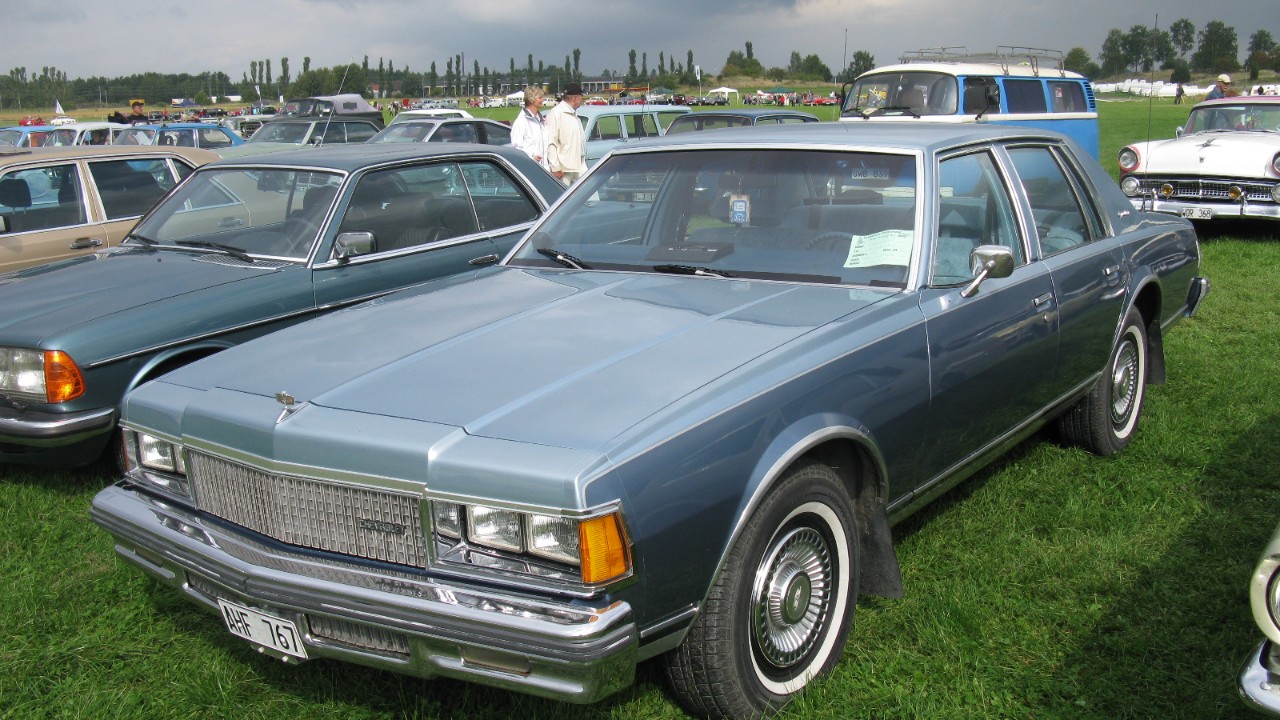
The 1977 Chevrolet Caprice shrank by more than 10 inches and shed over 600 pounds, and America bought it anyway. In fact, the downsized full-size Chevrolet became the best-selling car in the country that year. That result told Detroit something important. Smaller, lighter and smarter could still sell.
The late 1970s forced change on everyone. Fuel prices, new economy rules and fresh competition from Europe and Japan pushed carmakers to rethink almost everything. Front-wheel drive, unit-body platforms, rotary power and imported small cars all moved from the fringe toward the mainstream.
These are our picks: eight automobiles that, in our view, ushered in a new era during the late 1970s. Some changed how families drove, while others changed what enthusiasts expected. Every date, engine and production figure below comes from factory records, museum files and published histories.
1. 1977 Chevrolet Caprice Classic
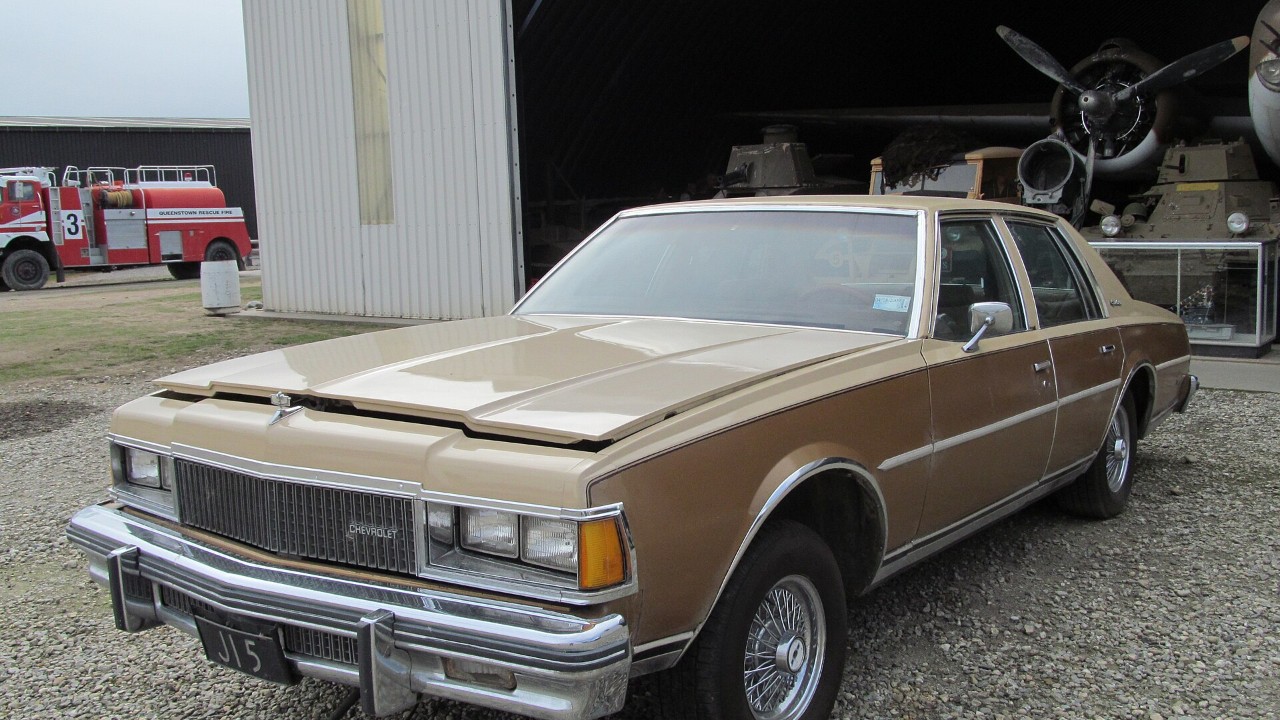
Chevrolet’s downsizing job for 1977 was dramatic. Coupes lost 611 pounds, sedans dropped 637 and wagons shed 871. Coupes and sedans also gave up more than 10 inches of length, while their wheelbase fell from 121.5 inches to 116. Wagons, by contrast, kept their 125-inch wheelbase but still lost 14 inches of length.
Buyers responded in a big way. Chevrolet built more than 660,000 full-size cars for 1977, and the Caprice alone accounted for 341,382. The four-door Caprice Classic sedan led the way at 212,840 units. According to SlashGear’s look at 1977’s best-seller, that sedan listed at $5,237 with a six or $5,357 with a V8. Motor Trend also named the 1977 Caprice its Car of the Year.
Our take: the 1977 Chevrolet Caprice proved that downsizing didn’t have to mean giving up. The base engine was a 250-cubic-inch six with 110 horsepower, and the top choice was a 350 V8 with 170. Every model came with the three-speed Turbo Hydra-Matic. We think this is the car that showed Detroit how to survive the decade.
2. 1978 Ford Fairmont wagon
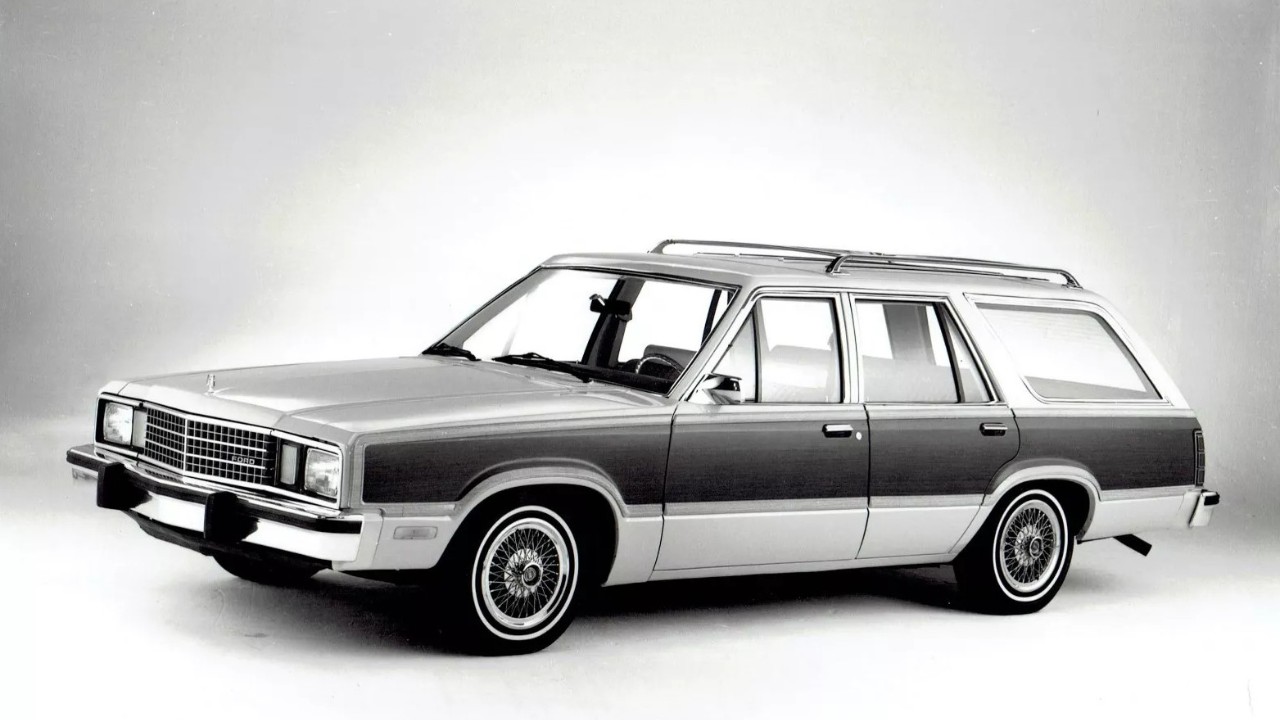
The Fairmont looked plain, yet it carried one of the most important platforms Ford ever built. It launched in August 1977 as a 1978 model and replaced the Maverick. Underneath sat the new Fox platform, which also debuted that year under the Mercury Zephyr. Ford designed Fox to be relatively light and simple.
The wagon came in base Fairmont and fancier Fairmont Squire trims. Ford built 128,390 Fairmont wagons for 1978, and total Fairmont production reached 460,981 that year. Engine choices ran from a 2.3-liter four with 88 horsepower to a 302 V8 with 139. The wagon also had a one-piece lift-up tailgate, a design that later turned up on Australian Falcon wagons. Furthermore, the front suspension used MacPherson struts with separately mounted coil springs, a modern touch for a domestic family car.
Our take: few people get excited about a Fairmont wagon, and that’s exactly the point. It was a sensible car built on a platform that went on to underpin the Mustang, Thunderbird and Lincoln Mark VII. If you find a clean survivor, keep it original. A factory-stock example tells the Fox story better than any modified car.
3. 1978 Dodge Omni
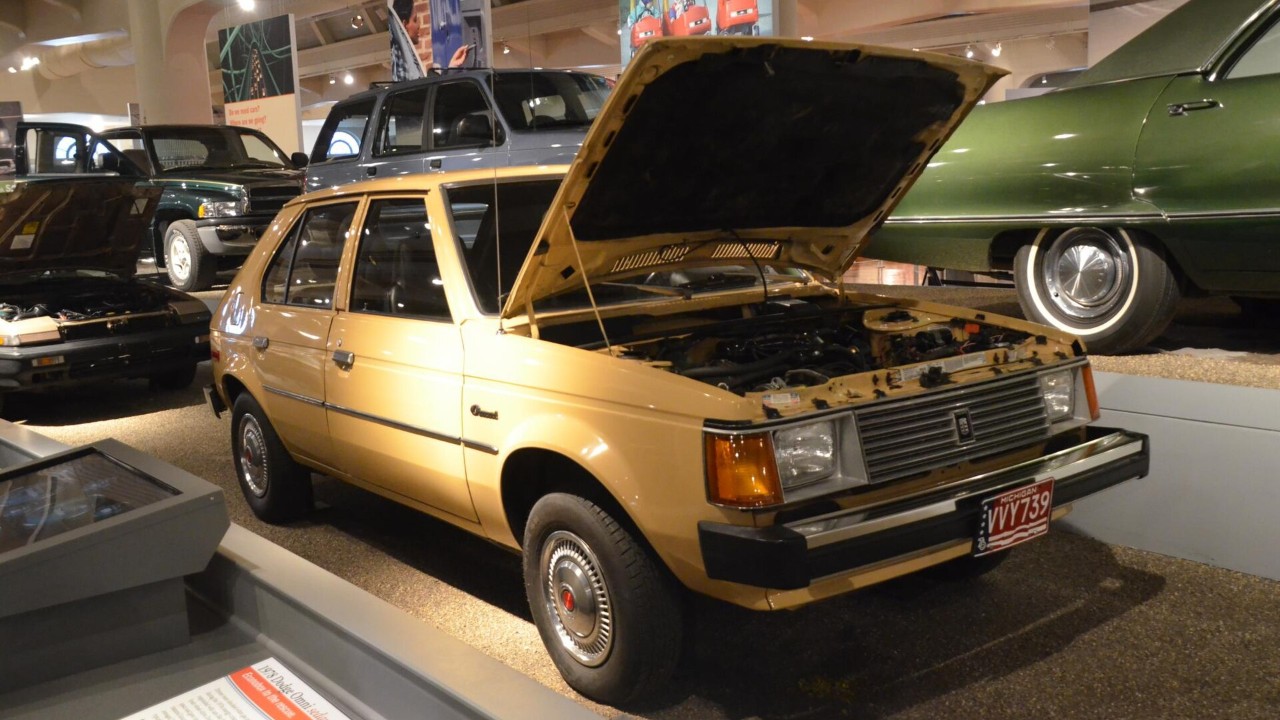
The Omni was Chrysler’s answer to high gas prices and new fuel economy rules. According to The Henry Ford museum’s record of its 1978 Omni sedan, the Omni and its Plymouth Horizon twin were the first American cars to adopt the front-wheel-drive hatchback layout common in Europe. The museum’s car has a 105-cubic-inch four with 75 horsepower and a three-speed automatic.
That museum record adds some telling details. The Omni rode on a 99-inch wheelbase, stretched 165 inches, weighed 2,145 pounds and cost $3,976. In addition, the museum notes that it was a response to the 1973 oil embargo and the fuel economy standards Congress passed in 1975. Motor Trend named the Omni and Horizon its Car of the Year. Not everyone agreed, though. Consumer Reports said the car lost control in hard maneuvering, and Chrysler responded with a steering damper and a lighter steering wheel. Chrysler went on to build 919,996 Dodge Omnis before production ended on February 2, 1990.
Our take: the Omni wasn’t glamorous, but it changed what an American small car looked like. Front-wheel drive and a hatchback became normal Detroit thinking because cars like this proved the idea. We’d love to find an unmodified early car, because an original Omni tells the front-drive story better than any museum placard.
4. Volkswagen Rabbit five-door
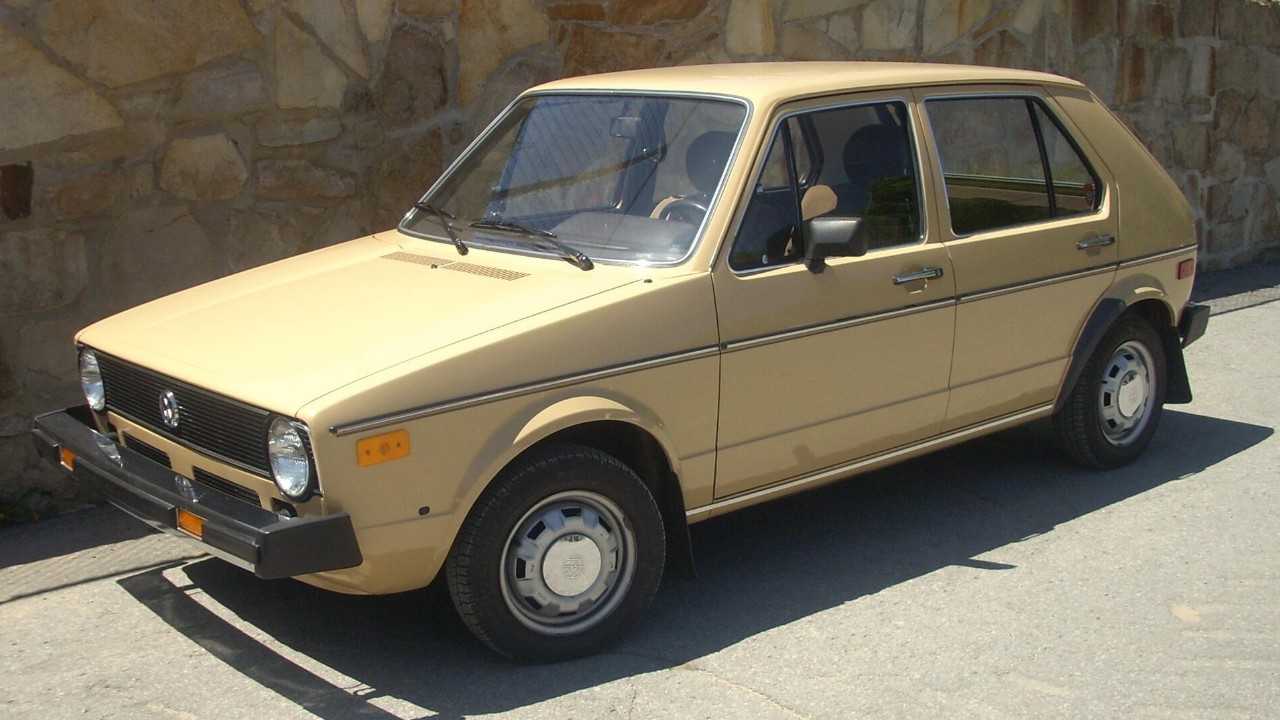
The Golf debuted in Europe in May 1974. Volkswagen then brought it to the United States and Canada that December, where buyers knew it as the Rabbit. Giorgetto Giugiaro’s Italdesign styled it, and the design brief called for both three-door and five-door versions. The extra rear doors made the Rabbit a real family car in a small package.
The big shift came in July 1978. That month, Volkswagen began building the Rabbit at its Westmoreland plant in Pennsylvania. In other words, a German maker was now assembling its small car in America. Meanwhile, Rabbit Diesels had arrived in mid-1977. They came from Germany at first, and production of those cars moved to Pennsylvania in 1980. The U.S. diesel claimed 48 horsepower.
Our take: the Rabbit helped teach American buyers that a small front-drive hatch could feel solid and fun. Local production also hinted at the transplant factories that came later. If you want one, rust is the enemy, so inspect the floors and lower body carefully. We’d take a five-door for its everyday practicality. A diesel version would be our first pick, since it captures the fuel-crisis mood perfectly.
5. 1979 Ford Fiesta Ghia
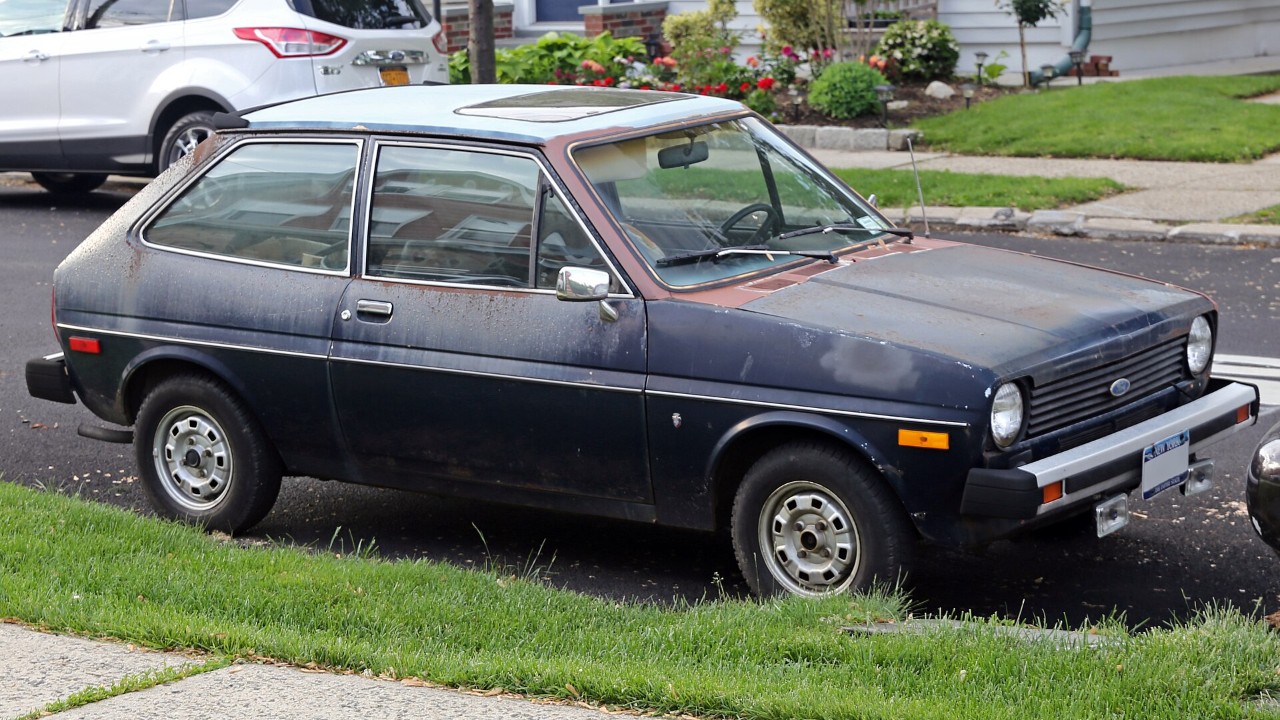
The Fiesta brought Ford’s European small-car thinking to American showrooms from 1977 to 1980. Ford built the U.S. cars in Saarlouis and Cologne, Germany, to slightly different specifications. Every U.S. car used the 1,596 cc version of the Kent four. Buyers could choose Base, Decor, Sport or the top Ghia trim.
The American Fiesta also needed changes. It gained a catalytic converter and air pump, energy-absorbing bumpers, side-marker lamps and round sealed-beam headlamps. Optional air conditioning, which Europe didn’t get, rounded out the list. More importantly, the Fiesta was Ford’s first front-wheel-drive car with a transverse engine. Ford’s 1960s Taunus 12M had used front-wheel drive, yet the Fiesta became the company’s first global front-drive success. Then, in 1981, the Escort replaced both the Fiesta and the Pinto in the U.S.
Our take: the Fiesta was a short chapter in Ford’s American story, but it pointed straight toward the future. The Ghia version adds a touch of comfort to a light, nimble car. Any honest, unmodified example deserves preserving. We’d keep one exactly as Ford built it.
6. Mercedes-Benz 230 G (W460)
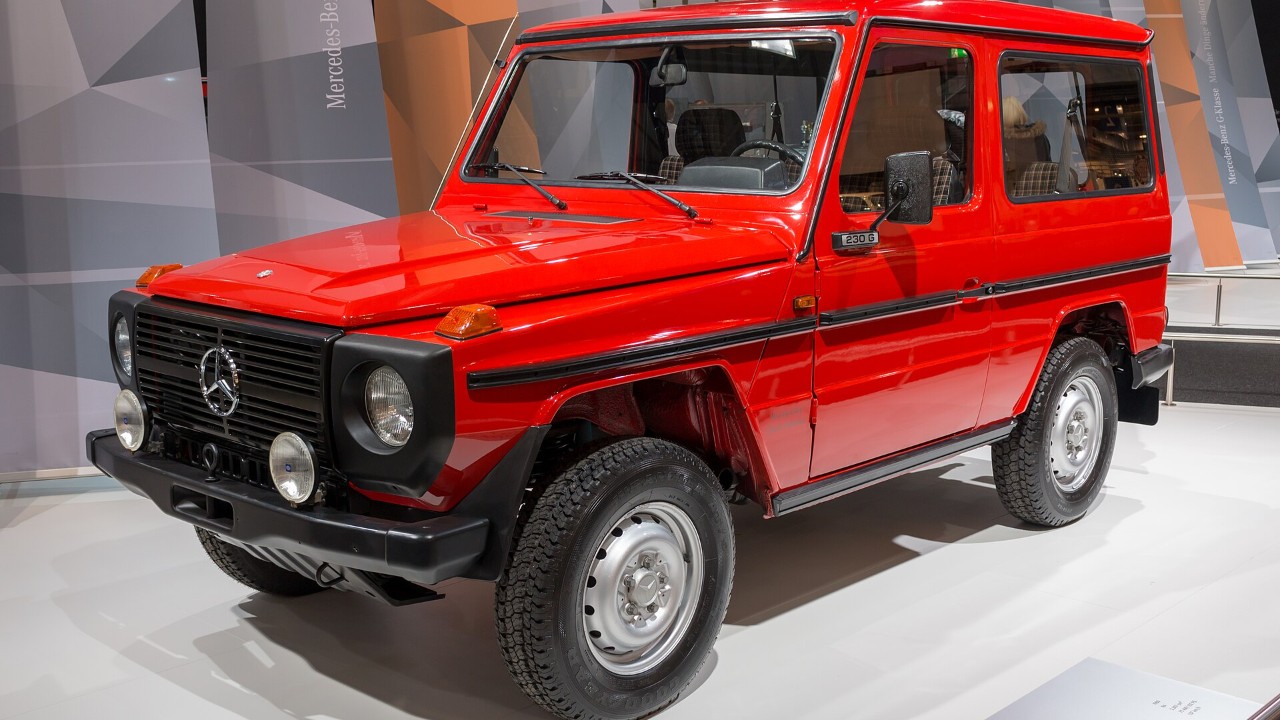
The G-Class started as a military vehicle, prompted by a suggestion from the Shah of Iran. Development began in 1972 as a joint project between Daimler-Benz and Steyr-Daimler-Puch. Stuttgart handled design and testing, while the Graz team planned production. Then, in 1979, production of the G model began in Graz, and the W460 went on sale that September after a press launch in Toulon, France.
The 230 G used a 2,307 cc four-cylinder with 90 horsepower, offered from 1979 to 1982. That’s modest output, yet the design proved remarkably durable. Mercedes built the 400,000th G-Class on December 4, 2020. The 500,000th followed in April 2023. Its run now spans 46 years, and only the Unimog surpasses the G-Class for production span in Daimler’s history.
Our take: the W460 started a new era for luxury off-roaders, even though it began as a tool. Early four-cylinder cars are slow, but they’re honest and simple. We’d buy one for the history and the mechanical honesty. Check for rust and full service records, because neglected early G models can hide costly repairs.
7. 1979 Mazda RX-7 GS
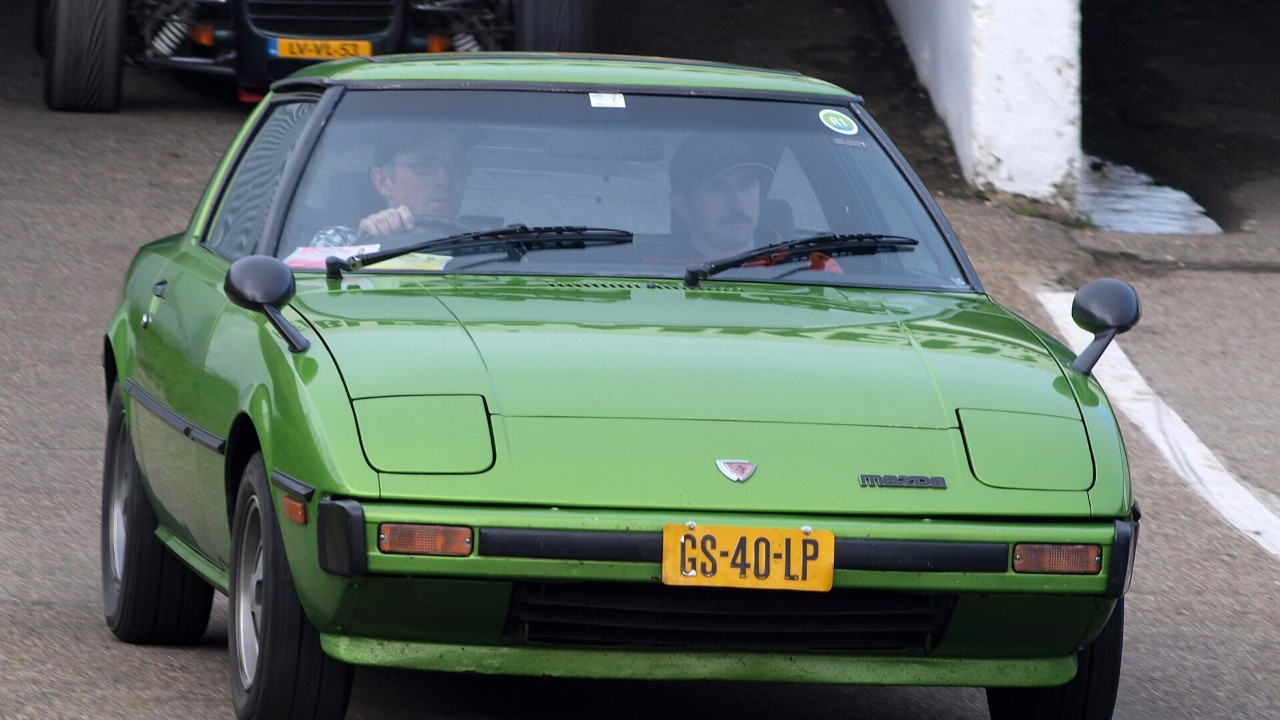
Mazda introduced the first RX-7 in Japan in March 1978. Its 12A rotary engine made 100 horsepower at 6,000 rpm in North American form, so it loved to rev. Mazda mounted that compact engine behind the front axle, which created a front-mid layout. As a result, the car weighed under 1,100 kilograms, making it the lightest RX-7 generation of all.
The RX-7 also proved itself on track. Mazda began racing it in IMSA’s GTU class in 1979. In that first year, RX-7s finished first and second at Daytona, and the car won the GTU championship. Sales were just as strong. Mazda built 471,018 first-generation cars, and roughly 70 to 80 percent went to the U.S.
Our take: the RX-7 made rotary power a mainstream choice for sports-car buyers. The GS trim sat at the heart of the range, and the 1980 Leathersport was essentially an uprated GS. If you shop for one, have a rotary specialist check compression before you buy. We’d keep a clean 1979 car forever, because it captures the moment Mazda found its sports-car identity.
8. 1980 Ford Mustang Ghia hatchback
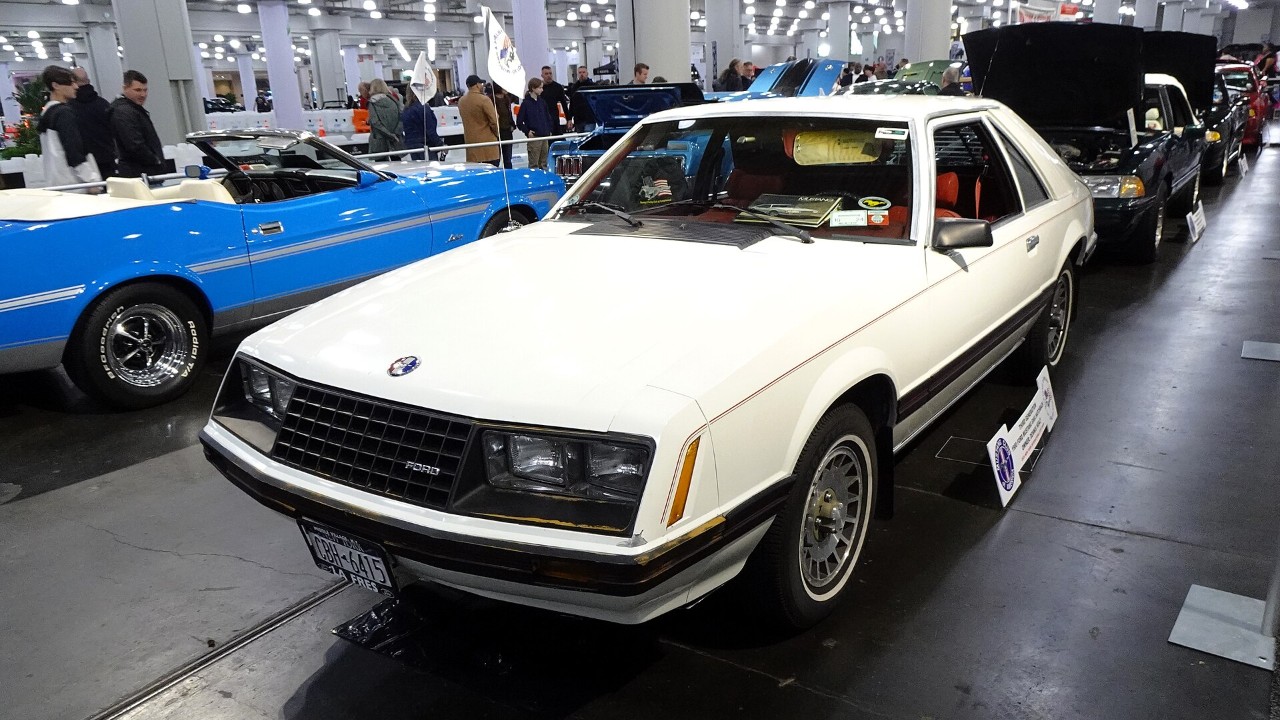
For 1979, Ford moved the Mustang onto the Fox platform and replaced the Mustang II. Jack Telnack’s team designed it. The new car rode on a 100.5-inch wheelbase, more than four inches longer than the Mustang II’s. Ford offered a two-door coupe and a three-door hatchback, plus a more luxurious Ghia trim.
The new Mustang sold 369,937 units in 1979, and 156,920 of them were hatchbacks. It also paced the 1979 Indianapolis 500, and Ford built 10,479 pace-car replicas. For 1980, Ford replaced the 302 V8 with a 4.2-liter V8 rated at 118 horsepower. The turbocharged 2.3-liter four stayed on the list, now with an optional three-speed automatic, and so did the 3.3-liter six. Meanwhile, the 1980 hatchback weighed 2,642 pounds, against 2,608 for the coupe.
Our take: the 1980 Ghia hatchback shows the Fox Mustang at its most refined, before the performance revival of the 1980s. It’s an affordable way to own a piece of Mustang history. We’d look for one with original Ghia trim intact. The platform beneath it outlasted the decade, serving Ford from the 1978 to 1993 model years.
More from Fast Lane Only