New tariffs under President Donald Trump are colliding with an auto market where new vehicles were already brushing against luxury-level prices. With the average transaction for a new model having recently crossed $50,000, even modest tariff-driven increases risk locking more households out of car ownership. I want to unpack how these policy moves could push typical sticker prices closer to $50K and what that means for buyers who still need a car to get to work, school, or the grocery store.
New tariffs meet a market already at $50,000
Tariffs are landing on an industry that had already pushed new vehicles into record territory, so the policy shock is hitting a fragile baseline rather than a stable one. Recent data show the average American new car buyer paying $50,080 for a vehicle, with the average new car price described as surpassing $50,000 for the first time. That figure is not an outlier on a luxury spreadsheet, it is the new center of gravity for mainstream shoppers, and it reflects years of rising MSRPs, more expensive technology, and a shift toward larger, higher-margin trucks and SUVs. When tariffs raise the cost of imported parts and finished vehicles, automakers have very little low-hanging fat left to trim before those increases flow directly into the prices buyers see on the lot, which is why analysts have warned that average prices could move even higher if the new duties are fully baked in.
Earlier analysis of the tariff packages aimed at Canada, Mexico, and China suggested that the range of added costs on vehicles could run from $4,000 on the low end to significantly more for some models, depending on how much imported content they use. That kind of increase, layered on top of an average that has already cleared $50,000, is how a theoretical policy debate turns into a very real payment shock for families. Separate research on how tariffs are affecting new car prices has emphasized that new vehicle prices were already high before the latest measures, with the average transaction price for popular models like the Toyota RAV4 and Honda CR-V reflecting that inflation. When I connect those dots, the risk is clear: tariffs are not creating a pricing problem from scratch, they are amplifying one that was already pushing the average buyer to the edge.
How tariffs filter into showroom prices
Tariffs do not show up as a separate line item on a window sticker, but they work their way into the final price through a series of decisions by automakers and dealers. When imported parts or finished vehicles are hit with new duties, manufacturers can either absorb the cost, cut features or quality, or pass the increase along to consumers. Analysts who have modeled the latest Trump-era tariffs estimate that if they are fully enacted, U.S. car prices could rise by roughly $3,000 per vehicle, with some brands singled out as automakers that will be hit hardest by tariffs, with price hikes likely. That kind of across-the-board bump would be enough to push many popular trims that currently sit in the mid to high $40,000s over the $50,000 threshold, effectively resetting what counts as a “normal” new car price.
There is also a feedback loop between tariffs and financing that makes the impact larger than the sticker alone. As the average transaction price climbs past $50,000, buyers are stretching loan terms to keep monthly payments manageable, often taking on six or seven year loans that leave them underwater for much of the term. Guidance on how to shop for a loan so you do not end up underwater has become more urgent as the average new car price just surged past $50,000, and tariffs that add thousands of dollars to the principal only deepen that risk. When I look at the combined effect of higher MSRPs, longer loans, and tariff-driven cost increases, the result is a market where the headline price is only the first layer of a much heavier financial burden.
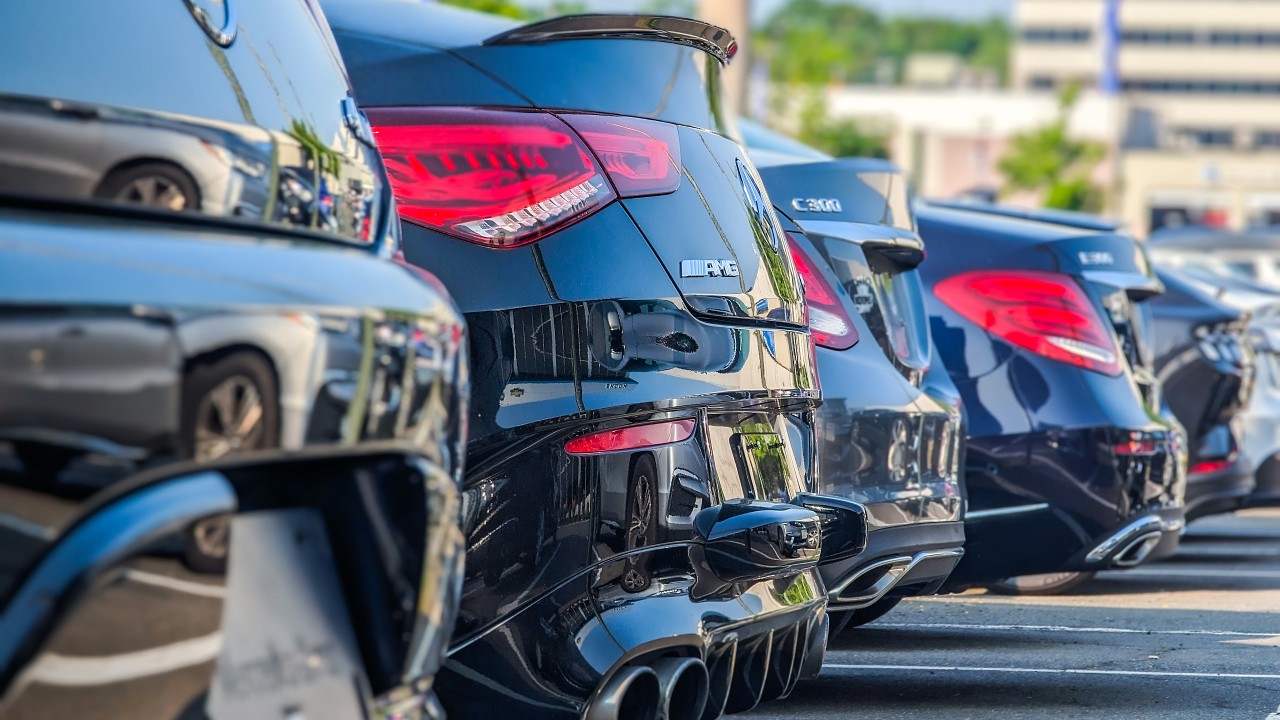
Why cars are becoming unaffordable for everyday drivers
For most of the United States, a car is not a luxury purchase, it is basic infrastructure for daily life, yet the costs are moving out of reach for a growing share of households. Reporting on the high and hidden costs of car ownership has highlighted how the average new car price is only part of the story, with insurance, maintenance, fuel, and fees all rising alongside the sticker. When tariffs push the upfront cost higher, they also tend to raise the value of the vehicle that needs to be insured and financed, which means higher premiums and more interest paid over the life of the loan. I see that as a compounding effect: each extra dollar at the dealership multiplies into several more over the years a family owns the car.
The strain is especially acute in regions where public transit is limited and driving is effectively mandatory. Analysis of cost-of-living pressures has shown that cars hit us in more subtle ways, from limiting job choices to forcing families to live farther from work in search of cheaper housing, which then increases commuting costs. When the average new car price surpasses $50,000 and tariffs threaten to push it higher, those trade-offs become harsher. Instead of upgrading to a safer or more efficient vehicle, many drivers are holding on to older cars longer, accepting higher repair bills and potential safety risks because the jump into the new car market feels impossible. That is how a macroeconomic policy like tariffs translates into very personal decisions about whether to fix the transmission again or take on a payment that rivals the rent.
Used cars, delayed purchases, and a tighter 2026 market
One of the most immediate consequences of higher new car prices is a surge of demand for used vehicles, and tariffs are likely to reinforce that pattern. Guidance on the latest car tariff information has already suggested that if demand spikes, used car prices could also rise, even though tariffs are aimed primarily at new vehicles. Analysts who track the 2026 auto market expect new and used cars alike to remain expensive, with prices staying high and stable as consumers hold on to what they have. When I factor in tariffs that raise the cost of new inventory, it becomes easier to see why used prices might not offer the relief buyers are hoping for, especially for late-model crossovers and pickups that are already in short supply.
There is also a timing dimension that matters for anyone on the fence about buying. Some experts have advised that to save money, shoppers should consider locking in a new car deal before any potential price increases take effect, a point captured in guidance framed around the question, Can You Avoid higher prices. At the same time, research into how tariffs are affecting new car prices has raised the possibility that certain models assembled in the United States with fewer imported parts might see smaller increases, which could shift demand toward those vehicles. In practice, that means a buyer comparing a compact SUV built in Mexico to a similar model built in the U.S. might find the domestic option relatively more attractive once tariffs are fully priced in, even if both are more expensive than they would have been without the policy change.
What buyers can realistically do now
For individual shoppers, the tariff debate can feel abstract, but the choices at the dealership are very concrete, and there are a few levers that still matter. First, I would focus on the total cost of ownership rather than just the monthly payment, especially in a market where the average new car price has already surpassed $50,000. That means comparing insurance quotes, fuel economy, and expected maintenance for specific models, not just chasing the lowest advertised lease or loan. Guidance on the high and hidden costs of car ownership underscores that a slightly cheaper sticker can still lead to higher long term costs if the vehicle is less efficient or more expensive to repair, which is particularly relevant as tariffs raise parts prices for some brands more than others.
Second, financing strategy is becoming as important as vehicle choice. With the average transaction price of a new car having surged past $50,000, advice on how to shop for a loan so you do not end up underwater is not just for luxury buyers. I would prioritize shorter loan terms, even if that means stepping down a trim level or choosing a smaller vehicle, because stretching to seven years on a tariff-inflated price leaves very little room to maneuver if you need to sell or trade in early. Analysts who warn that automakers will be hit hardest by tariffs, with price hikes likely, are effectively signaling that depreciation patterns could become more volatile, especially for models that see the steepest increases. In that environment, keeping your loan balance closer to the car’s real world value is one of the few protections an individual buyer can control.
More from Fast Lane Only: