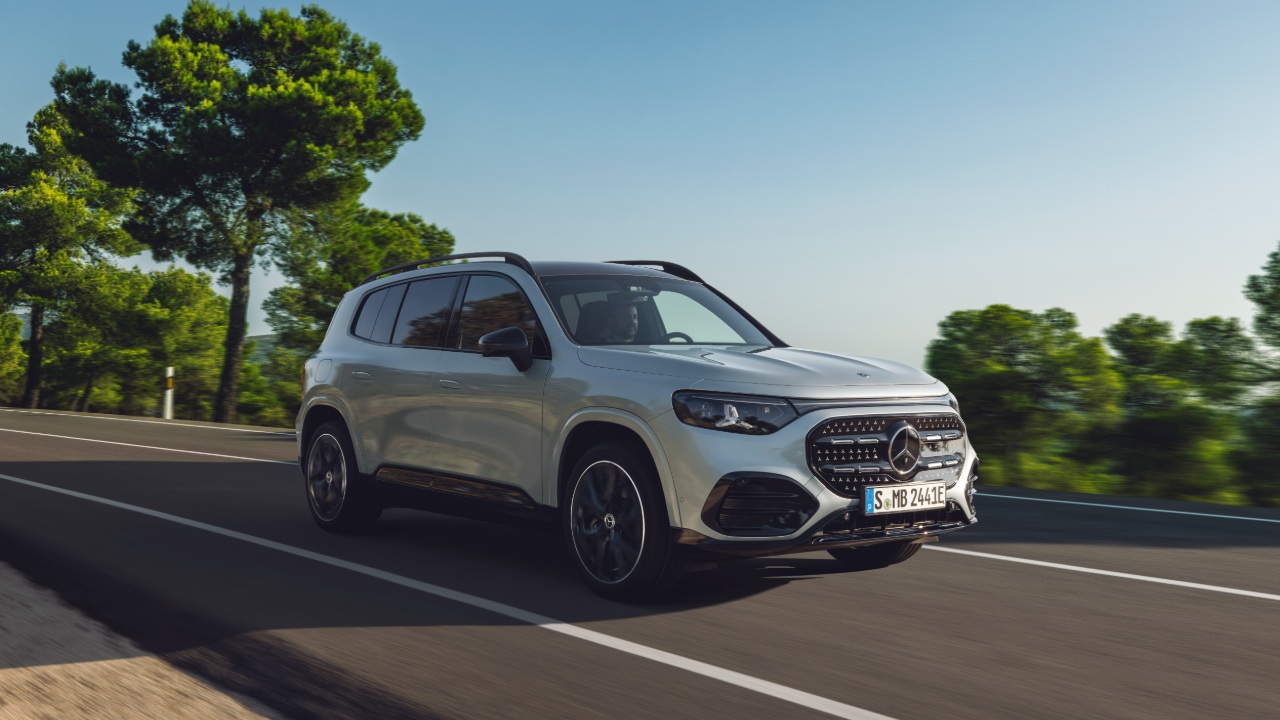
The next-generation 2027 Mercedes-Benz GLB arrives as a compact SUV that treats electrons, not gasoline, as its starting point, and its interior makes that shift impossible to miss. The boxy family hauler keeps its upright stance and seven-seat practicality, but now the dashboard is effectively one continuous pane of glass, turning the cabin into a rolling digital lounge. I see the new GLB as a clear signal of where Mercedes wants its mainstream models to go: electric first, screen heavy, and unapologetically tech-centric.
That strategy is not just about aesthetics. By pairing a dedicated electric GLB with a closely related hybrid, Mercedes is trying to bridge the gap between early EV adopters and buyers who still want a safety net, while using the same high-tech platform and battery hardware to keep development costs in check. The result is a small SUV that looks familiar from the outside but feels radically different once you climb inside and start interacting with its wall of displays.
EV-first platform with hybrid to follow
The 2027 GLB flips the script from the previous generation by putting the electric version at the center of the lineup and letting the hybrid follow behind. Reporting on the launch makes clear that the electric GLB arrives first, with the hybrid variant built on the same architecture coming later, which is a notable reversal from the usual pattern of EVs trailing established combustion models. The company is effectively using the electric GLB as the lead act and positioning the hybrid as a derivative for buyers who are not ready to plug in every day.
Underneath, the strategy is anchored by a shared set of hardware that is designed to support both full battery power and what one report calls a Mercedes GLB EV that will underpin a “High Tech Hybrid.” The electric GLB uses an 85-kWh lithium-ion pack, and the platform is built around an 800-Volt architecture for rapid charging, which allows very short top-up times that are framed as roughly ten minutes for a meaningful boost. That same 800-Volt setup is expected to serve the upcoming hybrid, which should benefit from the EV’s electrical backbone even as it adds an engine to the mix.
Powertrain options and range expectations
From a buyer’s perspective, the powertrain menu is straightforward but carefully tiered. The EV arrives first in two configurations: a single-motor RWD GLB 250+ with EQ Technology and a dual-motor all-wheel-drive version that uses the same 85-kWh battery pack. The rear-drive GLB 250+ is pitched as the efficiency play, while the dual-motor model targets drivers who want more traction and performance without stepping up to a separate performance sub-brand.
Range estimates reflect that split. Mercedes-Benz estimates the GLB EV will go between 323 and 392 miles on a full charge of its 85-kWh battery, depending on configuration and driving conditions, figures that are based on WLTP-style projections rather than stricter U.S. testing. Those numbers put the GLB squarely into the competitive set of long-range compact EVs, and they are particularly notable given the vehicle’s upright, boxy profile that is not as aerodynamically slippery as some sleeker crossovers. For drivers who still worry about charging infrastructure, the promise of 323 to 392 miles of range, combined with the 800-Volt fast-charging capability, is central to Mercedes’ pitch that this is a practical family EV rather than a tech experiment.
Superscreen cabin and screen-centric UX
The most dramatic change in the 2027 GLB is what happens once you open the door. The cabin is dominated by a set of screens spanning the entire width of the dashboard, dubbed the Superscreen, which turns the front row into a continuous digital surface. Instead of a traditional instrument cluster flanked by a separate infotainment display, the GLB’s layout integrates driver information, central controls, and a dedicated passenger screen into one sweeping panel that visually stretches from pillar to pillar.
Interior photo previews describe how the main driver display and central touchscreen are joined by a 14.0-inch passenger screen, with the latter designed to handle entertainment, navigation input, and other tasks without distracting the driver. One detailed look at the cabin notes that the Superscreen is the star of the show, with the passenger display able to be made opaque at the touch of a button so it is not visible from the driver’s seat when the car is in motion. Another early interior report goes so far as to describe the New GLB EV Interior Is All Screen, No Chill, underscoring how aggressively Mercedes has leaned into the screen-forward aesthetic. Physical controls have not disappeared entirely, but many traditional buttons have migrated into the digital interface, leaving only a few key toggles and a roller for volume control.
Space, seating and everyday practicality
For all the attention on the Superscreen, the GLB still has to function as a family SUV, and here the new generation quietly improves on the formula. Compared to its predecessor, the new electric GLB offers more freedom of movement and room for luggage, with reports highlighting that the GLB has grown in length by about 2.4 inches. That stretch translates into a more meaningful 2.7 inches of legroom in the second row, which should make the back seat feel less like a compromise for adults and teenagers on longer trips.
The GLB continues to offer seating for either five or seven passengers, with the third row remaining optional. Interior walk-throughs point out that larger rear doors and a reworked entry path make accessing the third row easier than before, even if that space is still best suited to children or occasional use. The electric packaging helps here, since the battery is integrated into the floor and the absence of a bulky transmission tunnel frees up foot room. One overview of the new model emphasizes that the GLB remains a small SUV that can still be configured as a seven-seater, a combination that is relatively rare in the compact EV segment and likely to appeal to urban families who need flexibility more than maximum cargo volume.
ADAS, AI features and the broader tech story
Beyond the headline-grabbing screens, the GLB leans heavily on driver assistance and AI-driven software to justify its tech-forward positioning. Optional ADAS packages will include lane keeping with steering assist, stop light and traffic sign identification, and parking aids that help maneuver the boxy SUV in tight spaces. These systems build on the EV’s sensor suite and high-speed electrical architecture, and they are framed as stepping stones toward more automated driving without promising full autonomy.
The infotainment system itself is described as a modern setup that integrates various AI tech to personalize the experience, from learning frequently used routes to adapting climate and seat settings based on driver habits. Interior coverage notes that like most modern infotainment systems, the GLB’s software is designed to respond to natural language voice commands, with one tech-focused preview highlighting how the system listens to what you say and adjusts accordingly. Combined with the Superscreen layout and the dedicated passenger display, the result is a cabin that treats software as a core part of the product rather than an add-on, aligning the GLB with the broader shift toward cars that behave more like connected devices on wheels.
Design evolution and market positioning
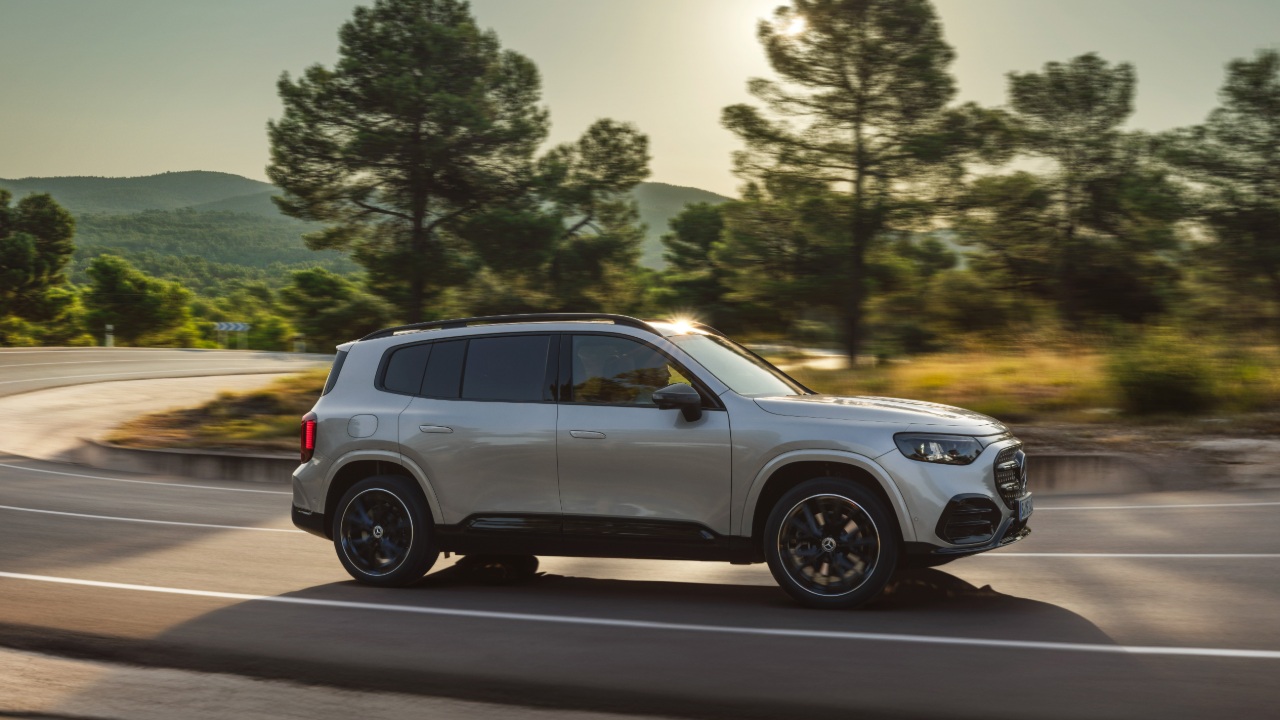
Visually, the 2027 GLB does not abandon the boxy silhouette that made the original model stand out, but it refines the details to match its more advanced hardware. Exterior walk-arounds describe fresh styling and more tech on the menu, with smoother lighting signatures, a cleaner front fascia, and subtle tweaks that keep the GLB recognizable while signaling its electric focus. Another early look characterizes the 2027 Mercedes-Benz GLB EV And Hybrid Put An Emphasis On Tech While Keeping The Boxy Looks We Love, capturing the balance between continuity and change that Mercedes is aiming for.
Inside, the design brief is summarized as modern, with high-tech design meeting practical touches like a spacious layout and thoughtful storage. One detailed specification sheet calls out how the new electric GLB is both modern and spacious, with plenty of freedom of movement and room for luggage, reinforcing that the tech upgrades have not come at the expense of usability. From a market perspective, the GLB is positioned as a subcompact luxury SUV that debuts globally as an electric-first model, with the EV expected to go on sale ahead of the hybrid version that will follow afterwards in 2027. That sequencing, combined with the Superscreen interior and long-range battery, makes the GLB one of the clearest examples yet of how Mercedes plans to transition its bread-and-butter SUVs into the electric era while still catering to buyers who want a familiar shape and flexible seating.