Nissan is preparing a bold reset for one of its most recognizable small crossovers, turning the next-generation Juke into a fully electric model with a dramatic new look. The quirky city SUV that helped define the compact crossover boom is being reimagined as a battery-powered hatchback on stilts, with sharp surfacing and concept-car proportions previewing what drivers can expect from 2027.
This shift folds the Juke into Nissan’s broader electric strategy, pairing a familiar name with a radical redesign aimed at younger buyers who want personality along with zero tailpipe emissions. Early previews suggest the new model will lean heavily on concept styling cues, new battery tech and a more grown-up interior to move the Juke from niche oddball to mainstream EV contender.
What happened
Nissan has confirmed that the next Juke will abandon combustion engines and launch as a pure electric vehicle, using a new platform shared with other compact EVs in the Renault-Nissan-Mitsubishi alliance. The company has been previewing the shift with a series of design studies that show a much more sculpted body, a higher beltline and a sleeker roof, all wrapped around a dedicated battery floor and short overhangs.
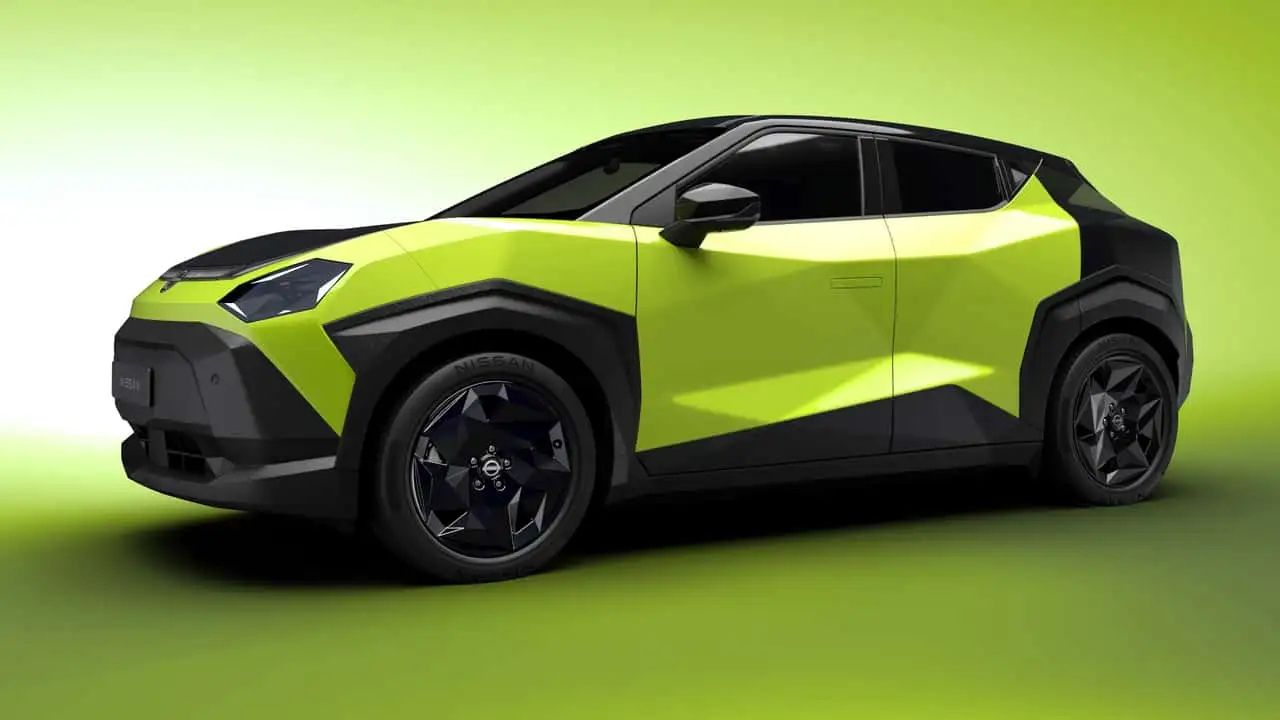
Those early images highlight what designers describe as an origami-inspired body, with intersecting creases and complex surfacing replacing the rounded forms of the current car. The front end trades the traditional grille for a closed panel with intricate patterns, flanked by ultra-slim LED daytime running lights and larger main lamps set low in the bumper. Reports on the all-new Juke EV describe a floating roof treatment, hidden rear door handles and a more athletic stance that stretches the wheelbase while keeping the overall footprint city friendly.
The decision to go electric aligns the Juke with Nissan’s wider plan to phase out pure combustion passenger cars in key markets over the next few years. The current Juke, offered with small turbocharged petrol engines and hybrid assistance in some regions, is expected to run its course before the EV replacement arrives around 2027. That timeline gives Nissan room to finalize its compact EV platform and expand battery production capacity, while also letting the brand refine the radical design language shown on the prototypes.
Inside, the new Juke is expected to move significantly upmarket compared with the original model’s playful but budget-conscious cabin. Previews point to a wide digital cockpit with twin screens, a more horizontal dashboard and higher quality materials. There is also a focus on freeing up rear legroom and boot space, areas where the first-generation car in particular lagged behind newer rivals. The flat EV floor and stretched wheelbase should help deliver more usable space without making the car feel oversized in tight streets.
Powertrain details are still emerging, but the Juke EV is set to slot below the Ariya in Nissan’s line-up, with battery capacities and motor outputs tuned for urban and suburban use rather than long-distance touring. That likely means a mix of single-motor front-drive versions and possibly a more powerful variant that leans into the Juke’s image as a fun-to-drive crossover. The design emphasis on aerodynamics and wheel design hints at an effort to extract competitive range from a relatively compact battery pack.
The exterior styling is not just an evolution of the current car. Coverage of the radically redesigned Juke notes that Nissan is using the new model to introduce a bolder visual identity for its small EVs, with more angular bodywork, a distinctive light signature and a rear end that blends coupe-like glass with a squared-off tailgate for better practicality. The result looks closer to a concept car brought to production than a cautious facelift.
Underneath, the Juke EV will benefit from the alliance’s shared components, including modular battery packs and updated driver-assistance systems. Expect the latest versions of Nissan’s adaptive cruise control, lane centering and automated parking features, along with over-the-air software updates that can refine efficiency and add functions over time. The move to a dedicated EV architecture also opens the door to a frunk in some configurations, although packaging decisions will depend on crash structures and cost.
Why it matters
Turning the Juke into a pure EV is a significant statement from Nissan, because the original car helped create the modern compact crossover segment. When the first-generation Juke arrived, its bug-eyed lights and chunky stance made it an instant talking point, and it sold strongly in Europe and other markets that embraced small SUVs. Retiring combustion power and reimagining that nameplate as a battery model shows how quickly the center of gravity in the segment is shifting toward electric power.
For Nissan, the Juke EV fills a critical gap between the Leaf hatchback and the larger Ariya SUV. The company needs a compact, style-led crossover that can compete with the likes of the Peugeot e-2008, Hyundai Kona Electric and Jeep Avenger. By leaning into a striking design and a familiar badge, Nissan is betting that buyers who might be wary of anonymous-looking EVs will be drawn to something with more personality. The reported sharp, origami-inspired design is central to that strategy, giving the car an identity that stands out in crowded city streets and online feeds.
The redesign also reflects a broader shift in how manufacturers approach small EVs. Early electric city cars often prioritized efficiency and low cost over emotional appeal, which limited their desirability. With the Juke EV, Nissan appears to be flipping that script, using dramatic styling and a more premium cabin to justify pricing that will inevitably sit above equivalent petrol crossovers. If the car can combine that visual drama with accessible finance deals and running-cost savings, it could help normalize EVs for buyers moving up from superminis and older compact crossovers.
There is a strategic manufacturing angle as well. A dedicated EV Juke gives Nissan more flexibility to consolidate engine production and invest in battery and motor plants instead. That shift supports the company’s long-term emissions targets and helps it meet tightening fleet-average CO2 rules in Europe and other regions. It also aligns with government incentives that favor local EV production, something that could influence where the Juke EV is assembled and how its supply chain is structured.
The move has implications for Nissan’s relationship with the Renault-Nissan-Mitsubishi alliance too. Sharing platforms and battery modules across brands is essential to make small EVs profitable, and the Juke EV will likely share much of its hardware with future Renault and Mitsubishi models. That shared development spreads costs but also creates pressure to differentiate on design and tuning. Nissan appears to be using the Juke’s radical look as its main differentiator, while leaving room for alliance partners to target different tastes with their own versions.
For existing Juke fans, the change is both an opportunity and a potential shock. Many owners were drawn to the original car’s oddball styling and compact footprint, but also valued the simplicity and familiarity of a small petrol engine. The EV-only approach asks those drivers to make a bigger leap, not just to a new shape but to a new fueling routine and cost structure. Nissan will need to reassure them on range, charging access and battery longevity, especially in markets where public charging networks remain patchy.
At the same time, the Juke EV could attract a new audience that never considered the old car. Younger urban buyers who already use public chargers or home wallboxes, and who value smartphone-like tech integration, may see the new Juke as a stylish alternative to more conservative rivals. The cabin’s expected focus on connected services, large screens and customizable ambient lighting plays directly to that crowd. If Nissan can deliver competitive range and charging speeds, the Juke EV could become a default choice for design-conscious city drivers who want something more distinctive than a generic crossover.
The decision also carries weight in markets where the Juke has been absent. In the United States, for example, the original Juke was discontinued and effectively replaced by the Kicks, leaving fans wondering whether the nameplate would ever return. Coverage asking whether the Juke highlights the lingering interest in the badge, even after several years off sale. An EV-only Juke could give Nissan a fresh story if it decides to reintroduce the model in North America, though that would depend on pricing, range and how it fits alongside the Ariya and Kicks.
From an industry perspective, the Juke’s transformation shows how quickly once-experimental designs can become mainstream. What began as a niche, polarizing crossover is now being asked to carry significant EV volume and brand identity. If the Juke EV succeeds, it will validate the idea that small, expressive crossovers can thrive in an electric era, not just rational, range-maximizing boxes on wheels. If it struggles, rivals may double down on more conservative shapes and leave the bolder experiments to concept cars.
What to watch next
Over the next year, the key questions around the Juke EV will center on technical specifications and market positioning. Range is the most obvious metric. Nissan will need to offer enough real-world distance between charges to compete with established small EVs, while keeping battery sizes modest to control cost and weight. The alliance’s latest cells promise improved energy density, but the final figures will determine whether the Juke is seen as a city specialist or a genuine all-rounder.
Charging performance will be just as critical. Buyers now expect at least 100 kW DC capability in this segment, with higher peak speeds becoming more common. The ability to add a meaningful chunk of range in 20 to 30 minutes can make the difference between a car that fits into busy lives and one that feels compromised. Nissan’s experience with the Ariya and updated Leaf will inform the Juke’s charging hardware and thermal management, and those choices will be closely scrutinized once technical details are released.
Pricing strategy will be another major storyline. The Juke has traditionally positioned itself as an affordable yet expressive alternative to more conservative crossovers, and the EV version will need to balance that heritage with the higher costs of electric hardware. Incentives and leasing deals will play a big role, especially in Europe where monthly payments often matter more than list price. Nissan may also look to offer different battery sizes to create a broader spread of price points, with a shorter-range entry model for city use and a longer-range version for those who travel more frequently.
Design-wise, the production car’s final look will reveal how much of the concept flair survives the transition to showrooms. Reports on Nissan’s plan to give the Juke an electrifying new leaf suggest that the brand is willing to keep much of the angular bodywork and dramatic lighting, although details such as mirror design, wheel sizes and bumper treatments are likely to be toned down for cost and regulation. The interior will face similar scrutiny, with buyers expecting the high-tech feel of a concept cabin but the durability and ergonomic clarity of a mass-market car.
More from Fast Lane Only