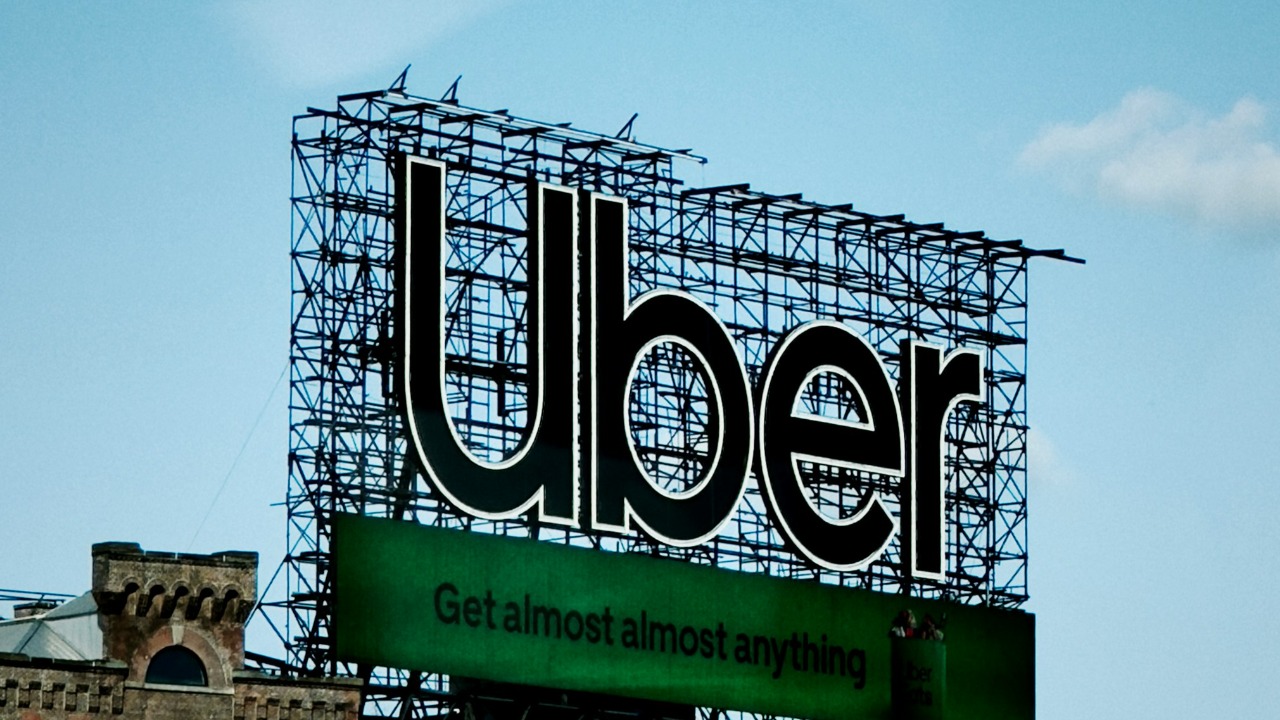
Uber is betting that the next phase of its business will not have a human behind the wheel. The company has committed 10 billion dollars to expand robotaxis and other autonomous services, marking one of its most aggressive strategic shifts since it went public. The move signals that Uber sees driverless mobility not as a side project but as the core of its long-term plan to cut costs, defend market share, and open new lines of revenue.
Such a large investment puts Uber alongside the biggest players in self-driving technology and raises immediate questions about how soon robotaxis can operate safely and profitably at mass scale. It also forces regulators, drivers, and investors to confront what a ride-hailing giant built around automation will look like in practice.
What happened
Uber has decided to allocate 10 billion dollars to a broad push into robotaxis and related autonomous services, according to detailed reporting on the company’s latest strategy reset. Internally, the commitment is framed as a multi-year capital plan that will cover technology partnerships, vehicle procurement, mapping, and the infrastructure needed to operate large fleets of self-driving cars in major cities.
The company is not starting from zero. Uber already works with autonomous-vehicle specialists in several markets, but the new strategy elevates those experiments into a central pillar of its business model. Executives have signaled that the 10 billion dollar program will be deployed through a mix of direct spending and long-term agreements with technology partners, rather than a single acquisition or one-off bet, according to people briefed on the plan cited in the financial reporting.
Publicly, Uber has framed the shift as a way to lock in access to autonomous technology while preserving its asset-light marketplace model. It intends to integrate robotaxis into the existing Uber app, so users will see self-driving options appear alongside traditional rides in selected cities, with pricing and availability tuned to local regulations and fleet size. Early deployments are expected to focus on well-mapped, relatively predictable environments, such as central business districts and airport corridors, where autonomous systems have the best chance of operating consistently.
The 10 billion dollar figure is striking relative to Uber’s historical spending on autonomy. Earlier in its life, Uber poured money into an in-house self-driving unit, then sold that unit to Aurora Innovation and pivoted toward partnerships. The new commitment signals a return to large-scale autonomy investment, but with a more collaborative structure that leans on outside providers rather than internal research labs. According to recent coverage, the capital will be spread across multiple regions and vendors, which is intended to reduce technical concentration risk and give Uber bargaining power as the technology matures.
Investors have reacted quickly. Reports of the 10 billion dollar push have been linked to a sharp move in Uber’s share price, as traders reassessed the company’s long-term margin potential and its position in the race to commercialize autonomous ride-hailing. One market-focused summary described how the announcement fed into a broader stock rally and stoked debate about whether Uber is finally leaning into a defensible technology edge or repeating the kind of expensive bets that once weighed on its path to profitability.
Outside financial markets, the decision has drawn attention from regulators and industry observers in regions where Uber operates at large scale. A regional news summary noted that policymakers in several countries are already tracking how a robotaxi rollout could affect road safety rules, data governance, and labor markets, since Uber’s driver network represents a significant source of income for hundreds of thousands of people. That coverage, highlighted in an aggregated brief, underscored how closely governments are watching the company’s next steps.
Why it matters
Uber’s 10 billion dollar commitment matters first because of what it says about the economics of ride-hailing. The company’s core business is constrained by the cost of human drivers, who receive the majority of each fare. If Uber can field large robotaxi fleets at scale, it can remove that cost from each trip, potentially lifting margins and giving it room to cut prices or expand into lower-density markets that are currently uneconomic. Analysts see that logic as central to the strategic shift, which is why the investment has been framed as a long-term margin story rather than a short-term growth stunt.
The move also resets the competitive map in autonomous vehicles. Dedicated self-driving companies have spent years building technology and limited commercial services, but they lack Uber’s global demand funnel and brand recognition. Uber, by contrast, has the customers and the logistics software, but has relied on partners for autonomy. A 10 billion dollar program signals that Uber intends to be a first-tier player in this field, not just a distribution channel. One detailed analysis from a technology-focused outlet argued that the company is effectively “going all in” on robotaxis as a way to future-proof its marketplace, a characterization grounded in the scale of the commitment and reflected in its coverage of the.
Timing is another strategic factor. Autonomous driving has moved from early prototypes to commercial pilots in cities such as San Francisco, Phoenix, and parts of China, but the industry is still grappling with safety incidents, regulatory pushback, and high operating costs. By announcing a large, multi-year investment now, Uber is signaling that it expects the technology to cross key reliability and regulatory thresholds within its planning horizon. If that bet is right, the company could be in position to scale quickly as rules evolve, rather than scrambling to catch up.
For drivers, the implications are more complicated. Uber’s network includes millions of active and occasional drivers worldwide, many of whom rely on the platform for flexible income. A large-scale shift toward robotaxis raises the prospect of reduced demand for human drivers in certain routes and time slots, especially in dense urban cores where autonomous vehicles can operate most efficiently. At the same time, Uber has historically argued that autonomy would roll out gradually and that human drivers would still be needed for complex trips, new markets, and peak demand. The tension between those two narratives is likely to intensify as more details of the 10 billion dollar plan emerge.
Regulators and city officials will have to navigate that tension alongside safety concerns. High-profile incidents involving self-driving test vehicles have already made some local authorities cautious about granting wide operating permits. Uber’s plan to deploy robotaxis at scale will require close coordination with transport agencies, law enforcement, and urban planners, who must weigh potential benefits such as reduced congestion and emissions against the risk of accidents and job displacement. A regional news report from the Caucasus region, which summarized Uber’s strategy as a “major shift,” noted that officials there see both economic opportunity and social risk in any rapid move toward driverless fleets, reflecting the mixed reaction captured in local coverage.
For passengers, the shift could change the everyday experience of using Uber. Robotaxis are likely to come with different pricing structures, service levels, and rules of conduct. Riders may face new trade-offs between cost and comfort, choosing between a cheaper driverless vehicle and a slightly more expensive human-driven car, especially in the early years when autonomous fleets are limited to specific zones. Accessibility questions will also loom large, including how robotaxis handle passengers with disabilities, late-night safety concerns, and the need for human assistance in unusual situations.
On the financial side, the commitment raises questions about capital allocation and risk. Ten billion dollars is a substantial sum relative to Uber’s free cash flow and prior investment programs, even if spread over several years. Shareholders will be watching to see how much of that capital goes into assets that sit on Uber’s balance sheet, such as owned vehicles or infrastructure, versus off-balance-sheet partnerships and revenue-sharing agreements. A market commentary highlighted that some investors are enthusiastic about the potential for higher long-term margins, while others worry that heavy spending on autonomy could delay shareholder returns or expose the company to technological dead ends.
There is also a broader technology-industry angle. If Uber’s robotaxi push succeeds, it could accelerate adoption of AI-powered systems in other parts of urban life, from logistics and delivery to public transport integration. Conversely, if the project stalls due to safety or cost problems, it could cool investor appetite for large-scale autonomous deployments and push capital back toward software-only AI applications. In that sense, Uber’s decision functions as a high-profile test case for how quickly autonomous mobility can move from pilot projects to mainstream infrastructure.
What to watch next
The next phase will be defined less by headlines and more by execution. Several concrete signposts will indicate whether Uber’s 10 billion dollar gamble is paying off.
One early indicator will be where the company chooses to launch its earliest large-scale robotaxi services. The initial cities will reveal a lot about its regulatory strategy and risk appetite. Jurisdictions with relatively clear autonomous-vehicle rules and supportive local governments are likely candidates. Observers will track whether Uber concentrates its first big deployments in a handful of flagship markets or spreads smaller pilots across many regions to gather data and build political relationships.
The structure of Uber’s partnerships will also matter. The company has signaled that it will rely heavily on external providers for self-driving stacks, sensors, and in some cases full vehicles. Investors will be looking for details on revenue splits, data ownership, and exclusivity clauses. A financial analysis of the strategy noted that Uber aims to avoid being locked into a single supplier, which would give it leverage in negotiations and allow it to swap in better-performing technology over time, a point that was emphasized in the market-focused discussion of the plan.
Regulators will also need to translate general enthusiasm or concern into concrete rules. Key questions include how cities will handle liability when autonomous vehicles are involved in accidents, what data they will require from operators, and whether they will impose caps on robotaxi fleet sizes or operating hours. Labor regulators may also revisit how ride-hailing drivers are classified if a growing share of trips no longer involve human labor. Any major regulatory setback in a large market could slow the pace of Uber’s rollout and affect how it allocates the 10 billion dollars geographically.
The economics of early deployments will be closely scrutinized as well. Self-driving vehicles remain expensive to build and maintain, with costly sensor suites and intensive maintenance requirements. For Uber, the central question is whether robotaxi trips can be priced competitively while still generating better unit economics than human-driven rides. Analysts will watch metrics such as cost per mile, fleet utilization rates, and downtime for maintenance or software updates. If those numbers trend favorably, Uber will have a stronger case for accelerating investment; if not, pressure may grow to slow the rollout or adjust the strategy.
More from Fast Lane Only