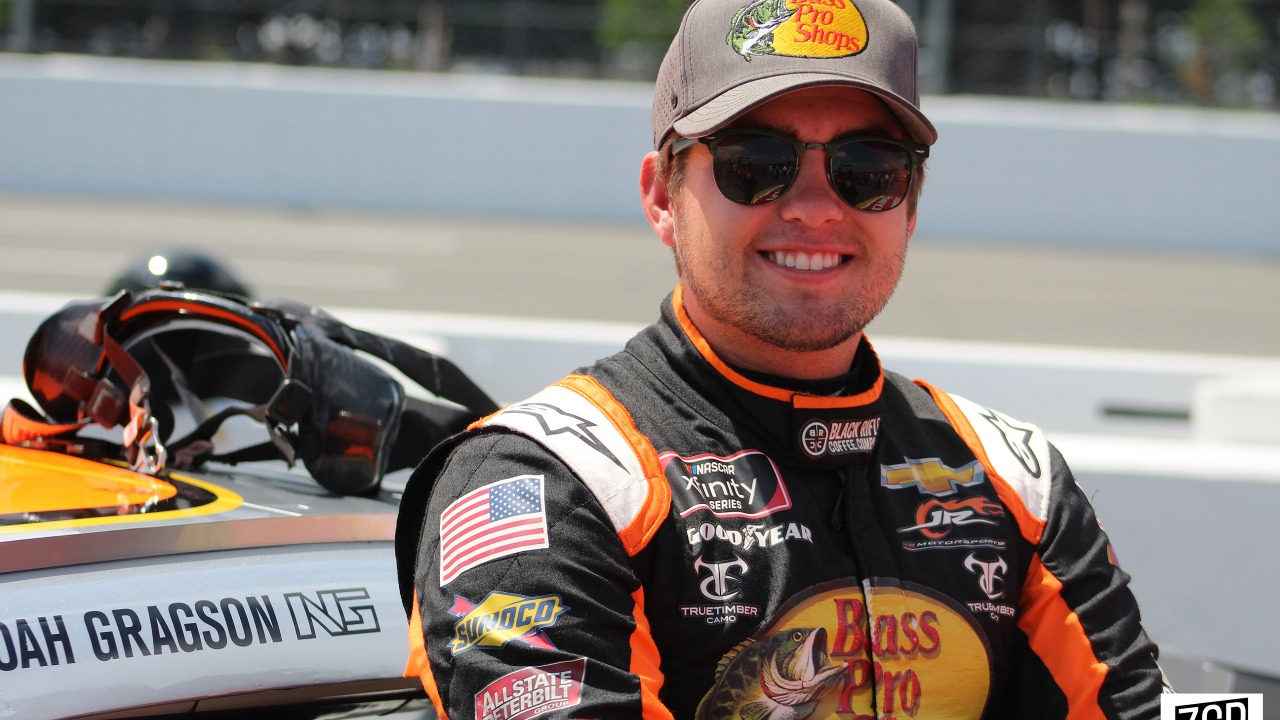
Noah Gragson will roll into the 2026 Daytona 500 with something he has not always enjoyed at the Cup level: a clearly defined path and organizational backing that extends beyond Speedweeks. His return to Front Row Motorsports, combined with fresh leadership atop the pit box and renewed sponsor support, gives the 27-year-old a stable platform as he locks in his plans starting with NASCAR’s biggest race. The question now is whether that structure can convert potential into the breakthrough results that have so far eluded him at the sport’s highest tier.
FRM commits to Gragson as a long‑term piece
The most important development for Noah Gragson is that Front Row Motorsports has chosen continuity over churn. Team previews for the upcoming year have already framed Gragson as part of FRM’s 2026 core, noting that he will return to the organization along with key leadership figures such as Drew Blickensderfer. That kind of early confirmation signals that the team views Gragson not as a stopgap, but as a driver around whom it can plan multiple seasons of Cup Series growth, rather than waiting to see how the first few races unfold before making decisions.
That commitment carries weight because it follows what has been described as “not a great season” for Gragson, one in which flashes of speed did not consistently translate into finishes. Even so, FRM has positioned him as a central part of its future, with the expectation that he can move from occasional contender to weekly threat if the surrounding pieces are upgraded. The message from the organization is clear: the No. 4 program is not being reset, it is being refined, and Gragson is expected to be the driver who finally turns that investment into a Cup Series win.
A new crew chief and a reshaped competition brain trust
Stability in the driver’s seat does not mean stasis on the pit box. Earlier this month, it was confirmed that Grant Hutchenes will serve as Gragson’s new crew chief for the 2026 NASCAR Cup Series season. That change reflects FRM’s belief that the next step for the No. 4 group will come from sharper execution and strategy, not just raw speed. A new voice on the radio, and a fresh approach to race management, can be the difference between running 15th and stealing track position when cautions fall late in a stage or in the closing laps.
The crew chief move is part of a broader restructuring of FRM’s competitive leadership. The team has added an overall competition director, a role that has become standard among top Cup Series organizations, and that position will be filled by Drew Blickensd. By elevating Blickensd into a shop-wide oversight role while pairing Gragson with Grant Hutchenes on the No. 4 pit box, FRM is trying to create a clearer chain of command. The goal is to align car preparation, race strategy, and long-term development so that Gragson benefits from a unified vision rather than fragmented decision making.
Rush Truck Centers strengthens the No. 4 program
On the commercial side, Gragson’s 2026 outlook is buoyed by a renewed commitment from a familiar partner. Rush Truck Centers has extended its relationship with Front Row Motorsports for the upcoming season and will support Noah Gragson in a significant slate of events. That backing is not merely cosmetic. In modern NASCAR, sponsor alignment often dictates how many cars a team can field, how much engineering support it can purchase, and how aggressively it can invest in simulation and data tools that directly influence performance.
Further details show just how central that partnership will be to Gragson’s year. Rush Truck Centers is set to back him in 12 races, a sizable portion of the schedule that includes the high-visibility events teams use to court additional partners. For FRM, having a committed sponsor on the No. 4 car for roughly one-third of the season stabilizes the budget and allows the group to plan development cycles around those anchor races. For Gragson, it means he will enter marquee weekends with a fully funded effort, rather than juggling paint schemes and obligations that can distract from the on-track task.
Daytona 500 as the launchpad, not the finish line
All of these moves converge on the same starting point: the 2026 Daytona 500. For Gragson and FRM, the season opener is less a one-off opportunity and more the first test of a structure that has been carefully assembled over the offseason. With Grant Hutchenes calling the shots and Drew Blickensd overseeing competition across the organization, the No. 4 team will arrive at Daytona with a clearer identity than it has had in previous years. The expectation is that the car will not only be fast in the draft, but also prepared to execute pit cycles and late-race restarts with a level of discipline that reflects the new leadership model.
Yet the stakes extend far beyond one Sunday in Florida. Superspeedway results can be fickle, and FRM’s internal messaging appears to recognize that the real measure of progress will come in the weeks after Daytona, when the series heads to intermediate ovals and shorter tracks that reward sustained performance. The organization’s decision to lock in Gragson’s role, secure multi-race backing from Rush Truck Centers, and elevate its competition structure suggests that the Daytona 500 is being treated as the launchpad for a full-season push, not a standalone showcase. For Gragson, a strong run in the opener would validate that approach, but the true goal is to carry that momentum into the grind of the Cup Series calendar.
Pressure, opportunity, and the 2026 driver landscape
Gragson’s situation also has to be viewed within the broader context of a Cup Series field where several established names are facing pivotal seasons. Recent analysis of the 2026 grid has highlighted multiple veterans in “do-or-die” scenarios, including a 41-year-old star who, despite a new crew chief in Jim Pohlman and flashes of speed, is under pressure to deliver a breakthrough victory to prove he remains elite. That kind of scrutiny at the top of the sport underscores how quickly narratives can shift, and how unforgiving the Cup Series can be when results do not match expectations.
Compared with those veterans, Gragson has more runway, but not unlimited patience. FRM’s willingness to invest in Grant Hutchenes, to promote Drew Blickensd into a competition director role, and to secure Rush Truck Centers for 12 races signals that the organization expects tangible progress, not just incremental gains. The 2026 Daytona 500 will mark the public debut of that revamped program, but the real story will unfold over the full schedule, as Gragson tries to convert this rare combination of stability and support into the kind of consistent performance that can secure his place in the Cup Series hierarchy for years to come.
More from Fast Lane Only