Mercedes has confirmed that its long-serving Formula One design chief John Owen is leaving the team, drawing a line under one of the most influential technical tenures of the modern era. His exit removes a central figure behind the cars that powered Mercedes to a run of Constructors’ titles and reshapes the technical hierarchy at Brackley just as a new rules cycle begins. The decision, framed as a planned change rather than a sudden rupture, still raises pointed questions about how the team will evolve without the architect of its most successful machines.
A quiet architect of an F1 dynasty
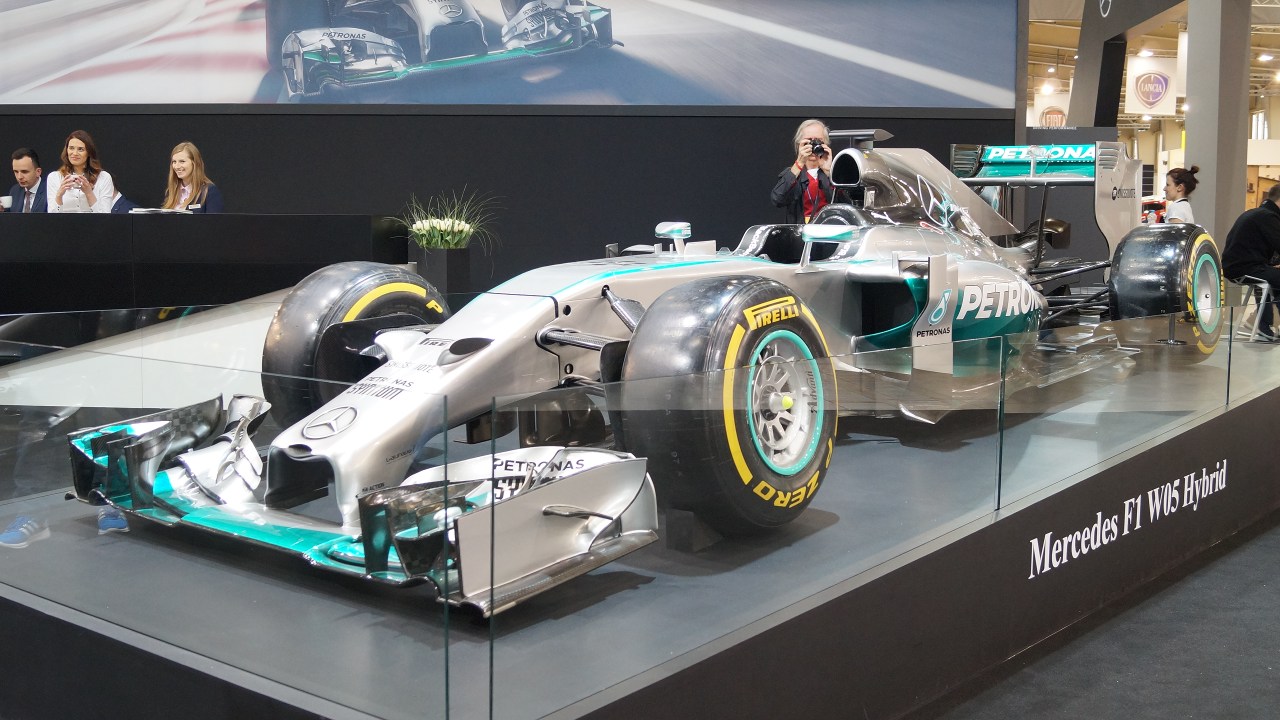
John Owen’s name has rarely been as prominent as the drivers he helped turn into champions, yet inside the paddock he has long been regarded as one of the key minds of the hybrid era. After joining Mercedes in 2007 as a principal aerodynamicist, he rose to become director of car design and single-seater design director, overseeing the concepts that underpinned the team’s dominance. Those cars delivered eight Constructors’ Championships between 2014 and 2021, a period in which Mercedes set the competitive standard and forced rivals to respond to its innovations.
That success was not the product of a single breakthrough but of a sustained design philosophy that balanced outright performance with reliability and operational flexibility. Owen’s group produced cars that were consistently quick across a wide range of circuits and conditions, a hallmark of the Brackley operation’s strength. Internal recognition of his influence has been explicit, with Mercedes describing him as one of the masterminds behind its eight Constructors’ crowns and a central figure in the team’s rise from midfield outfit to benchmark. His departure therefore removes not just a senior title but a designer whose fingerprints are on more than a decade of competitive evolution.
From early dominance to ground-effect turbulence
The story of Owen’s tenure is also the story of how Mercedes navigated shifting technical landscapes. Under his leadership, the team capitalised on the introduction of the V6 hybrid power units, pairing a strong engine with a chassis that maximised aerodynamic efficiency and tyre management. The resulting package allowed drivers to control races from the front and gave the team strategic latitude that rivals struggled to match. In those years, the Brackley cars were often the reference point for how to integrate power unit, aerodynamics, and suspension into a coherent whole.
The arrival of new ground-effect regulations in 2022, however, marked a more turbulent chapter. Mercedes committed to a bold design direction that proved difficult to tame, and the team has since been engaged in a multi-season effort to recover its former edge. While responsibility for that challenge is shared across the technical structure, Owen’s role as director of car design placed him at the heart of the response. The decision to adjust the leadership now, as Formula One enters the first year of a fresh regulatory phase, signals a desire to refresh the conceptual approach while acknowledging the foundations he helped build.
Why Mercedes is changing its technical guard now
Mercedes has framed Owen’s exit as part of a broader evolution of its technical organisation rather than a reaction to a single poor season. The team has confirmed that the role will be filled internally, with engineering director Giacomo Tortora stepping up to become the new director of car design. That choice reflects a preference for continuity of culture and process, even as the team seeks new ideas on how to interpret the rules and close the gap to its rivals. By elevating an existing senior engineer, Mercedes aims to preserve institutional knowledge while adjusting the balance of voices in key design meetings.
The timing is significant. Owen is set to leave during the upcoming Formula One season, just as the first cars conceived fully under the latest regulations begin to show their true potential. Mercedes has indicated that he will remain in place through the early part of the campaign, including the initial running at the first test session in Barcelona, to ensure a smooth handover. That overlap is designed to minimise disruption to ongoing development programmes and to give Tortora and the wider group direct access to Owen’s insights as they refine the car through its first competitive outings.
Life after Brackley for John Owen
While the end of Owen’s Mercedes chapter is now confirmed, his next steps illustrate how Formula One expertise is increasingly spilling into adjacent industries. He is set to move into a production company based in Brackley, remaining geographically close to the team he is leaving but shifting into a different sector. The move suggests a desire to apply high-level engineering and project management skills in a new context, rather than jumping immediately to a rival F1 outfit. For Mercedes, that destination is also strategically preferable, since it avoids the immediate risk of sensitive intellectual property migrating to a direct competitor.
Owen’s decision to step away from the front line of grand prix car design after two decades in the sport also underscores the intensity of modern Formula One. The demands of continuous development, compressed calendars, and ever more complex regulations have stretched technical staff as much as drivers. By choosing a role outside the championship, he is following a path taken by several senior engineers who have sought a different balance while still leveraging their experience. For the Brackley workforce, his continued presence in the local area may help preserve informal links, even as formal responsibilities are handed over.
What Owen’s exit means for Mercedes and the 2026 era
The immediate question for Mercedes is how the loss of such a central figure will affect its ability to respond to the competitive pressures of the new rules cycle. The team has stressed that its technical strength rests on a broad group rather than a single individual, pointing to the depth of engineering talent that has been built up around Brackley. Giacomo Tortora’s promotion is intended to tap that depth, with his background as engineering director giving him a detailed understanding of how design decisions translate into trackside performance. The internal reshuffle is therefore as much about redistributing responsibilities as it is about replacing one person.
At the same time, the symbolism of Owen’s departure should not be understated. He has been with Mercedes through its transformation from Honda and Brawn roots into a modern powerhouse, and his exit marks the end of a particular generation of leadership. For a team seeking to reassert itself at the front of the grid, the change offers both risk and opportunity. If Tortora and his colleagues can blend fresh thinking with the proven processes that delivered eight Constructors’ titles, Mercedes may yet turn a period of uncertainty into the starting point for a new competitive cycle. If not, the loss of one of its key engineers will be remembered as a turning point that coincided with a shift in the balance of power at the top of Formula One.
More from Fast Lane Only